Artwork
Portrait of a woman playing the viola-da-gamba, formerly identified as Margaret Lemon
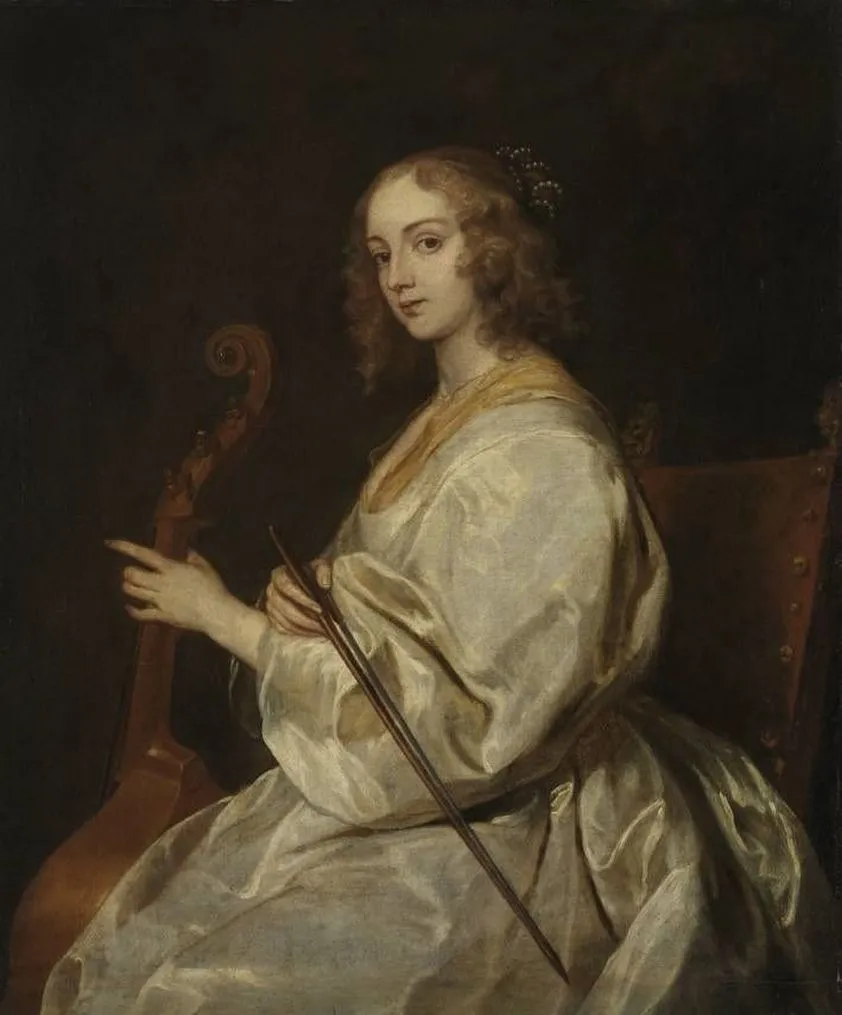
Portrait of a woman playing the viola-da-gamba, formerly identified as Margaret Lemon is an oil painting by the Flemish Baroque painting artist Anthony van Dyck. It dates from 1637 and is held in the collection of the Bavarian State Painting Collections.
About this work
Overview
Created in 1637 by the Flemish Baroque painter Anthony van Dyck, this oil on canvas portrays a seated woman holding a viola‑da‑gamba. The composition is set against a dark backdrop that isolates the figure, emphasizing the delicate fabric of her light‑coloured dress and the instrument’s polished surface. Van Dyck’s careful handling of light and shadow gives the portrait a quiet, focused presence.
Subject & Meaning
The sitter, once thought to be Margaret Lemon, is shown in a moment of musical contemplation, chin resting on her hand while she cradles the long‑necked string instrument. The relaxed pose and serene expression suggest an intimate, perhaps private, engagement with music, reflecting the early‑modern appreciation of the viola‑da‑gamba as both a courtly pastime and a symbol of cultured refinement.
Technique & Style
Van Dyck employs a restrained chiaroscuro, allowing the illumination on the woman’s sleeve and the gleam of the viola‑da‑gamba to emerge from the surrounding darkness. The brushwork is smooth in the rendering of flesh and fabric, while the background remains loosely modeled, a hallmark of Flemish Baroque practice that directs attention to the central figure.
History & Provenance
The portrait entered the art historical record as a depiction of Margaret Lemon, a misidentification later corrected through scholarly research. Since its creation, the work has passed through several private collections before being acquired by a public institution, where it now serves as a representative example of van Dyck’s early English period.
Context
Painted shortly after van Dyck’s appointment as court painter to Charles I, the piece reflects the artist’s adaptation of continental Baroque aesthetics to English tastes. The inclusion of a musical instrument aligns with contemporary portrait conventions that used objects to convey the sitter’s education, leisure pursuits, and social standing.
Artist & collection
Artist
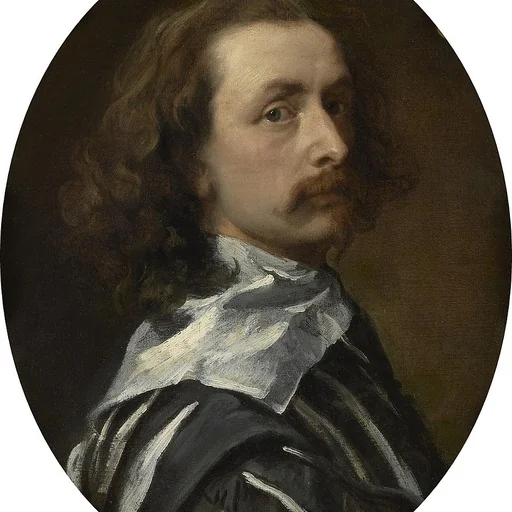
Sir Anthony van Dyck (; Dutch: Antoon van Dijck ; 22 March 1599 – 9 December 1641) was a Flemish Baroque artist, who became the leading court painter in England after success in the Spanish Netherlands and Italy.