Artwork
Portrait of Wolfgang Wilhelm, Count Palatine of Neuburg
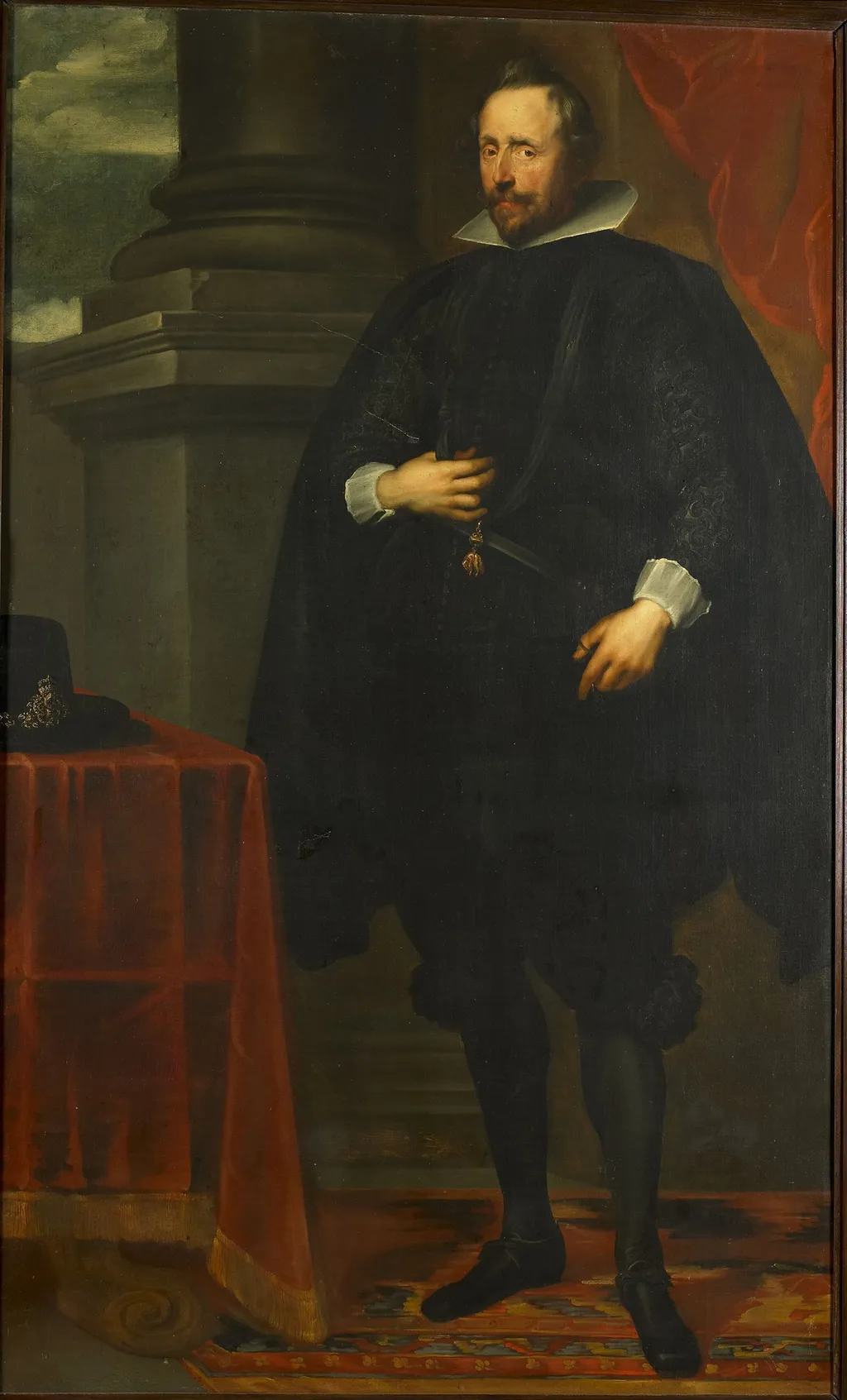
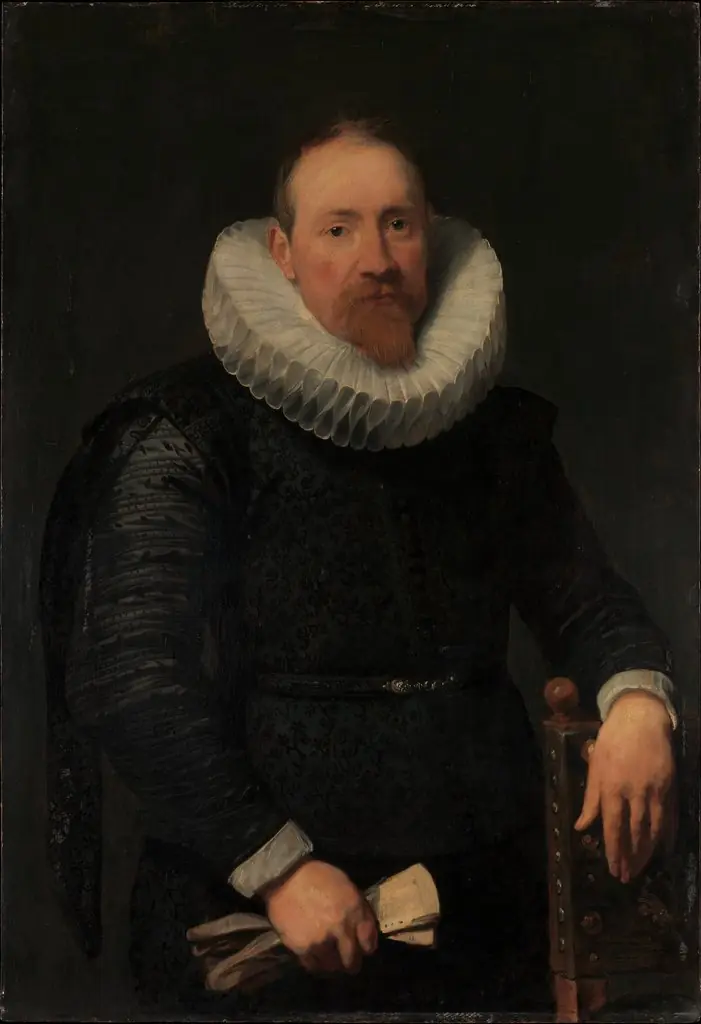
Portrait of Wolfgang Wilhelm, Count Palatine of Neuburg is an oil painting by the Flemish Baroque painting artist Anthony van Dyck. It dates from 1630 and is held in the collection of the Rijksmuseum.
About this work
Overview
Anthony van Dyck’s 1630 oil portrait depicts Wolfgang Wilhelm, Count Palatine of Neuburg, seated in a dimly lit interior. The composition centers the nobleman in a dark coat with a high collar, his hand holding a folded document. A red curtain and stone wall form a muted backdrop, while a patterned rug and a small table with a hat complete the setting.
Subject & Meaning
Wolfgang Wilhelm (1588‑1653) was a German prince who ruled the Palatinate of Neuburg. In the portrait he appears solemn, his short beard and mustache emphasizing his authority. The folded paper suggests official duties, while the restrained pose conveys the dignified bearing expected of a 17th‑century ruler.
Technique & Style
Van Dyck employs chiaroscuro to model the figure, allowing the light to accentuate the texture of the velvet coat and the gleam of the chain, while the surrounding space recedes into shadow. The brushwork is smooth in the facial features, contrasting with the more loosely rendered drapery, characteristic of the Flemish Baroque approach.
History & Provenance
Created during van Dyck’s early career, the painting entered the Rijksmuseum’s collection in the 20th century, where it remains on display. Its provenance traces back to the German princely archives before being acquired by Dutch collectors, reflecting the work’s movement across European noble circles.
Context
The portrait belongs to a period when van Dyck was establishing his reputation beyond Rubens’ workshop, producing courtly images for aristocratic patrons. It illustrates the cross‑regional ties between Flemish artists and German courts, highlighting the exchange of visual culture in the early Baroque era.
Artist & collection
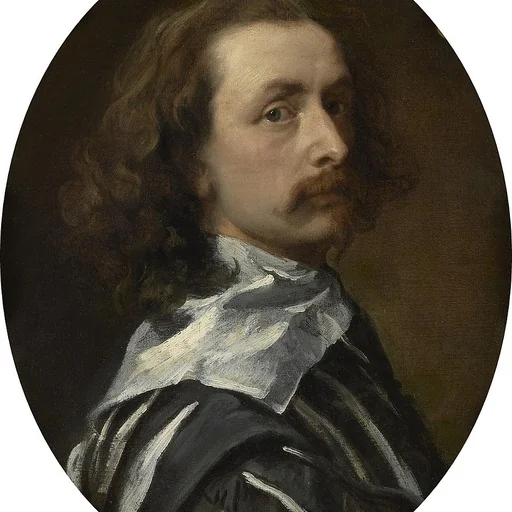
Artist
Sir Anthony van Dyck (; Dutch: Antoon van Dijck ; 22 March 1599 – 9 December 1641) was a Flemish Baroque artist, who became the leading court painter in England after success in the Spanish Netherlands and Italy.