Artwork
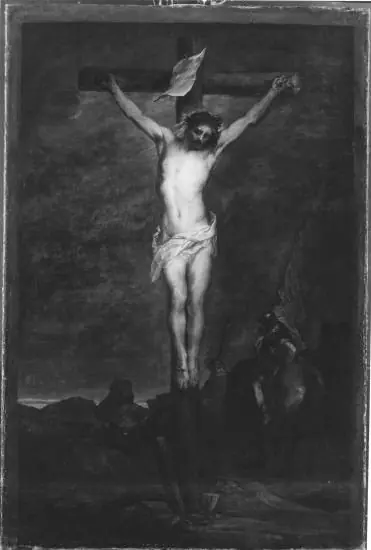
Christ on the Cross (after Van Dyck)
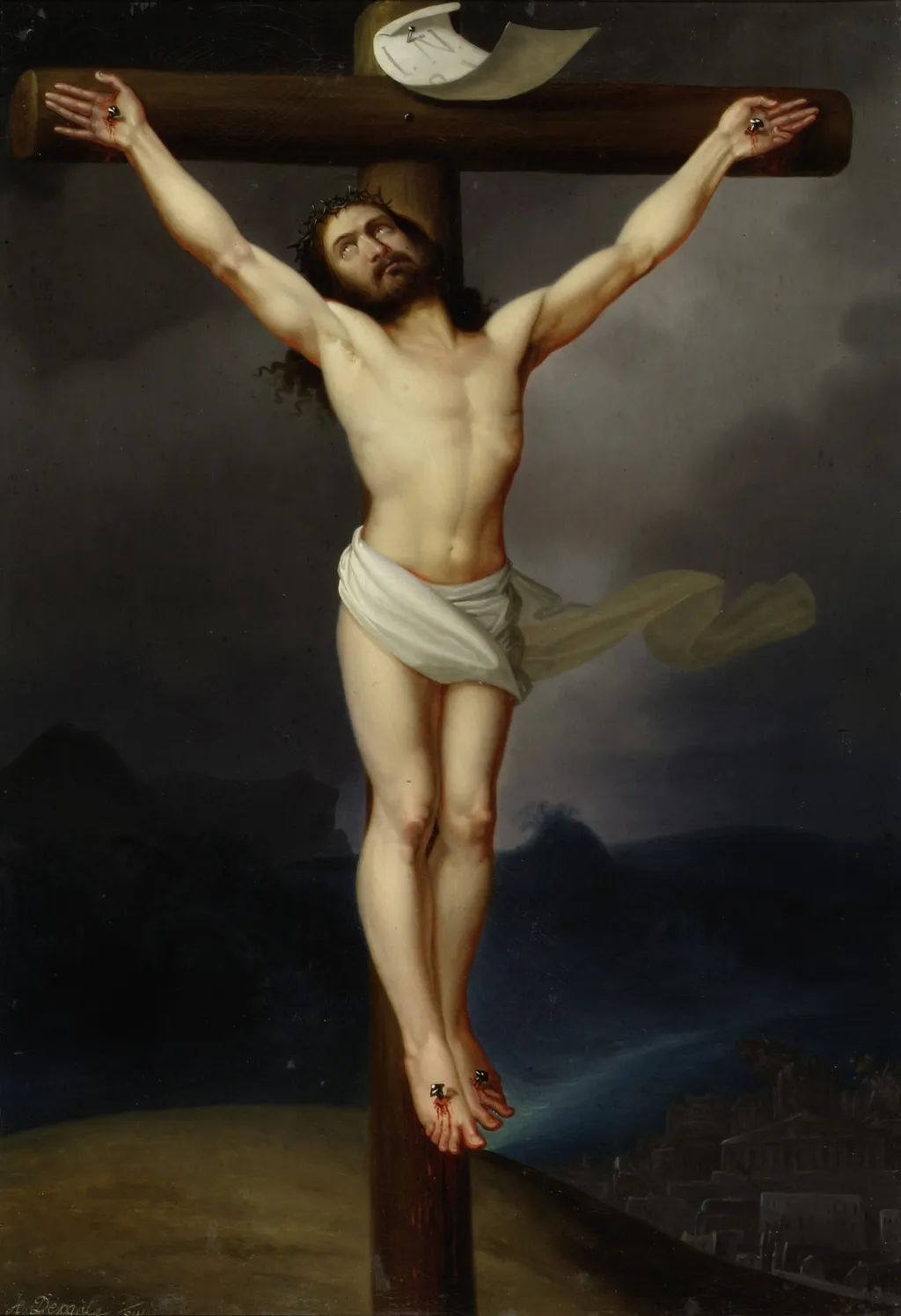
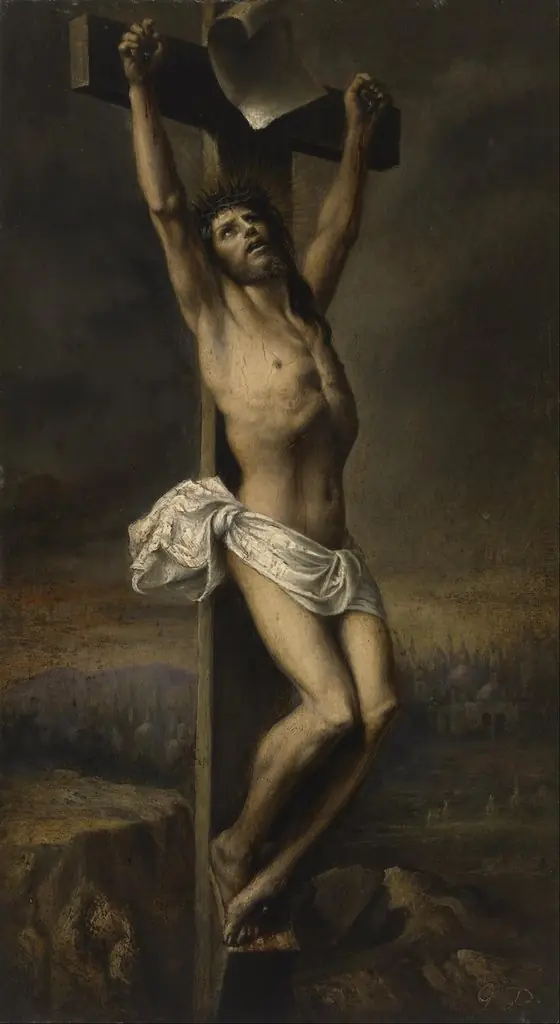
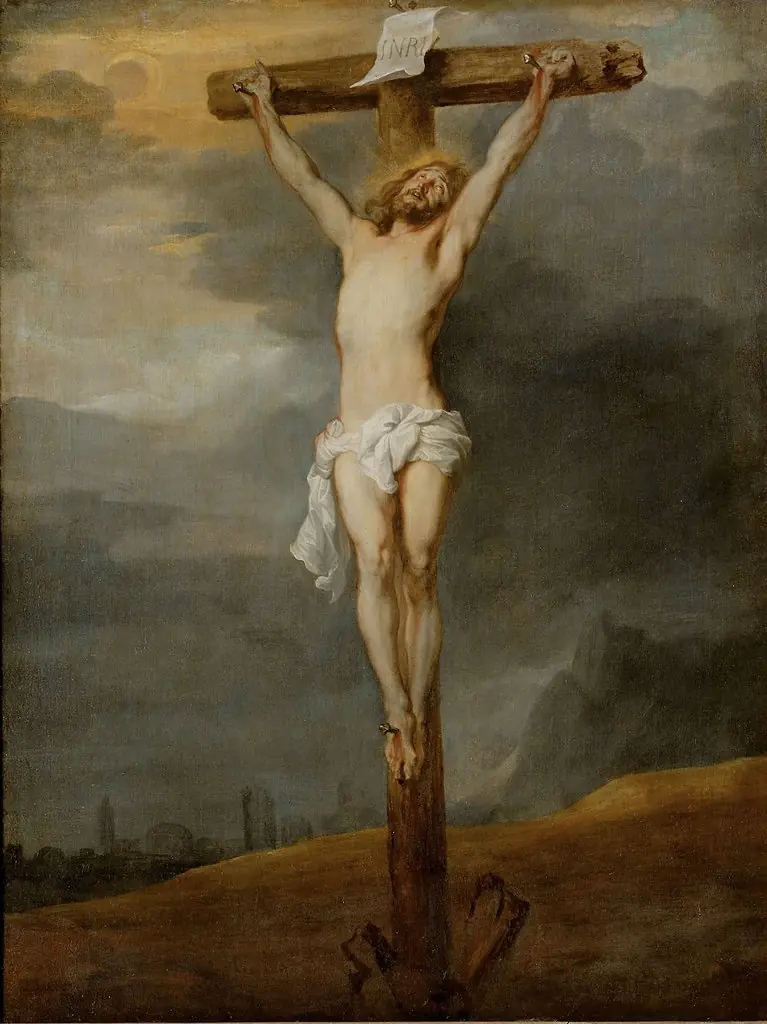
Christ on the Cross (after Van Dyck) is an oil painting by the Biedermeier artist Anton Depauly. It dates from 1841 and is held in the collection of the Belvedere.
About this work
Overview
Anton Depauly, a Bohemian painter active in the Austrian Empire, completed the oil painting *Christ on the Cross (after Van Dyck)* in 1841. Executed during the Biedermeier era, the work belongs to the religious genre and is part of the permanent collection of Vienna’s Kunsthistorisches Museum.
Subject & Meaning
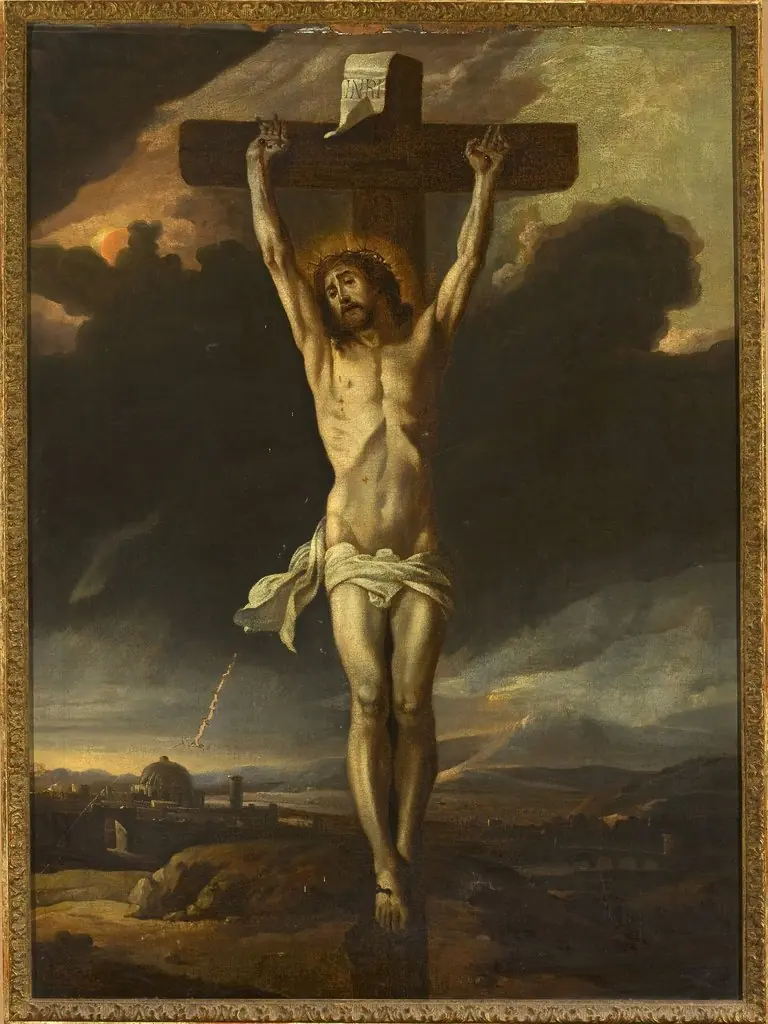
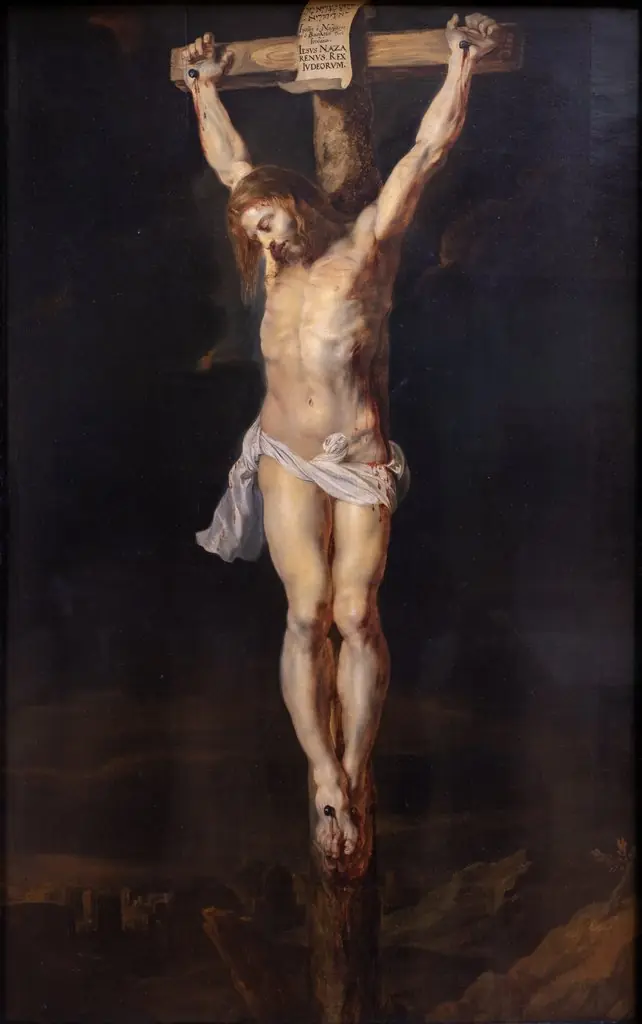
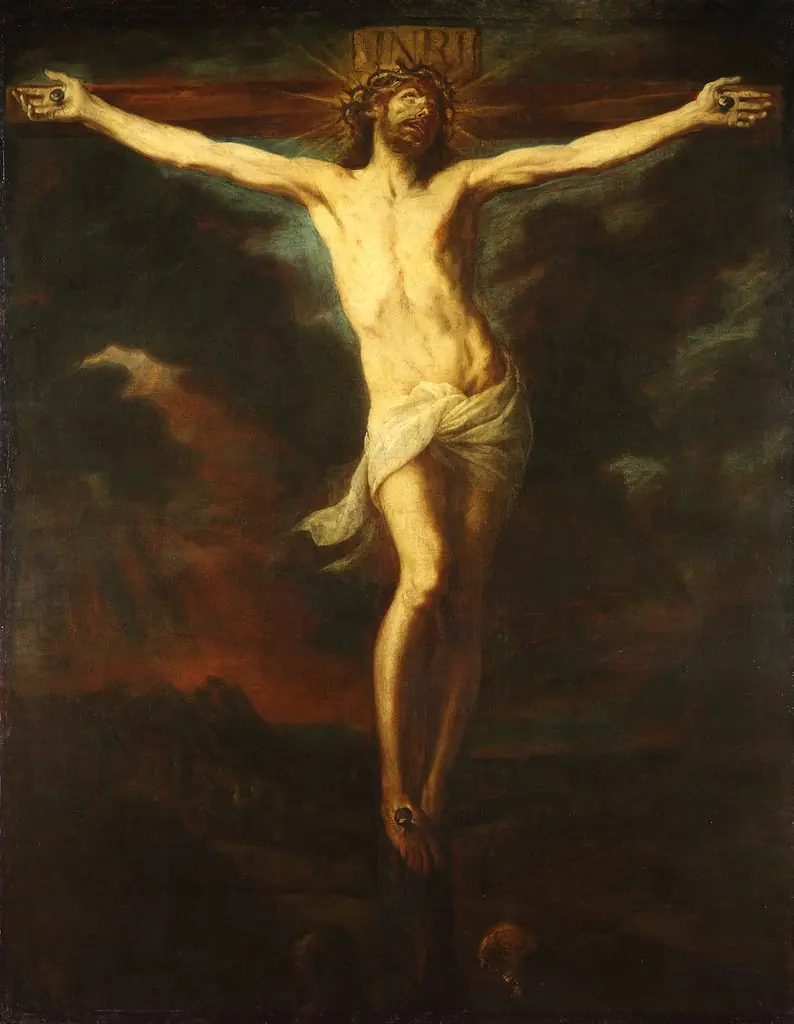
The canvas presents the crucified figure of Jesus, his arms outstretched and nailed to a wooden cross. A thin cloth drapes his waist, while his face conveys a mixture of fatigue and serene resignation. The subdued backdrop, punctuated by a faint city silhouette and a moon, reinforces the solemnity of the moment.
Technique & Style
Depauly employs a pronounced chiaroscuro, allowing deep shadows to carve the contours of the body and accentuate the gleam of the nails and the sheen of blood. The contrast between the illuminated figure and the dark background creates a palpable sense of weight and immediacy, characteristic of mid‑19th‑century religious painting.
History & Provenance
Created in 1841, the painting reflects Depauly’s engagement with historical and devotional subjects, a secondary focus to his portrait work. After its completion, the piece entered the holdings of the Kunsthistorisches Museum, where it remains on display as part of the museum’s representation of Biedermeier religious art.
Own this work as a print
Artist & collection
Artist
Anton Felix Depauly (30 April 1801 – 27 April 1866) was a Bohemian-born painter of the Austrian Empire, known primarily for his portraits and historical paintings.