Artwork
Seaweed Gatherer
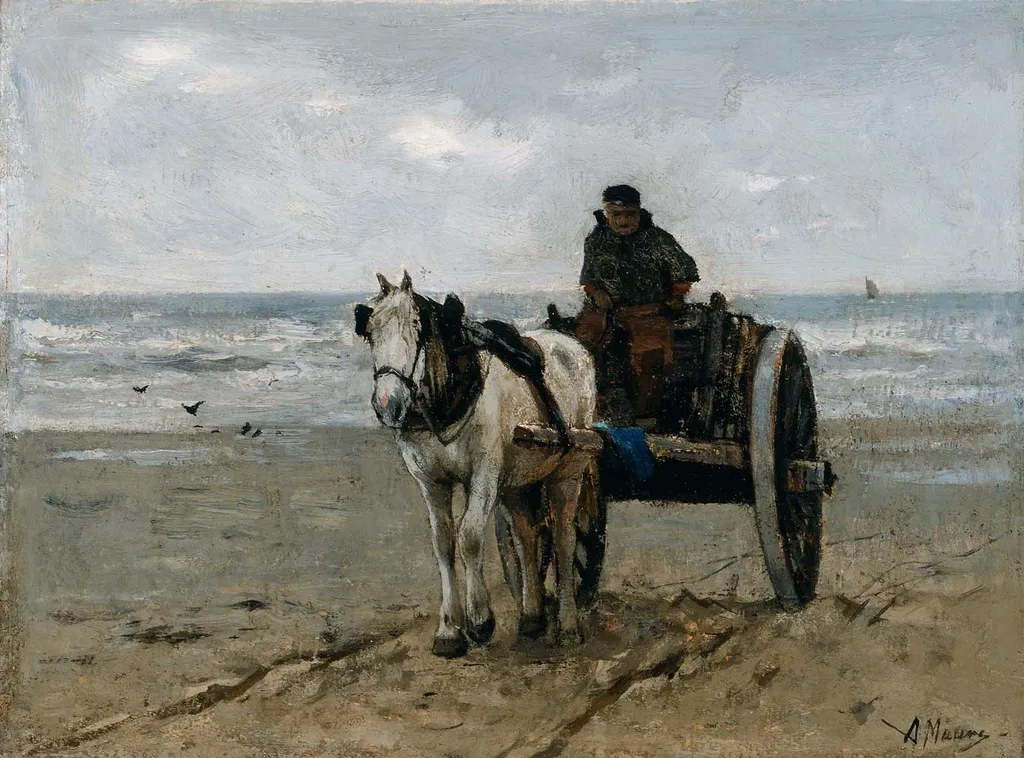
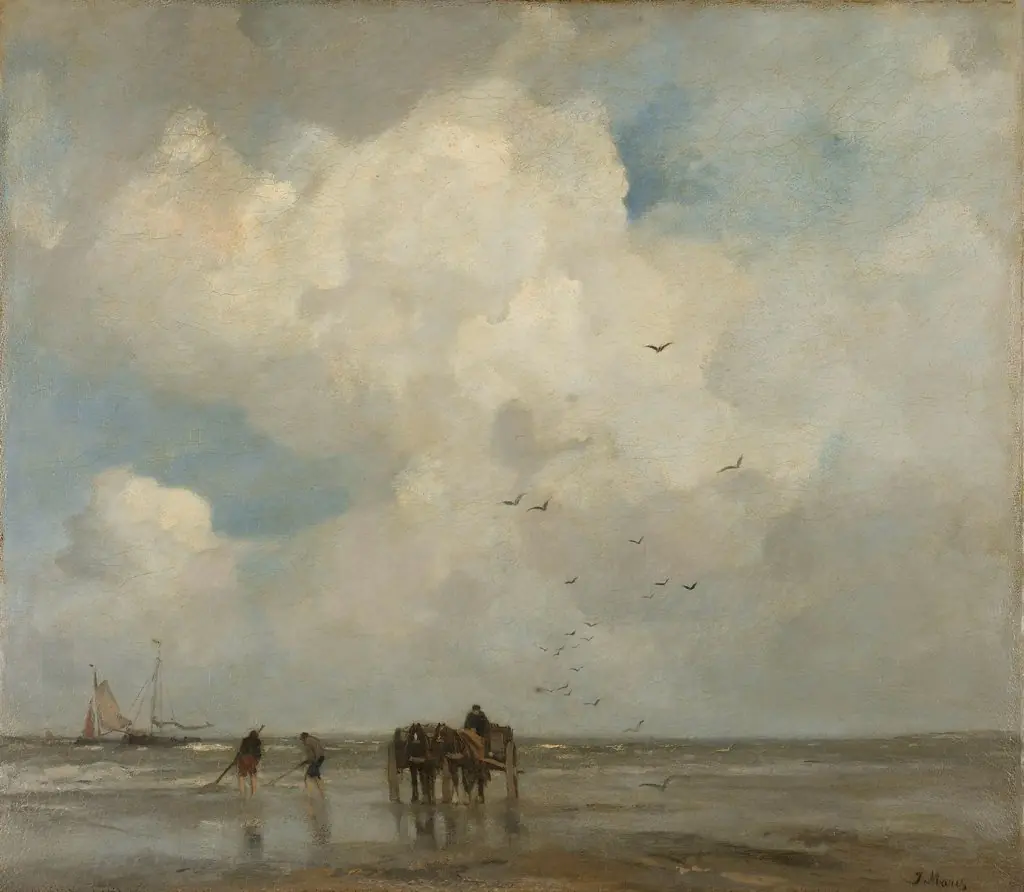
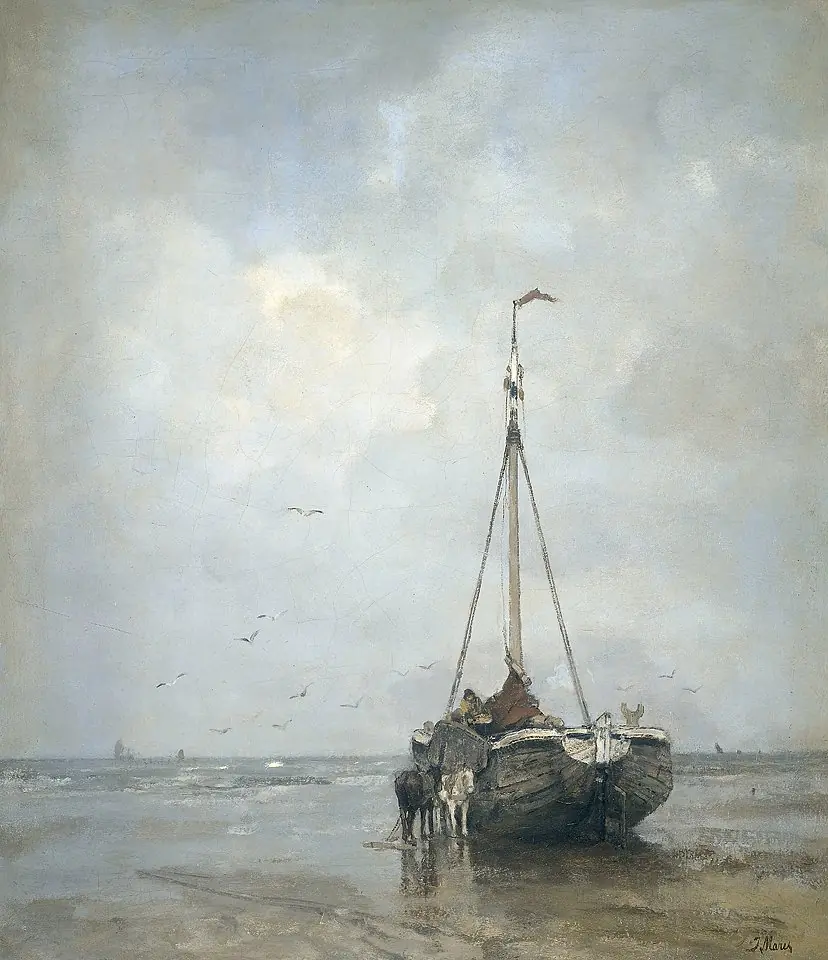
Seaweed Gatherer is an unspecified painting by the Hague School artist Anton Mauve. It dates from 1873 and is held in the collection of the Museum of Fine Arts Boston.
About this work
Overview
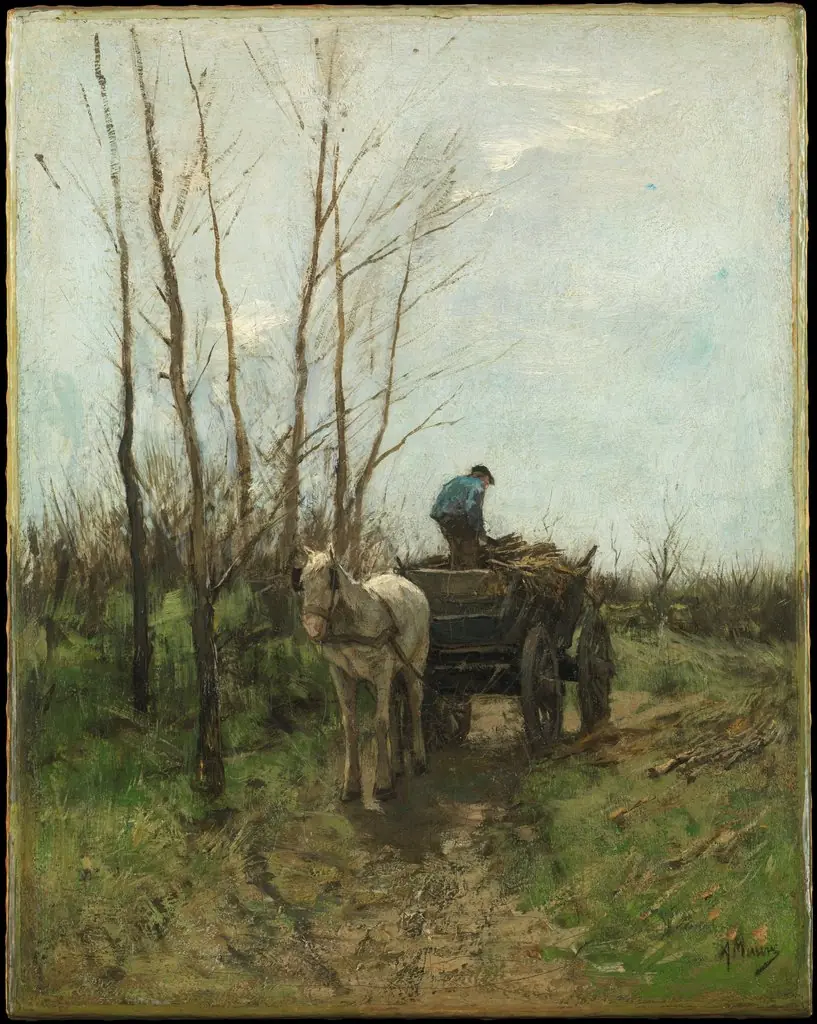
The scene presents a horse-drawn cart on a shoreline, its occupant at rest, surrounded by the subdued tones of sea and sky.
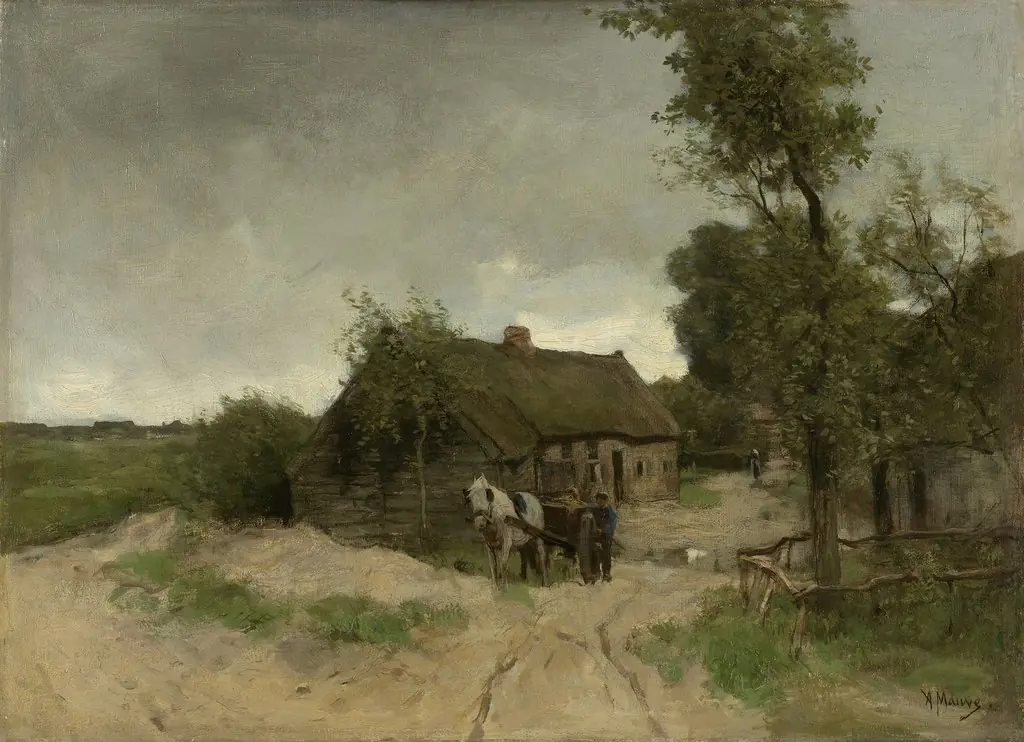
Anton Mauve painted *Seaweed Gatherer* circa 1873, capturing a quiet moment of coastal labor in the Netherlands. As a central figure in the Hague School, Mauve focused on rural life with restrained realism, avoiding idealization. The scene presents a horse-drawn cart on a shoreline, its occupant at rest, surrounded by the subdued tones of sea and sky. This work exemplifies his commitment to depicting ordinary people within their natural environment.
Subject & Meaning
The painting portrays a laborer seated atop a cart filled with harvested seaweed, a common practice along the Dutch coast for fertilizer and fuel. Rather than dramatizing hardship, Mauve presents the figure with dignity and stillness, integrating him into the landscape. The absence of overt struggle suggests a quiet endurance, reflecting the rhythm of coastal existence rather than its toil. The scene invites contemplation of daily life shaped by nature’s cycles.
Technique & Style
Mauve employed a muted palette of grays, blues, and earth tones to evoke the coastal atmosphere, with subtle variations in light suggesting early morning or late afternoon. His brushwork is deliberate yet fluid, blending soft edges between land, sea, and sky. The white horse and wooden cart are rendered with careful attention to texture and form, grounding the composition in tangible reality while preserving an overall sense of calm.
History & Provenance
Created during Mauve’s mature period, the painting emerged from his sustained engagement with rural subjects and the Hague School’s emphasis on truthful representation. Though less widely known today than his contemporaries, Mauve was respected in his time for his technical precision and sensitivity to light. The work remained within private collections in the Netherlands before entering public institutional holdings, preserving its connection to Dutch artistic traditions.
Context
In the 1870s, Dutch artists increasingly turned away from romanticized history painting toward scenes of everyday life. The Hague School, influenced by French Realism and Barbizon painters, sought to capture the mood of the countryside with atmospheric precision. Mauve’s focus on laborers and animals aligned with this movement, reflecting broader societal interest in the lives of working-class communities during industrialization.
Legacy
Mauve’s influence extended beyond his own oeuvre, notably shaping the early style of his cousin-in-law Vincent van Gogh, who admired his use of color and composition. While Mauve’s reputation faded in the 20th century amid rising modernism, his works remain valued for their quiet integrity and technical restraint. *Seaweed Gatherer* stands as a testament to a generation of artists who found significance in the unadorned rhythms of rural existence.
Artist & collection
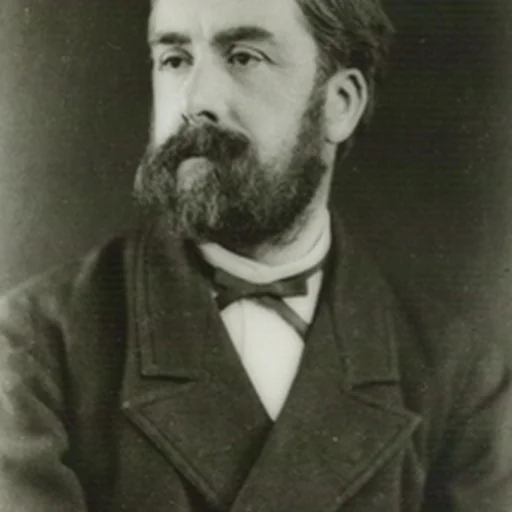
Artist
Anthonij "Anton" Rudolf Mauve (Dutch pronunciation: ; 18 September 1838 – 5 February 1888) was a Dutch realist painter who was a leading member of the Hague School.