Artwork
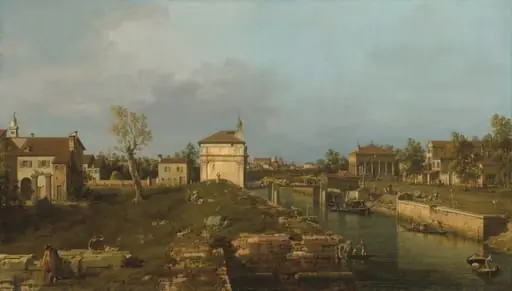
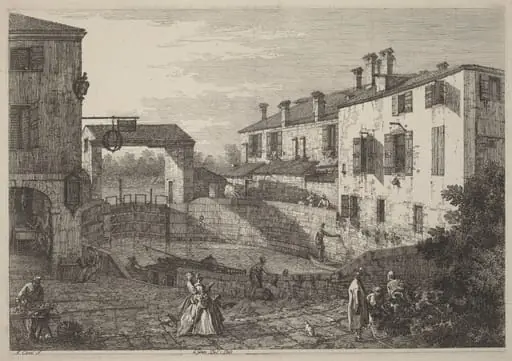
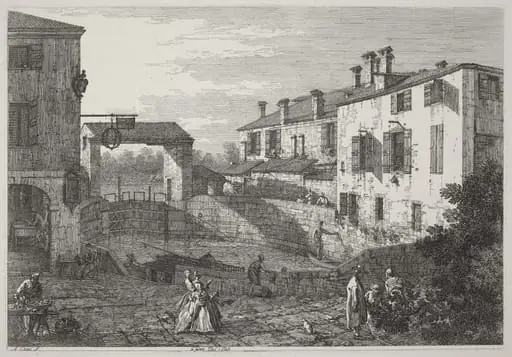
Views: The Canal Lock at Dolo
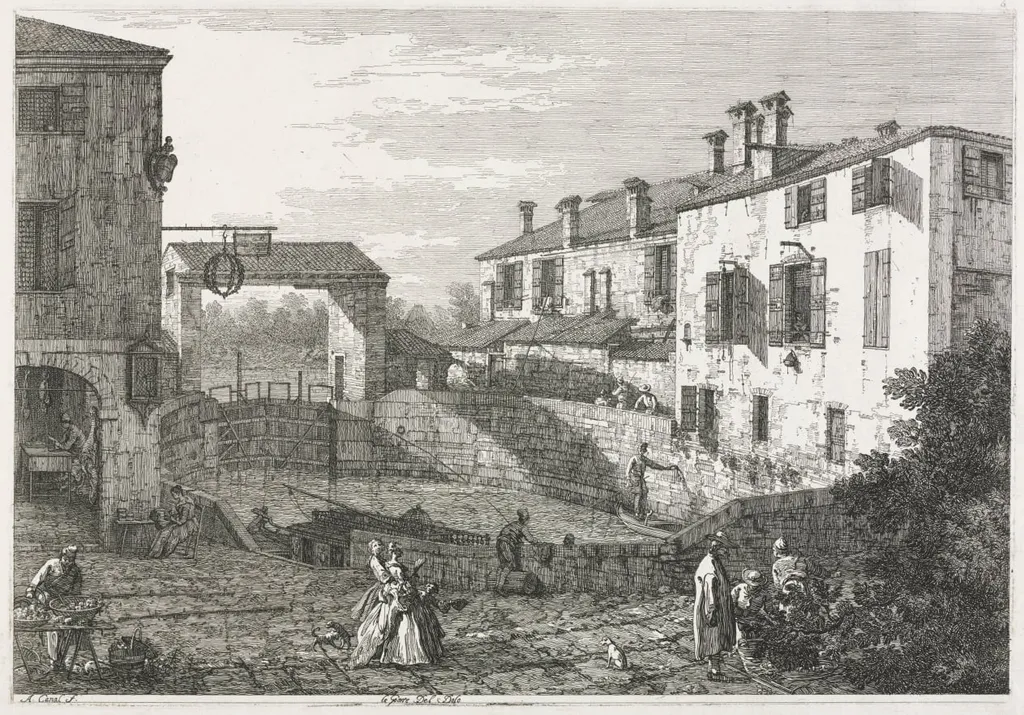
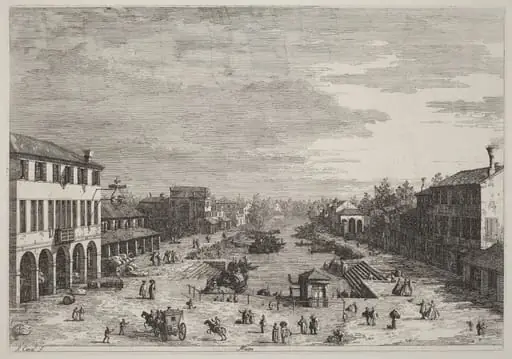
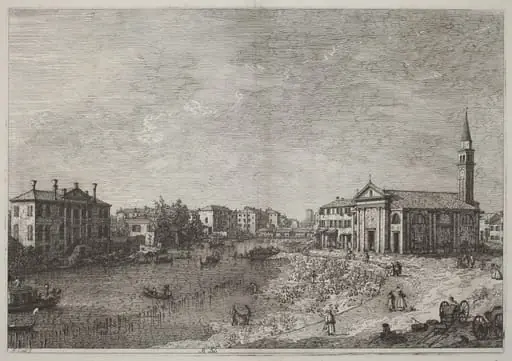
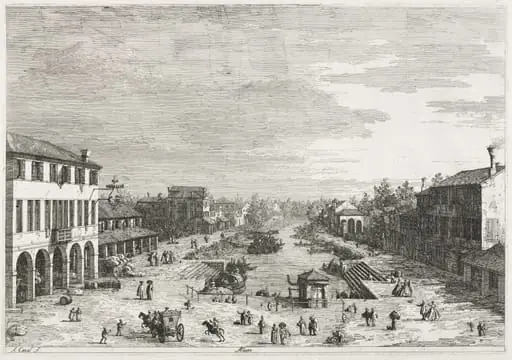
Views: The Canal Lock at Dolo is a print by the Baroque artist Canaletto. It dates from 1740 and is held in the collection of the Cleveland Museum of Art.
About this work
Overview
Antonio Canaletto created this etching as part of a small series depicting rural landscapes beyond Venice’s urban core.
Antonio Canaletto created this etching as part of a small series depicting rural landscapes beyond Venice’s urban core. Unlike his famed cityscapes, this work focuses on Dolo, a modest village along the Brenta River. The medium of etching allowed him to explore tonal subtleties and atmospheric effects distinct from his oil paintings, offering a quieter, more intimate view of Venetian life beyond the Grand Canal.
Subject & Meaning
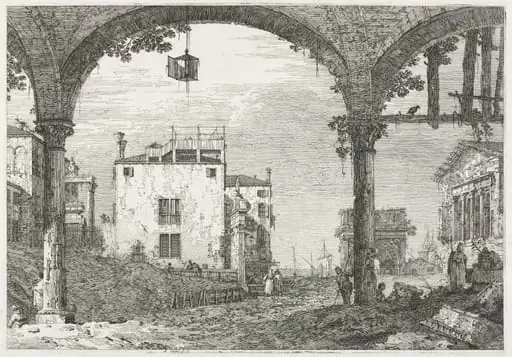
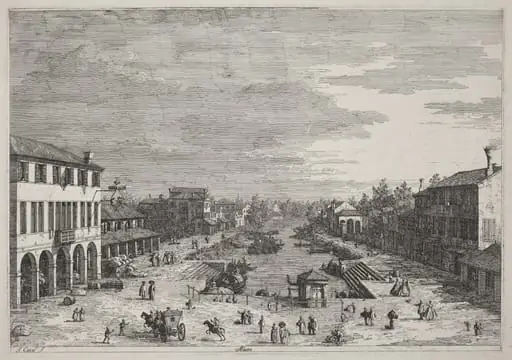
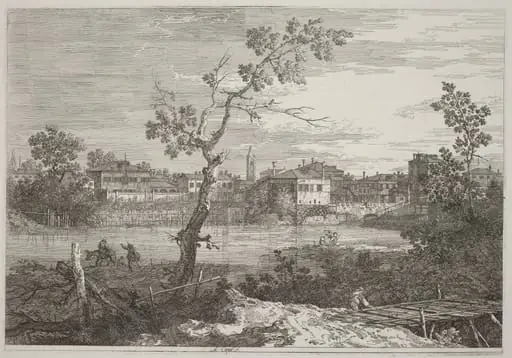
The scene captures a tranquil canal lock at Dolo, with modest boats, stone architecture, and figures engaged in daily tasks under a muted sky. By shifting focus from Venice’s grandeur to its surrounding countryside, Canaletto highlights the rhythm of regional life. The absence of spectacle invites contemplation of ordinary moments, suggesting a broader interest in the landscape’s quiet functionality rather than its tourist appeal.
Technique & Style
Canaletto employed etching to achieve fine gradations of light and shadow, emphasizing the reflective surfaces of water and the textured stone of the lock. His linework is precise yet fluid, capturing architectural detail without ornamentation. The tonal range, achieved through controlled ink density, enhances the sense of atmospheric depth, distinguishing this work from his more linear painted views.
History & Provenance
This print emerged from a series produced in the 1740s, likely intended for the growing market of British Grand Tour travelers. Etchings were more affordable and portable than paintings, making them ideal souvenirs. While the exact provenance of this impression is undocumented, its subject and technique align with other prints from the period marketed to northern European collectors seeking authentic regional imagery.
Context
During the mid-18th century, Venetian artists increasingly catered to foreign tourists seeking mementos of their travels. Canaletto, already renowned for his city views, expanded his repertoire to include surrounding villages, reflecting a broader curiosity about the Venetian mainland. This shift coincided with rising interest in pastoral and topographical subjects across Europe, aligning his work with contemporary tastes in landscape documentation.
Legacy
Canaletto’s rural etchings, though less celebrated than his urban scenes, demonstrate his adaptability as a printmaker and his keen observation of everyday environments. These works expanded the scope of Venetian topographical art beyond the city’s iconic landmarks, influencing later artists who sought to capture the quiet character of regional Italy. The series remains a valuable record of 18th-century rural life near Venice.
Artist & collection
Artist
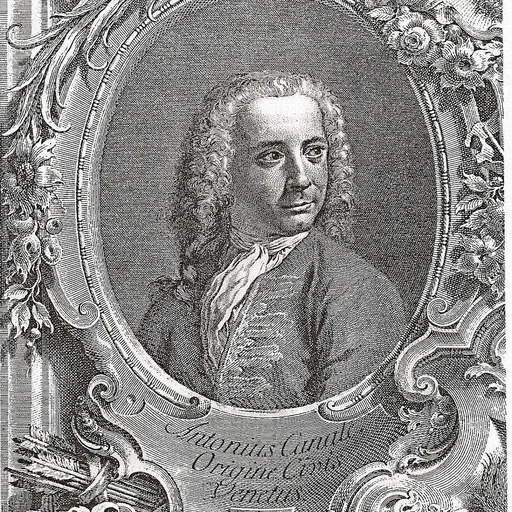
Giovanni Antonio Canal (18 October 1697 – 19 April 1768), commonly known as Canaletto (Italian: ), was an Italian painter from the Republic of Venice, considered an important member of the 18th-century Venetian school.