Artwork
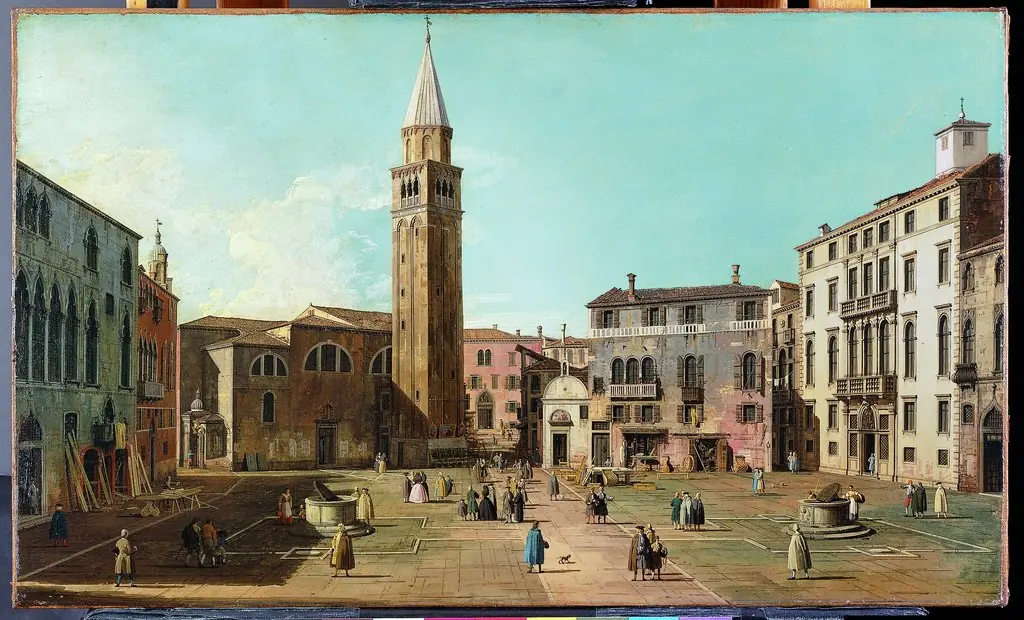
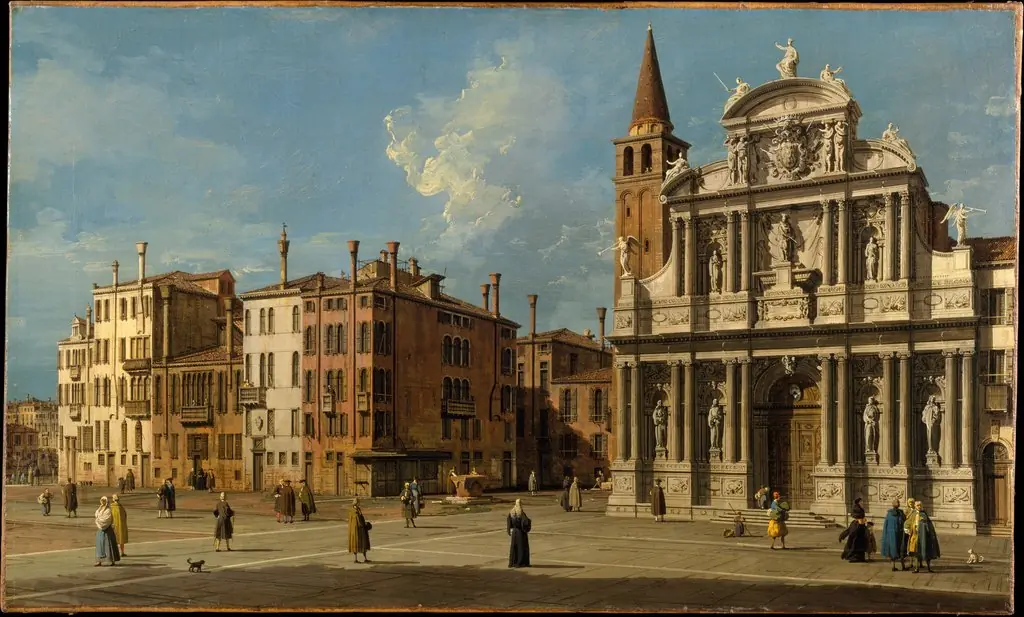
Views: The Procurator's Palace and the Church of St. Géminien, Venice
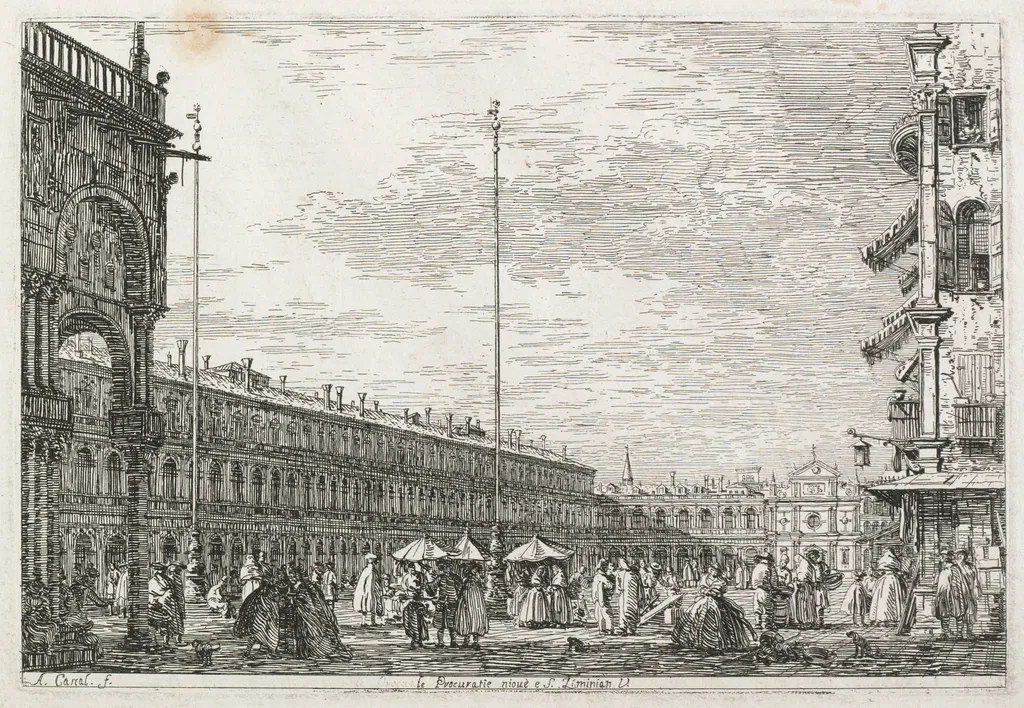
Views: The Procurator's Palace and the Church of St. Géminien, Venice is a print by the Baroque artist Canaletto. It dates from 1740 and is held in the collection of the Cleveland Museum of Art.
About this work
This painting is titled Views: The Procurator's Palace and the Church of St. Géminien, Venice.
It was created by Antonio Canaletto between 1735 and 1746.
The painting is an example of architectural art and is part of the Baroque movement.
It is held at The Cleveland Museum of Art.
To learn more about this style, look up the movement: Baroque.
Overview
Canaletto’s work bridges painting and printmaking, reflecting his role in popularizing detailed urban imagery for international audiences.
Created between 1735 and 1746, this print by Antonio Canaletto presents a precise depiction of two prominent structures in Venice: the Procurator’s Palace and the Church of St. Géminien. Executed in etching, it belongs to a series of topographical views that document the city’s architectural landscape. Canaletto’s work bridges painting and printmaking, reflecting his role in popularizing detailed urban imagery for international audiences.
Subject & Meaning
The scene centers on the Procurator’s Palace, a symbol of civic authority, and the adjacent Church of St. Géminien, both situated along the Piazza San Marco. These buildings were integral to Venice’s political and religious life. Canaletto’s focus on their form and spatial relationship emphasizes order and continuity, offering a quiet celebration of the city’s enduring structure rather than its ceremonial events.
Technique & Style
Canaletto employed etching to achieve fine linear clarity and tonal gradation, capturing the textures of stone, water, and sky with precision. His compositions follow a strict perspective, guiding the viewer’s eye along receding architectural planes. The style is rooted in the Venetian veduta tradition, prioritizing accuracy over dramatic effect, though the lighting and atmosphere retain a subtle Baroque sensibility.
History & Provenance
The print was produced during Canaletto’s most active period in Venice, before his later years in England. It was likely made for collectors interested in accurate representations of the city, a growing market among Grand Tour travelers. The work now resides in The Cleveland Museum of Art, having entered its collection through documented acquisitions in the 20th century.
Context
In mid-18th century Venice, vedute prints served both as souvenirs and as records of urban identity. Canaletto’s output responded to demand from foreign patrons seeking authentic depictions of the city’s architecture. His work stood apart from idealized landscapes, instead offering measured, observational renderings that aligned with Enlightenment values of documentation and clarity.
Legacy
Canaletto’s etchings influenced later topographical artists and contributed to the standardization of urban representation in print. His method of combining architectural fidelity with atmospheric detail became a model for documenting cities. While his paintings are more widely known, his prints ensured wider dissemination of his vision, shaping how Venice was perceived beyond its borders.
Artist & collection
Artist
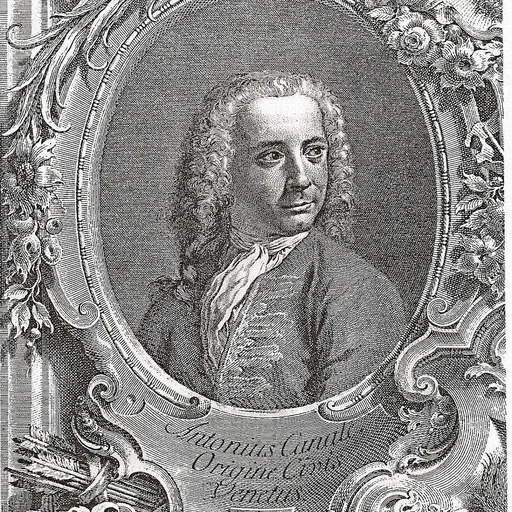
Giovanni Antonio Canal (18 October 1697 – 19 April 1768), commonly known as Canaletto (Italian: ), was an Italian painter from the Republic of Venice, considered an important member of the 18th-century Venetian school.

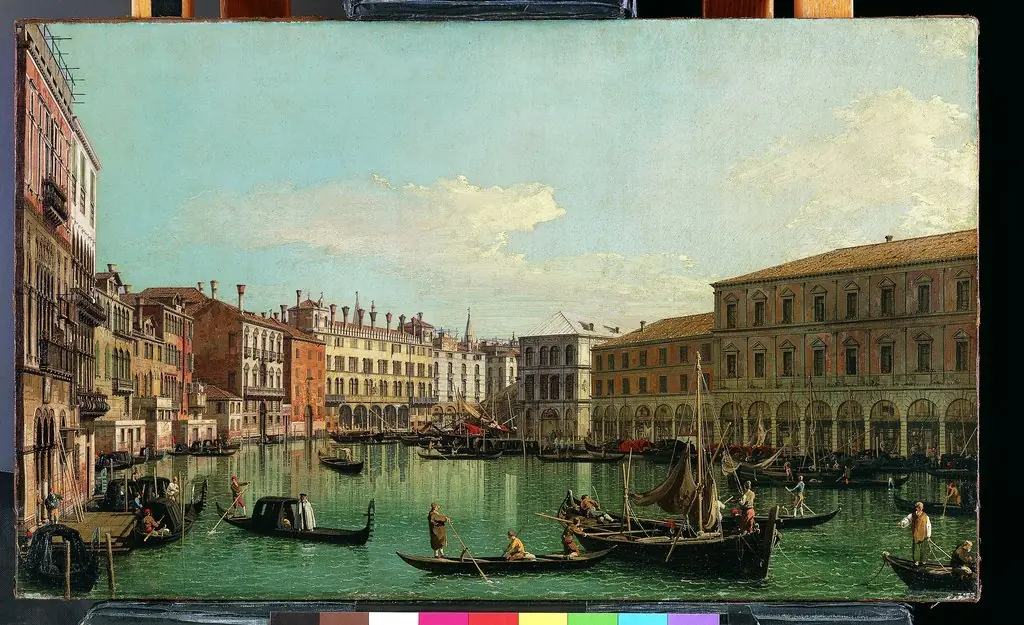
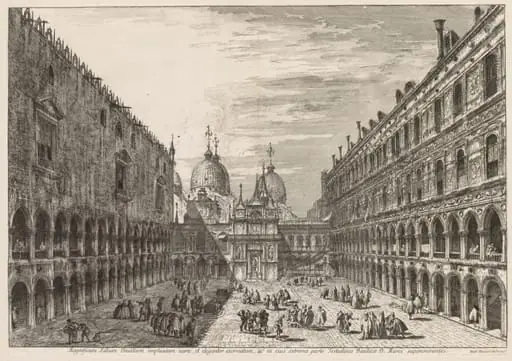 Views of Venice: The Courtyard of the Ducal Palace
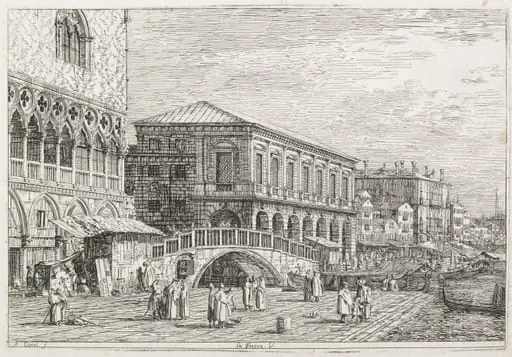 Views: The Prison, Venice
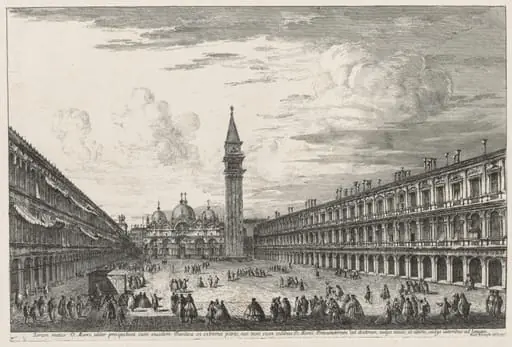 Views of Venice: Piazzo S. Marco
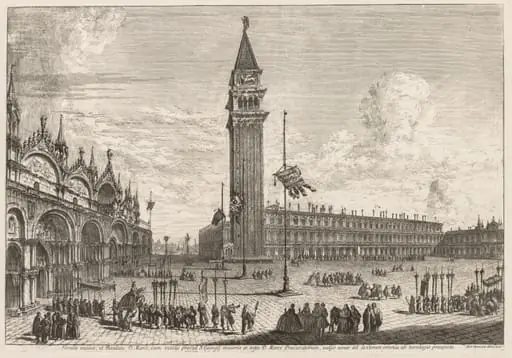 Views of Venice: Piazza and Piazzetta
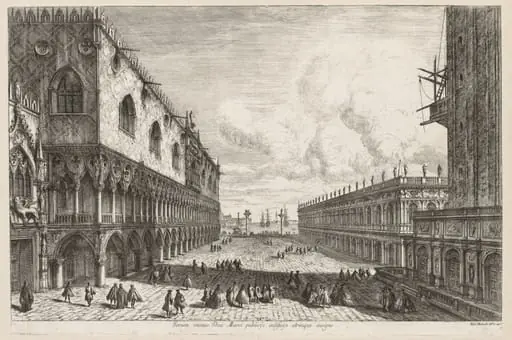 Views of Venice: The Piazzetta
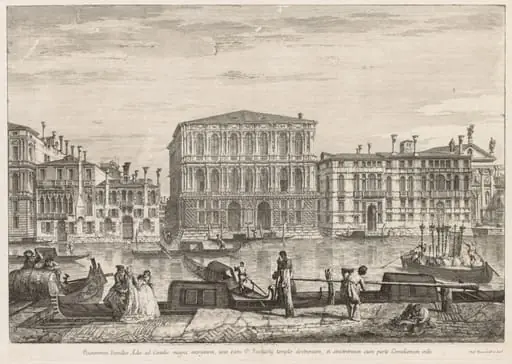 Views of Venice: Palazzo Pesaro
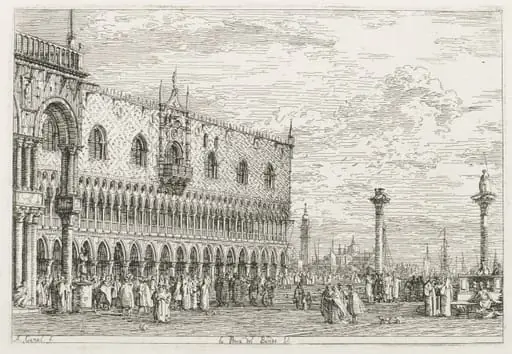 Views: The Stone of Proclamation at Venice
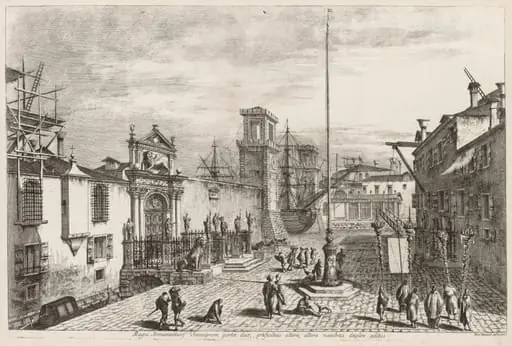 Views of Venice: The Gates of the Arsenal
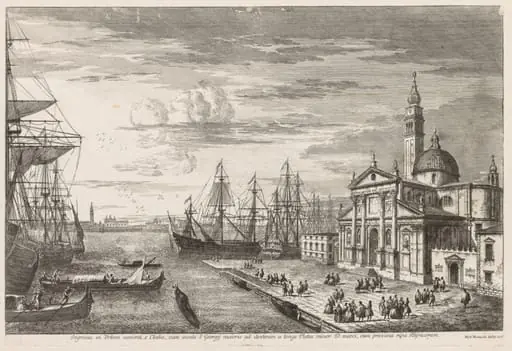 Views of Venice: The Basin of St. Mark's