Artwork
Jupiter and Io
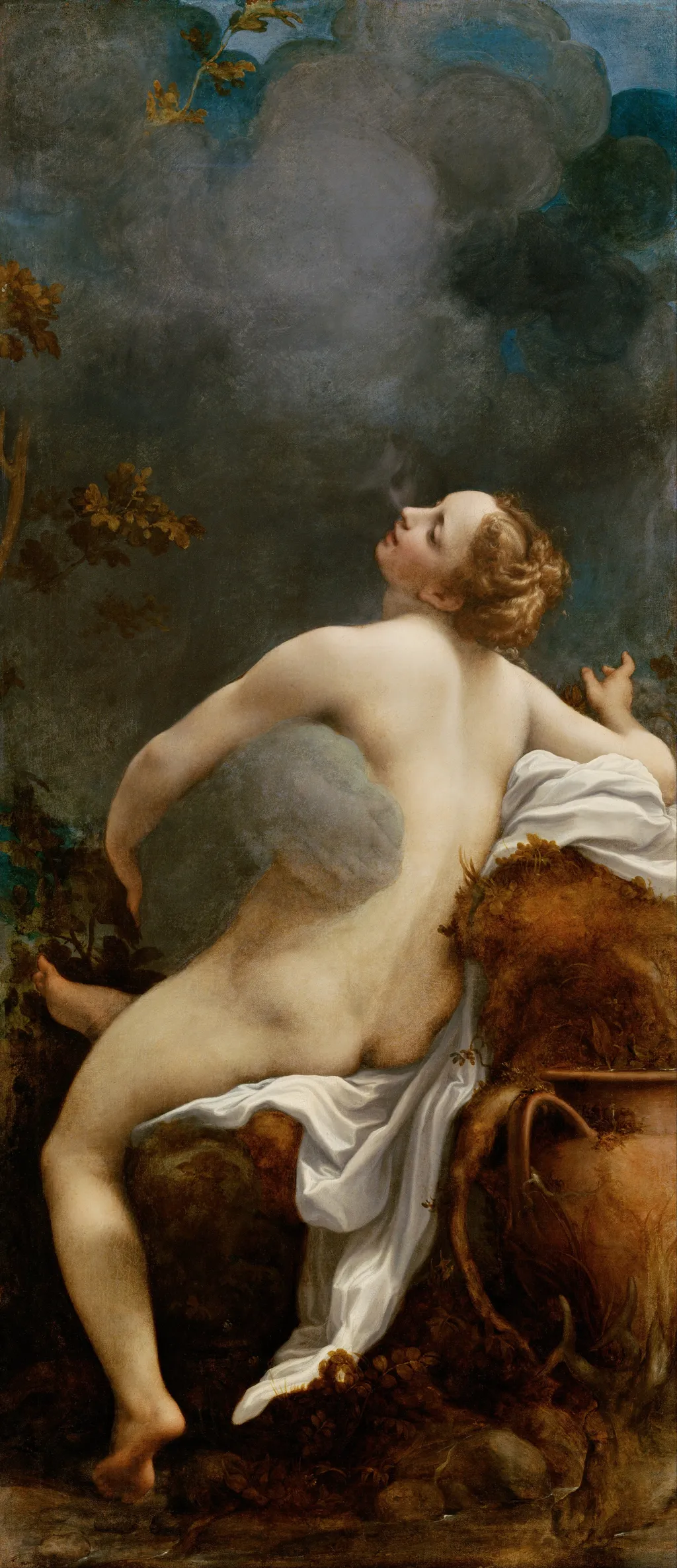
Jupiter and Io is an oil painting by the Mannerist artist Correggio. It dates from 1530 and is held in the collection of the Kunsthistorisches Museum.
About this work
Overview
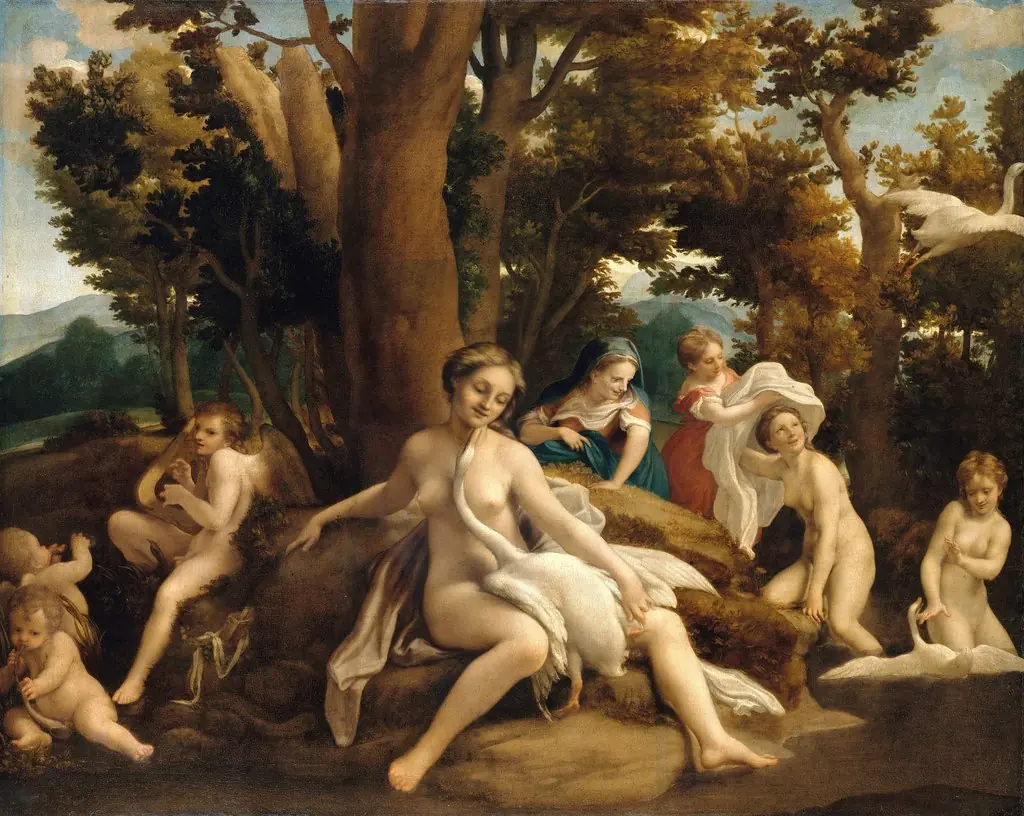
Created circa 1530 by the Italian painter Antonio da Correggio, this oil on canvas depicts a solitary female figure reclining on a rocky ledge. The work is part of the collection of the Kunsthistorisches Museum in Vienna, where it has been on display for many decades. Its composition balances a luminous figure against a dark, atmospheric background, drawing the viewer’s eye to the central form.
Subject & Meaning
The reclining woman is identified as Io, a figure from classical mythology who was pursued by the god Jupiter. Her pose, with a raised arm and a contemplative tilt of the head, suggests a moment of introspection or surrender. The inclusion of a partially buried golden urn adds a symbolic element, hinting at themes of love, transformation, and divine intervention.
Technique & Style
Correggio employs a pronounced chiaroscuro, allowing the skin tones to appear as if illuminated from within while the surrounding rocks recede into shadow.
Correggio employs a pronounced chiaroscuro, allowing the skin tones to appear as if illuminated from within while the surrounding rocks recede into shadow. The soft gradations of light create a three‑dimensional effect, and the delicate rendering of the draped white cloth demonstrates the artist’s skill in depicting texture. The overall palette is restrained, emphasizing the contrast between flesh and darkness.
History & Provenance
After its completion in the early 16th century, the painting entered several private collections before being acquired by the Habsburgs in the 18th century. It was transferred to the Kunsthistorisches Museum in Vienna, where it remains part of the museum’s Renaissance holdings. Documentation traces its ownership through inventories and sale records, confirming its continuous presence in European collections.
Context
Correggio’s work belongs to the High Renaissance period, a time when artists explored dynamic compositions and emotional expression within mythological subjects. The painting reflects contemporary interest in classical narratives and the use of dramatic lighting to convey psychological depth. It aligns with other works of the era that blend sensuality with allegorical content, illustrating the period’s artistic priorities.
Own this work as a print
Artist & collection

Artist
Antonio Allegri da Correggio (August 1489 – 5 March 1534), usually known as just Correggio (, also UK: , US: , Italian: ), was an Italian Renaissance painter who was the foremost painter of the Parma school of the High…