Artwork
Holland House, Kensington
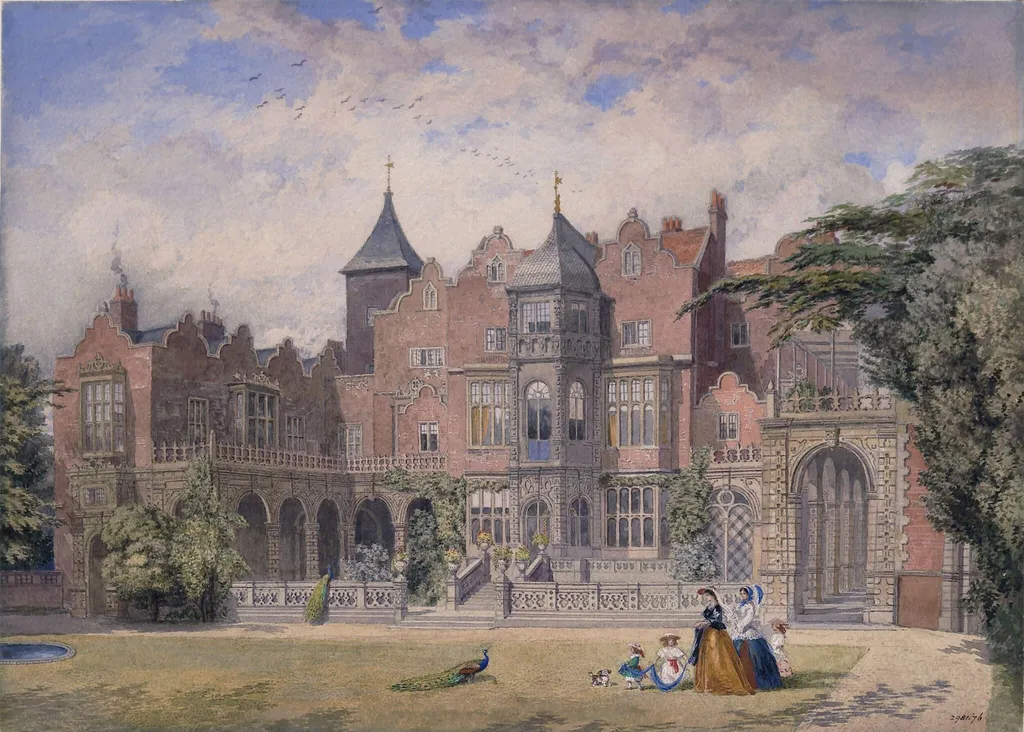
Holland House, Kensington is a watercolor work on paper by the British Romanticist artist John Wykeham Archer. It dates from 1825 and is held in the collection of the Victoria and Albert Museum.
About this work
Overview
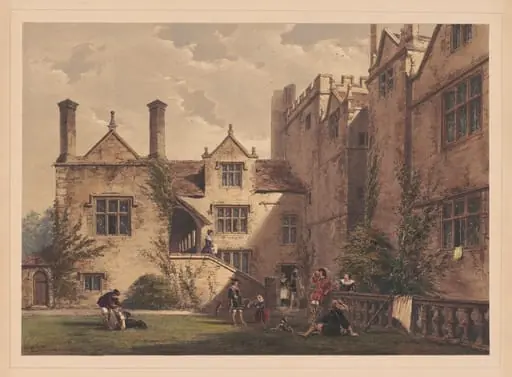
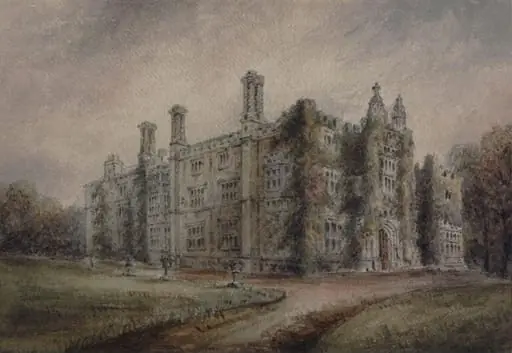
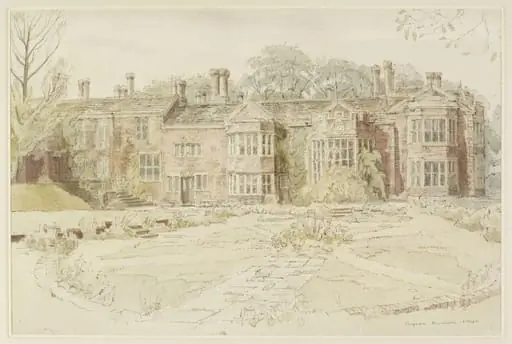
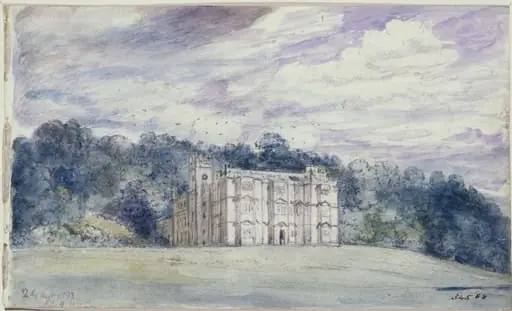
John Wykeham Archer’s watercolour portrays Holland House, a substantial red‑brick mansion in Kensington, set within a landscaped lawn framed by mature trees. The composition includes the house’s prominent tower, numerous windows, and ornamental arches, while a family and a peacock occupy the foreground, suggesting a leisurely outdoor scene.
Subject & Meaning
The work captures a moment of genteel leisure, juxtaposing the architectural grandeur of Holland House with the informal presence of a family in period attire and a peacock, a traditional symbol of opulence. The inclusion of the bird and the relaxed posture of the figures convey a sense of cultivated enjoyment of the estate’s surroundings.
Technique & Style
Executed in watercolour, Archer employs transparent washes to render the red brick and foliage, allowing delicate tonal variations that convey light across the building’s surfaces. Fine linear detail defines the arches and balconies, while broader brushstrokes suggest the texture of the lawn and the plumage of the peacock, reflecting a Romantic interest in atmosphere and natural setting.
History & Provenance
The painting is attributed to John Wykeham Archer, an English watercolourist active in the early nineteenth century. It records Holland House before its demolition in the mid‑1800s, providing a visual record of the estate’s appearance during that period. The work’s ownership history remains limited to museum documentation.
Artist & collection
Artist
John Wykeham Archer made watercolour views of London landmarks in the early 1800s.