Artwork
Liebespaar auf einem Hügel
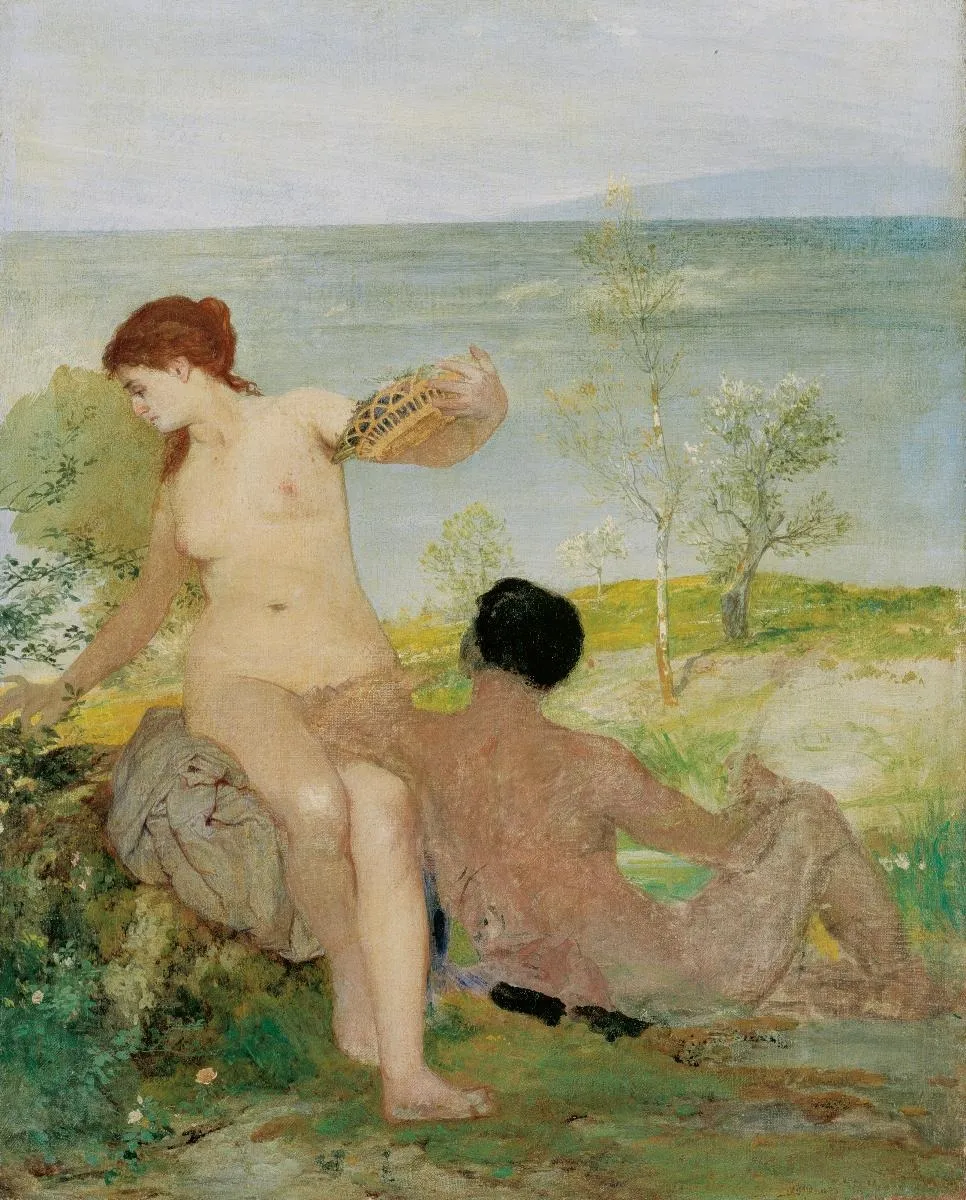
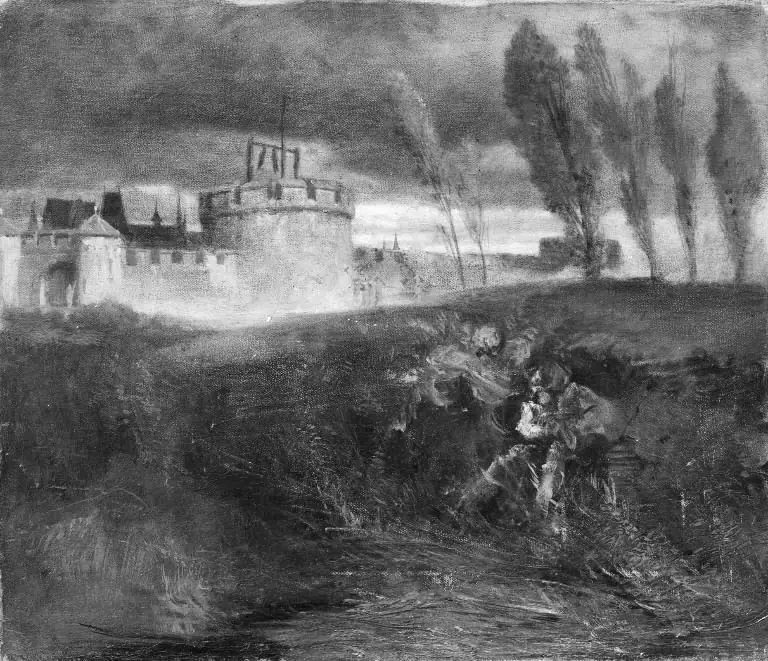
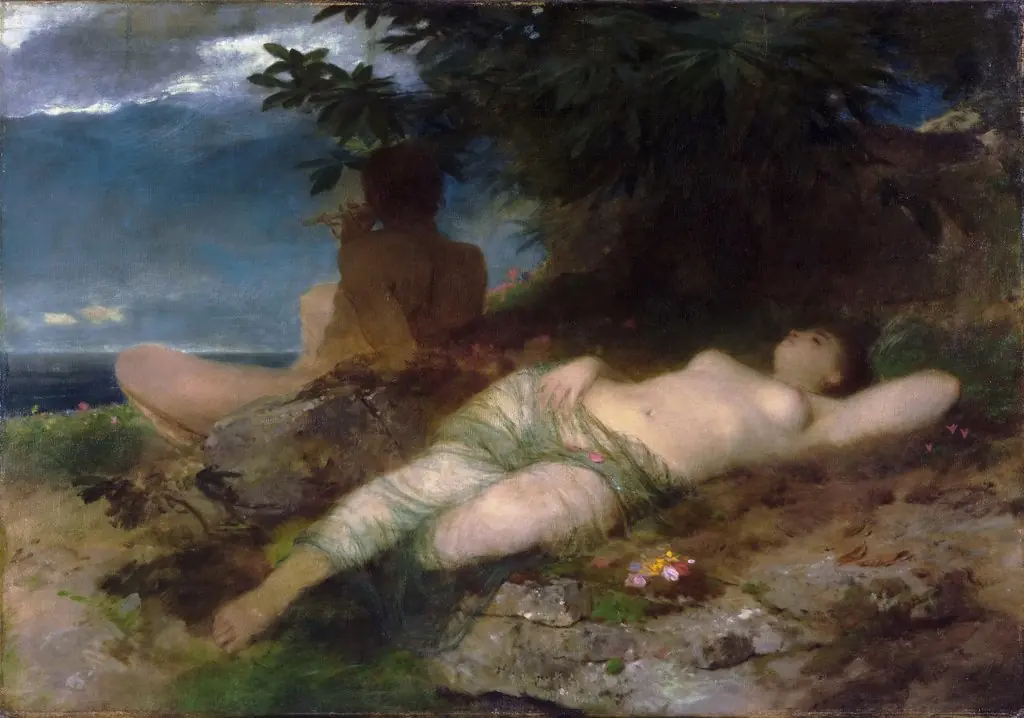
Liebespaar auf einem Hügel is a tempera painting by the German Romanticist artist Arnold Böcklin. It dates from 1863 and is held in the collection of the Kunsthaus Zürich.
About this work
Overview
Arnold Böcklin painted this tempera work in 1863, capturing a quiet moment between two figures in a natural landscape. The piece is part of the collection at Kunsthaus Zürich. Unlike his later mythological scenes, this work emphasizes stillness and personal connection rather than dramatic narrative. Its small scale and delicate medium reflect an intimate, contemplative approach to subject matter.
Subject & Meaning
Neither figure is identified by name or mythological reference, allowing the scene to function as a universal representation of solitude and shared presence.
Two figures, a woman and a man, sit together on a gentle hillside, their postures suggesting quiet companionship. The woman holds a basket, while the man faces away, his attention directed outward. Neither figure is identified by name or mythological reference, allowing the scene to function as a universal representation of solitude and shared presence. The lack of overt symbolism invites interpretation grounded in mood rather than story.
Technique & Style
Böcklin used tempera on a support, favoring its matte finish and precise brushwork to render subtle textures. The figures are softly modeled, with minimal detail in their clothing, emphasizing form over ornament. The landscape is rendered with loose, atmospheric strokes, blending the sky, water, and distant hills into a unified tonal field. The palette is restrained—soft greens, pale blues, and earth tones—enhancing the painting’s tranquil tone.
History & Provenance
The painting was completed in 1863 during Böcklin’s early career, before his rise to prominence with mythological themes. It entered the Kunsthaus Zürich collection in the 20th century, though its earlier ownership history is not widely documented. Its preservation in a public institution has ensured continued access, though it has received less scholarly attention than his larger, more dramatic works.
Context
Created during a period when Böcklin was exploring Romantic ideals and nature-based themes, this work aligns with broader 19th-century European interests in introspective landscapes and human solitude. It predates his engagement with classical mythology and reflects a more personal, lyrical phase. The painting resonates with contemporaneous trends in German and Swiss art that valued emotional restraint and natural harmony.
Legacy
Though not among Böcklin’s most widely recognized works, this painting offers insight into his artistic development and sensitivity to quiet human moments. It stands as a counterpoint to his later, more symbolic compositions, illustrating his capacity for understated expression. Its presence in a major Swiss museum ensures its role as a reference point for understanding the breadth of his early practice.
Artist & collection
Artist
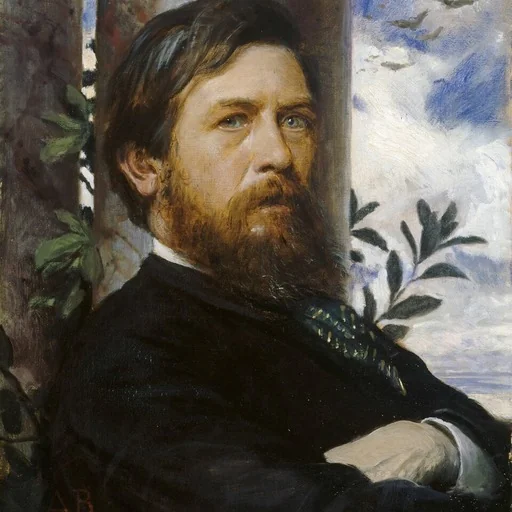
Arnold Böcklin was a Swiss Symbolist painter. His five versions of the Isle of the Dead inspired works by several late Romantic composers.