Artwork
Near Weymouth
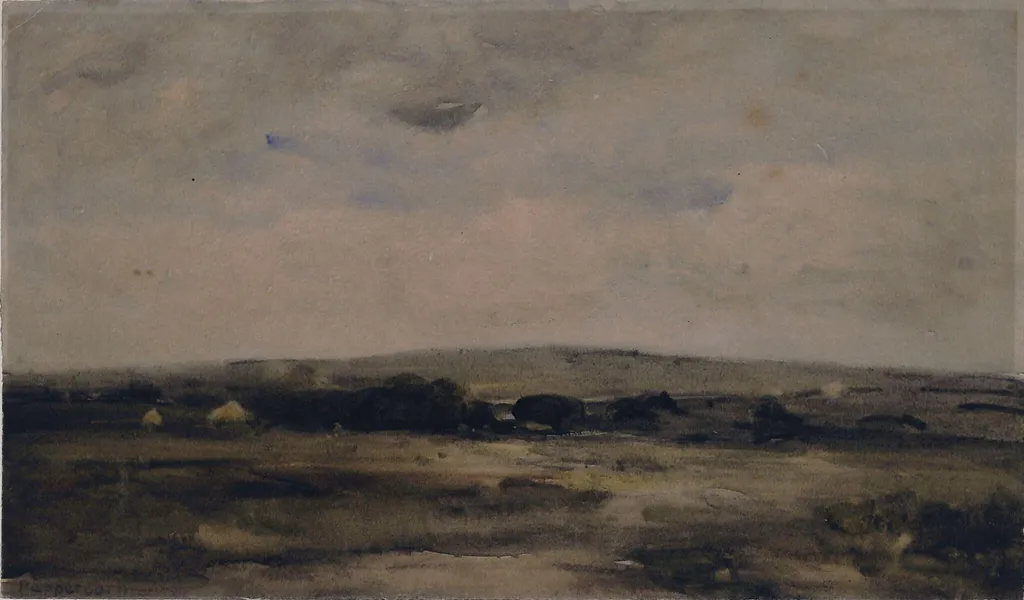
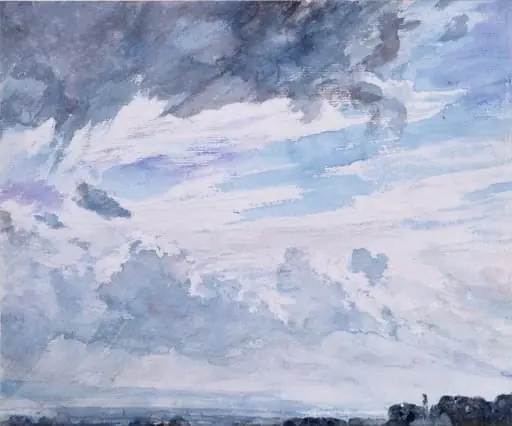
Near Weymouth is a watercolor work on paper by the Impressionist artist Peppercorn. It dates from 1870 and is held in the collection of the Victoria and Albert Museum.
About this work
Overview
Created in 1870, *Near Weymouth* is a watercolour by Arthur Douglas Peppercorn, signed by the artist. The work captures a quiet, open stretch of coastal terrain with minimal detail and subdued tones. Its delicate washes and loose application suggest a momentary impression rather than a polished depiction, aligning it with emerging tendencies in landscape representation of the period.
Subject & Meaning
The absence of narrative or dramatic focus invites contemplation of atmosphere over event, reflecting a quiet reverence for the ordinary landscape.
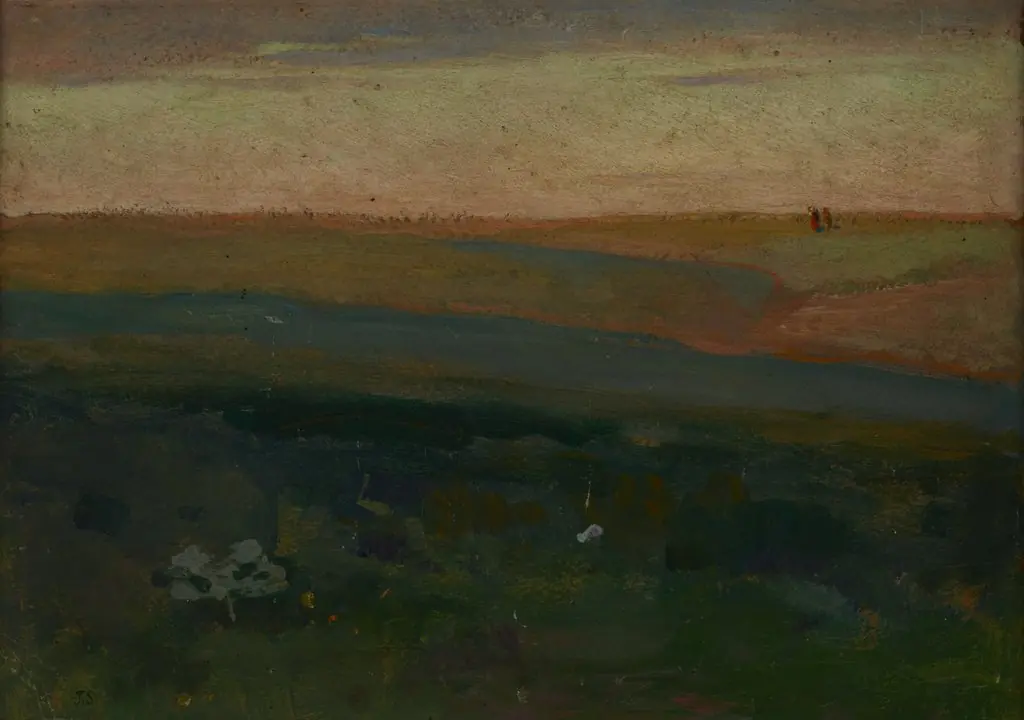
The scene depicts a barren, windswept stretch of land near Weymouth, with sparse vegetation, scattered stones, and an unbroken horizon. There is no human presence or architectural element, emphasizing solitude and the quiet persistence of natural forms. The absence of narrative or dramatic focus invites contemplation of atmosphere over event, reflecting a quiet reverence for the ordinary landscape.
Technique & Style
Peppercorn employed transparent watercolour washes with minimal detail, allowing the paper’s texture to contribute to the effect. Brushstrokes are fluid and unrefined, blending hues of pale gray, brown, and blue to suggest sky and earth without definition. The lack of sharp contours and the soft transitions between tones create a sense of atmospheric haze, prioritizing mood over precision.
History & Provenance
The work was completed in 1870 and bears the artist’s signature, confirming its origin. While specific ownership history is not documented, its survival suggests it was retained within private collections or institutional holdings. Its modest scale and medium indicate it was likely intended as a personal study or small-scale exhibition piece rather than a commercial commission.
Context
In the late 19th century, British watercolourists increasingly turned to landscapes as subjects worthy of serious attention, moving beyond topographical accuracy toward emotional resonance. Peppercorn’s approach aligns with this shift, echoing contemporaries who valued tonal harmony and atmospheric effect. Though not formally part of the Impressionist movement, his work shares affinities with its emphasis on light and transient conditions.
Legacy
Though not widely exhibited or reproduced, *Near Weymouth* exemplifies a quiet strand of British watercolour practice that valued restraint and observation over spectacle. It remains a representative example of how artists of the period used the medium’s inherent transparency to evoke mood, influencing later generations interested in lyrical, non-narrative landscape expression.
Own this work as a print
Artist & collection

Artist
Black pepper is a flowering vine in the family Piperaceae, cultivated for its fruit, which is usually dried and used as a spice and seasoning.

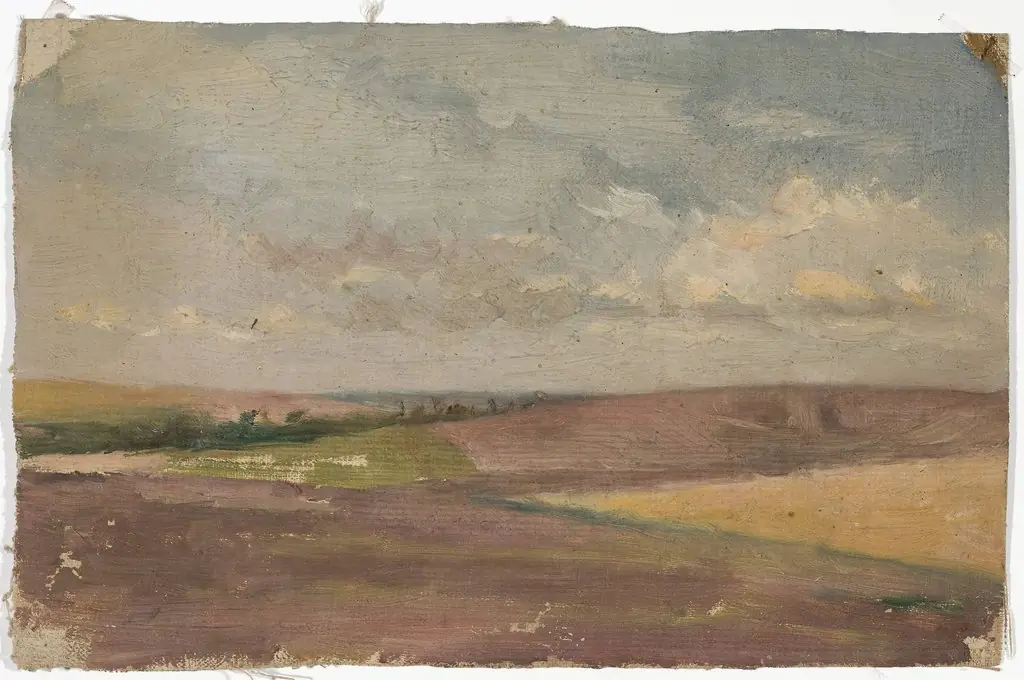 Polish landscape
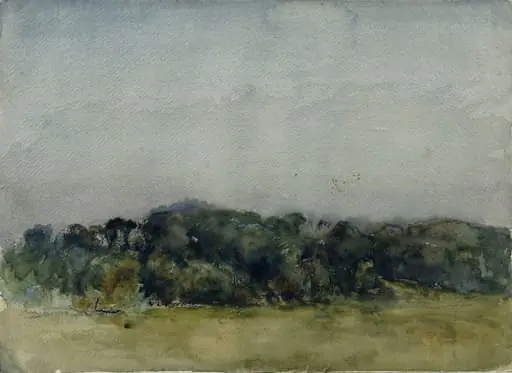 Landscape with bank of trees
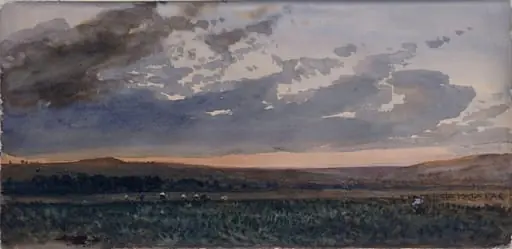 Landscape with rustics working: evening effect
 Green Steppe in the Ukraine
 View over hilly country, with a stormy sky
 Hills near Loch Awe : Twilight
 Sheep on the Moor
 A view of downland country
 Landscape
 Hampstead Heath
 The Campagna, Rome, after sunset
 Study of clouds above a wide landscape