Artwork
Up Channel: Taeping and Ariel
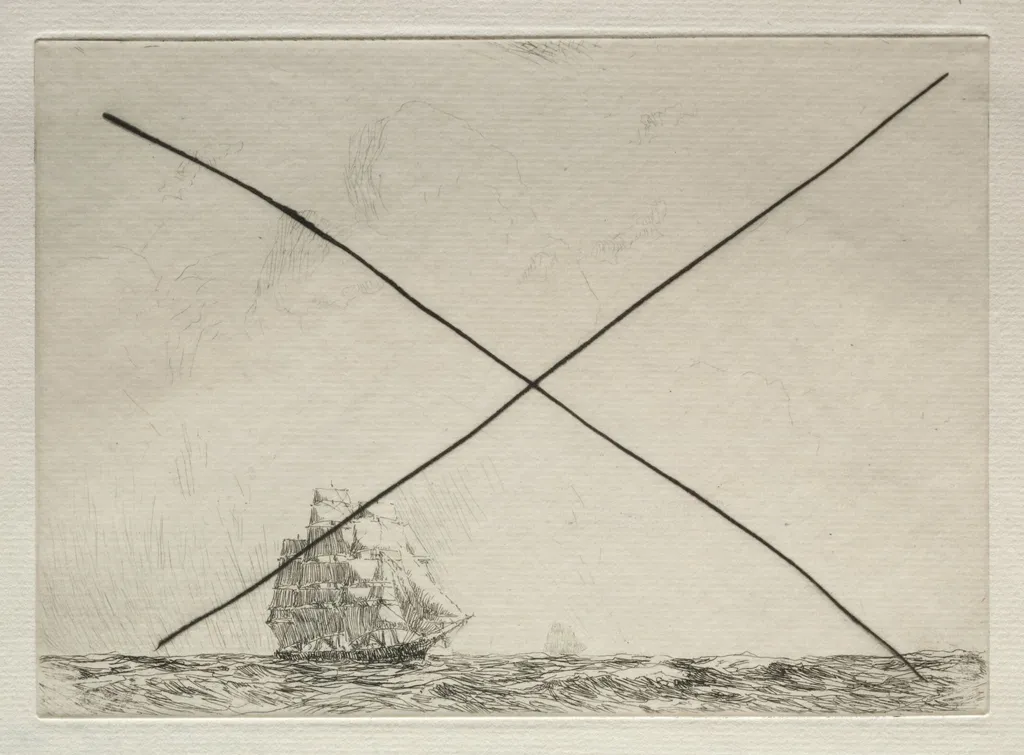
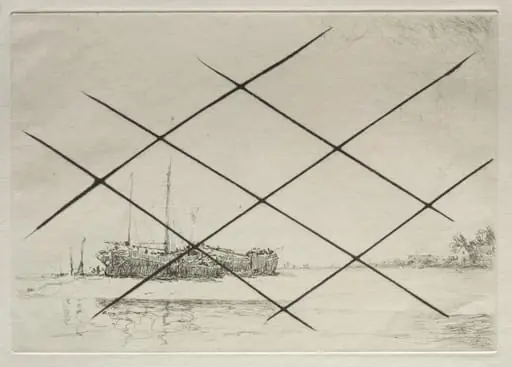
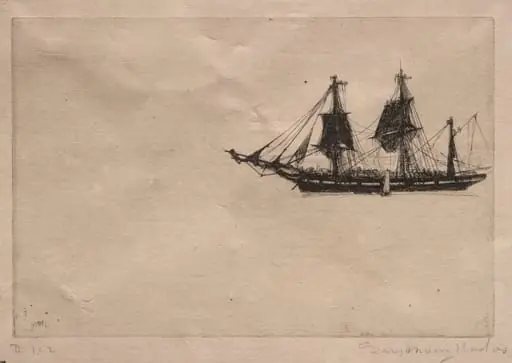
Up Channel: Taeping and Ariel is a print by Arthur John Trevor Briscoe. It dates from 1918 and is held in the collection of the Cleveland Museum of Art.
About this work
Overview
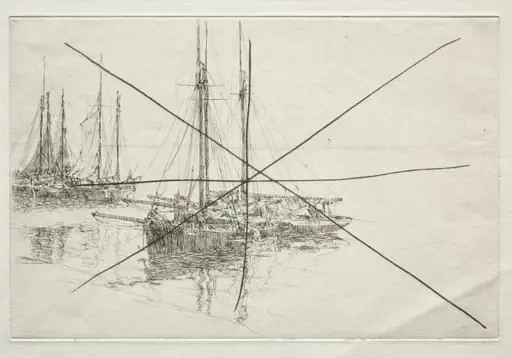
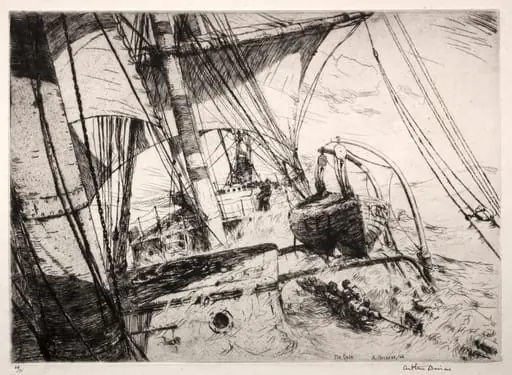
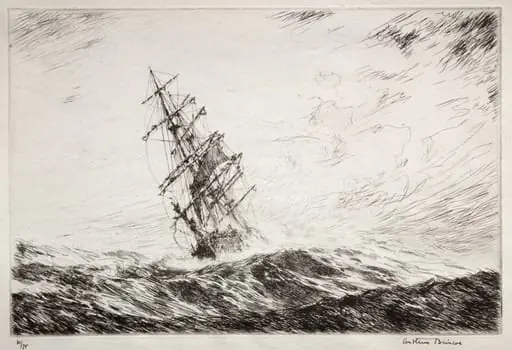
Created in 1918 by Arthur John Trevor Briscoe, this ink sketch captures two sailing vessels in motion across turbulent seas. Executed in monochrome, the work is held in the collection of The Cleveland Museum of Art. Its restrained palette and dynamic line work suggest it was made as a study rather than a finished piece, emphasizing movement and form over detail.
Subject & Meaning
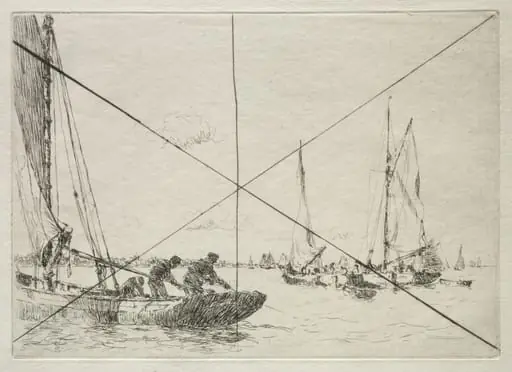
The scene depicts the clipper ships Taeping and Ariel, known for their speed and competition in the 19th-century tea trade. Though rendered in a simplified, almost abstract manner, the vessels convey a sense of urgency and struggle against the elements. The X-marked background may indicate a working sketch, possibly annotated for later reference or correction.
Technique & Style
Briscoe employed swift, fluid ink strokes to suggest the force of wind and water, avoiding precise contours in favor of energetic gesture. The absence of color focuses attention on composition and motion. The light gray wash provides atmospheric depth, while the bold black X disrupts the background, possibly marking an area of revision or a compositional note.
History & Provenance
The work entered The Cleveland Museum of Art’s collection as part of a broader acquisition of Briscoe’s maritime studies. Its date aligns with the artist’s post-World War I period, when he returned to documenting seafaring subjects. No record suggests it was exhibited publicly during his lifetime, indicating its role as a private study.
Context
Briscoe was part of a tradition of British artists who recorded naval and commercial shipping during a time of transition from sail to steam. This sketch reflects an interest in the lingering presence of clippers, whose era had largely ended by the 1880s. The work preserves a romanticized memory of maritime speed and endurance.
Legacy
As a modest but precise study, the sketch contributes to understanding how artists documented maritime motion before photography became dominant. It remains a quiet testament to the technical observation of wind, water, and sail—qualities that continue to inform modern marine illustration and art education.
Artist & collection