Artwork
Tyrolean Farmer in Traditional Stubai Folk Costume
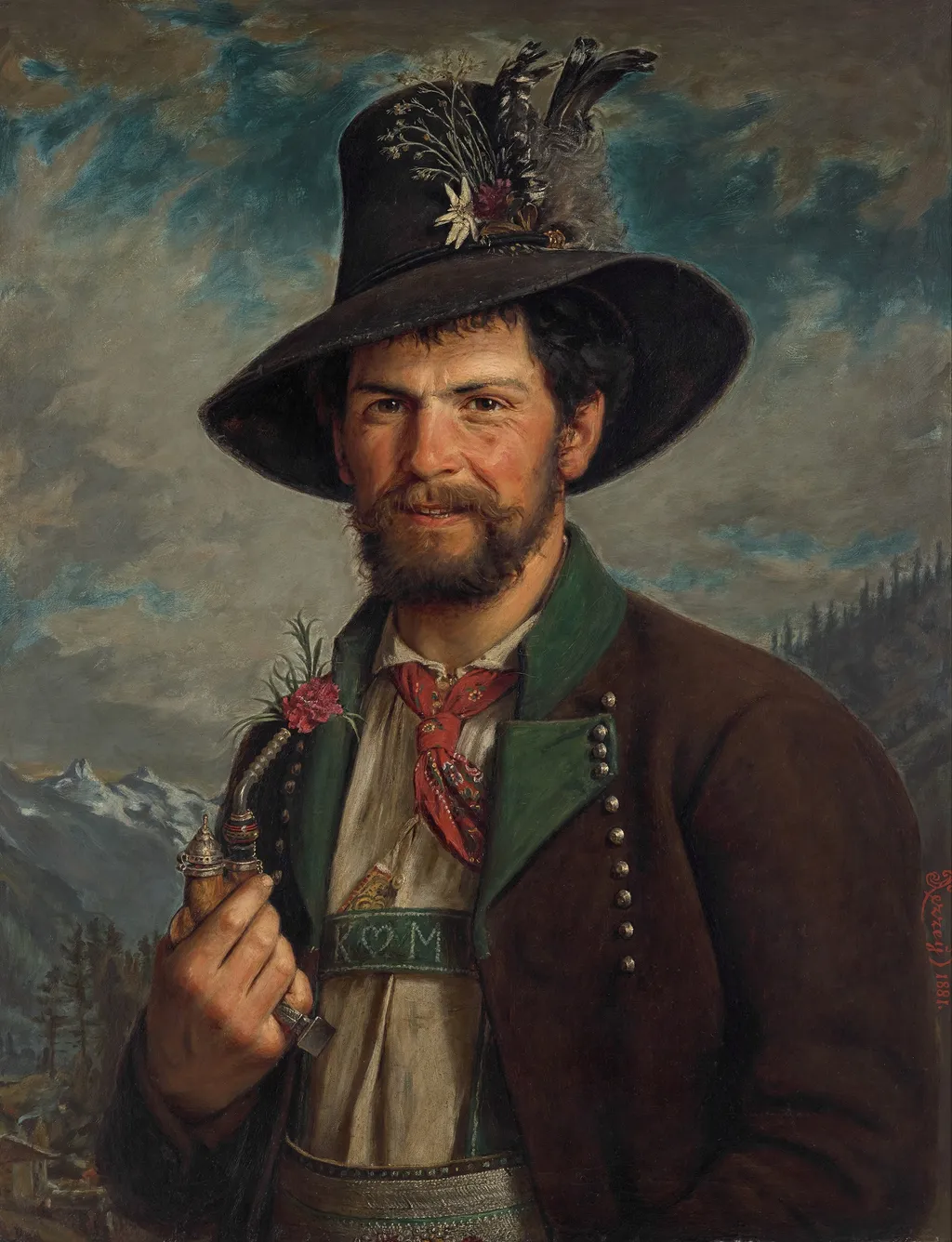
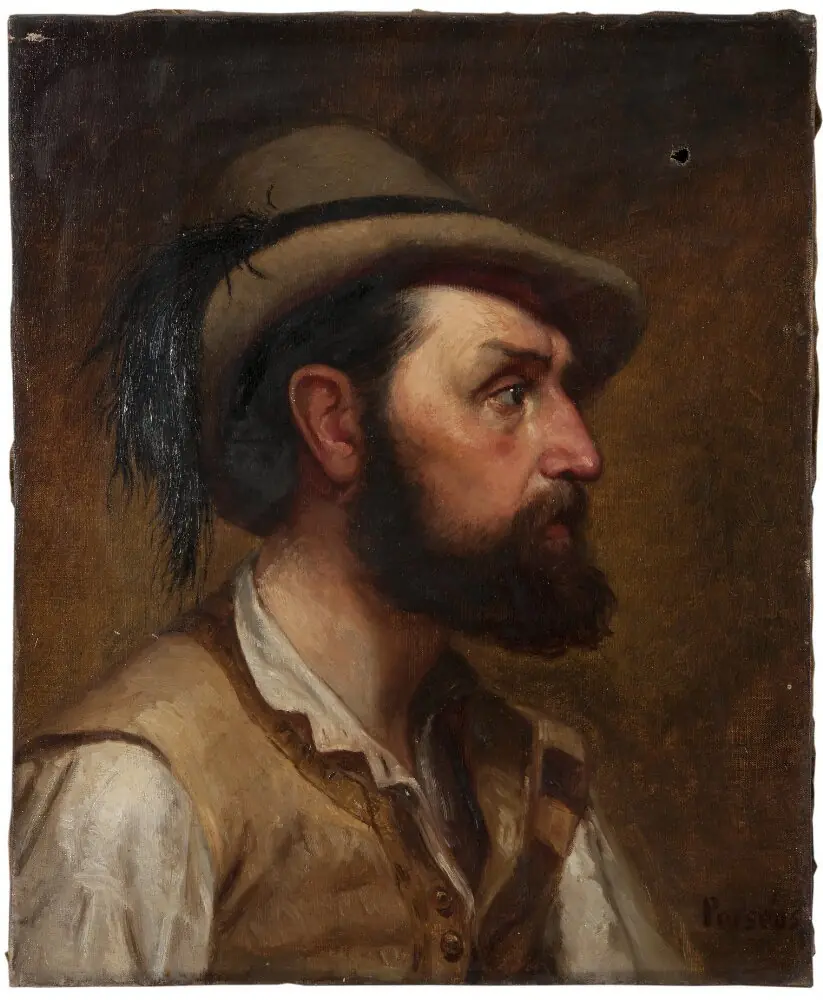
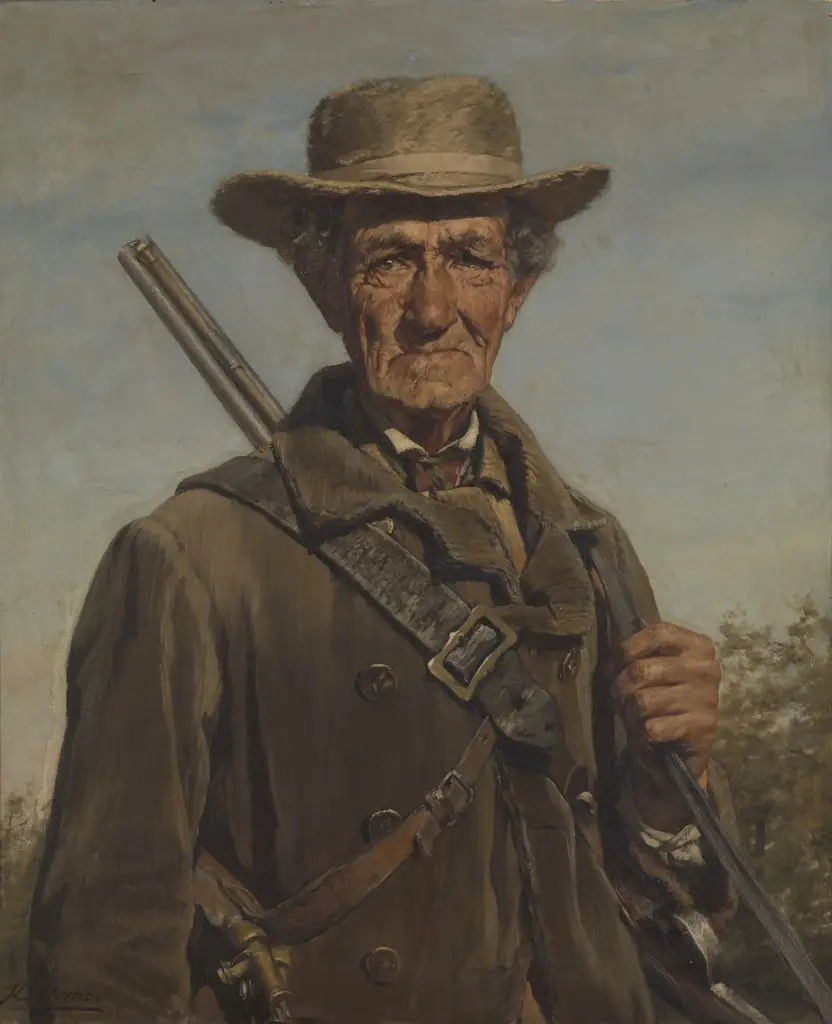
Tyrolean Farmer in Traditional Stubai Folk Costume is an oil painting by the Realist artist August Pezzey the Elder. It dates from 1891 and is held in the collection of the Belvedere.
About this work
Overview
August Pezzey the Elder’s 1891 oil painting depicts a male figure from the Stubai valley, rendered in a realistic manner. The work is part of the collection of Vienna’s Kunsthistorisches Museum, where it is displayed among other 19th‑century Austrian genre pieces. The composition combines a detailed portrait with a modest landscape, emphasizing both individual identity and regional environment.
Subject & Meaning
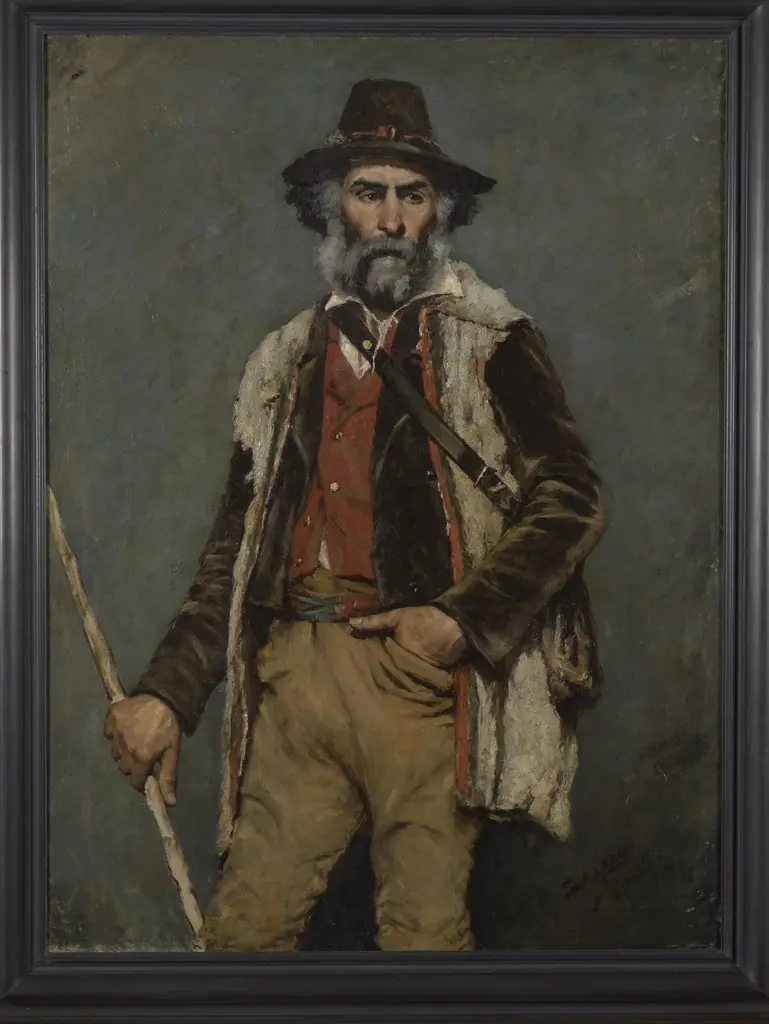
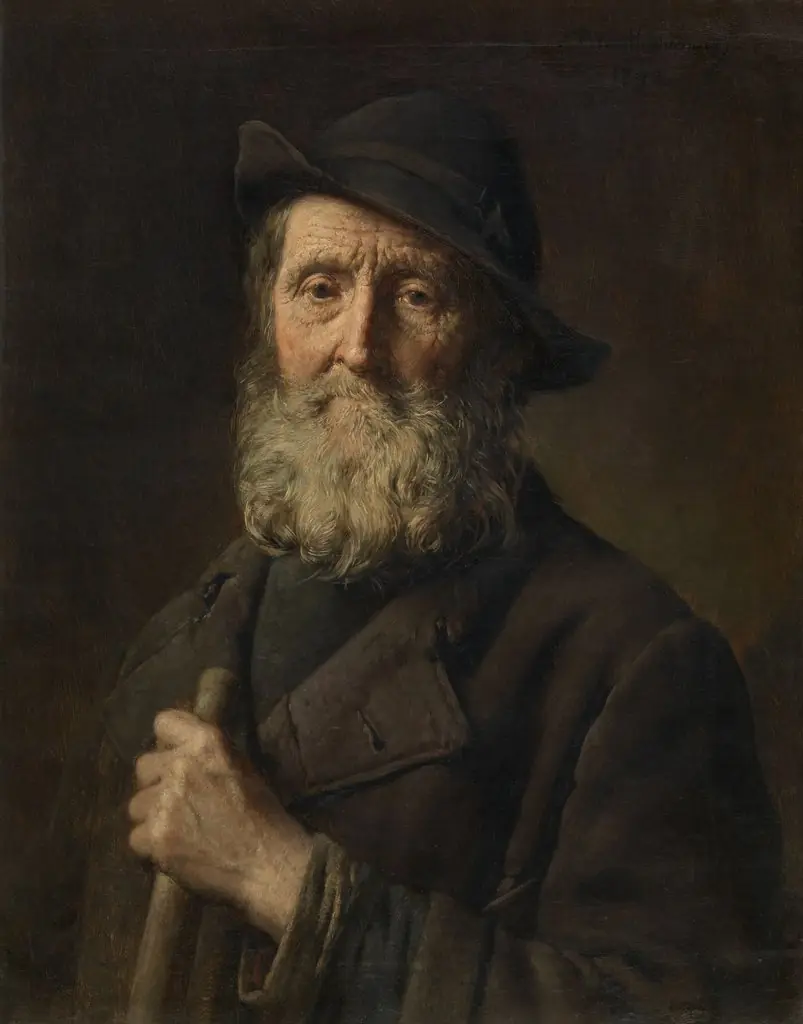
The sitter is presented in full traditional Stubai costume: a brown jacket with green lapels, silver‑buttoned cuffs, a white shirt, and a vivid red neckerchief.
The sitter is presented in full traditional Stubai costume: a brown jacket with green lapels, silver‑buttoned cuffs, a white shirt, and a vivid red neckerchief. A black hat crowned with feathers and floral ornaments tops his dark hair, while a pipe with an elaborately carved wooden stem rests in his right hand. The attire and accessories signal pride in local customs and a connection to agrarian life.
Technique & Style
Pezzey employs a smooth, academic brushwork typical of late‑19th‑century Austrian painting, allowing precise rendering of textiles and metalwork. The oil medium provides subtle gradations of light on the figure’s face and clothing, while the background features a loosely modeled mountainous scene with muted foliage and a cloud‑dotted sky, creating a gentle contrast between foreground detail and atmospheric distance.
History & Provenance
Created in 1891, the portrait entered the Kunsthistorisches Museum’s holdings during the early 20th century, though the exact acquisition date is not recorded in public sources. The painting has remained in the museum’s permanent collection, serving as an example of Pezzey’s interest in regional folk subjects and as documentation of Tyrolean dress.
Context
During the 1890s, Austrian artists frequently turned to rural motifs to affirm national identity within the Austro‑Hungarian Empire. Pezzey’s focus on a Stubai farmer aligns with this trend, reflecting contemporary interest in preserving folk traditions amid rapid industrialization. The work also mirrors the broader European fascination with ethnographic portraiture of the period.
Own this work as a print
Artist & collection