Artwork
Woman sewing
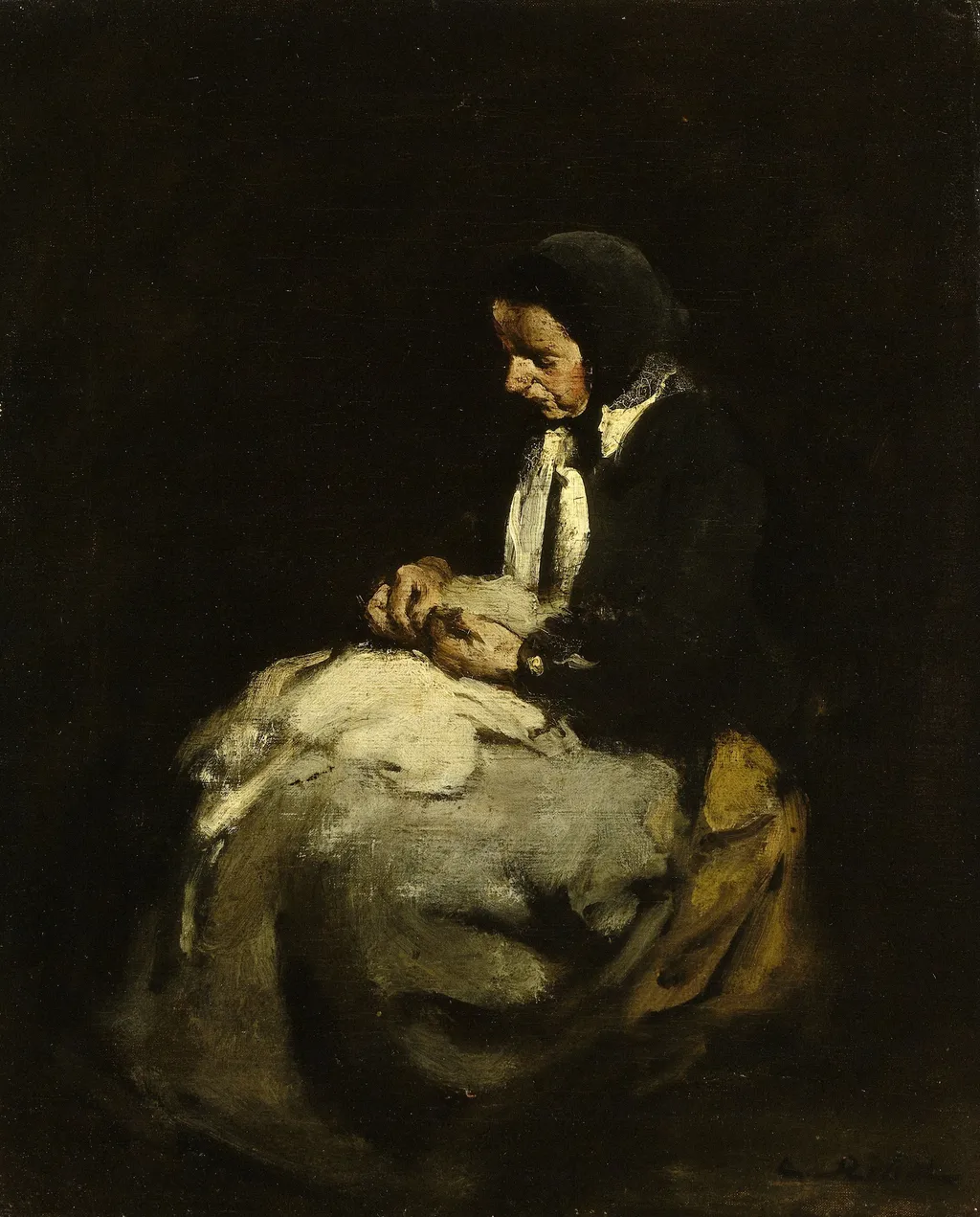
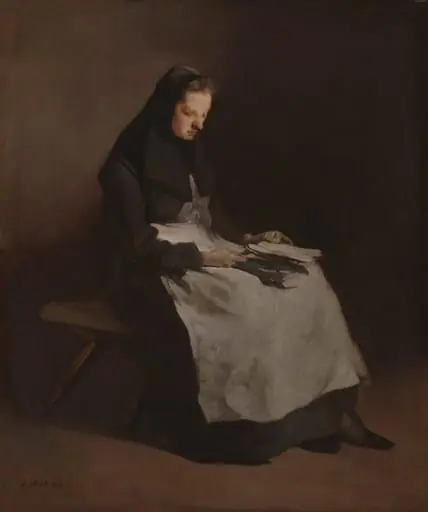
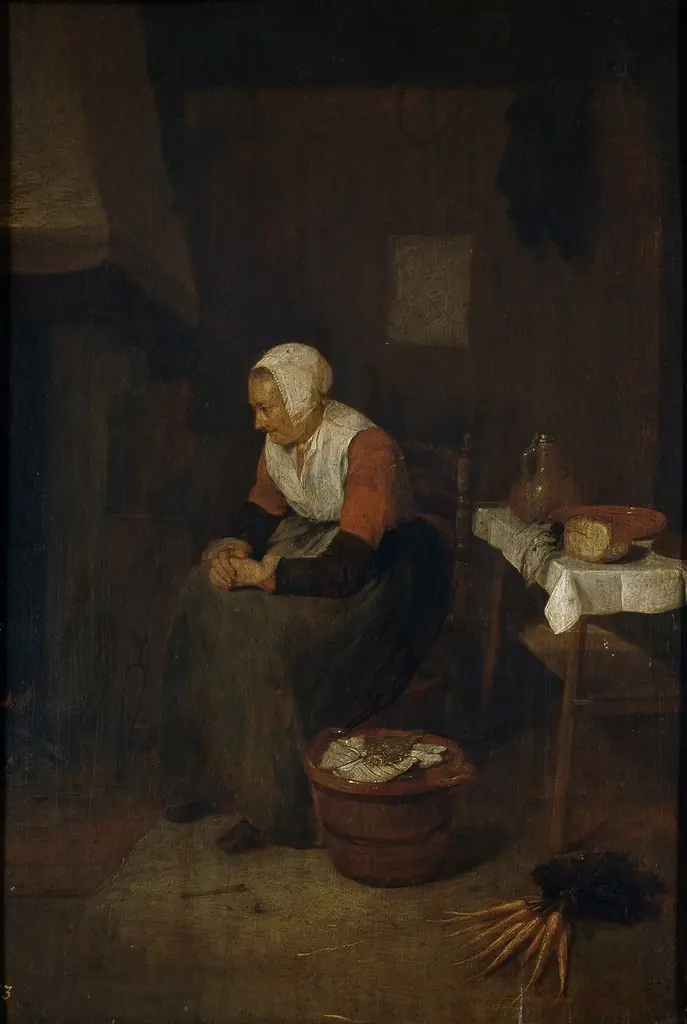
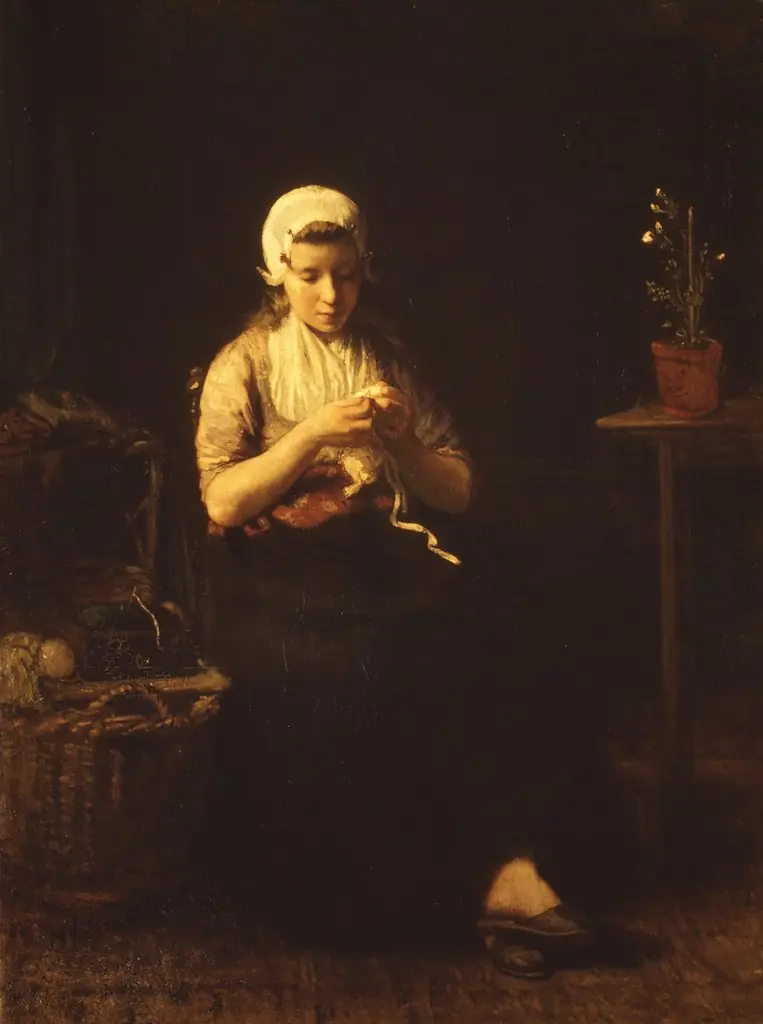
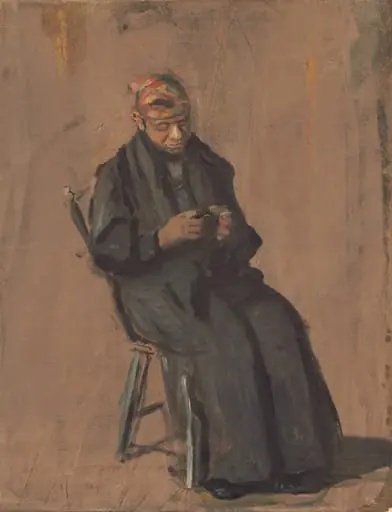
Woman sewing is an oil painting by the Realist artist Augustin Théodule Ribot. It dates from 1850 and is held in the collection of the Rijksmuseum.
About this work
Overview
Théodule‑Augustin Ribot, a French painter associated with the Realist school, produced the oil painting *Woman Sewing* circa 1850. The work portrays a solitary figure occupied with needlework, rendered in a subdued palette that emphasizes the quiet intimacy of domestic labor. It is part of the Rijksmuseum’s permanent collection.
Subject & Meaning
The composition focuses on a woman seated in a dimly lit interior, her face partially concealed beneath a dark hat. She holds a swatch of fabric, her fingers poised over a needle, suggesting a moment of concentration and the everyday rituals of household work that Realism sought to elevate.
Technique & Style
Ribot employs a limited tonal range, allowing the figure and cloth to emerge from an almost black background. Thick applications of paint in selective areas create a tactile, impasto effect that gives the skin and fabric a sculptural quality, while softer washes convey the warm glow of the light source.
History & Provenance
Born in 1823, Ribot began his career as a decorative artisan in Paris before turning to genre scenes. *Woman Sewing* entered the Rijksmuseum’s holdings through acquisition in the early 20th century, reflecting the museum’s interest in 19th‑century French Realist works.
Own this work as a print
Artist & collection
Artist
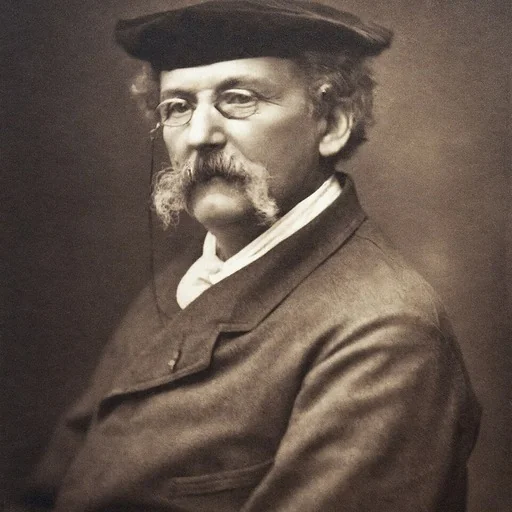
Théodule-Augustin Ribot (French: ; August 8, 1823 – September 11, 1891) was a French realist painter and printmaker.