Artwork
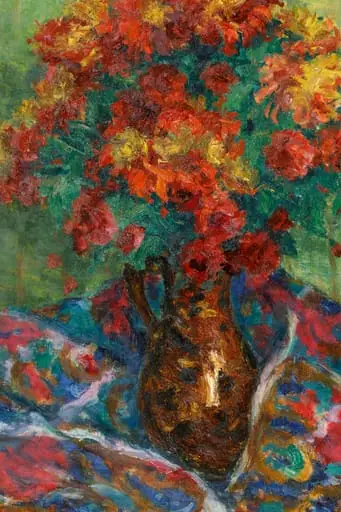
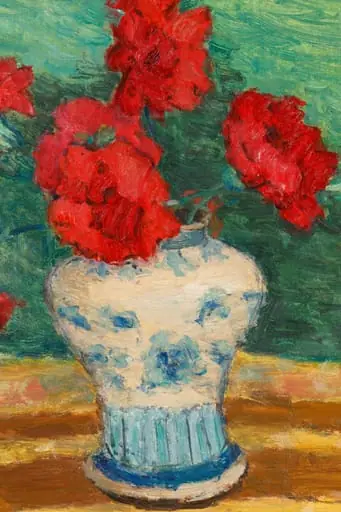
Bujori în vas persan
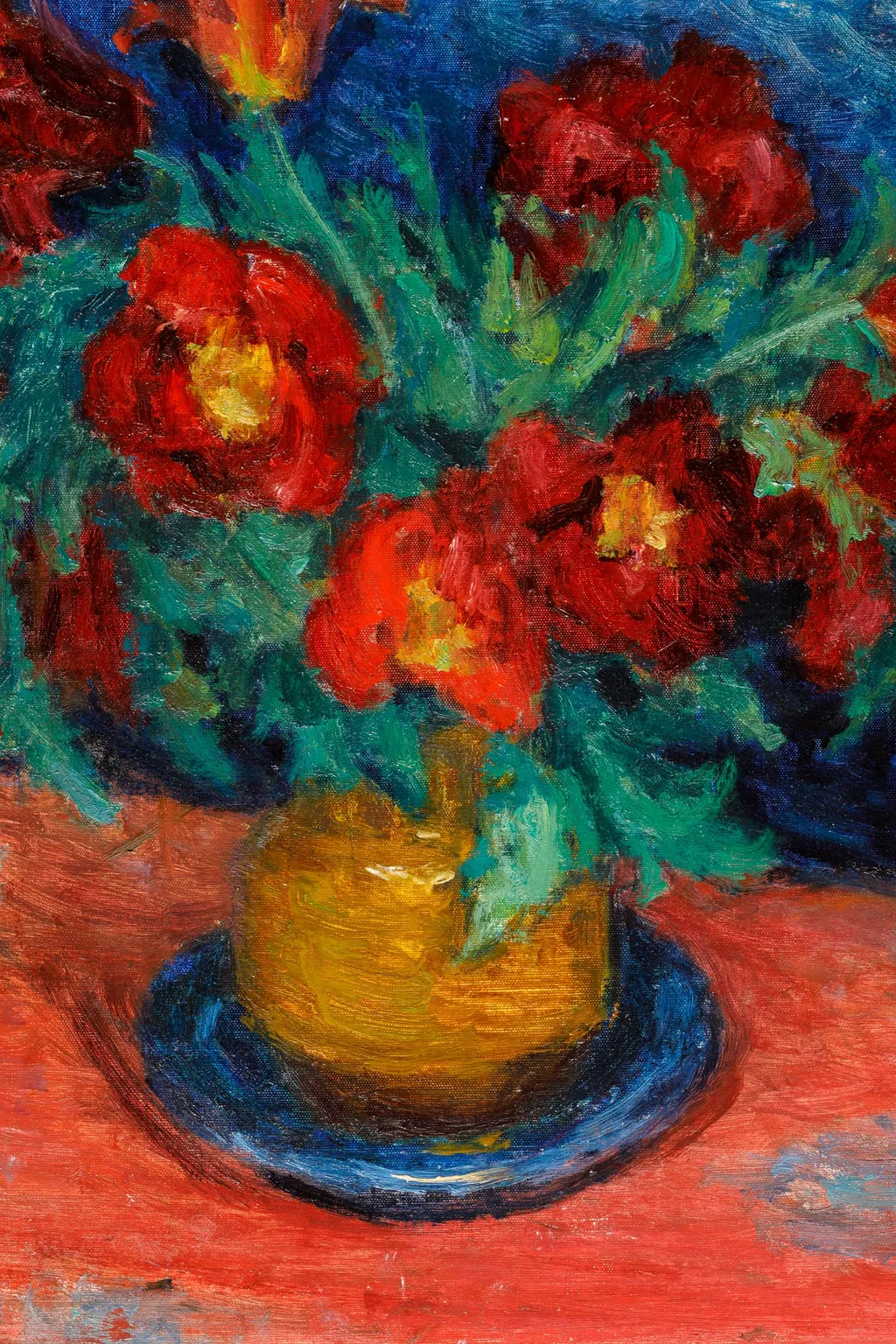
Bujori în vas persan is an unspecified painting by Hrandt Avakian. It dates from 1850 and is held in the collection of the National Museum of Art of Romania.
About this work
Overview
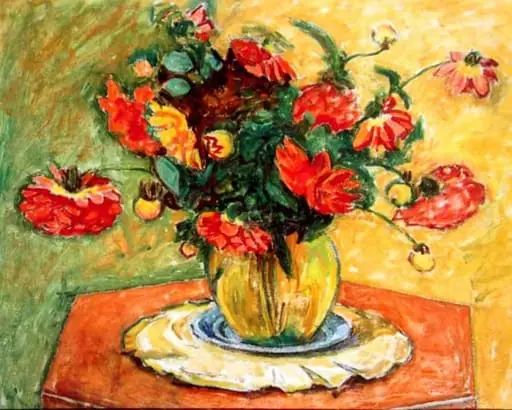
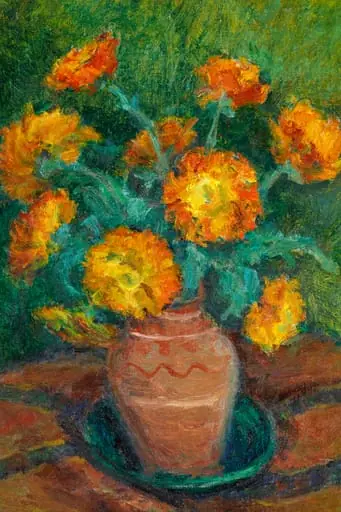
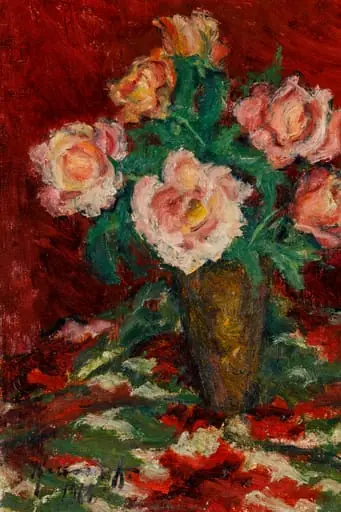
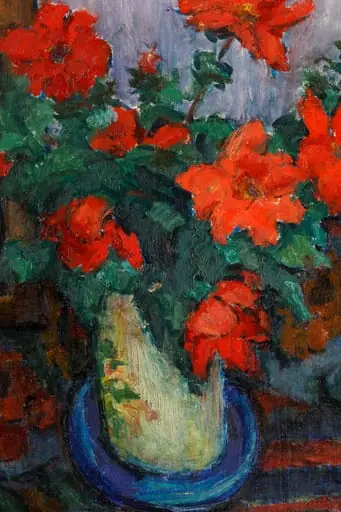
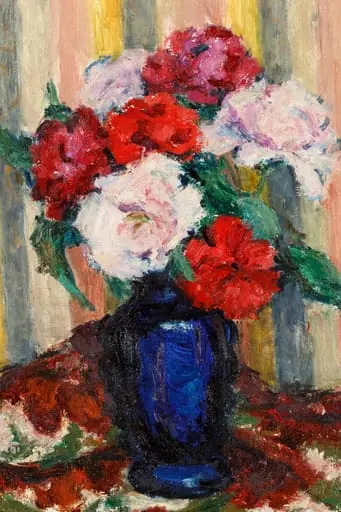
Painted around 1850 by Hrandt Avakian, this work depicts a simple still life: a cluster of red flowers in a dark, rounded vessel. The composition is intimate and focused, with no extraneous elements. The painting’s energy comes from its bold color contrasts and energetic application of paint, suggesting a spontaneous approach to capturing natural form.
Subject & Meaning
The subject is a modest arrangement of flowers in a Persian-style bowl, likely chosen for its visual impact rather than symbolic depth. The vibrant red petals, set against deep shadows, emphasize vitality and transience. There is no overt narrative, but the intensity of color and texture invites contemplation of beauty in everyday objects.
Technique & Style
Avakian applied paint with loose, vigorous strokes, building texture through thick layers that catch light unevenly. The petals appear sculpted rather than outlined, with yellow and green foliage pushed into the background in broad sweeps. The background’s blended red and blue tones dissolve into the flowers, creating a sense of atmospheric unity without sharp boundaries.
History & Provenance
The painting’s early history is undocumented, and its ownership prior to modern collections remains unclear. It is one of few known works by Avakian, an Armenian artist active in the mid-19th century. Its survival suggests it was preserved within private or familial circles, possibly in the Ottoman Empire or diaspora communities.
Context
Created during a period when European academic traditions dominated Eastern art schools, Avakian’s work reflects a quieter, more personal response to still-life conventions. The use of impasto and expressive brushwork aligns with emerging trends in regional painting that valued emotional resonance over formal precision, even as formal training remained rooted in classical models.
Legacy
Though not widely exhibited or studied, the painting stands as a rare example of 19th-century Armenian still-life practice. Its raw, tactile quality distinguishes it from more polished contemporaries. It contributes to a growing recognition of non-Western artists who adapted European techniques with individual sensitivity, expanding the scope of regional art history.
Artist & collection