Artwork
Sărbătoare
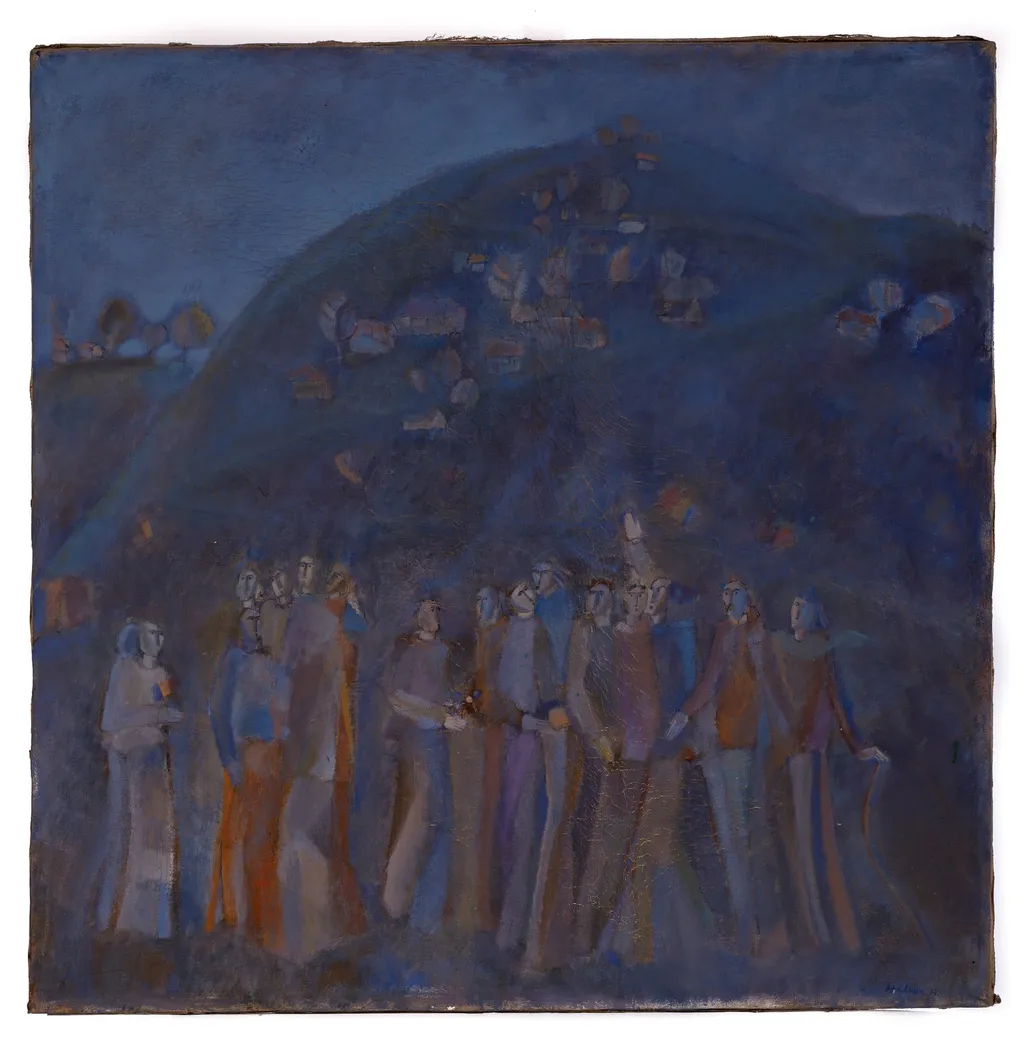
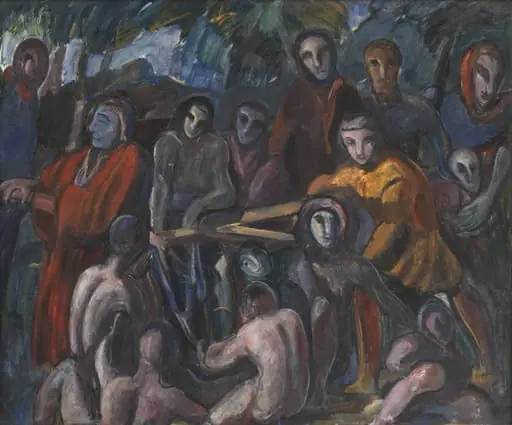
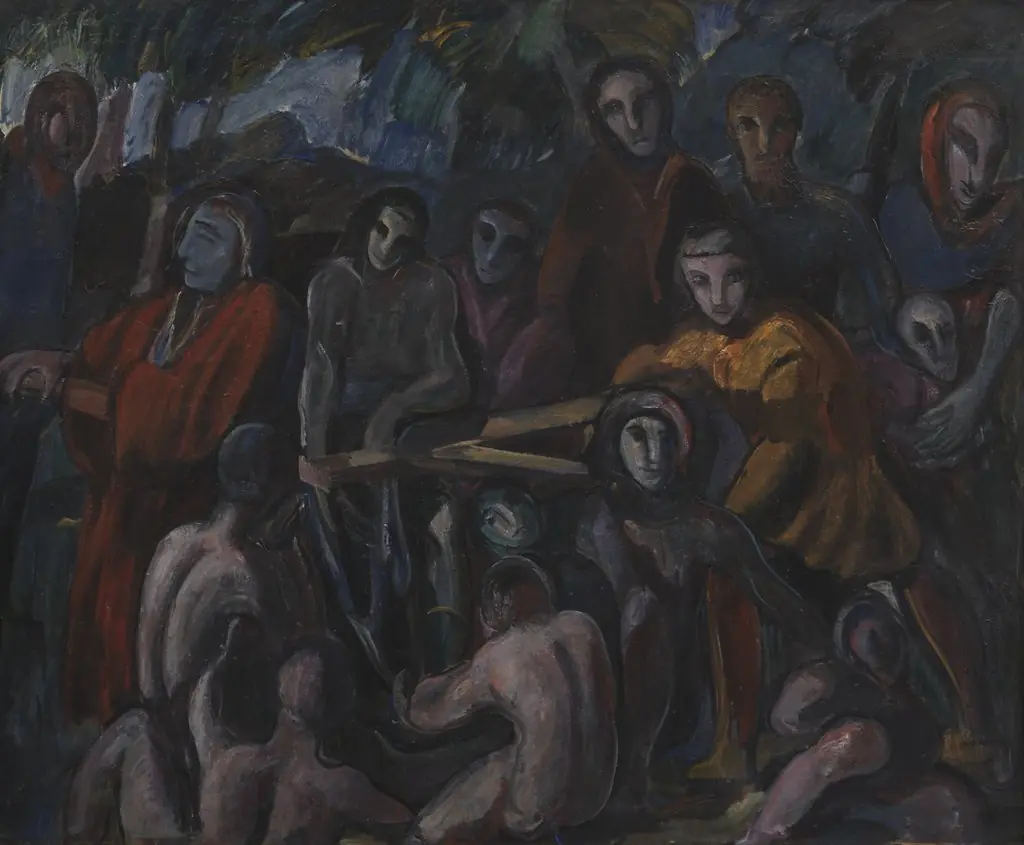
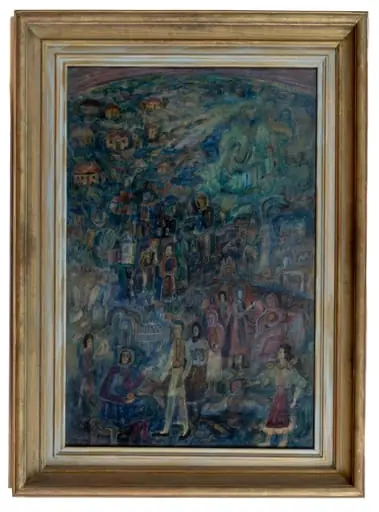
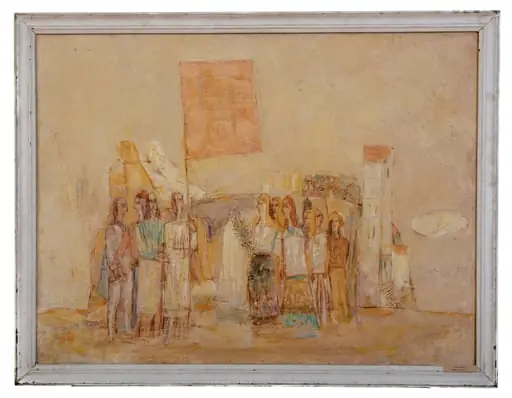
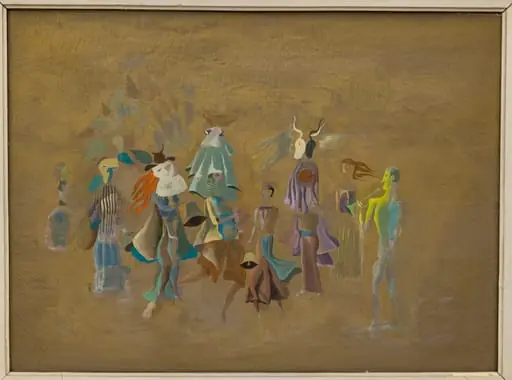
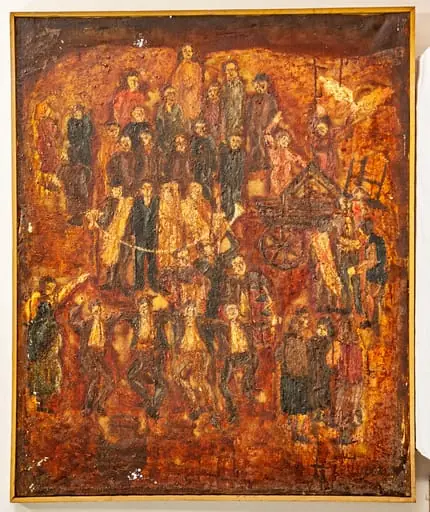
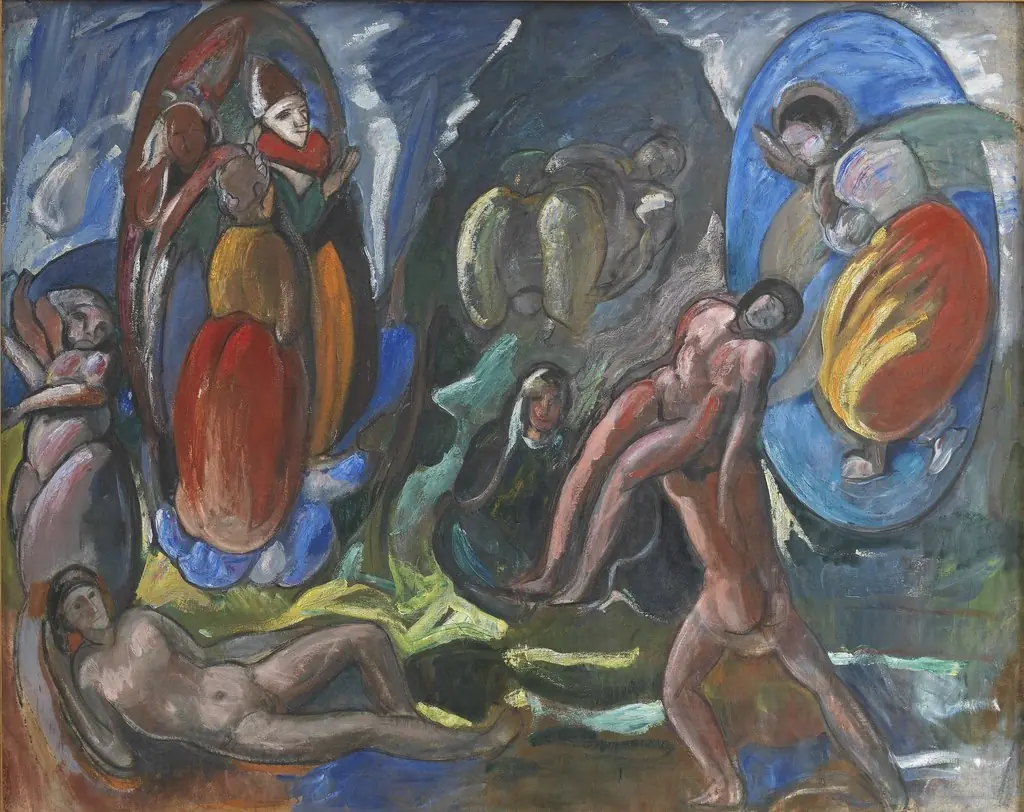
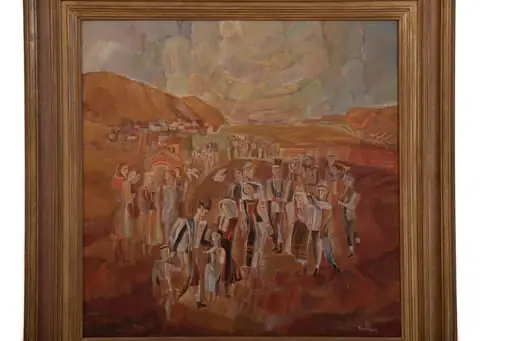
Sărbătoare is an unspecified painting by Bârleanu Bogdan. It is held in the collection of the Moldova National Museum Complex. This image depicts a line of figures standing in a quiet, rural setting.
About this work
Overview
The background fades into a blurred landscape of hills and dwellings, reinforcing the focus on the group rather than their environment.
This image depicts a line of figures standing in a quiet, rural setting. Rendered with coarse brushwork and muted tones, the scene conveys a sense of stillness and anonymity. The figures are arranged in a row, their forms simplified and their expressions indistinct. The background fades into a blurred landscape of hills and dwellings, reinforcing the focus on the group rather than their environment.
Subject & Meaning
The figures appear to be ordinary individuals, possibly engaged in a communal ritual or daily routine. Their uniform posture and featureless faces suggest a collective identity, minimizing individuality. The lack of narrative detail invites interpretation of their actions as symbolic—perhaps representing tradition, labor, or the quiet endurance of rural life.
Technique & Style
The artist employs impasto, applying paint thickly to create a tactile surface that catches light unevenly. Colors are restrained—browns, grays, and blues—enhancing the somber mood. Brushstrokes are deliberate and rough, rejecting smooth modeling in favor of raw texture. The background is loosely rendered, contrasting with the more defined, heavy forms of the figures.
History & Provenance
The work originates from a regional artistic tradition that valued emotional resonance over realism. Its creation likely coincided with early 20th-century efforts to document folk life, though its exact date and ownership history remain undocumented. It has been preserved in private collections and regional archives, rarely exhibited beyond local contexts.
Context
Emerging from a period when rural communities were undergoing social change, the painting reflects a visual interest in peasant life. It aligns with broader movements in Eastern European art that sought to capture the dignity of everyday existence, often rejecting academic conventions in favor of expressive, unpolished forms.
Legacy
Though not widely known outside its region, the work contributes to a larger dialogue on the representation of rural identity in modern art. Its use of impasto and emotional restraint influenced later artists exploring materiality and anonymity in portraiture, particularly those interested in the intersection of folk culture and modernist technique.
Artist & collection
Artist
Bogdan Bârleanu paints like he’s setting a dinner table—each color and line has its own seat.