Artwork
Peisaj din Toledo
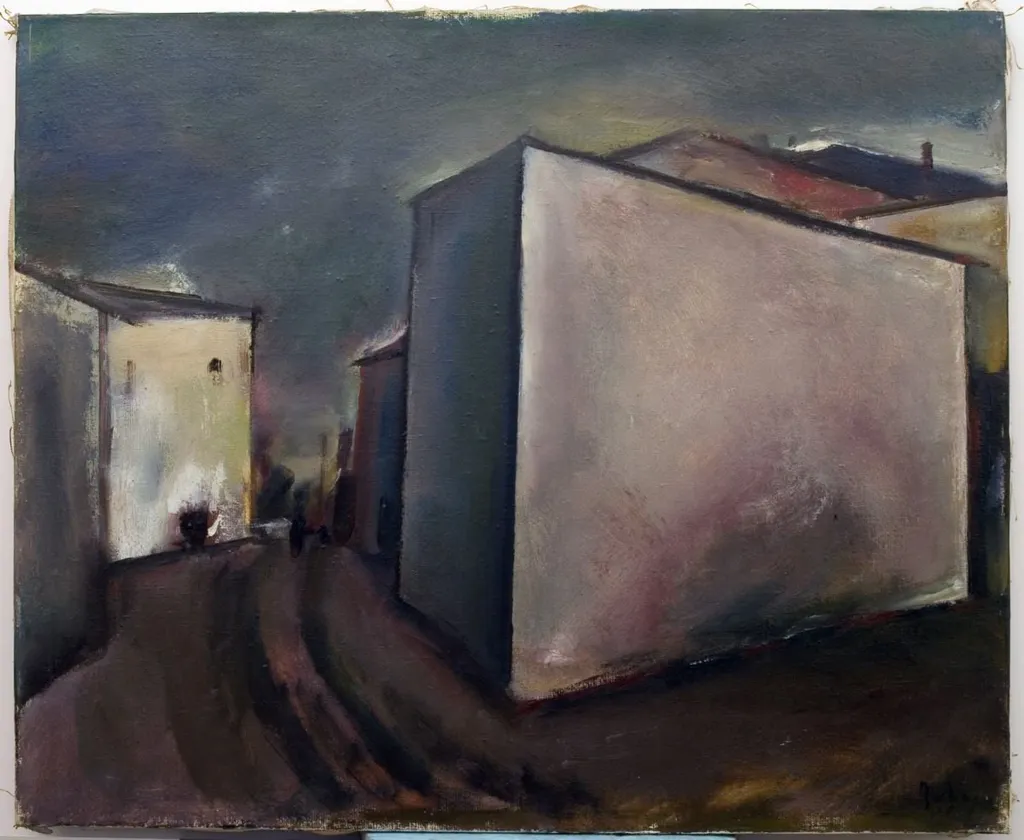
Peisaj din Toledo is a print by Corneliu Baba. It dates from 1956 and is held in the collection of the National Museum of Art of Romania.
About this work
Overview
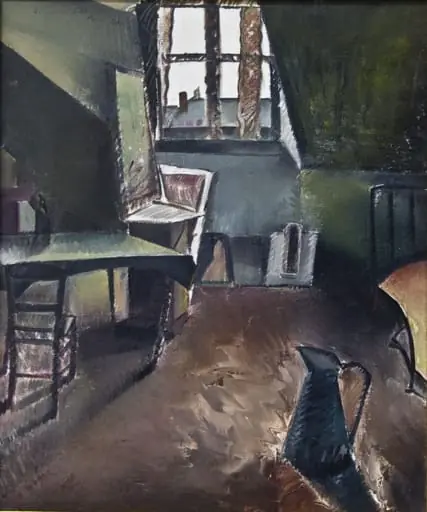
Painted around 1956, Peisaj din Toledo is a landscape by Romanian artist Corneliu Baba, capturing a secluded urban corridor in Toledo. The composition focuses on a narrow passage between high, unadorned walls, rendered with a somber palette and minimal detail. The absence of human figures enhances the sense of stillness, transforming a mundane street into a contemplative space.
Subject & Meaning
The painting depicts a quiet, unnamed alleyway, stripped of narrative or activity. Its emptiness invites reflection on isolation and the passage of time. The faint glow from a doorway suggests unseen life, yet the scene remains withdrawn and introspective. The architecture, unembellished and imposing, conveys a quiet dignity, rooted in the physical presence of the place rather than its history.
Technique & Style
The muted sky and elongated shadows ground the scene in a specific time of day, enhancing the painting’s atmospheric stillness without relying on detail.
Baba employed thick impasto brushwork to build the surfaces of the walls, creating tactile depth and a sense of weathered texture. Dark tones dominate, contrasted by subtle luminosity near the doorway, where light seems to emerge from within the structure. The muted sky and elongated shadows ground the scene in a specific time of day, enhancing the painting’s atmospheric stillness without relying on detail.
History & Provenance
Created during Baba’s mature period, the work reflects his interest in urban solitude and structural form, developed after his earlier figurative studies. It was likely painted in Romania, inspired by his travels or photographic references to Spanish architecture. The piece entered public collections in the late 20th century, where it remains as an example of postwar Romanian realism with expressive texture.
Context
In mid-century Romania, artistic expression was often constrained by state-mandated socialist realism. Baba’s focus on quiet, unidealized spaces like this alley offered a subtle resistance — prioritizing mood and materiality over propaganda. His work aligned with broader European trends in postwar painting that valued emotional resonance over political messaging.
Legacy
Peisaj din Toledo endures as a quiet testament to Baba’s ability to convey emotional weight through restrained composition and physical paint application. It influenced later Romanian artists seeking to explore urban isolation beyond ideological frameworks. The painting’s enduring presence in collections underscores its role as a bridge between realism and expressive abstraction in Eastern European art.
Artist & collection

Artist
Corneliu Baba was a Romanian painter, primarily a portraitist, but also known as a genre painter and an illustrator of books.

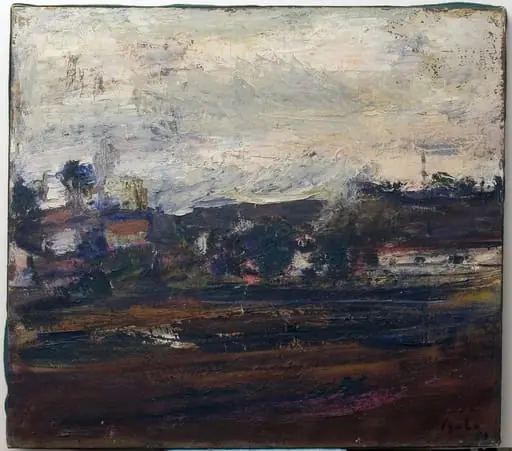 Peisaj
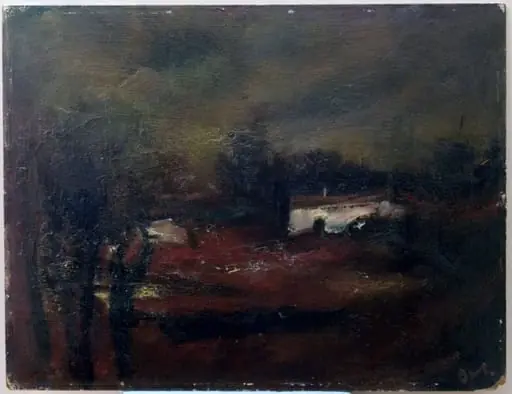 Peisaj
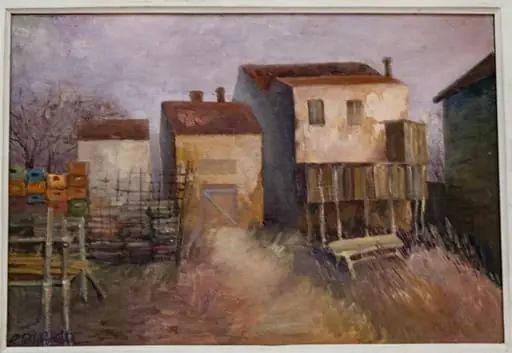 Amurg de toamnă
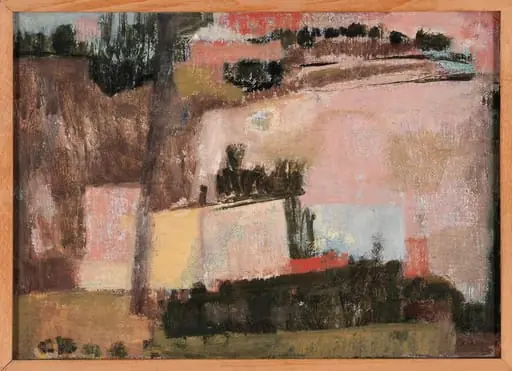 Outdoor study
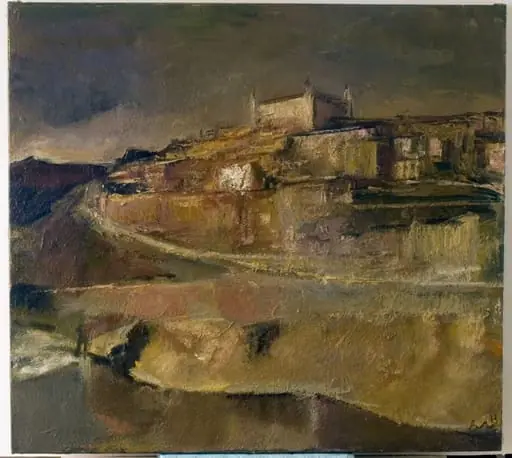 Toledo
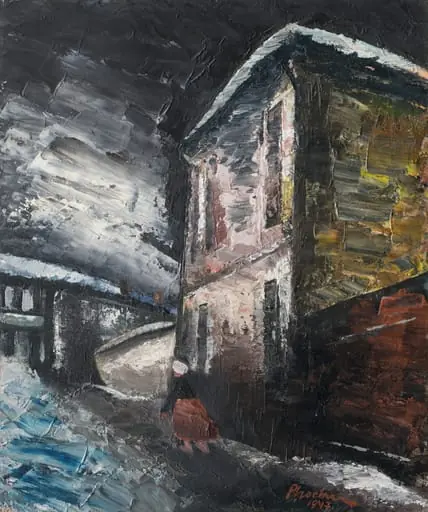 STRADĂ ÎN BUCUREȘTII VECHI
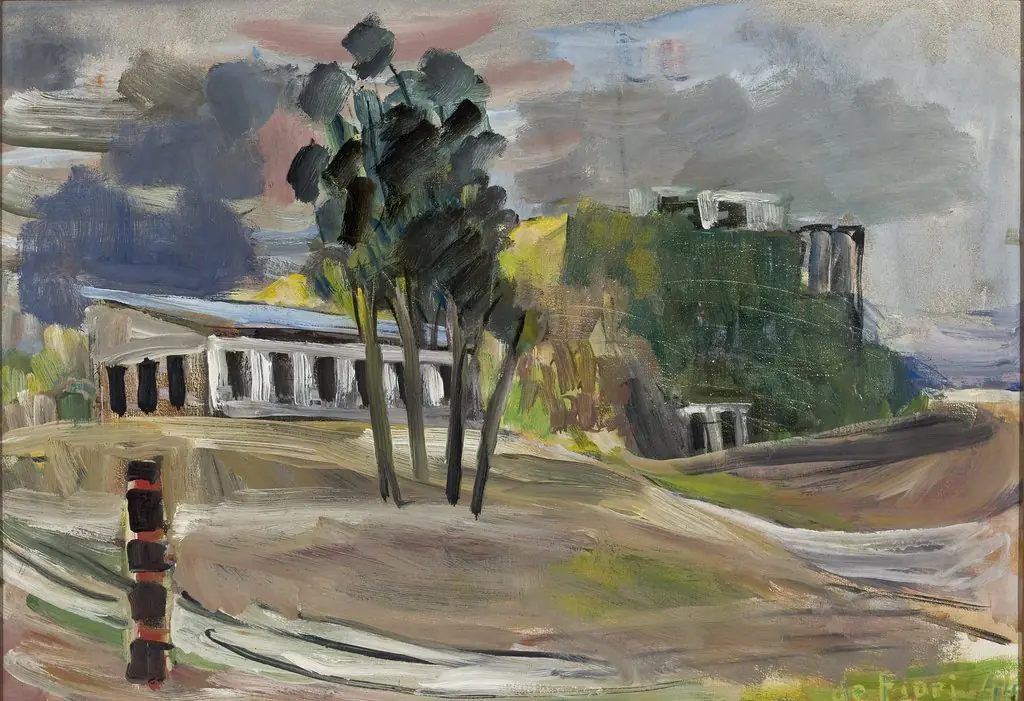 Paisagem
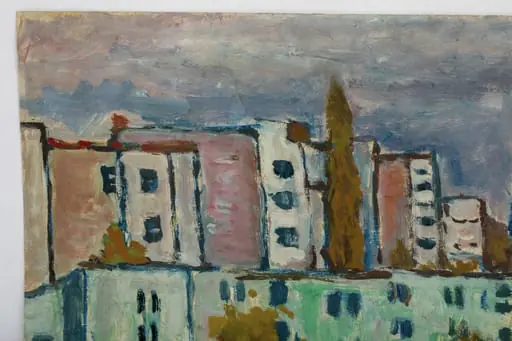 Peisaj urban cu blocuri. În prim-plan, un grup de copaci verde-ocru, urmați de un bloc gri, jos, iar în spatele său se aliniază un șir de blocuri înalte. În dreapta lucrării, copaci înalți. Cerul plumburiu. Semnat și datat dreapta jos, cu negru: Craiu (19)72.
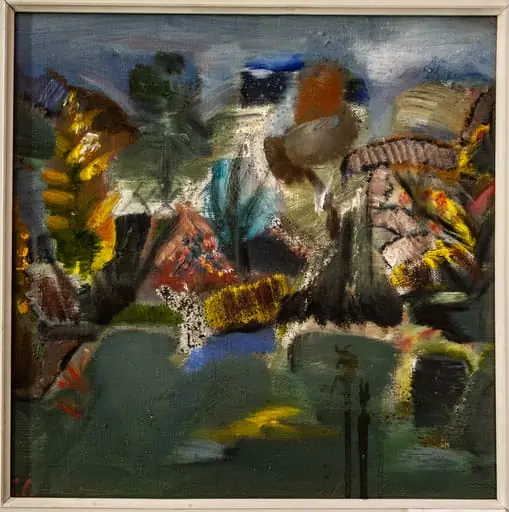 Peisaj
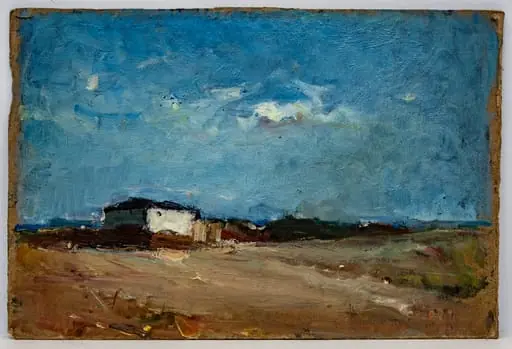 Peisaj cu casă singuratică
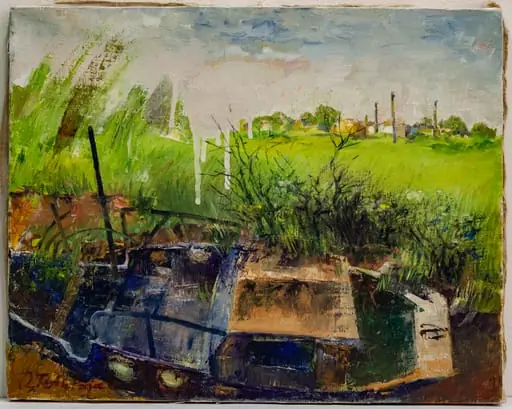 Peisaj
 Interior