Artwork
The Good Samaritan
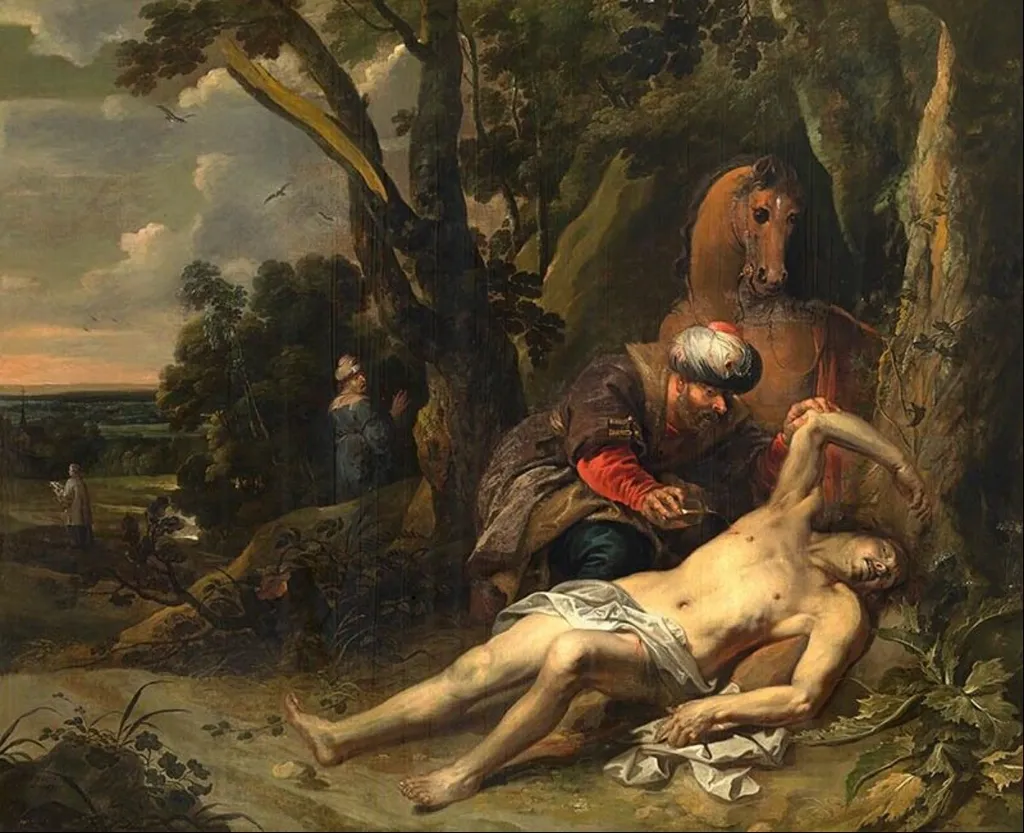
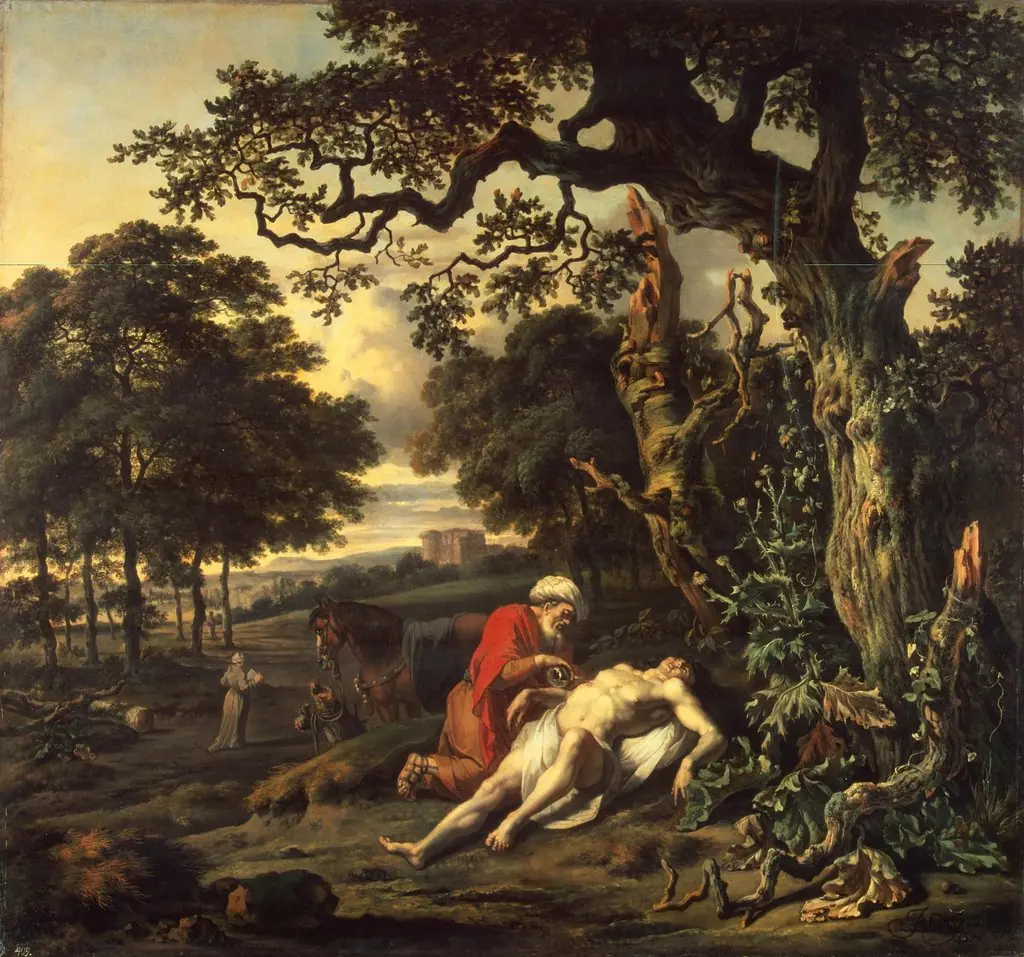
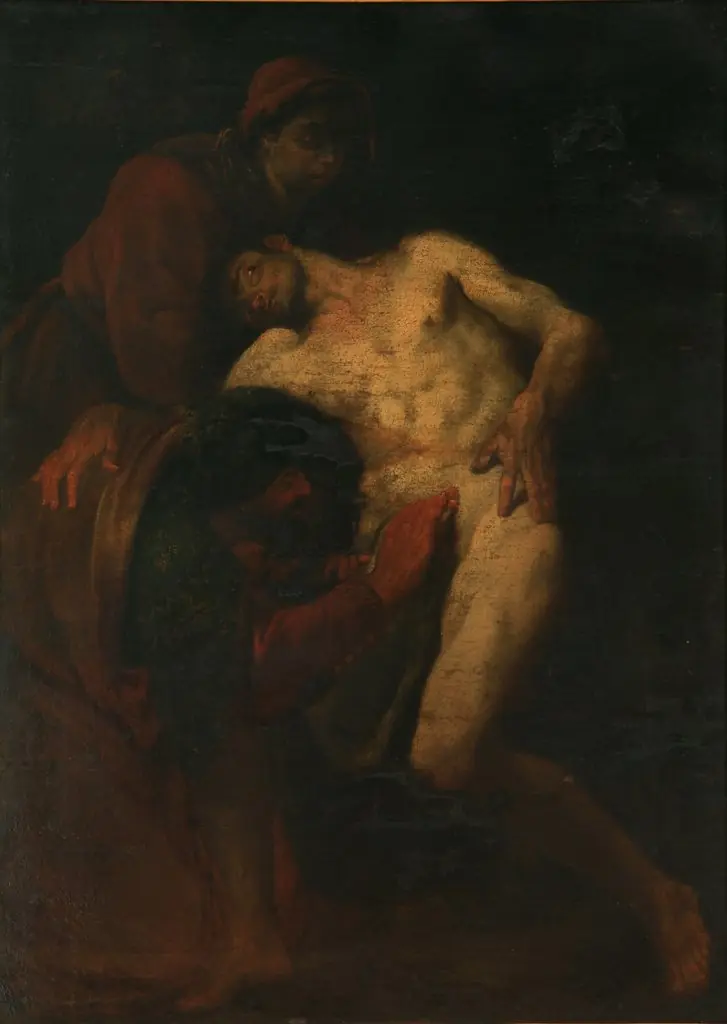
The Good Samaritan is an oil painting by the Flemish Baroque painting artist Balthasar van Cortbemde. It dates from 1647 and is held in the collection of the Royal Museum of Fine Arts Antwerp.
About this work
Overview
Created in 1647 by the Antwerp‑based artist Balthasar van Cortbemde, this oil painting illustrates the biblical parable of the Good Samaritan. Executed in the Flemish Baroque idiom, the work is part of the collection of the Royal Museum of Fine Arts in Antwerp.
Subject & Meaning
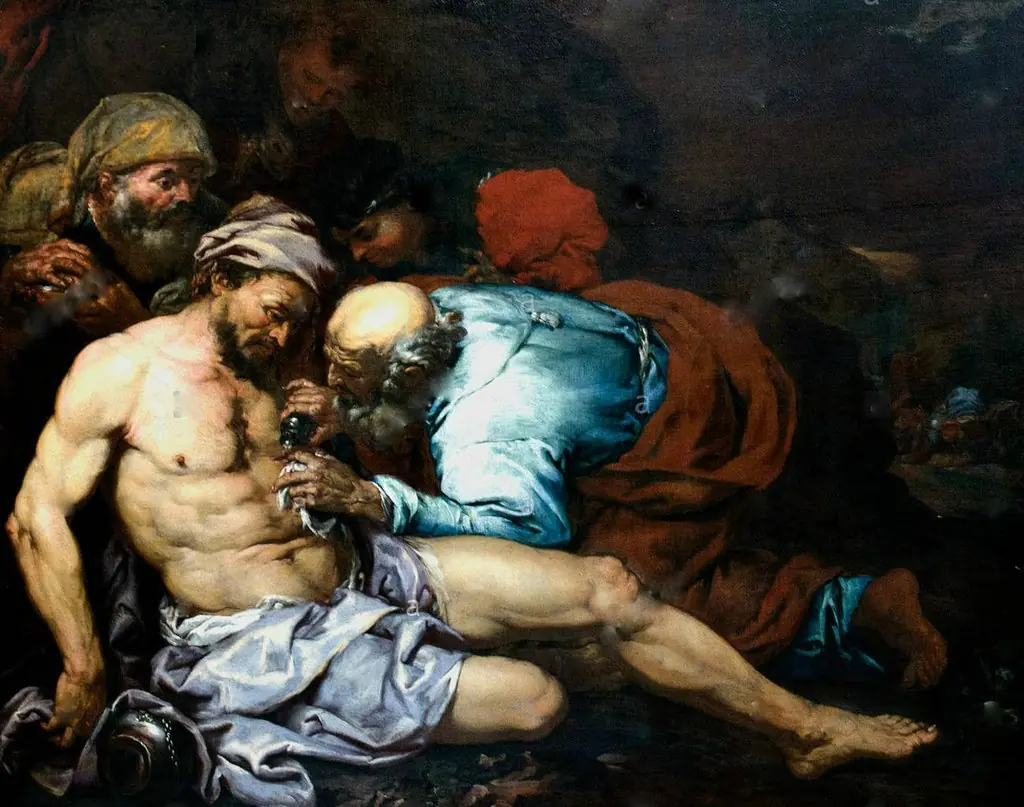
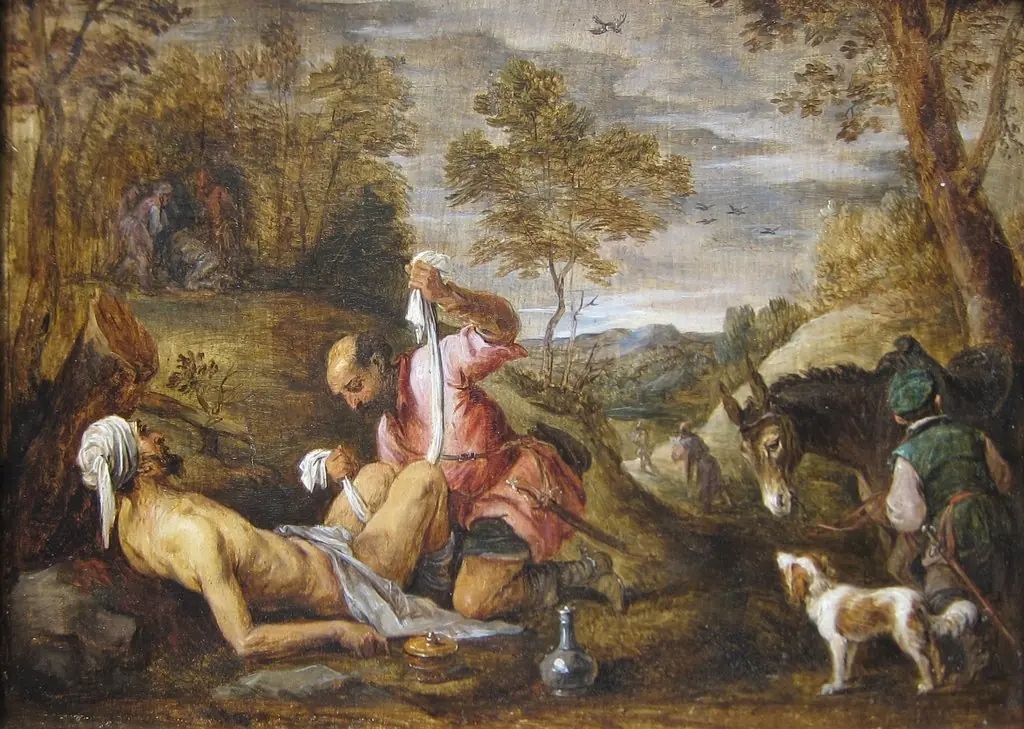
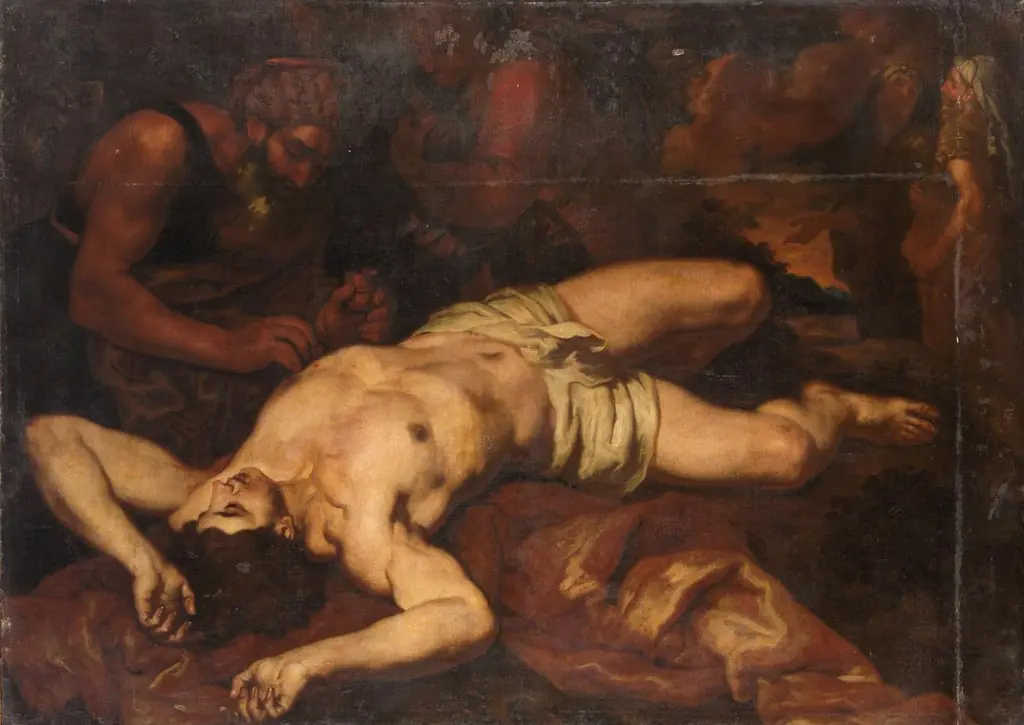
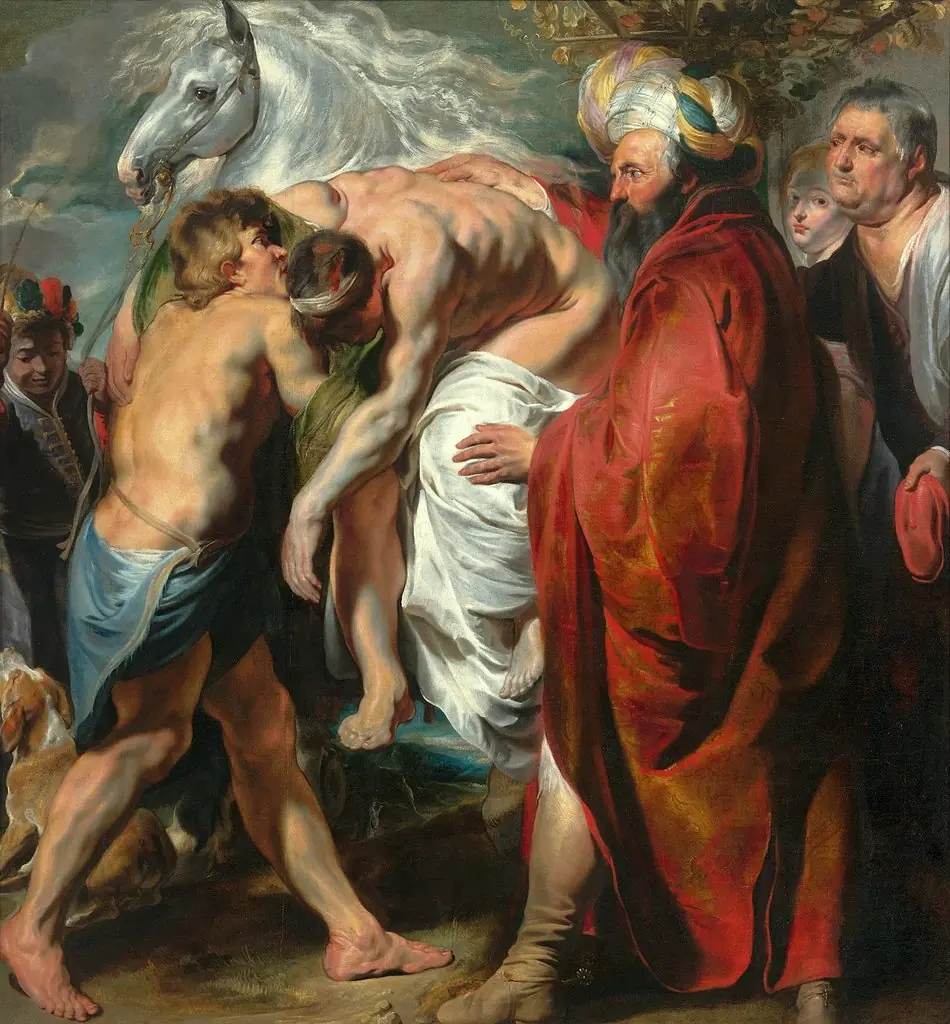
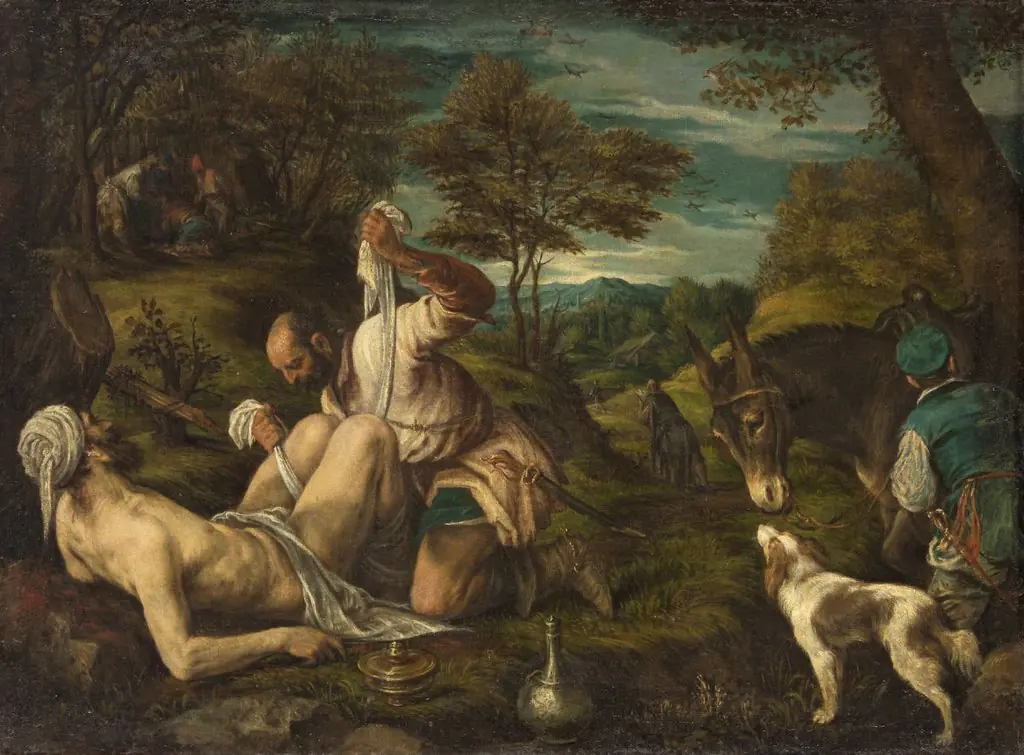
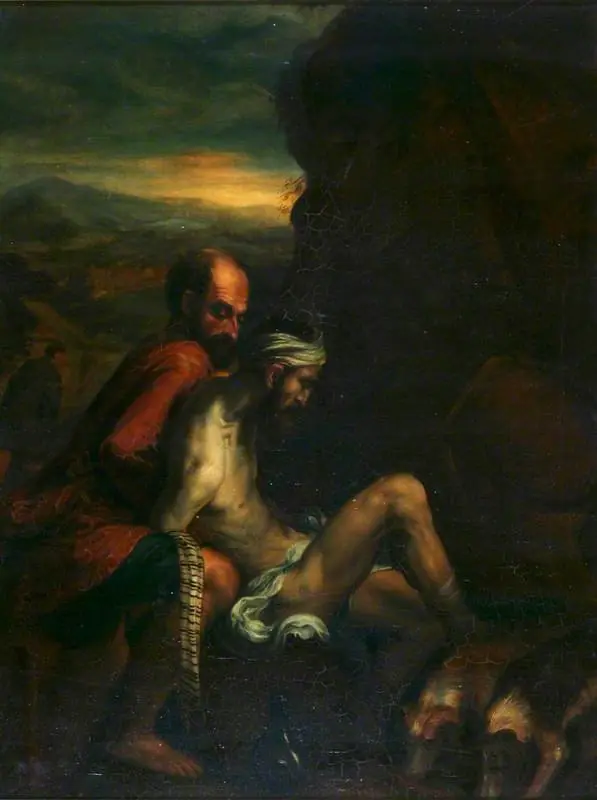
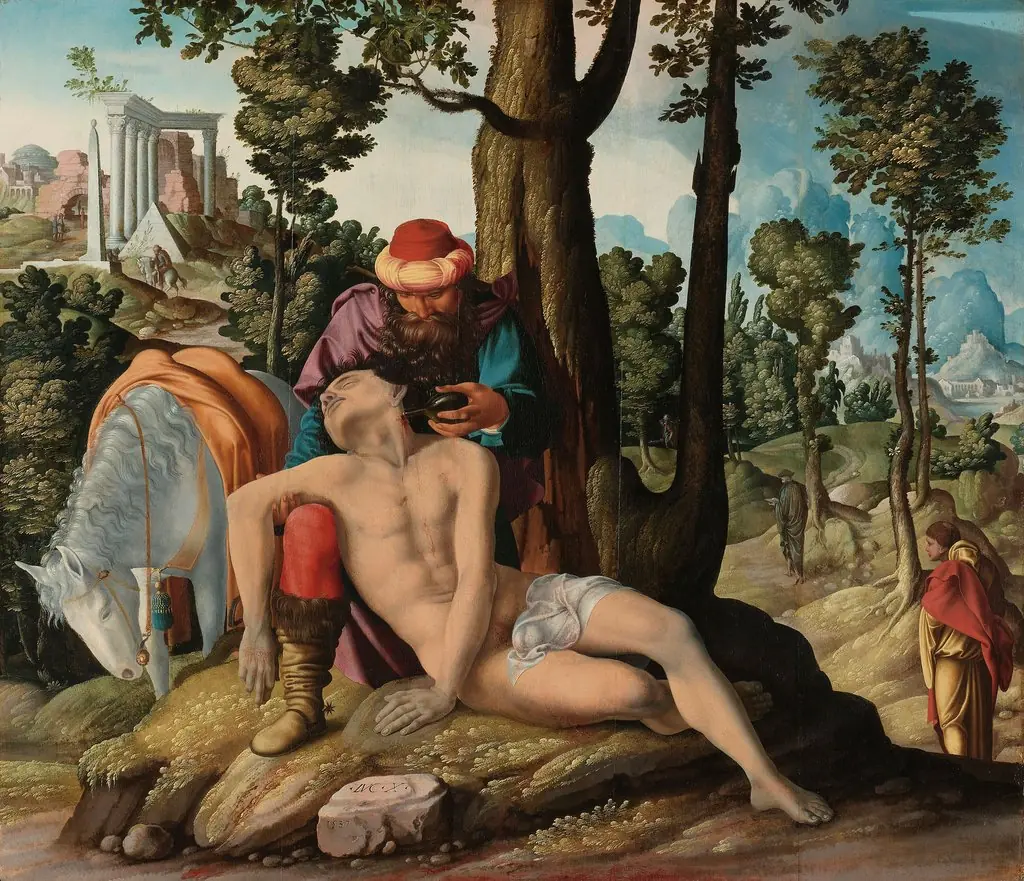
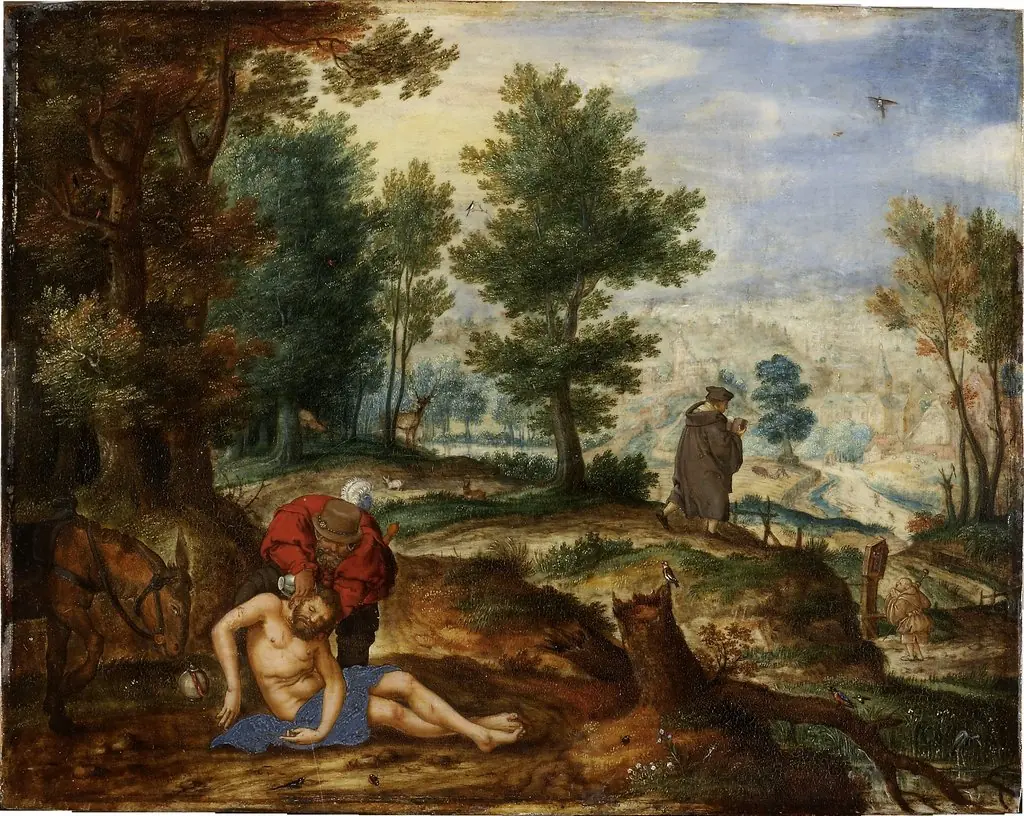
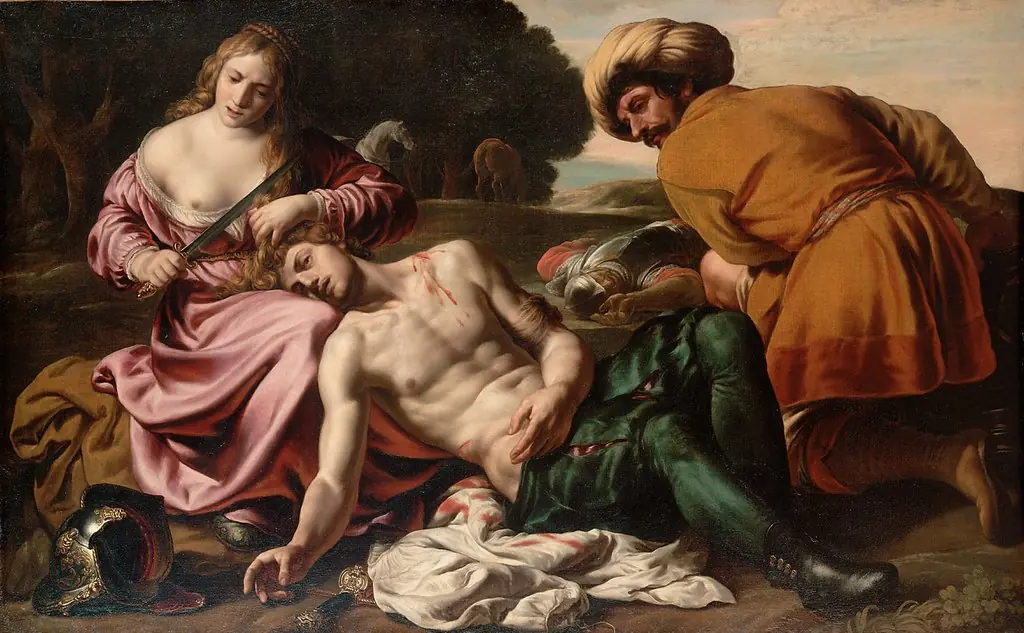
The composition centers on a wounded traveler, half‑clothed and pale, lying on a forest floor. A man in a red‑brown coat kneels beside him, attentively examining the injury, embodying the Samaritan’s compassion. A horse and distant figures complete the scene, reinforcing the narrative of aid rendered to a stranger.
Technique & Style
Van Cortbemde employs a restrained palette of greens, browns and muted reds, allowing the figures to emerge from a softly lit woodland backdrop. The oil medium renders delicate flesh tones and the texture of the rocky hillside, while the chiaroscuro modeling reflects Baroque concerns with drama and naturalism.
History & Provenance
The painting was produced during the artist’s active period in mid‑17th‑century Antwerp, a hub for religious commissions. It entered the Royal Museum of Fine Arts Antwerp’s holdings in the 19th century, where it remains on display as part of the museum’s Flemish Baroque collection.
Artist & collection
Artist
Balthasar van Cortbemde (Antwerp, 8 April 1612 – Antwerp, prior to 24 December 1663) was a Flemish painter, copyist and art dealer. He is only known for one painting.