Artwork
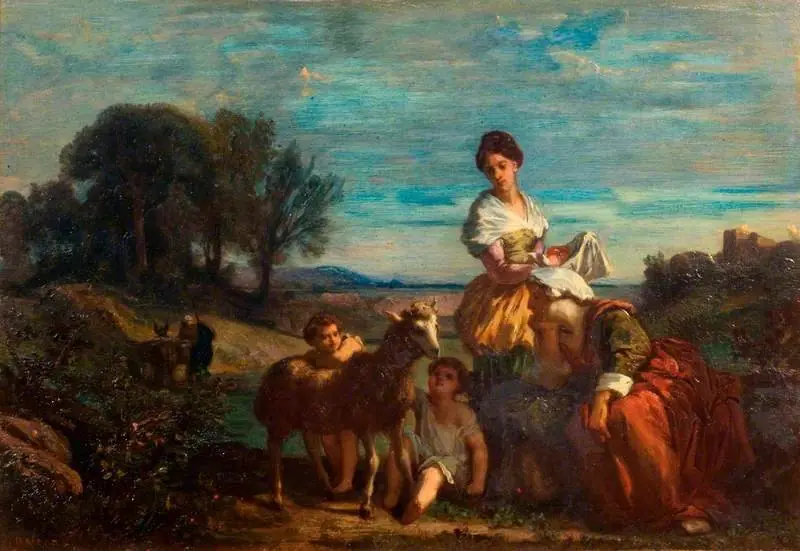
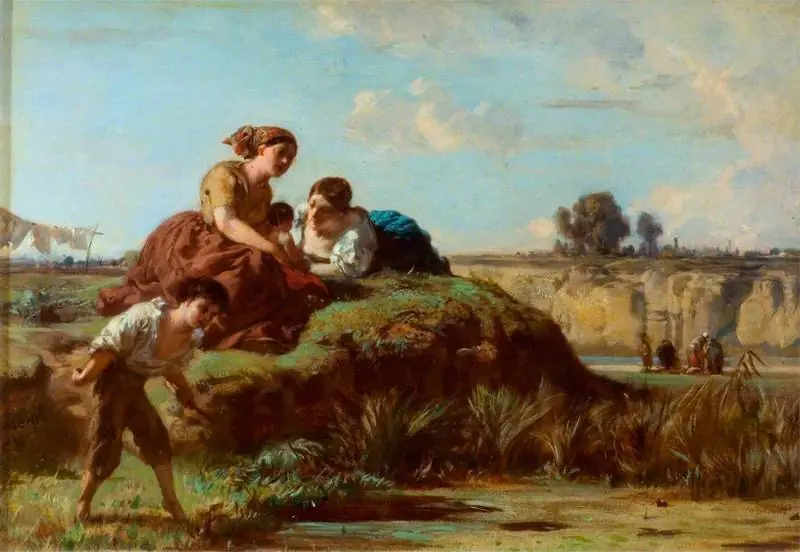
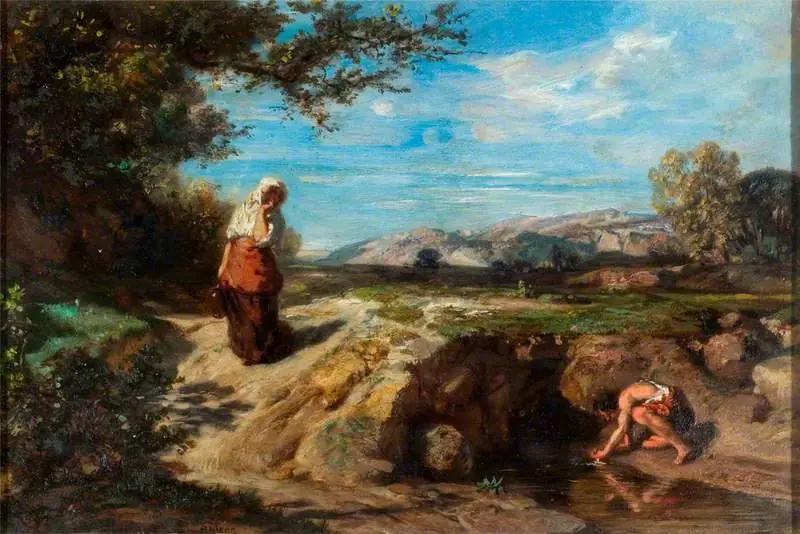
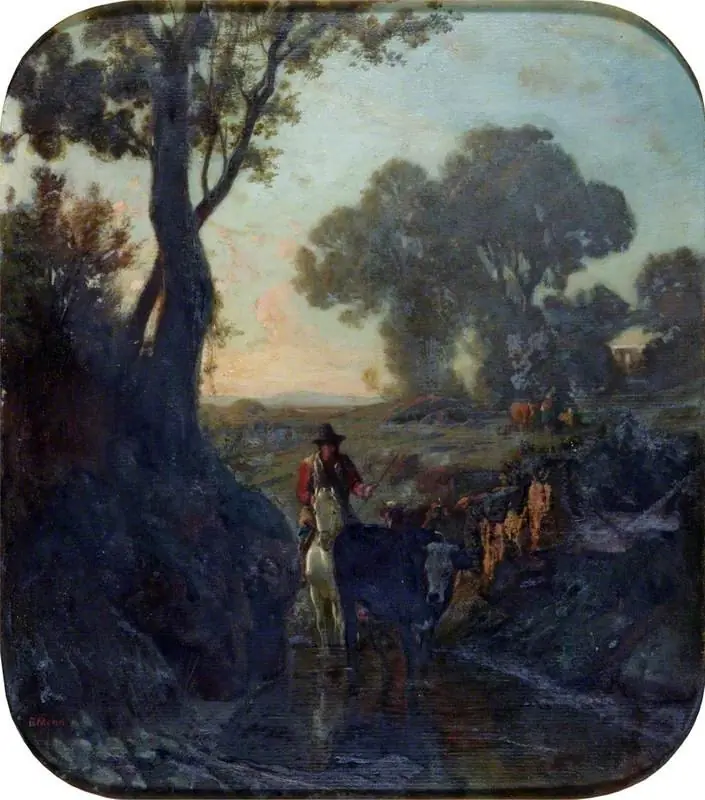
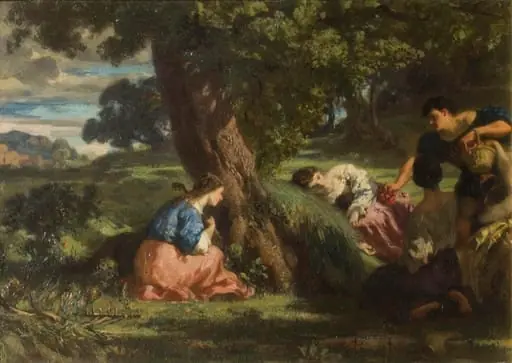
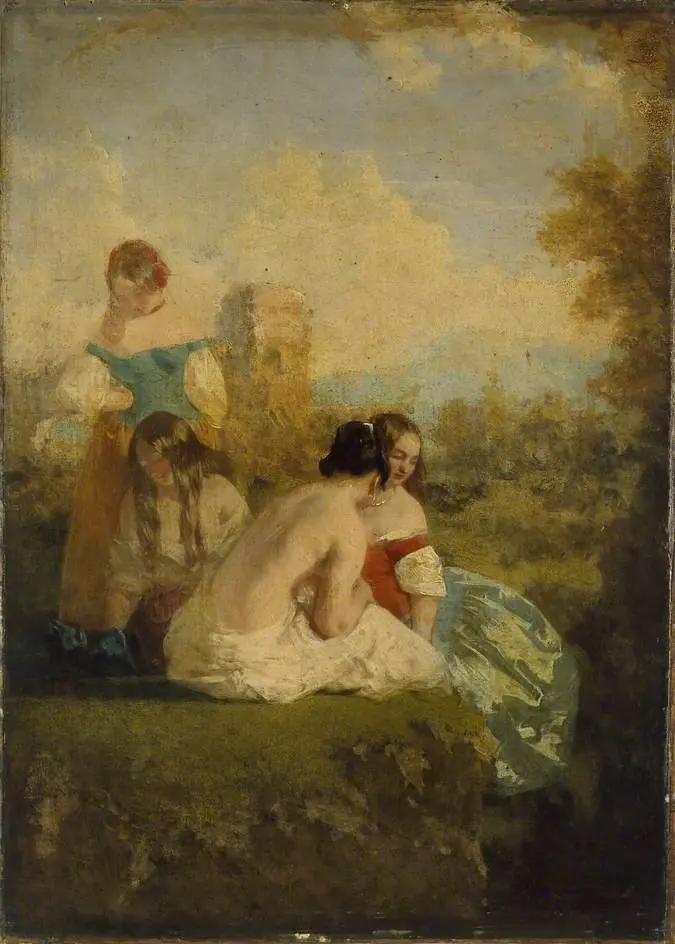
Cherries: A Group of Young Women in a Landscape, One of Them Holding a Basket of Cherries
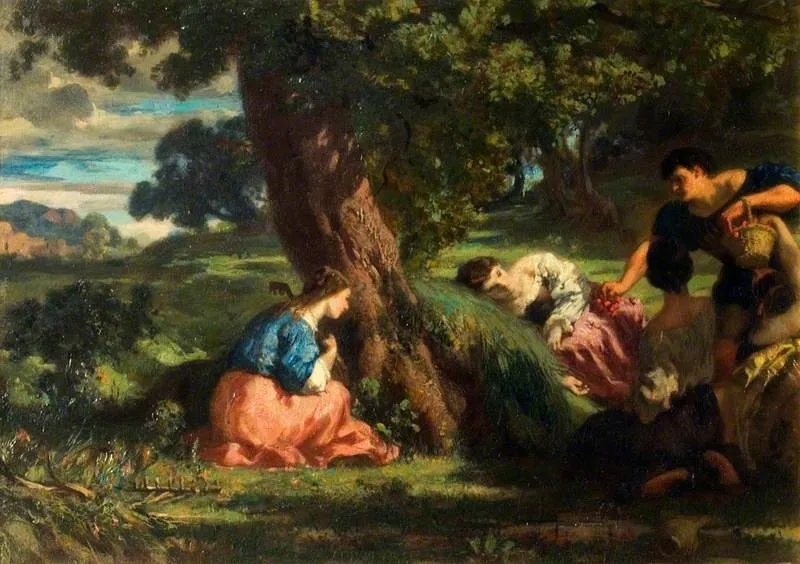
Cherries: A Group of Young Women in a Landscape, One of Them Holding a Basket of Cherries is an unspecified painting by the Barbizon school artist Barthélemy Menn. It dates from 1850 and is held in the collection of the Victoria and Albert Museum.
About this work
Overview
The composition reflects the influence of the Barbizon School, which prioritized direct observation of the countryside over studio-based idealism.
Painted around 1850 by Swiss artist Barthélemy Menn, this work captures a quiet moment among young women in a rural setting. Menn, known for bringing plein-air practices to Swiss painting, focused on unidealized natural scenes. The composition reflects the influence of the Barbizon School, which prioritized direct observation of the countryside over studio-based idealism. The painting’s modest scale and subdued tone align with its emphasis on everyday life rather than grand narrative.
Subject & Meaning
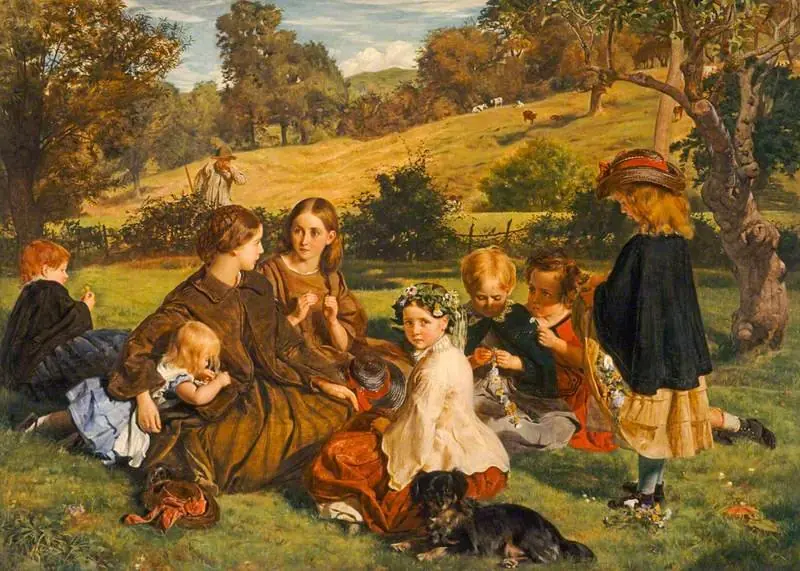
The painting portrays a group of young women in a wooded clearing, engaged in quiet, unposed interaction. One holds a basket of cherries, another reclines on the grass, and a third reaches toward the fruit, suggesting a moment of shared stillness. No overt symbolism is present; the scene derives its significance from its intimacy and authenticity. The figures’ simple clothing and natural posture convey a sense of rural leisure, rooted in the observation of real life rather than romanticized convention.
Technique & Style
Menn employed soft, observational brushwork to render the dappled light filtering through trees and the textures of fabric and foliage. Colors are muted yet harmonious, with warm tones in the skin and clothing contrasting against the cool greens of the undergrowth. The composition avoids dramatic perspective, favoring a level, immersive view that draws the viewer into the scene. Light is handled with subtlety, suggesting late afternoon without artificial emphasis, characteristic of Barbizon-inspired naturalism.
History & Provenance
Created during Menn’s formative years, the painting emerged from his engagement with French landscape traditions after studying in Paris. It reflects his commitment to painting outdoors, a practice he later promoted in Switzerland. While specific early ownership records are limited, the work is documented in Swiss collections by the late 19th century and remains part of the national artistic discourse on realism and landscape.
Context
In mid-19th century Switzerland, academic painting still dominated, but Menn and a small circle of artists began challenging its conventions. Inspired by French contemporaries like Corot and Millet, he turned toward rural subjects rendered with honesty and sensitivity. This painting exemplifies a quiet revolution in Swiss art: the shift from staged compositions to direct observation of nature and ordinary people, aligning with broader European trends toward realism.
Legacy
Though not widely exhibited outside Switzerland, the painting stands as an early example of the country’s engagement with plein-air realism. Menn’s influence extended through his teaching, helping establish landscape painting as a legitimate subject in Swiss academies. This work, with its restrained emotion and attention to light, contributed to a broader redefinition of artistic value in Swiss culture, prioritizing authenticity over spectacle.
Artist & collection
Artist
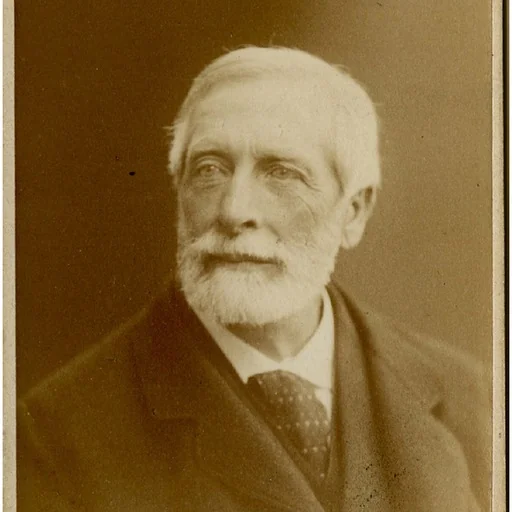
Barthélemy Menn (20 May 1815 – 10 October 1893) was a Swiss painter and draughtsman who introduced the principles of plein-air painting and the paysage intime into Swiss art.