Artwork
Azaleas
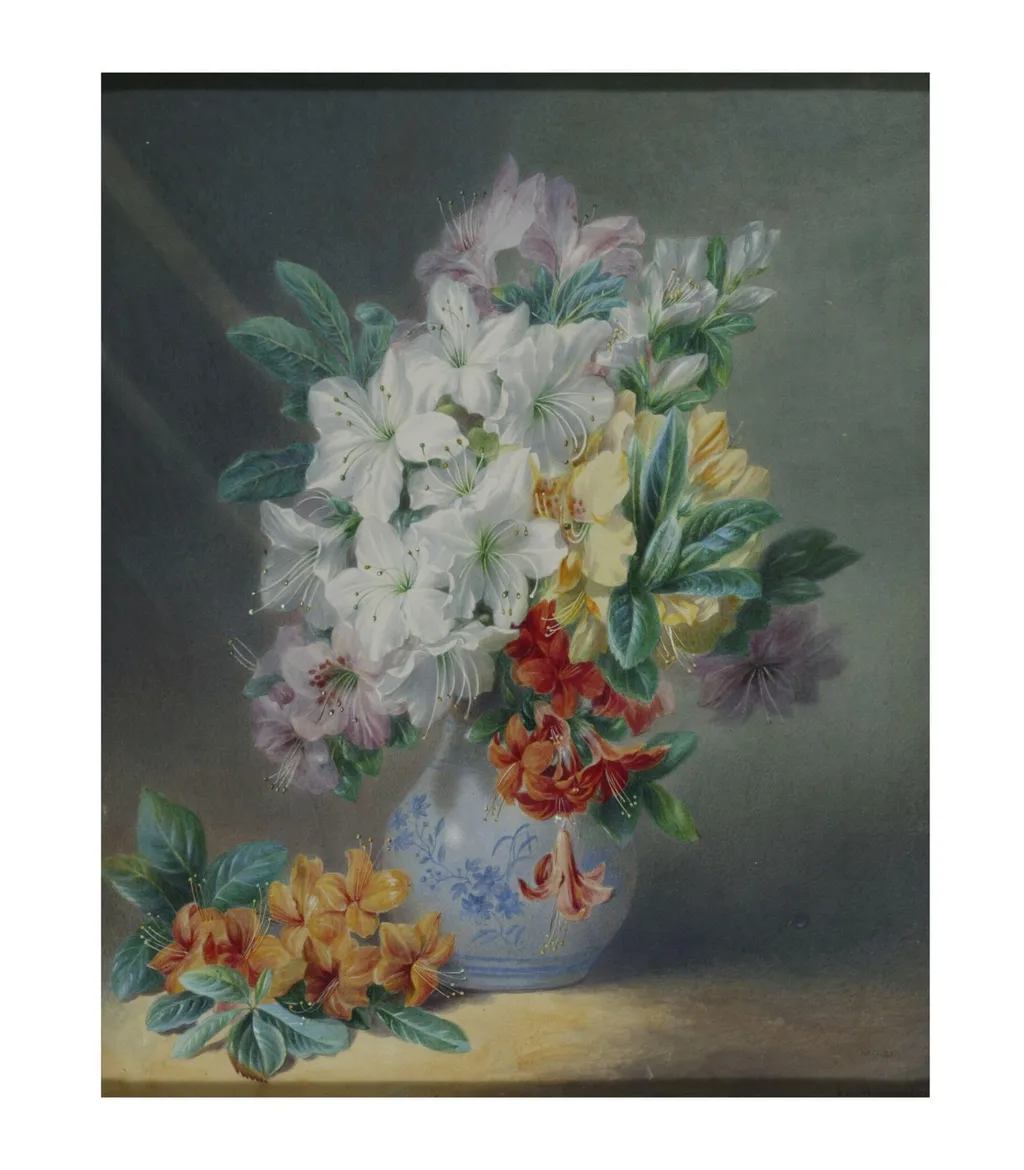
Azaleas is a watercolor work on paper by the British Romanticist artist Valentine Bartholomew. It dates from 1840 and is held in the collection of the Victoria and Albert Museum.
About this work
Overview
Azaleas is a watercolour painting by Valentine Bartholomew, created during the height of his career as a botanical artist.
Azaleas is a watercolour painting by Valentine Bartholomew, created during the height of his career as a botanical artist. It depicts a modest arrangement of azaleas in a patterned ceramic vase, rendered with quiet precision. The work exemplifies Bartholomew’s reputation for botanical accuracy and refined composition, earning recognition in major Victorian exhibition venues such as the Royal Academy and the Old Watercolour Society.
Subject & Meaning
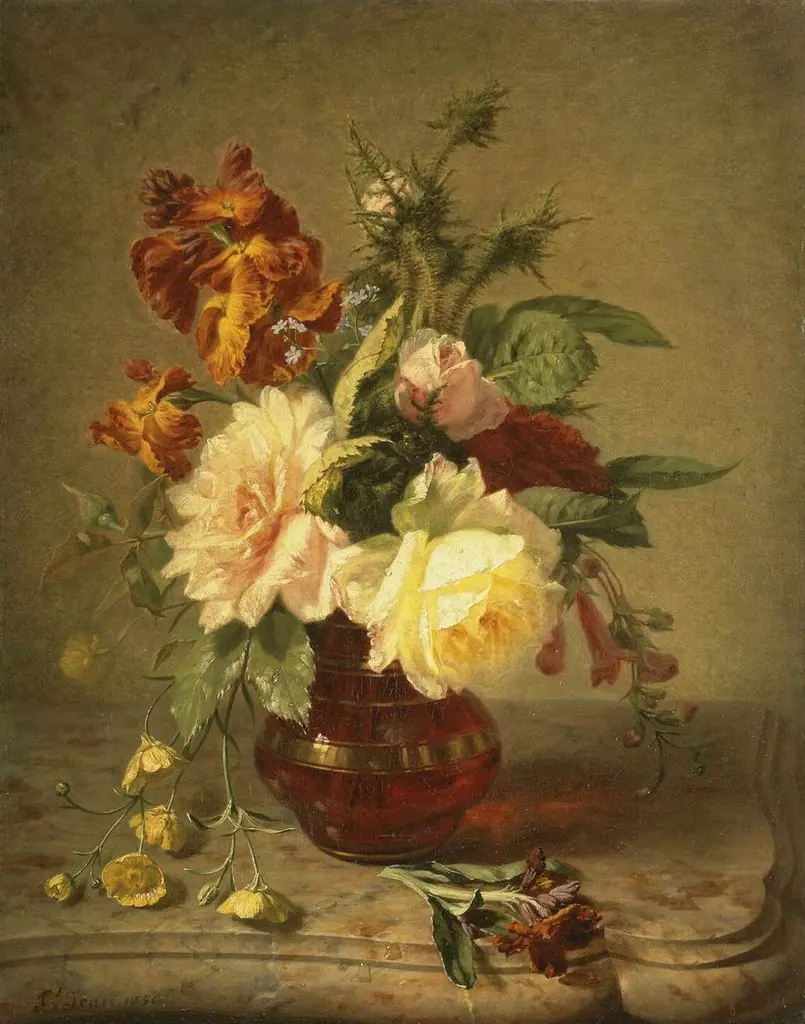
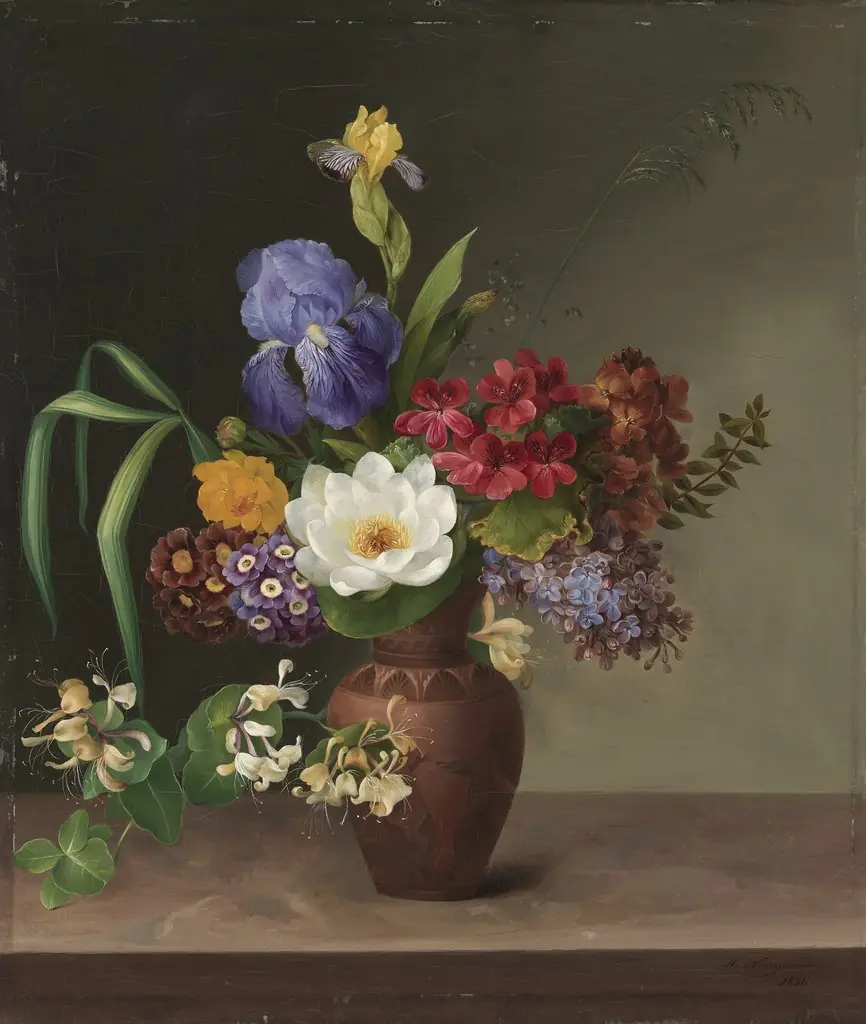
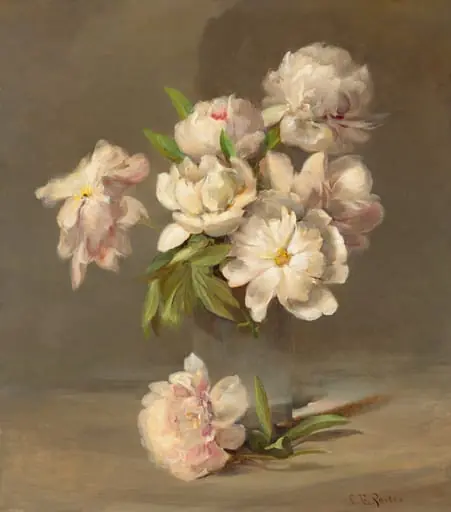
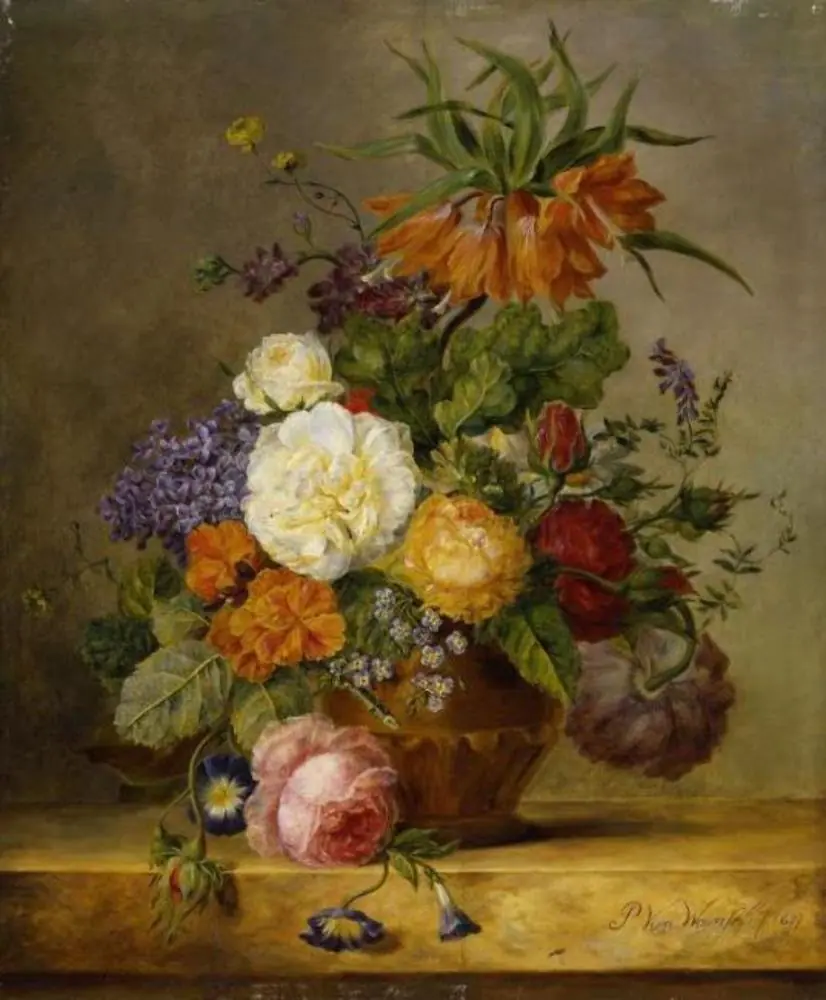
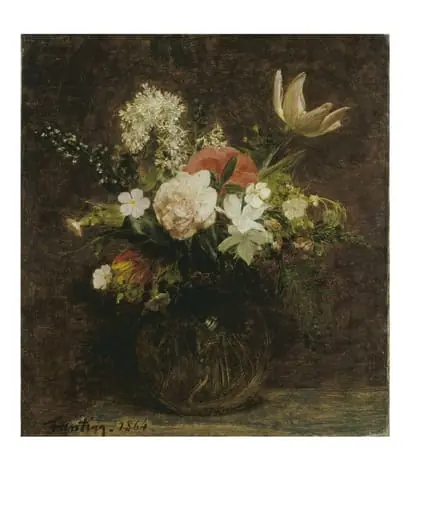
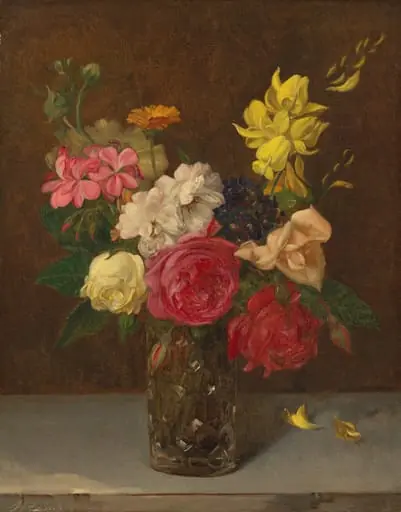
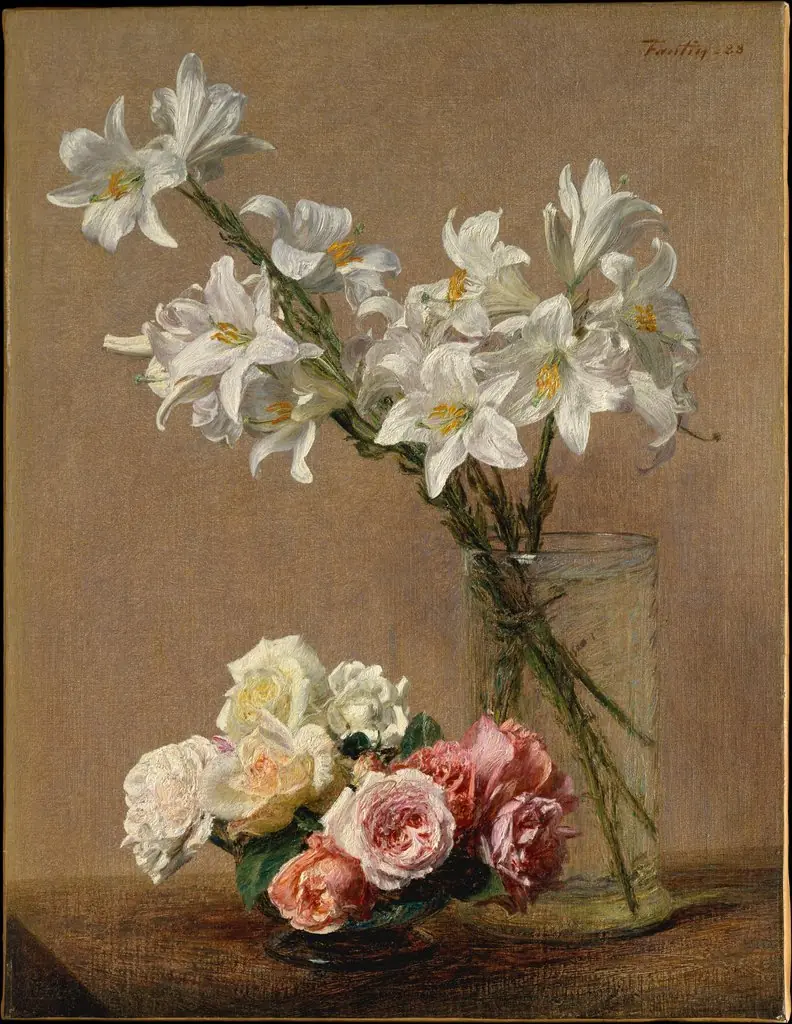
The painting presents a simple bouquet of azaleas in white, yellow, and orange, arranged without rigid symmetry. The flowers are rendered with attention to natural variation in petal shape and color gradation, suggesting observation from life rather than idealization. The muted greenish-gray background and restrained palette emphasize the flowers’ organic presence, reflecting a Victorian taste for botanical truth over theatrical display.
Technique & Style
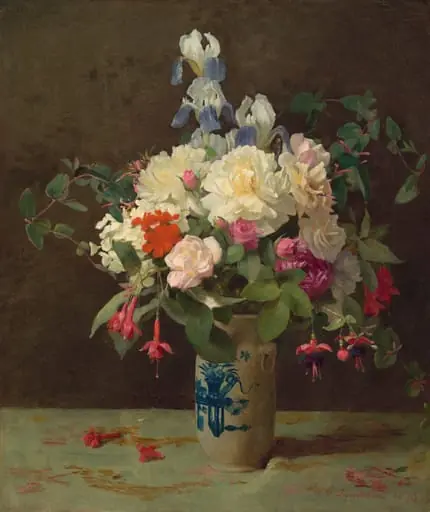
Bartholomew employed transparent watercolour washes to build subtle tonal shifts and delicate highlights, capturing the translucency of petals and the glossy sheen of leaves. The blue-and-white vase, with its faint floral motif, is rendered with fine linework and restrained detail, grounding the composition without competing for attention. The technique prioritizes clarity and restraint, aligning with the watercolour tradition’s emphasis on luminosity and control.
History & Provenance
Valentine Bartholomew held the official title of Flower Painter to Queen Victoria, a role that underscored his standing in Victorian artistic circles. Azaleas was likely created during the 1840s–1860s, a period when he regularly exhibited at the Royal Academy and the Old Watercolour Society. While the painting’s early ownership is unrecorded, its survival reflects the enduring interest in domestic botanical art among collectors of the era.
Context
In mid-nineteenth-century Britain, botanical illustration flourished alongside scientific inquiry and domestic horticulture. Azaleas, a popular ornamental plant, symbolized both aesthetic refinement and the era’s fascination with cultivated nature. Bartholomew’s work fits within a broader tradition of still-life painting that valued accuracy and quiet beauty, distinct from the dramatic narratives of academic history painting.
Legacy
Bartholomew’s approach influenced later generations of botanical artists who prioritized observational fidelity over romantic embellishment. Though not widely known today, his watercolours remain in institutional collections as examples of Victorian floral art’s technical discipline. Azaleas endures as a quiet testament to the artistic value placed on botanical study during a time when nature was both science and solace.
Artist & collection
Artist
Valentine Bartholomew spent his days painting flowers in watercolor for Queen Victoria’s court, where every petal had to look perfect.