Artwork
Atlantida
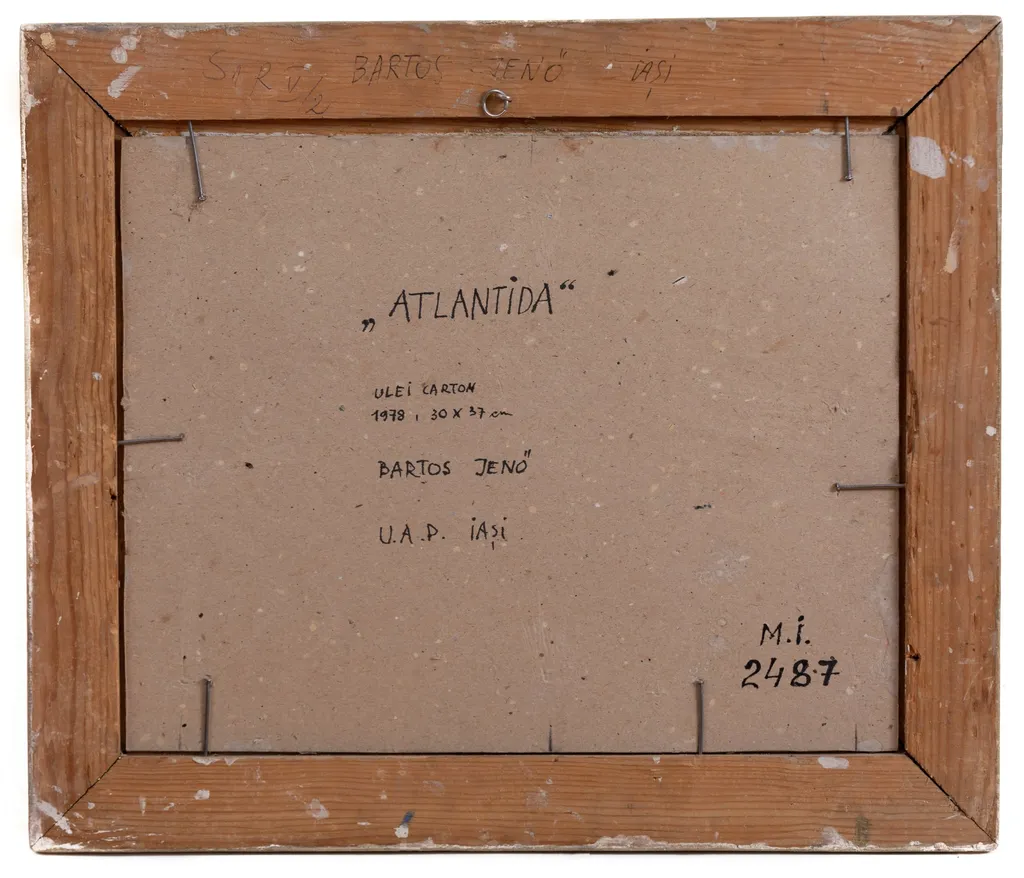
Atlantida is a print by Bartoș Jeno. It dates from 1978 and is held in the collection of the Moldova National Museum Complex.
About this work
In the image, a subtle visual detail is the use of chiaroscuro, which adds depth and dimension to the marine scene depicted in the painting.
The painting "Atlantida" by Bartoș Jeno, created in 1978, is a print that falls under the marine visual genre. The artwork is held at the Museum of Ethnography.
In the image, a subtle visual detail is the use of chiaroscuro, which adds depth and dimension to the marine scene depicted in the painting. This technique is evident in the way light and shadow are used to create a sense of volume and texture in the artwork.
To explore more works that utilize this technique, look up the artist Bartoș Jeno.
Overview
Atlantida is a 1978 print by Hungarian artist Bartoș Jeno, classified within the marine visual tradition. Executed as a graphic work, it is part of the collection at the Museum of Ethnography. The piece does not depict a literal narrative but evokes atmospheric marine conditions through tonal contrasts and restrained composition, reflecting the artist’s interest in natural elements and their symbolic resonance.
Subject & Meaning
The subject of Atlantida is an abstracted seascape, evoking the mythic lost continent without literal representation. Rather than illustrating Atlantis directly, Jeno suggests its presence through mood and form—darkened waters, obscured horizons, and ambiguous spatial depth invite contemplation of memory, disappearance, and the sublime power of the ocean. The title functions as a poetic anchor, not a literal depiction.
Technique & Style
Jeno employs chiaroscuro to model form and space, using graded tonal shifts rather than line to define the sea and sky. The print’s limited palette enhances the sense of mystery, with deep shadows contrasting muted mid-tones. The technique, rooted in printmaking traditions, emphasizes texture and atmosphere over detail, aligning with a modernist tendency toward suggestion rather than description.
History & Provenance
Created in 1978, Atlantida entered the collection of the Museum of Ethnography in Budapest, where it remains today. Its acquisition reflects the institution’s broader interest in 20th-century Hungarian graphic art that engages with cultural memory and natural symbolism. The work was produced during a period of heightened experimentation in Hungarian printmaking, though Jeno’s approach remained introspective and non-political.
Context
In late 1970s Hungary, artists often turned to myth and nature as indirect modes of expression under state cultural constraints. Atlantida fits within this trend, using the sea as a metaphor for the unseen or lost. Jeno’s work diverged from overtly political art, instead focusing on quiet, elemental themes that resonated with broader existential concerns of the era.
Legacy
Atlantida contributes to the recognition of Bartoș Jeno as a significant figure in Hungarian graphic art of the late 20th century. While not widely exhibited outside Hungary, the work exemplifies a quiet, tonal approach to marine imagery that influenced later generations of printmakers interested in atmosphere over narrative. Its presence in a museum of ethnography underscores its cultural, rather than purely aesthetic, significance.
Artist & collection
Artist
Bartoș Jeno left two small pieces you’ll recognize right away: a woman’s portrait, *Portret de fată*, and a print called *Atlantida* from 1978.