Artwork
Voievod
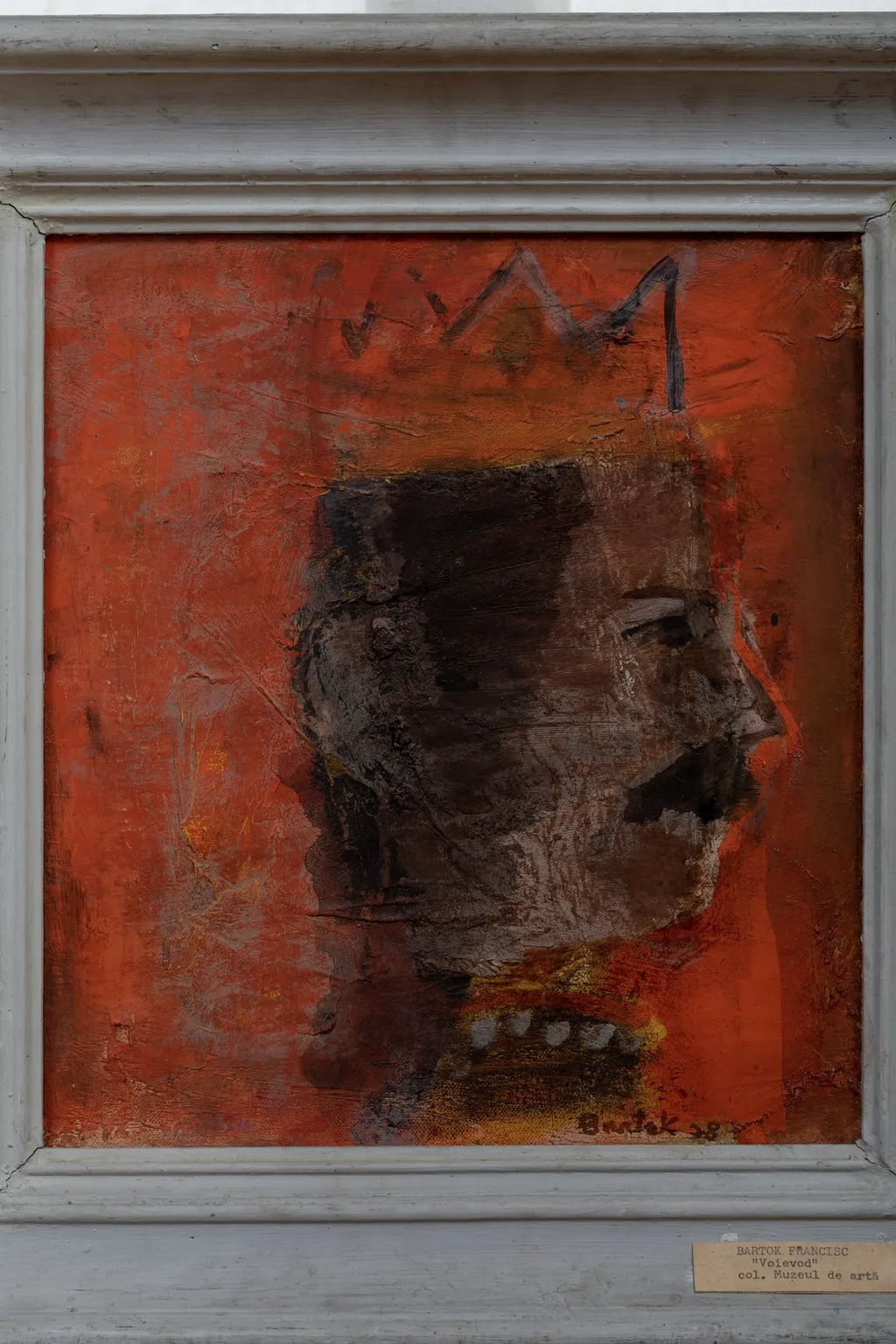
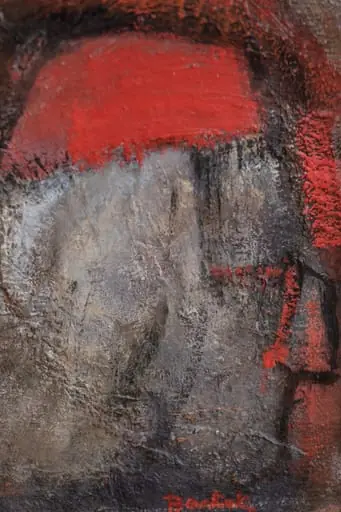
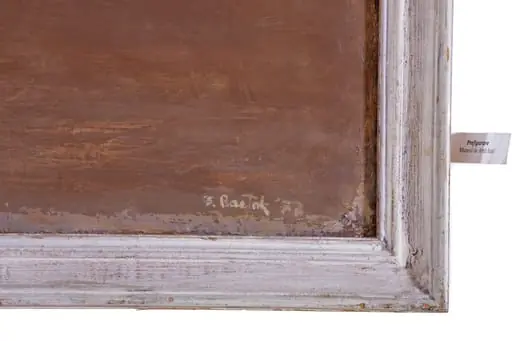
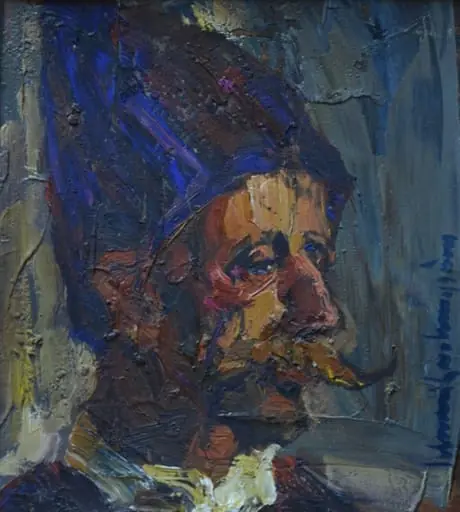
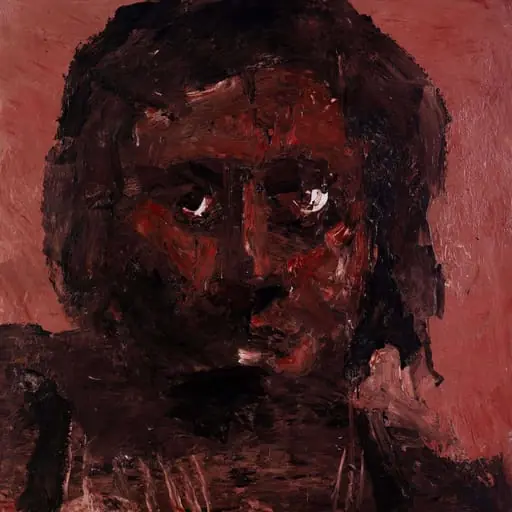
Voievod is a print by Bartok Francisc. It is held in the collection of the Moldova National Museum Complex. This portrait depicts a male figure in profile, wearing a crown and rendered with a heavy, tactile application of paint.
About this work
Overview
Thick brushwork and a rough surface texture give the image a tactile, almost sculptural quality, reinforcing its solemn mood.
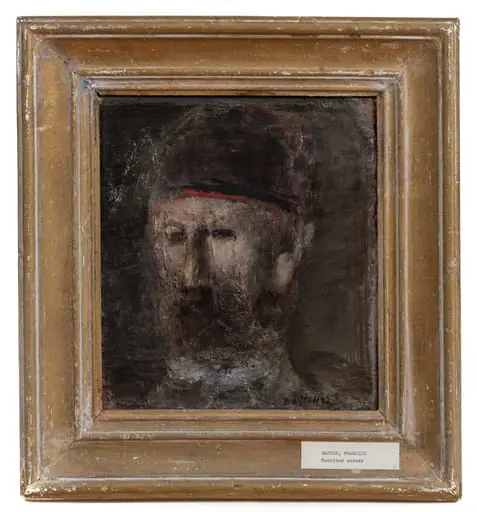
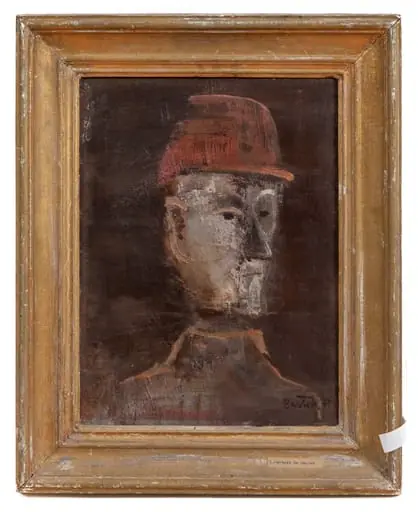
This portrait depicts a male figure in profile, wearing a crown and rendered with a heavy, tactile application of paint. The background is a solid red, contrasting with the dark, muted tones of the face and beard. Thick brushwork and a rough surface texture give the image a tactile, almost sculptural quality, reinforcing its solemn mood. The limited palette of browns and grays contributes to an atmosphere of quiet dignity.
Subject & Meaning
The figure is identified as a voievod, a historical title for a regional ruler in Eastern Europe. The crown signifies authority, while the profile view and somber expression suggest introspection or gravitas rather than triumph. The absence of ornate detail or symbolic objects focuses attention on the individual’s presence, implying a portrait of leadership defined by weight of responsibility rather than display.
Technique & Style
The painting employs a direct, expressive technique with visible, layered brushstrokes and a coarse impasto. Colors are restrained—dominated by earthy browns, ashen grays, and the flat red background—creating a sense of austerity. The texture is not decorative but structural, emphasizing the physicality of the paint and the psychological intensity of the subject through material presence rather than refinement.
History & Provenance
The work is attributed to Bartok Francisc, a lesser-known artist active in the early 20th century, primarily in Transylvania. Little documentation exists regarding its commission or early ownership. It likely originated in a regional context, possibly as part of a series or personal exploration of local historical identity, rather than a state-sponsored portrait.
Context
Created during a period of shifting national identities in Central Europe, the image reflects a broader cultural interest in historical figures as symbols of regional heritage. The stylistic roughness aligns with early modernist tendencies that rejected academic polish in favor of emotional authenticity. The voievod, as a pre-modern ruler, may have served as a metaphor for enduring local autonomy amid political upheaval.
Legacy
Though not widely exhibited or studied, the painting remains a quiet example of regional modernist portraiture. Its emphasis on materiality and psychological depth resonates with contemporaneous movements that valued raw expression over idealization. It contributes to a broader, though underrecognized, body of work exploring Eastern European historical memory through personal, tactile artistry.
Artist & collection
Artist
Bartok Francisc painted Romanian scenes and portraits across the 20th century. He left works like *Natură statică cu flori* (1966) and *Portretul pictorului Coreliu Baba*, plus historical scenes such as *23 august…