Artwork
madonna col bambino in trono
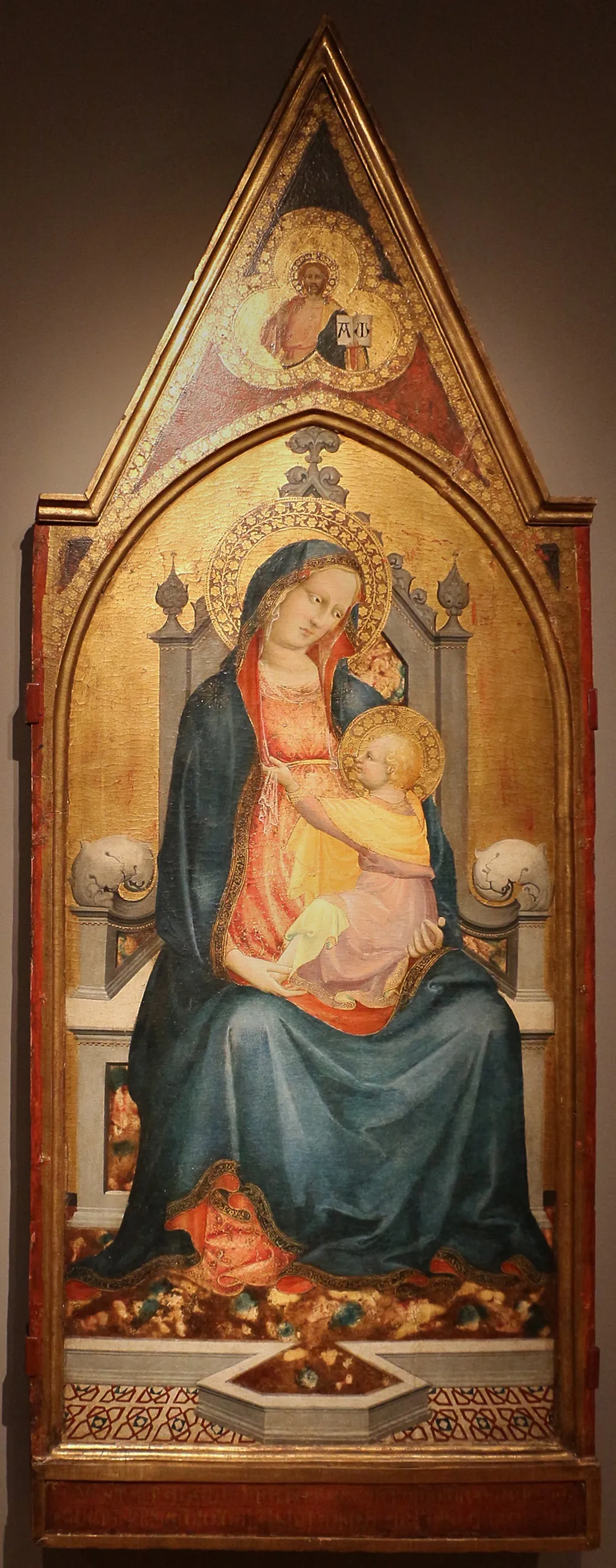
madonna col bambino in trono is an unspecified painting by the Early Renaissance artist Battista di Biagio Sanguigni. It dates from 1419 and is held in the collection of the Cleveland Museum of Art.
About this work
Overview
Battista di Biagio Sanguigni, an artist active in early 15th-century Florence, completed "Madonna col Bambino in trono" in 1419. This early Renaissance painting, depicting a sacred theme, is now part of the collection at The Cleveland Museum of Art. It exemplifies the devotional art prevalent during its creation, offering a glimpse into the artistic practices of the period.
Subject & Meaning
The painting centers on the Virgin Mary, depicted in a dark blue robe over a red dress, cradling the Christ Child.
The painting centers on the Virgin Mary, depicted in a dark blue robe over a red dress, cradling the Christ Child. Both figures are seated on an ornate, throne-like structure, emphasizing their divine status. A smaller, haloed figure hovers above, while subtle background scenes add narrative depth. This composition underscores the work's devotional purpose, inviting contemplation of the sacred figures.
Technique & Style
Characteristic of its era, the artwork employs extensive gold leaf, particularly around the halos and architectural elements, to convey spiritual radiance and opulence. The artist meticulously renders the figures, using light to create a gentle, luminous quality on their faces. This approach enhances the sacred atmosphere, reflecting the artistic conventions of early Renaissance Florentine painting.
Artist & collection
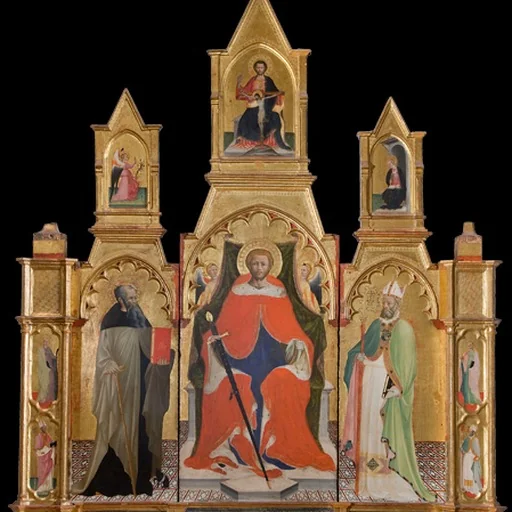
Artist
Battista di Biagio Sanguigni, formerly known as the Master of 1419 (active 1393–1451) was an Italian painter from the region around Florence in the first half of the 15th century.
