Artwork
Äidin iloa
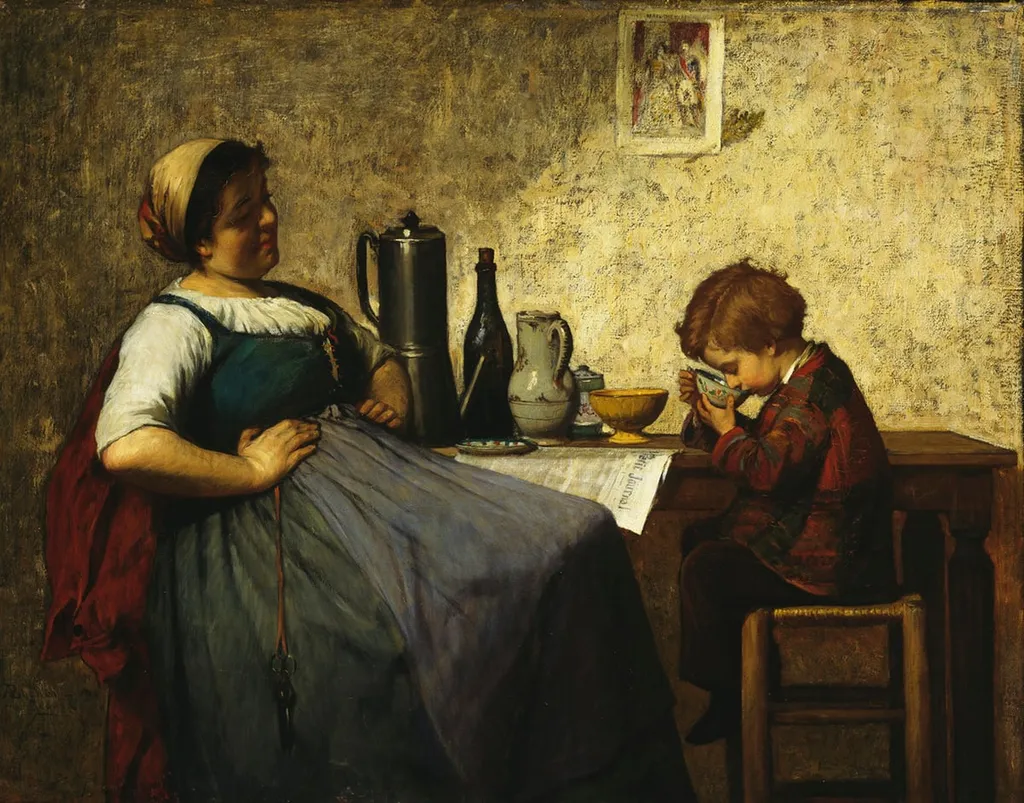
Äidin iloa is an unspecified painting by Adolf von Becker. It dates from 1880 and is held in the collection of the Finnish National Gallery.
About this work
Overview
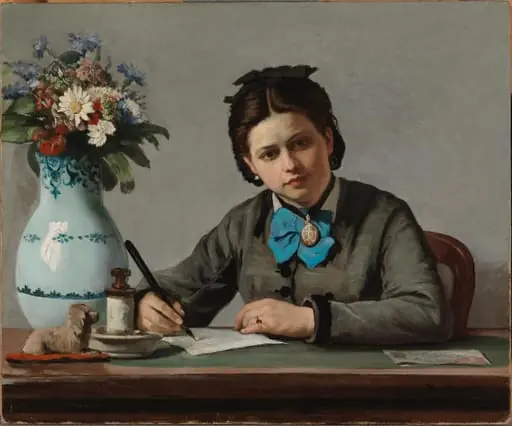
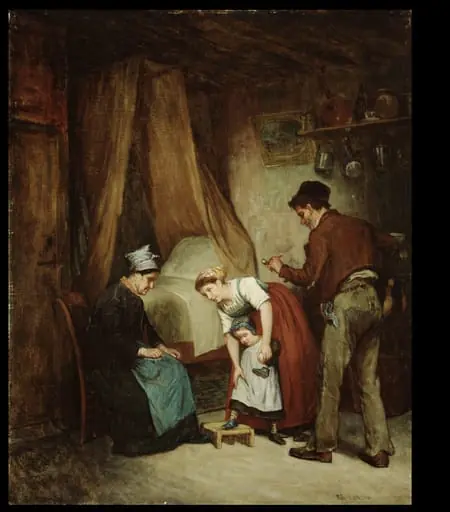
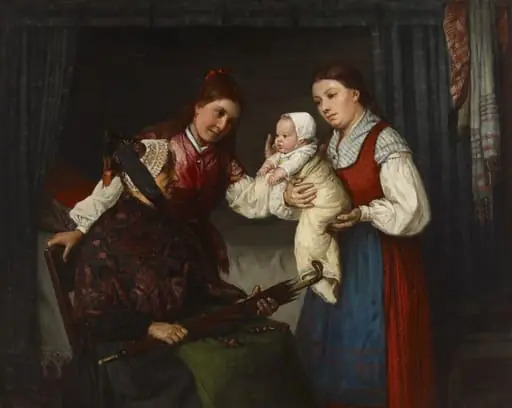
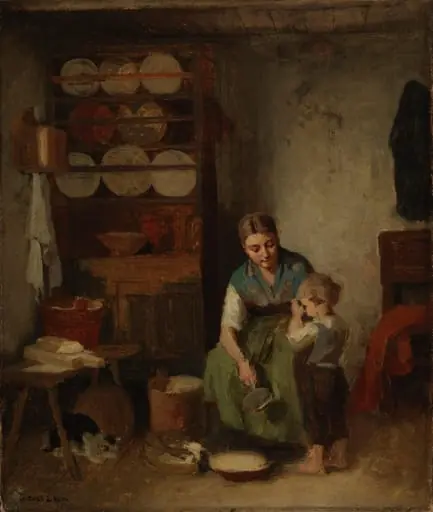
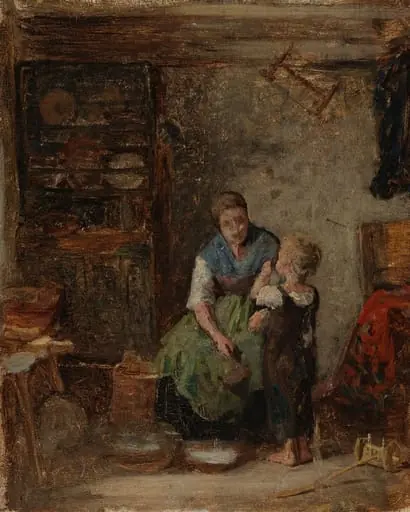
Painted around 1880 by Adolf von Becker, Äidin iloa presents a quiet domestic moment between a mother and her young son. Set in a modest interior, the scene avoids theatricality, focusing instead on the unspoken bond between the two figures. The composition is restrained, with attention to subtle gestures and the textures of everyday objects, reflecting a realist approach to private life.
Subject & Meaning
The absence of external distractions emphasizes the emotional stillness of the moment, valuing ordinary familial connection over grandeur.
The painting captures a moment of quiet engagement: the mother, seated with an arm around her child, observes him as he concentrates on a small object in his hands. No narrative is spelled out, but the intimacy suggests a routine, tender interaction—perhaps sharing a toy or a treat. The absence of external distractions emphasizes the emotional stillness of the moment, valuing ordinary familial connection over grandeur.
Technique & Style
Becker employs a muted palette dominated by darks and soft neutrals, with the boy’s red-and-black jacket providing a subtle focal point. Brushwork is precise yet unobtrusive, rendering fabrics, wood, and metal with quiet realism. The background wall, slightly textured and unadorned, reinforces the sense of a lived-in space. Light falls gently, modeling forms without dramatic contrast, enhancing the painting’s calm atmosphere.
History & Provenance
Created during Becker’s mature period in Finland, the work reflects his engagement with Scandinavian domestic realism. It remained in private collections in Finland for much of the 20th century before entering a public institution. No major exhibitions or documented controversies surround its history; its significance lies in its quiet representation of everyday life rather than public acclaim.
Context
In late 19th-century Finland, artists increasingly turned to intimate, non-idealized scenes of home life as national identity took shape. Becker’s work aligns with this trend, rejecting romanticized history painting in favor of understated observations. The painting’s focus on maternal care and domestic order resonated with contemporary ideals of family and moral stability in a rapidly modernizing society.
Legacy
Äidin iloa endures as a representative example of Finnish realist painting from the late 1800s. It is not widely reproduced or celebrated in international circles, but within Finland, it is recognized for its sensitivity to domestic emotion and its contribution to the visual language of everyday life. Its enduring value lies in its restraint and authenticity.
Artist & collection

Artist
Adolf von Becker was a Finnish genre painter and art professor of German descent. He was one of the first Finnish artists to study in Paris, who taught many of the young artists of the Golden Age of Finnish Art.