Artwork
Study for Nude with Hexagonal Quilt
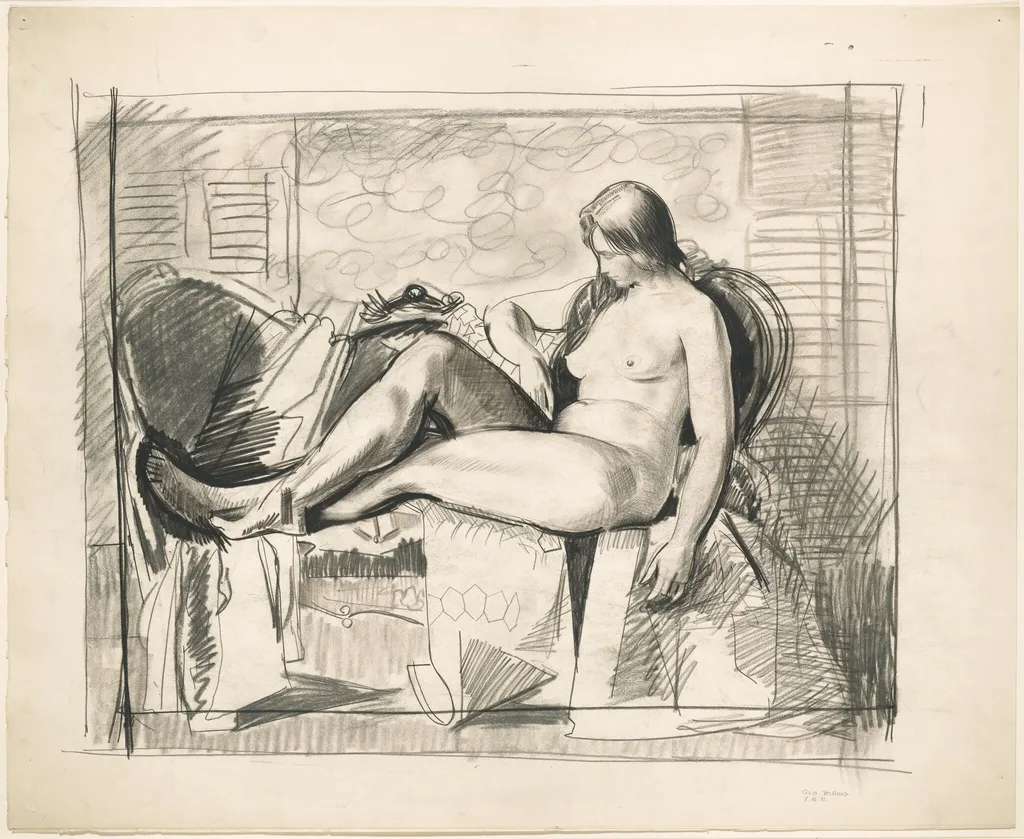
Study for Nude with Hexagonal Quilt is a charcoal drawing by George Bellows. It dates from 1924 and is held in the collection of the National Gallery of Art.
About this work
Overview
George Bellows produced a preparatory drawing titled Study for Nude with Hexagonal Quilt in 1924. Executed in charcoal and black crayon on wove paper that has been mounted to paperboard, the work functions as a study for a larger composition featuring a reclining nude figure.
Subject & Meaning
The drawing depicts an interior scene with two figures. A nude sitter occupies a chair, a quilt folded across the lap, while a second figure stands behind, turned away from the viewer. A modest table and a patterned wall complete the setting, suggesting a private, domestic environment.
Technique & Style
Bellows employed rapid, gestural lines characteristic of a sketch, allowing the charcoal and crayon to convey form with a loose, almost spontaneous quality. The handling of the medium creates a textured, draft‑like surface that emphasizes volume and spatial relationships without detailed finish.
History & Provenance
Created as a study for the later painting Nude with Hexagonal Quilt, the drawing remained in Bellows’s studio archives before entering public collections. Its provenance traces through the artist’s estate and subsequent acquisition by a museum dedicated to early 20th‑century American art.
Artist & collection
Artist
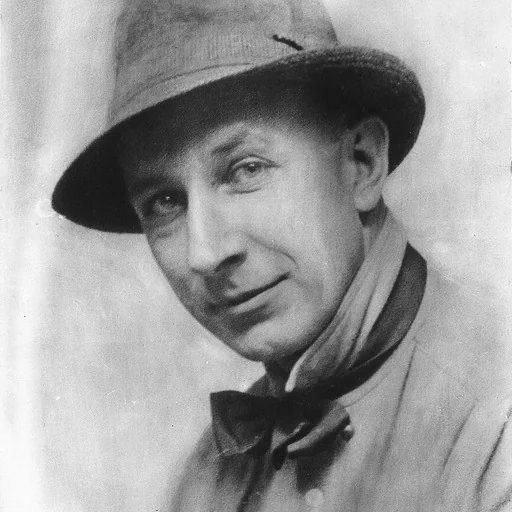
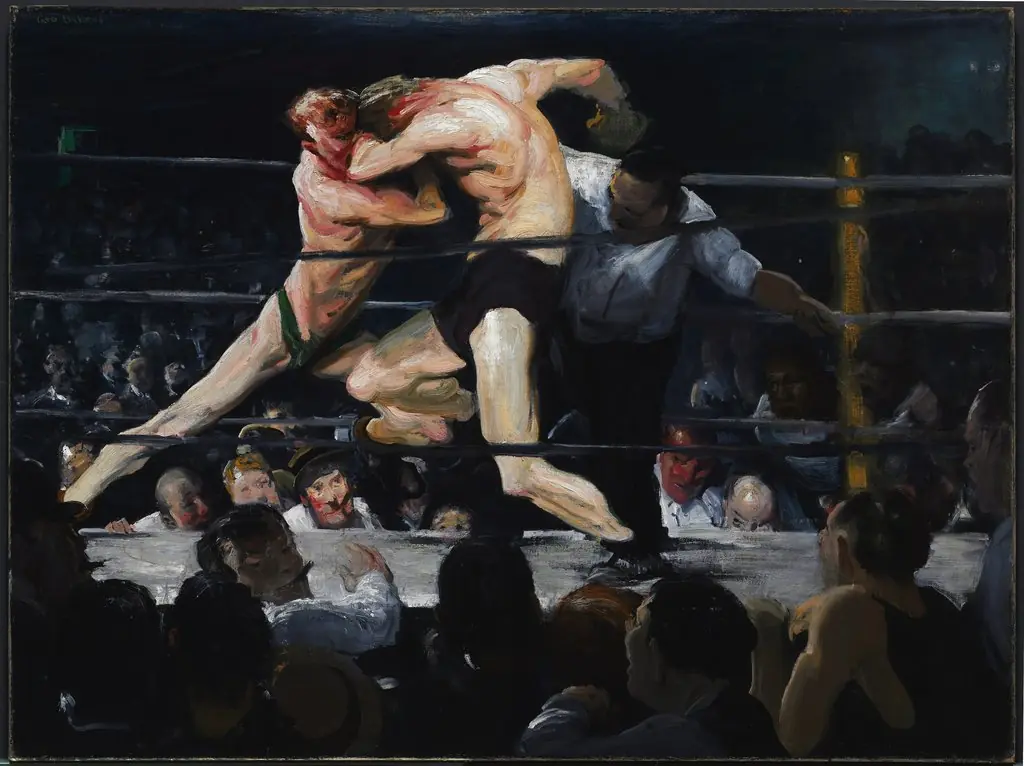
George Wesley Bellows (August 12 or August 19, 1882 – January 8, 1925) was an American realist painter, known for his bold depictions of urban life in New York City.

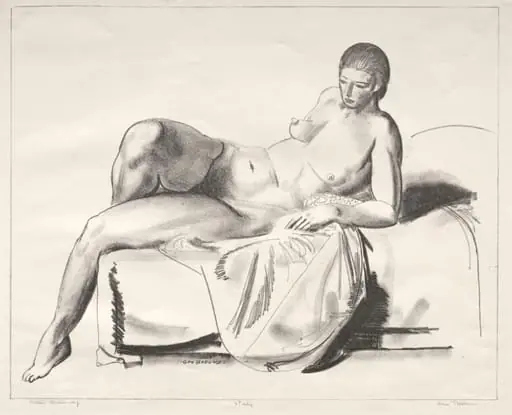 Nude Study, Classic on a Couch
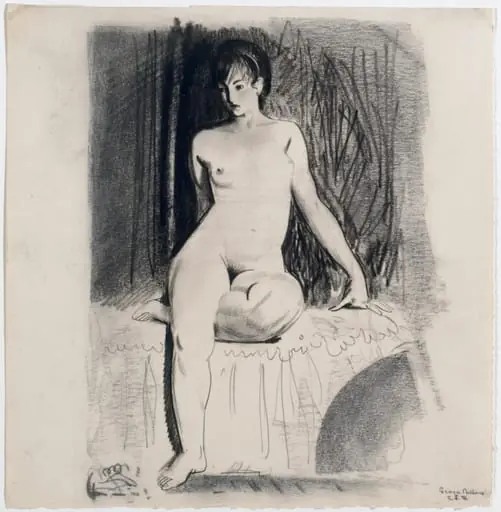 Seated Female Nude (Emma Story Bellows)
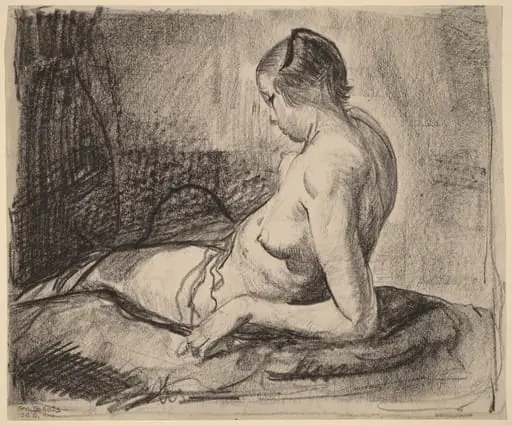 Nude Girl Reclining
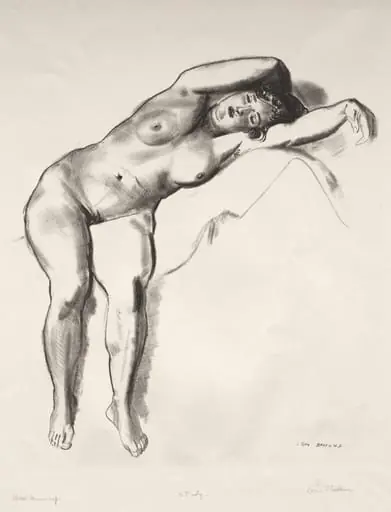 Nude Study, Woman Stretched on Bed
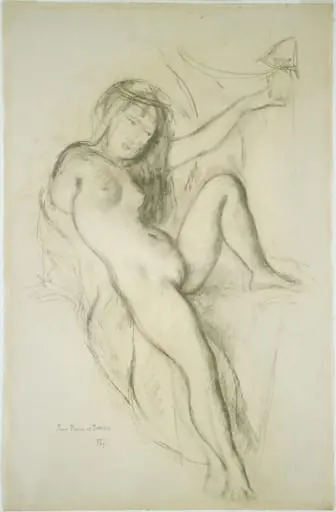 Untitled
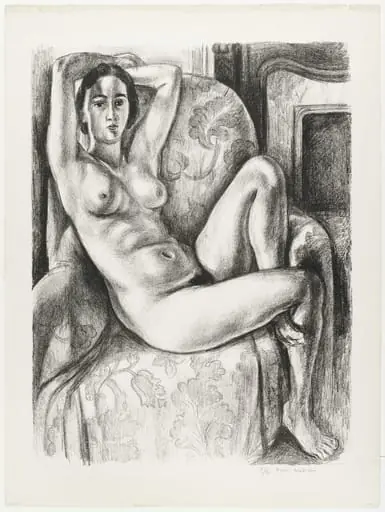 Untitled
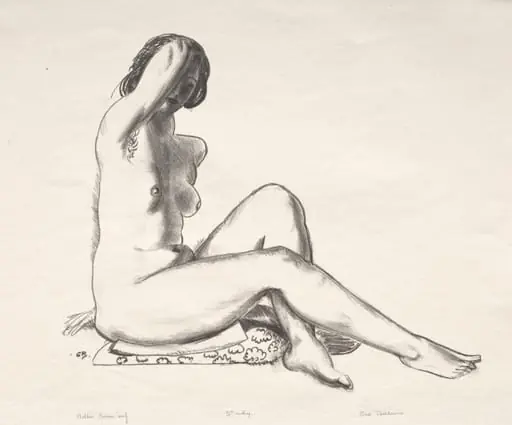 Nude Study, Girl Sitting on a Flowered Cushion
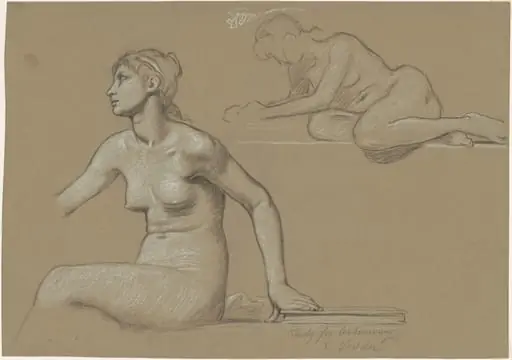 Study for "Astronomy"
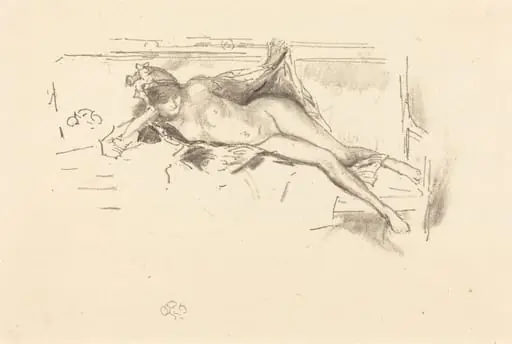 Nude Model, Reclining
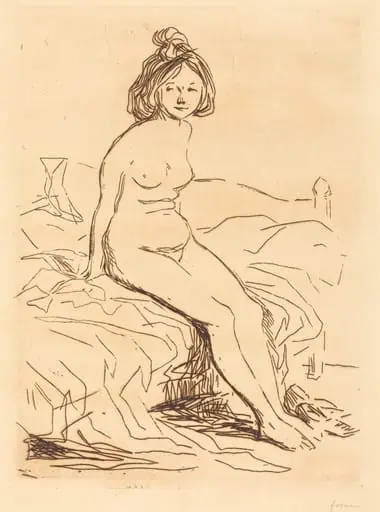 Femme nue, assise sur son lit, de face (Nude Woman, Seated on Her Bed, Front View)
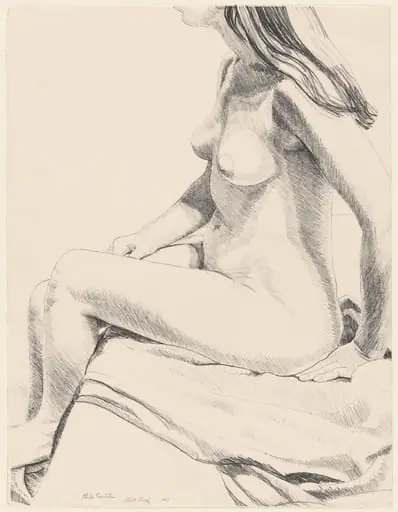 Untitled
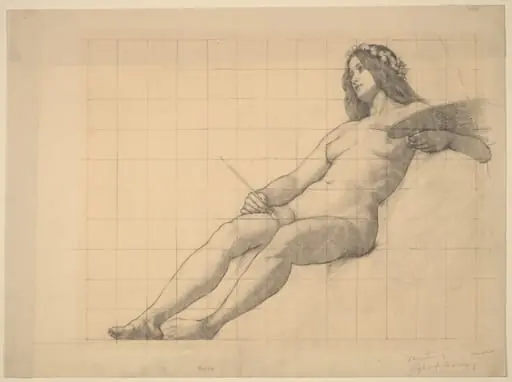 Reclining Female Nude Study for "Painting"