Artwork
Classical Landscape with a Waterfall
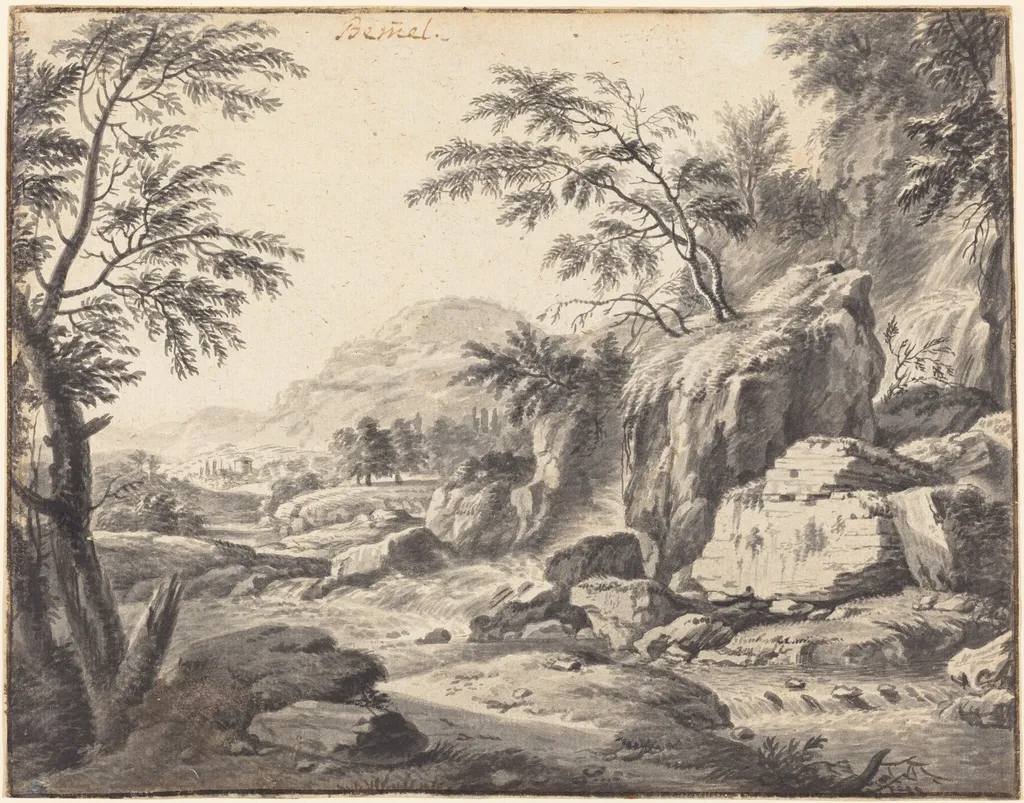
Classical Landscape with a Waterfall is an ink drawing by the Baroque artist Wilhelm von Bemmel. It dates from 1660 and is held in the collection of the National Gallery of Art.
About this work
Overview
The work belongs to a tradition of Northern European landscape drawing that favored quiet observation over dramatic expression.
Created around 1660, this drawing by Wilhelm von Bemmel depicts a tranquil valley scene centered on a cascading waterfall. Executed in gray wash with brown and black pen and ink on laid paper, it reflects the artist’s interest in naturalistic composition rather than theatrical spectacle. The work belongs to a tradition of Northern European landscape drawing that favored quiet observation over dramatic expression.
Subject & Meaning
The scene unfolds in a secluded valley framed by dense trees and rugged cliffs, with distant structures hinting at human presence without intrusion. The waterfall, gently falling over stone, serves as the focal point, its motion contrasting with the stillness of the surrounding foliage. The composition suggests contemplation of nature’s harmony, avoiding narrative or allegory in favor of atmospheric stillness.
Technique & Style
Bemmel employed layered gray washes to model form and suggest atmospheric depth, while fine brown and black ink lines define rock textures and tree branches. The paper’s laid texture subtly enhances the tactile quality of the landscape. His restrained palette and controlled brushwork prioritize spatial clarity and tonal nuance, aligning with the precision of Dutch and German draftsmanship of the period.
History & Provenance
The drawing is attributed to Wilhelm von Bemmel, a German artist active in the mid-seventeenth century, known for his topographical landscapes. While specific early ownership records are sparse, its technical qualities and subject matter place it within a circle of artists who documented natural scenery for private collectors rather than public display.
Context
Though produced during the Baroque era, this work diverges from the movement’s typical dynamism and emotional intensity. Instead, it reflects a quieter, more introspective trend in Northern European art, where landscape drawing served as a study of nature’s order. Such works were often collected as expressions of cultivated taste and scholarly interest in the natural world.
Legacy
Bemmel’s drawing exemplifies the enduring value placed on detailed, serene landscape studies in early modern Europe. Though not widely exhibited today, it remains a representative example of how artists of the time engaged with nature through disciplined draftsmanship, influencing later traditions of topographical and plein air drawing.
Own this work as a print
Artist & collection


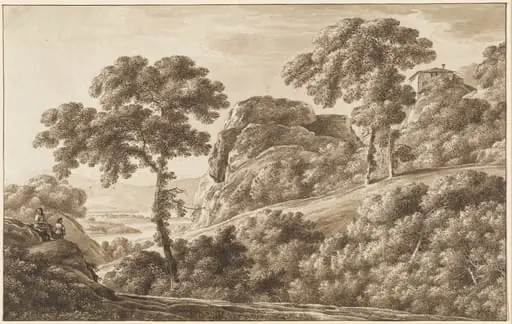 The Isar with Boulders on the Isarhohe
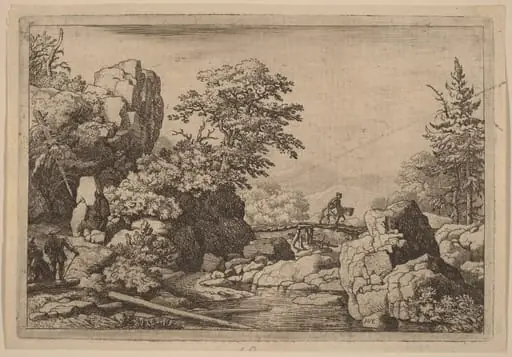 Horseman on a Bridge
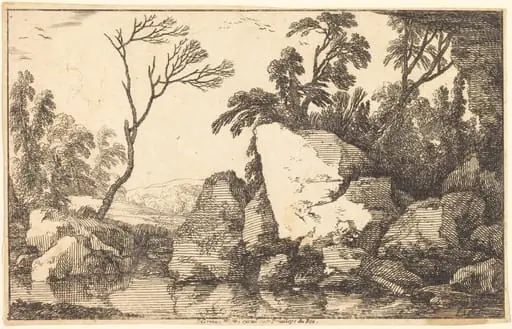 A Rocky Pond
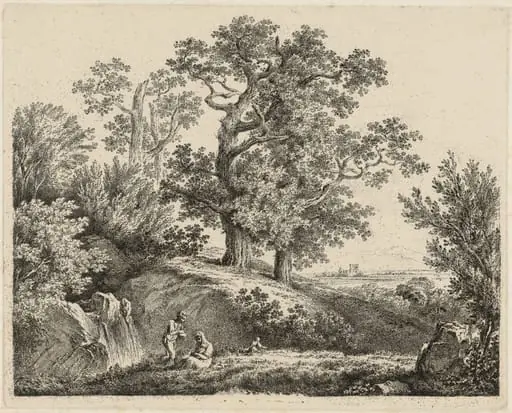 Landscape with a Waterfall and a Resting Family
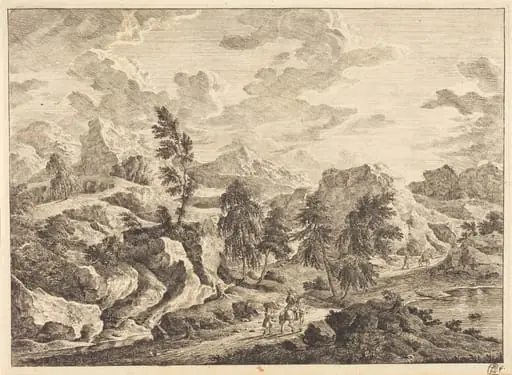 Landscape with the Rising Sun and a Rider with Attendant
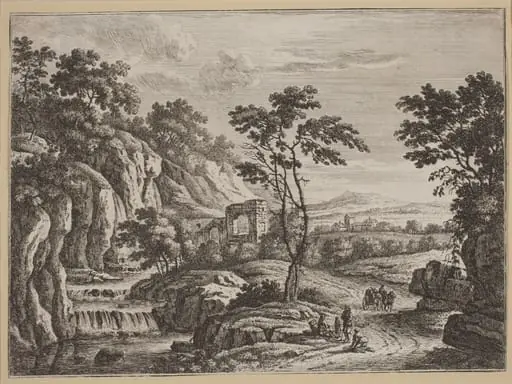 Landscape with Ruins and a Waterfall
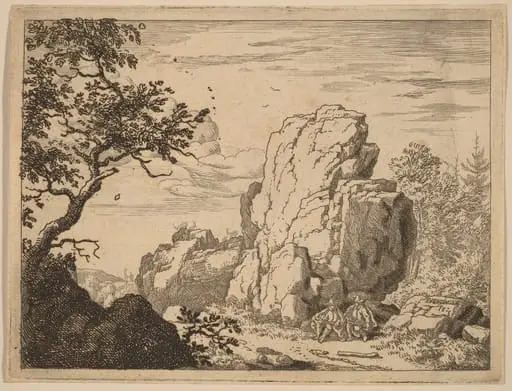 Two Men Seated at the Foot of a High Rock
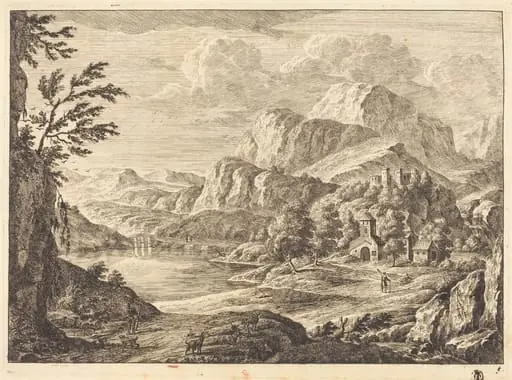 Mountainous Landscape with a Ruined Castle and an Arched Bridge in the Distance
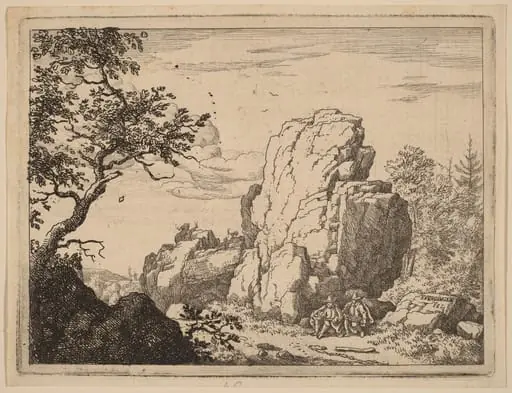 Two Men Seated at the Foot of a High Rock
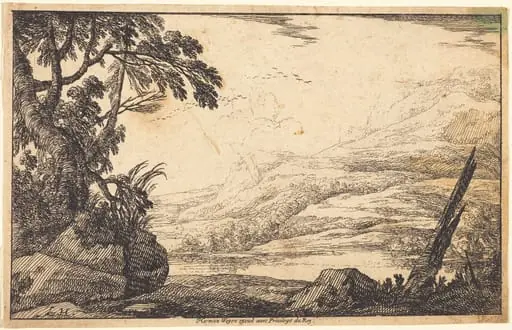 Mountainous Landscape
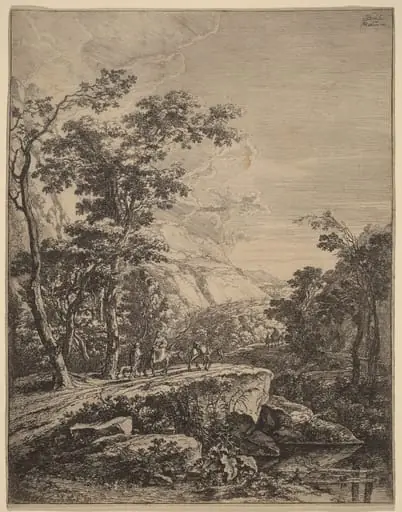 The Woman on the Hinny
 A Young Couple Seated near a Massive Rock Formation