Artwork
Willem V (1748-1806), Prince of Orange-Nassau
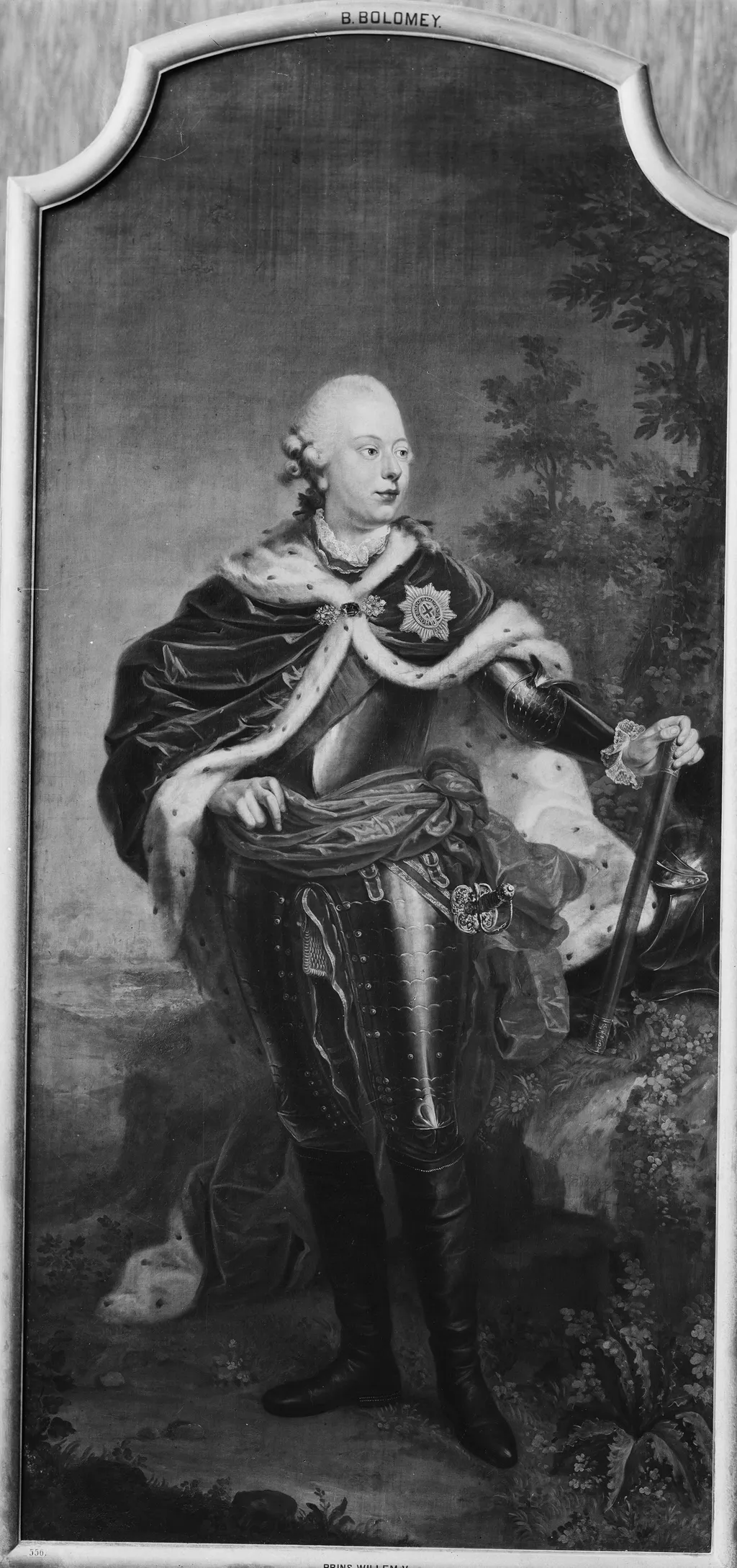
Willem V (1748-1806), Prince of Orange-Nassau is an oil painting by the Rococo painting artist Benjamin Samuel Bolomey. It dates from 1770 and is held in the collection of the Rijksmuseum.
About this work
Overview
Created in 1770 by Swiss artist Benjamin Samuel Bolomey, this oil portrait presents William V, Prince of Orange, in the late Rococo style. The work is part of the Rijksmuseum’s collection and exemplifies the formal portraiture typical of European courts in the eighteenth century.
Subject & Meaning
The sitter, William V, appears in full regalia, his posture dignified as he rests a hand on a sword. The inclusion of medals, a white wig, and fur‑trimmed coat underscores his rank and military authority, while the subdued background keeps the focus on his personhood and status.
Technique & Style
Bolomey renders the prince’s face and hands with a polished, luminous finish, contrasting sharply with the richly folded drapery that catches deep shadows. This handling of light and dark, reminiscent of chiaroscuro, gives the fabrics a tactile presence and heightens the three‑dimensional effect of the figure.
History & Provenance
The portrait was executed during Bolomey’s period of activity in the Netherlands, a time when he received commissions from the Dutch aristocracy. After remaining in private hands for several decades, the painting entered the Rijksmuseum’s holdings, where it is displayed as part of the museum’s representation of Dutch political portraiture.
Artist & collection
Artist
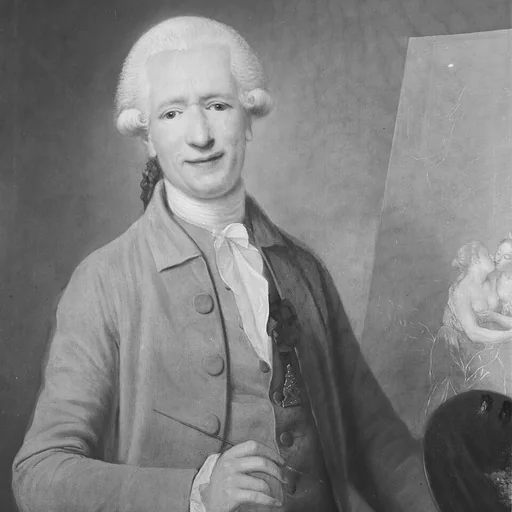
Benjamin Samuel Bolomey (19 May 1739 – 19 December 1819) was a Swiss painter and politician. As an artist he spent most of his career as a portrait painter in the Netherlands.