Artwork
An Artist
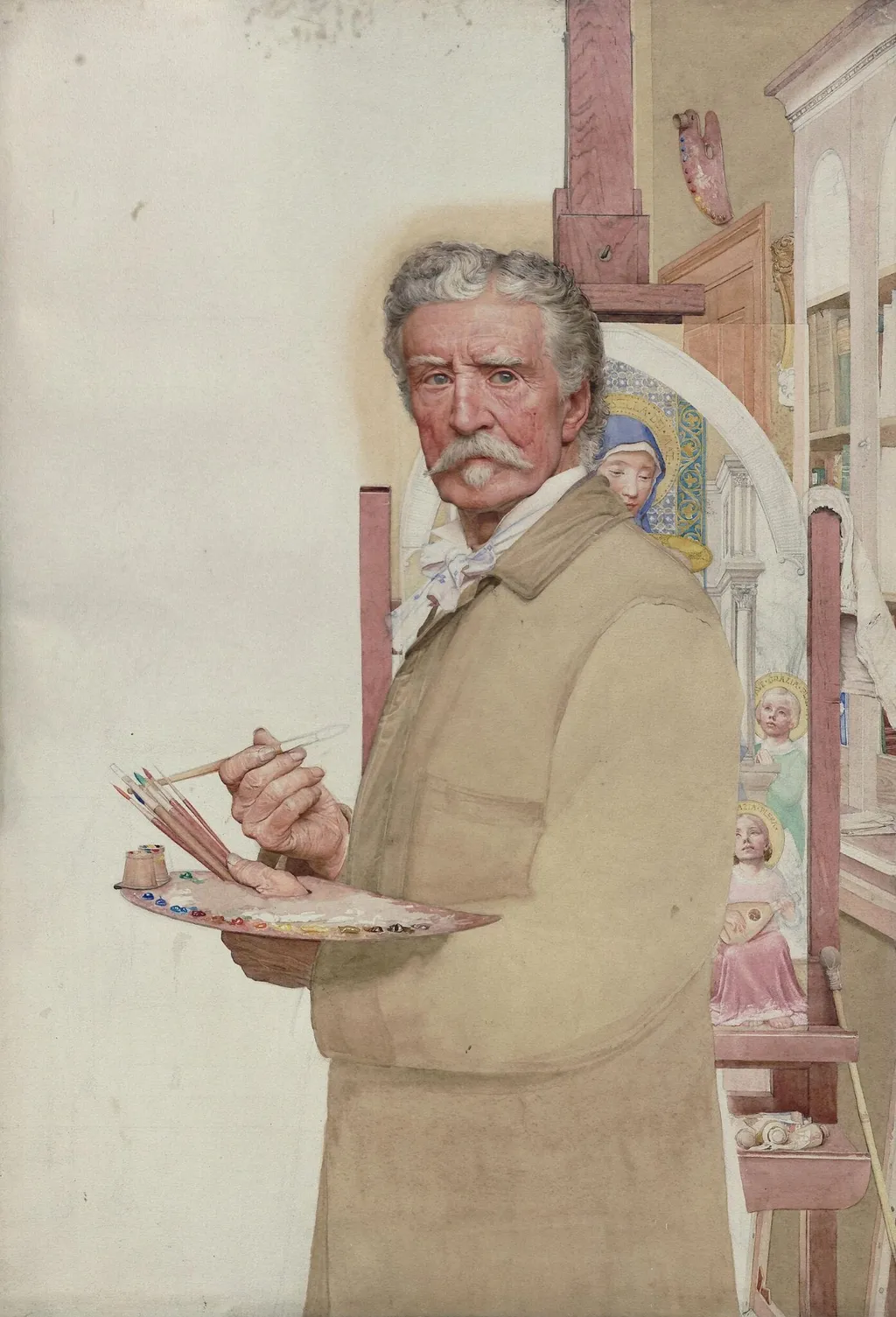
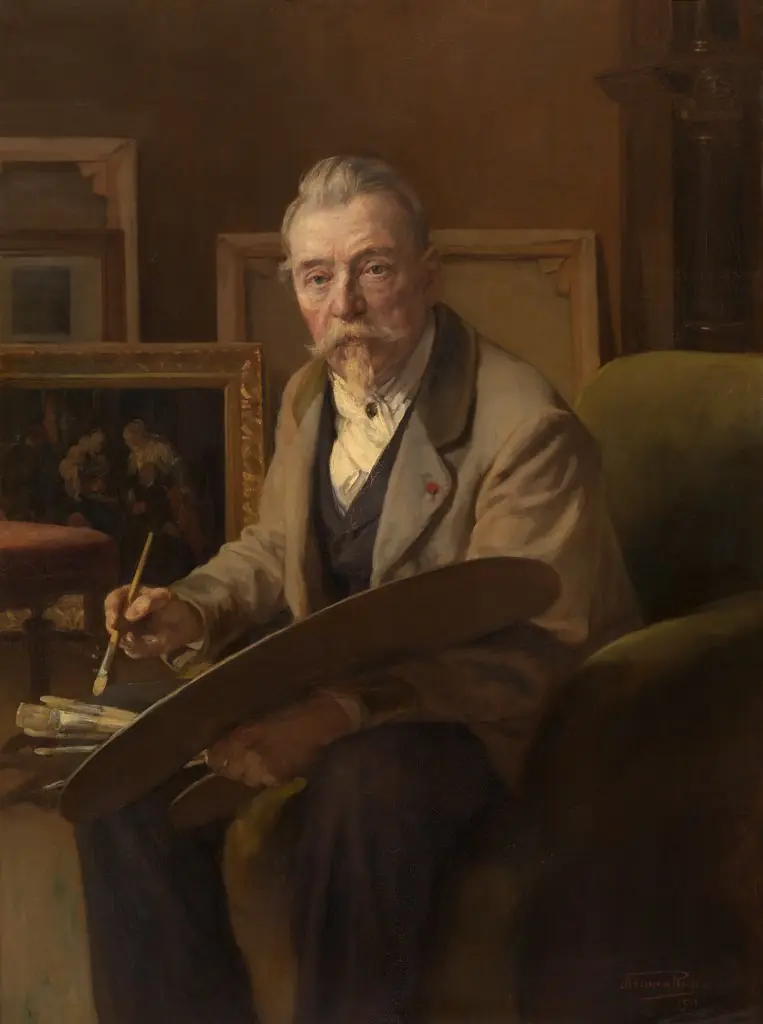
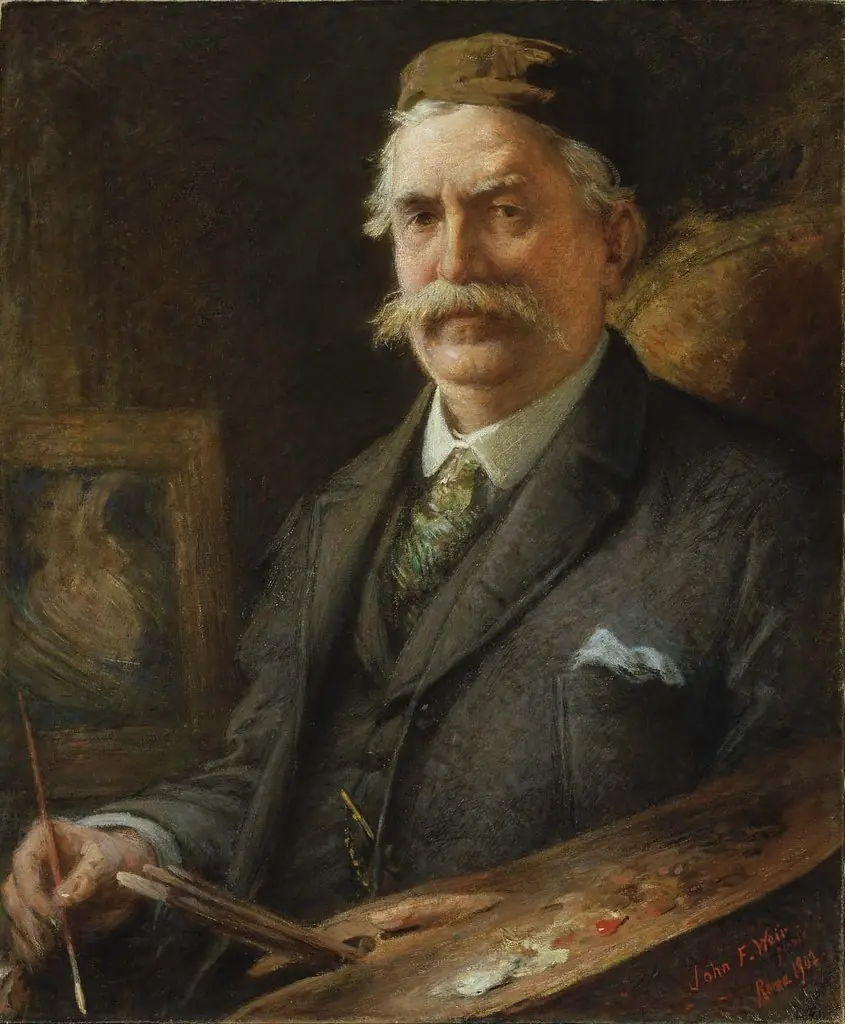
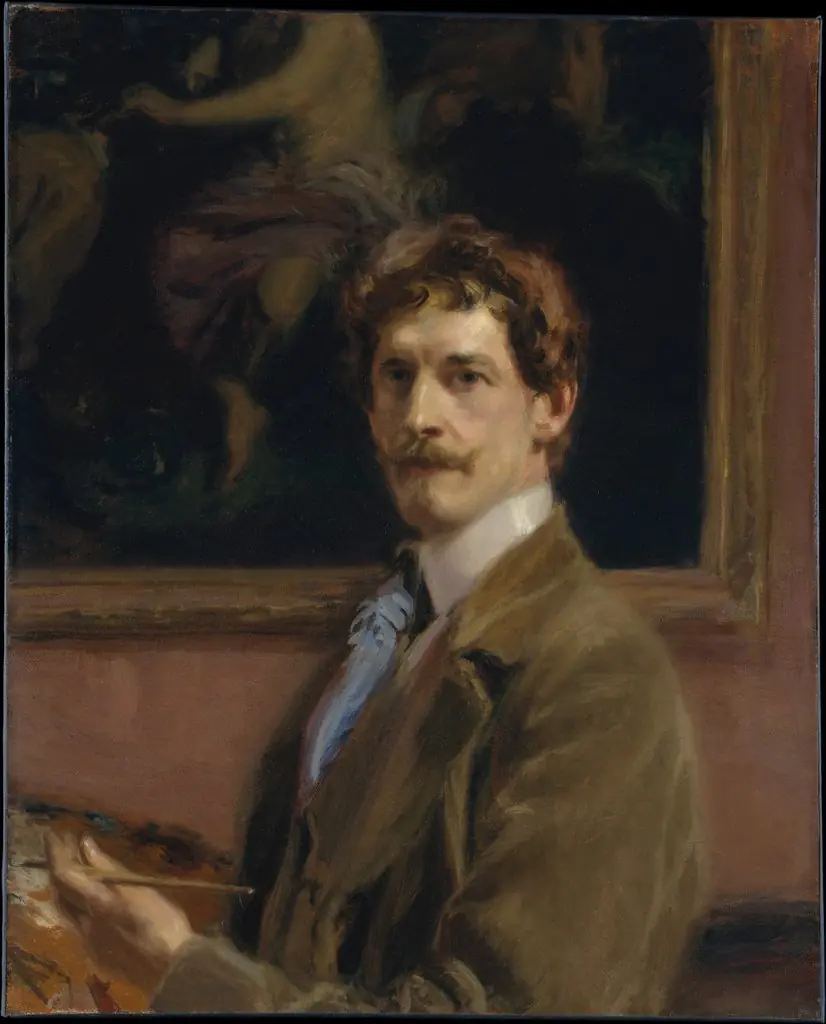
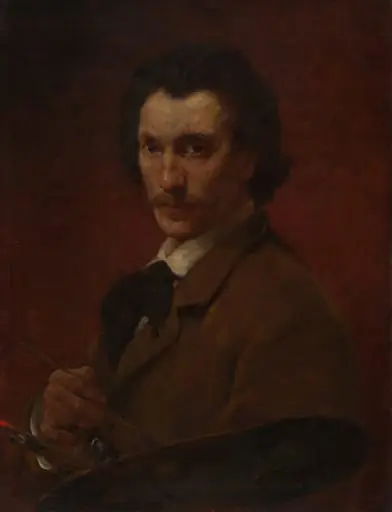
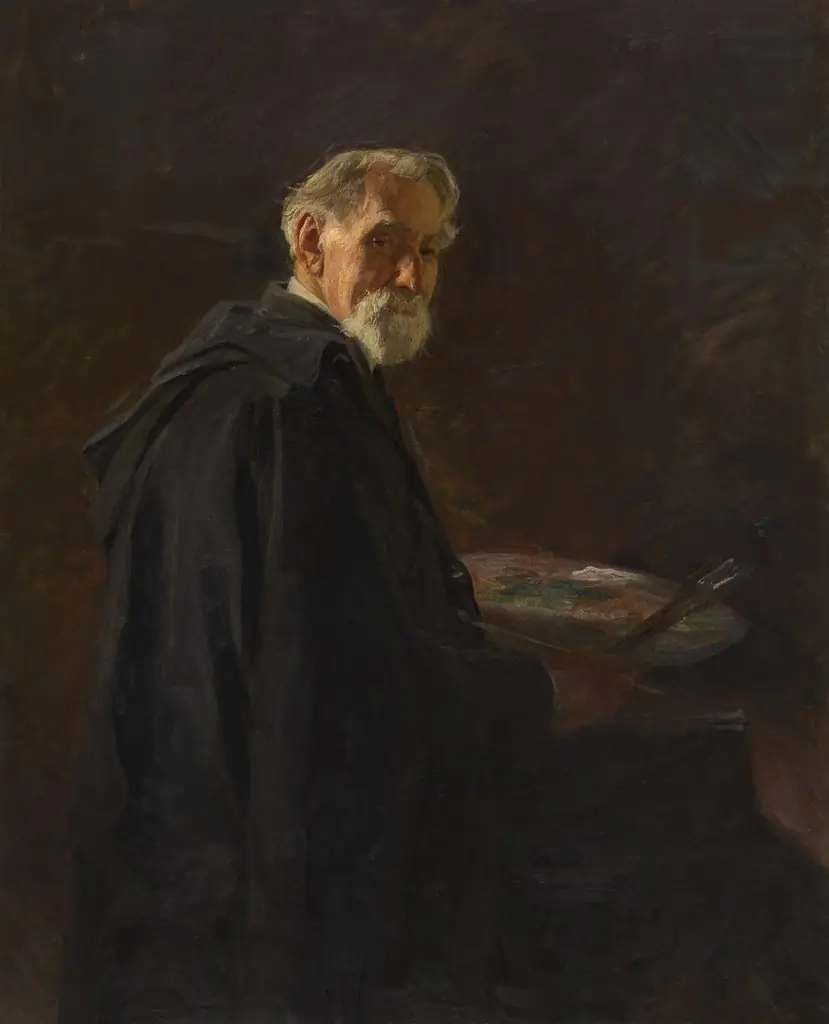
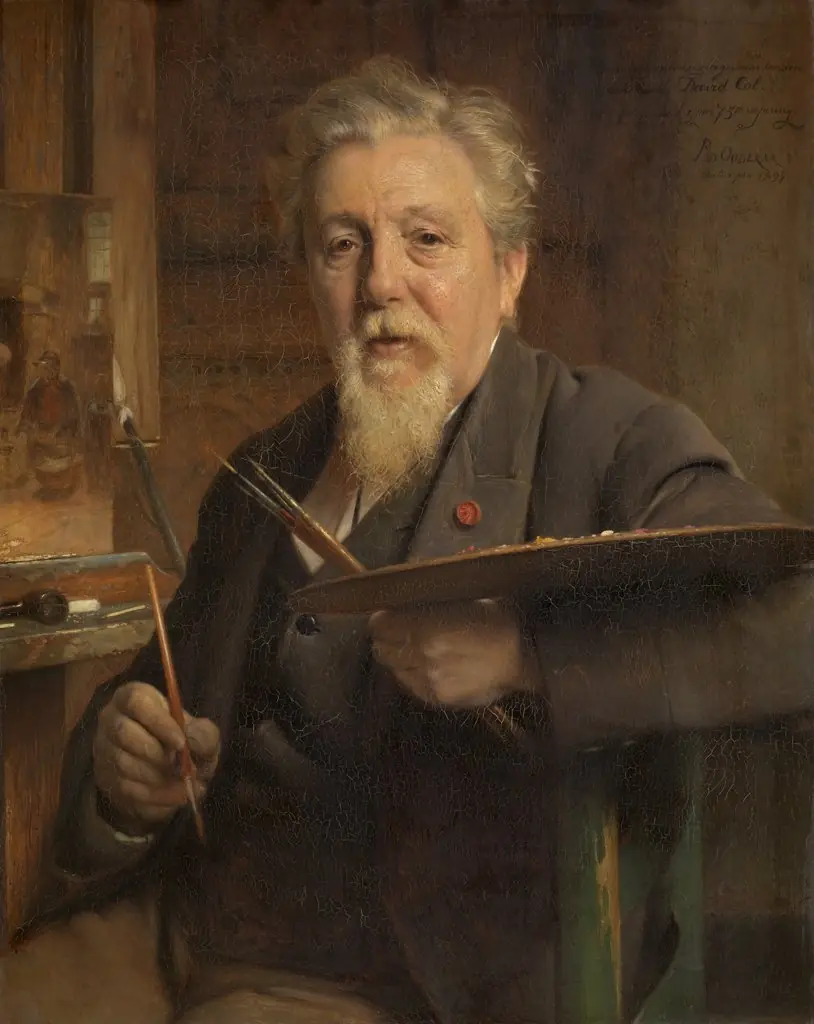
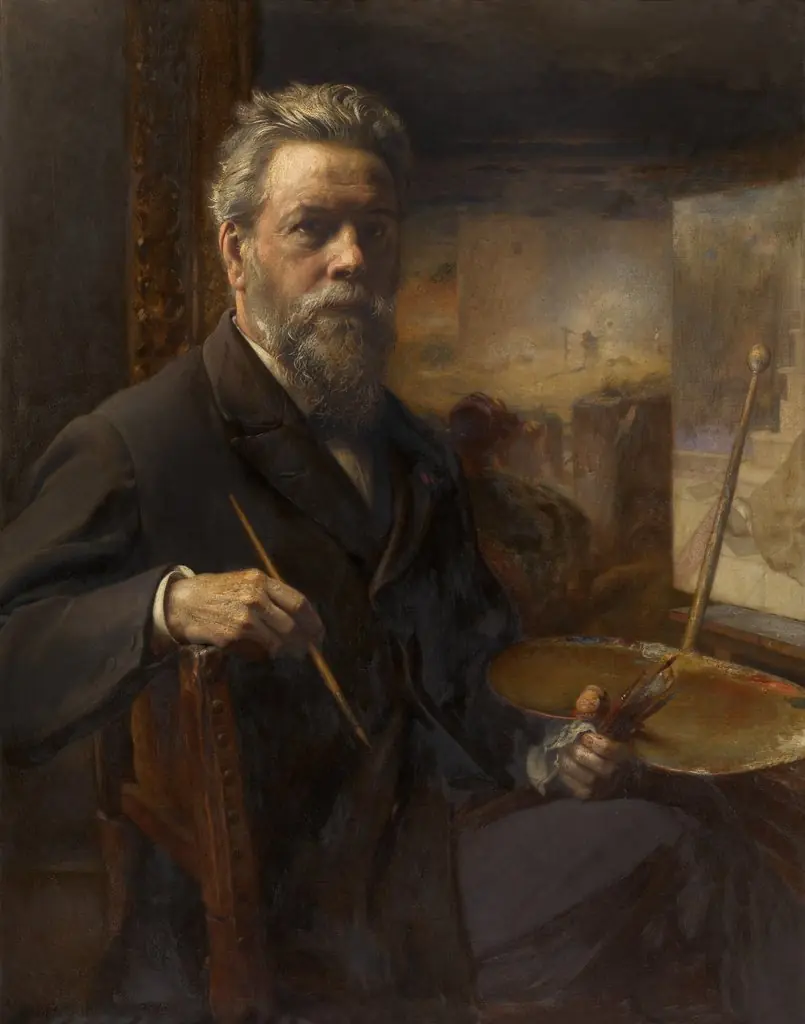
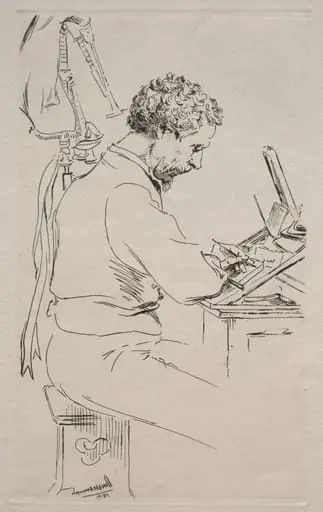
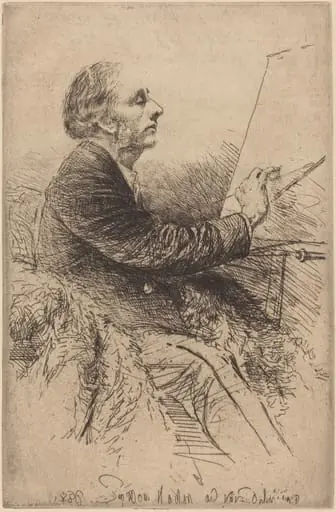
An Artist is a watercolor work on paper by the Impressionist artist Benjamin Williams Leader. It dates from 1890 and is held in the collection of the Victoria and Albert Museum. Painted in 1890 by Benjamin Williams, this watercolour depicts a working artist in a modest studio setting.
About this work
Overview
Painted in 1890 by Benjamin Williams, this watercolour depicts a working artist in a modest studio setting. Executed in transparent washes, the piece captures a quiet moment of preparation rather than active creation. It is part of the Victoria and Albert Museum’s collection, where it is preserved as an example of late 19th-century British watercolour practice focused on everyday artistic life.
Subject & Meaning
The central figure is an older man with a mustache, dressed in practical clothing, holding a wooden palette and brushes. His expression is focused, suggesting concentration rather than performance. The surrounding shelves, small painted figures, and books imply a life devoted to craft. The scene avoids romanticism, presenting the artist as a skilled laborer, grounded in routine and materiality.
Technique & Style
Williams employs soft, layered watercolour washes to build subtle tonal variations, favoring earthy browns, muted ochres, and greys.
Williams employs soft, layered watercolour washes to build subtle tonal variations, favoring earthy browns, muted ochres, and greys. Accents of brighter pigment on the palette draw the eye without disrupting the overall restraint. The brushwork is deliberate yet fluid, capturing texture in fabric, wood, and plaster with economy. The composition avoids dramatic lighting, relying instead on naturalistic clarity and quiet spatial depth.
History & Provenance
The painting was completed in 1890 and entered the Victoria and Albert Museum’s collection shortly thereafter. Its acquisition reflects the institution’s interest in documenting the tools and environments of artistic practice during the Victorian era. No significant changes in ownership are recorded, and it has remained in public care since its donation.
Context
In the late 19th century, watercolour was increasingly valued for its immediacy and intimacy, moving beyond landscape traditions to depict domestic and occupational scenes. Williams’s work aligns with this shift, echoing contemporary interest in the artist’s studio as a site of quiet dignity. Unlike academic oil paintings, this piece emphasizes process over spectacle, reflecting broader cultural appreciation for artisanal labor.
Legacy
Though not widely reproduced, the painting contributes to a modest but persistent tradition of British watercolours that portray artists at work. It stands as a quiet counterpoint to more theatrical depictions of creativity, offering instead a sober, unembellished view of artistic discipline. Its presence in the V&A underscores its role as a historical document of studio culture in the Victorian period.
Artist & collection
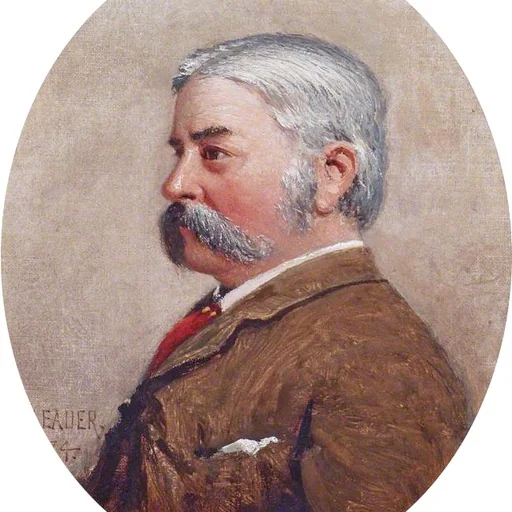
Artist
Benjamin Williams Leader (1831–1923) was an artist, born in Worcester.