Artwork
Cow Pissing
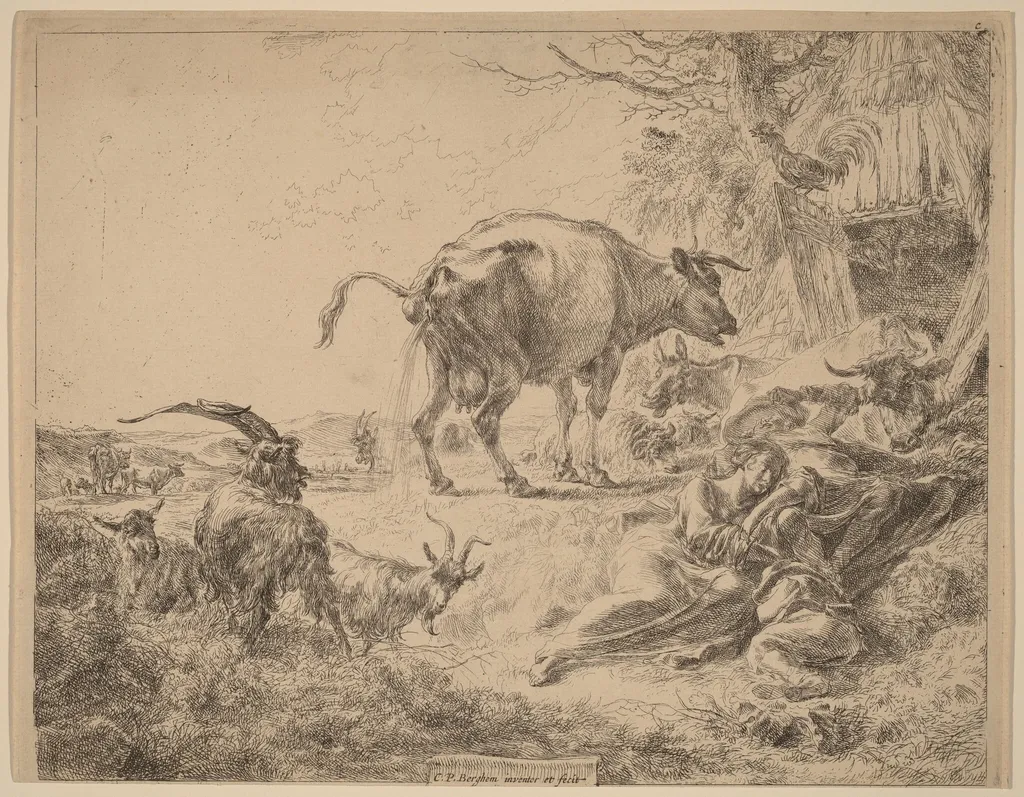
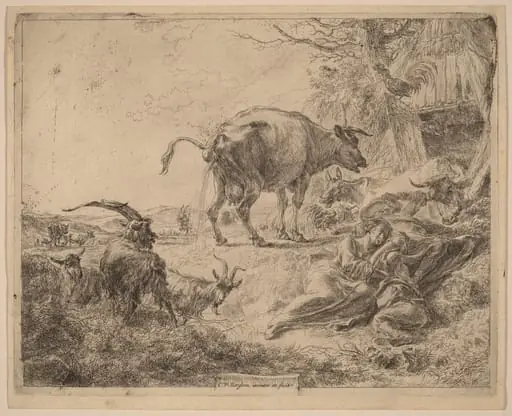
Cow Pissing is an ink print by the Baroque artist Nicolaes Pieterszoon Berchem. It dates from 1652 and is held in the collection of the National Gallery of Art.
About this work
Overview
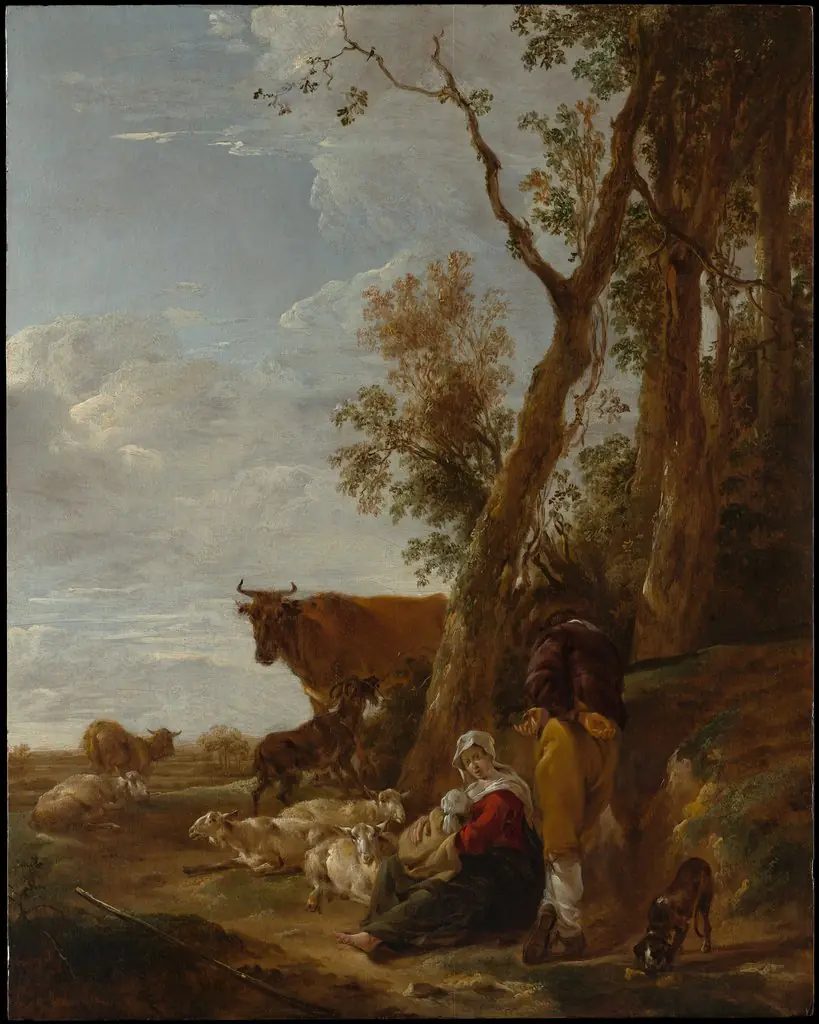
Cow Pissing is an etching created by Nicolaes Pieterszoon Berchem in 1652, exemplifying the Dutch Golden Age style. This print depicts a serene pastoral scene with a cow urinating, surrounded by other animals and a resting figure, set against a hilly landscape.
Subject & Meaning
The subject of Cow Pissing focuses on everyday pastoral life, blending mundane activity with serene natural surroundings. The inclusion of a resting figure and various animals emphasizes the tranquil, idyllic nature of the scene, characteristic of Berchem's pastoral themes.
Technique & Style
Executed in etching, the work showcases Berchem's blend of Italianate romanticism and Dutch realism. Notable are the detailed textures of animal fur and landscape, muted earthy tones, and the effective use of light and shadow to achieve depth.
History & Provenance
Created in 1652 by Nicolaes Pieterszoon Berchem, a second-generation Dutch Italianate landscape painter, the etching reflects his style influenced by classical and pastoral imagery. Specific provenance details are not provided.
Context
As part of the Dutch Golden Age, Cow Pissing situates itself within a broader artistic movement that valued realistic depictions of everyday life and landscapes. Berchem's work, in particular, stands out for its fusion of Italian influences with distinctly Dutch realism.
Legacy
While specific legacy details of Cow Pissing are not highlighted, the work contributes to Berchem's reputation as a prominent painter and etcher of pastoral scenes, influencing subsequent generations of landscape artists.
Own this work as a print
Artist & collection
Artist
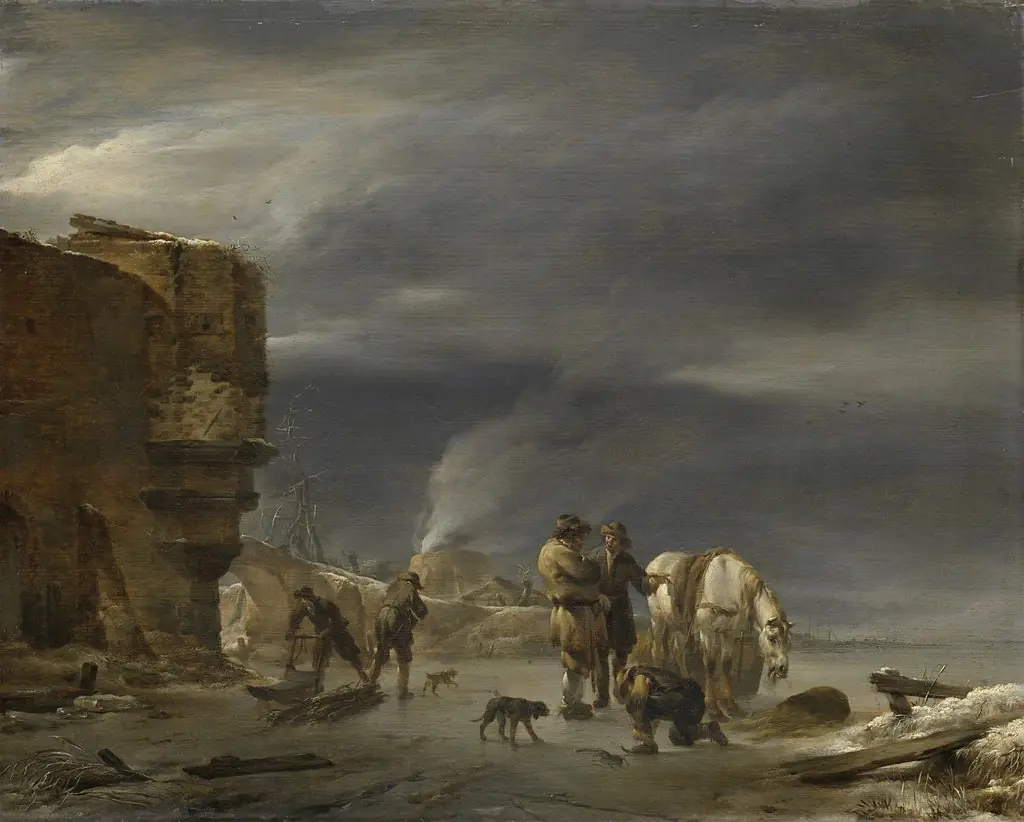
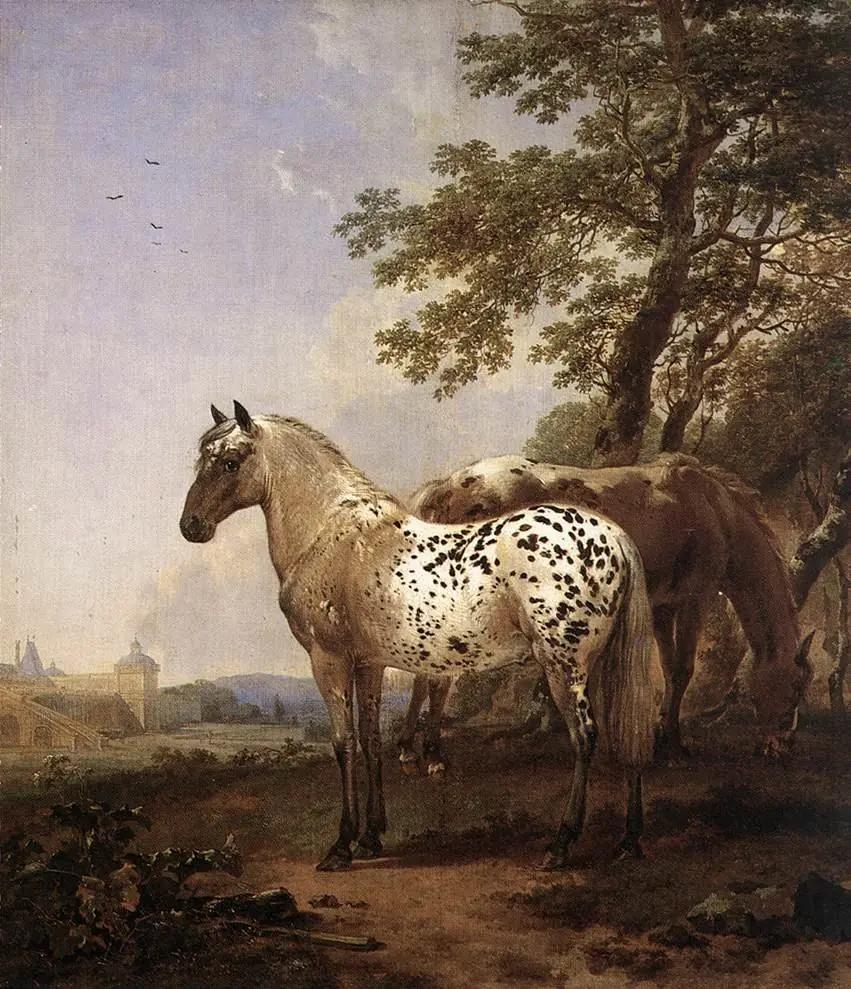
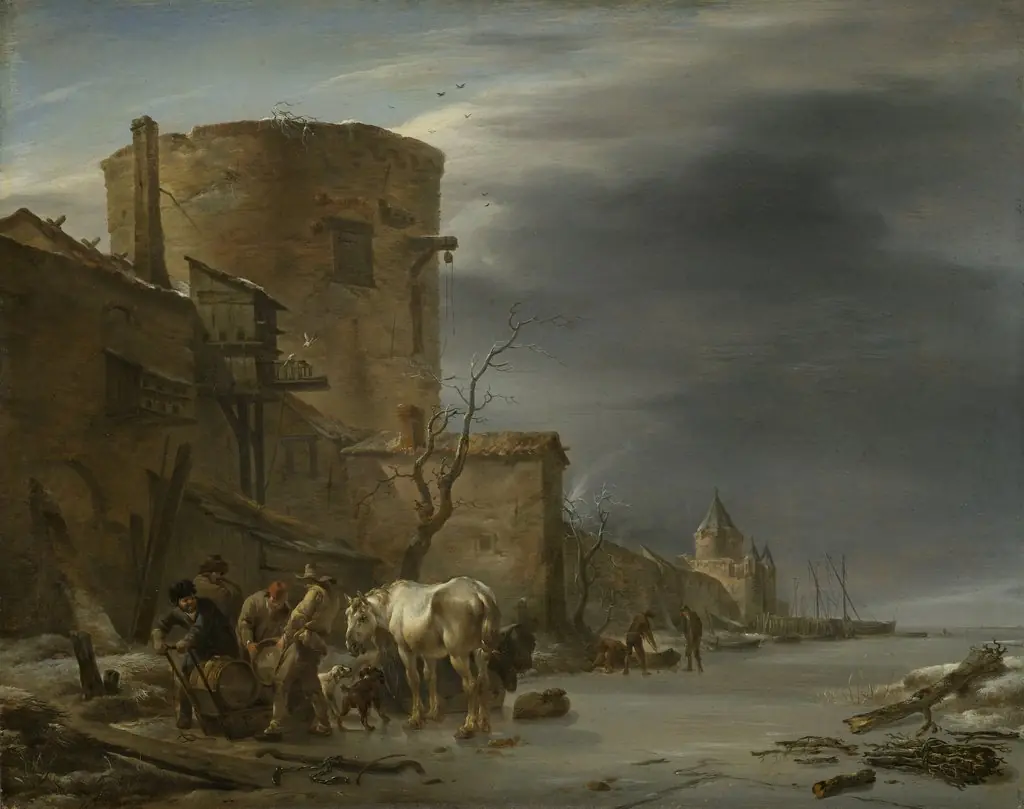
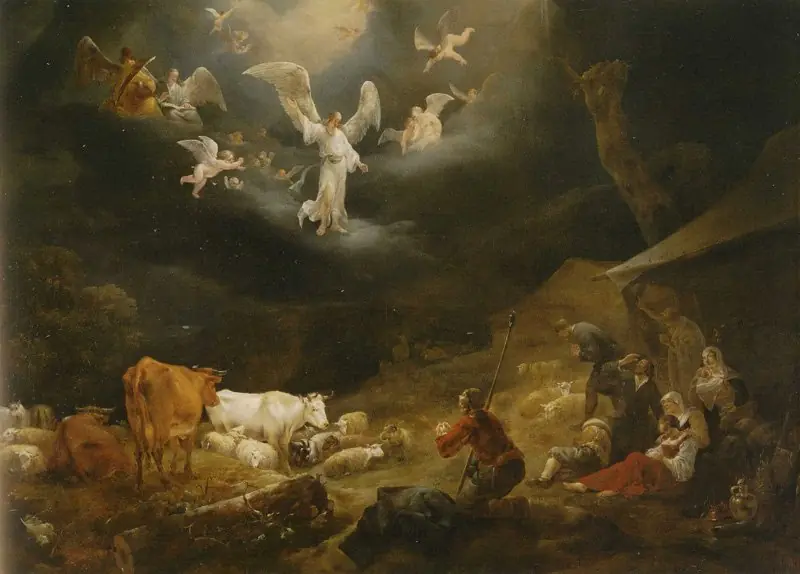
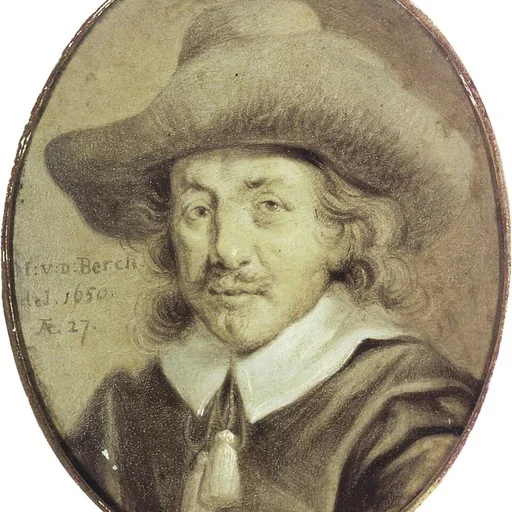
Nicolaes Pieterszoon Berchem (1 October 1620 – 18 February 1683) was a highly esteemed and prolific Dutch Golden Age painter of pastoral landscapes, populated with mythological or biblical figures, but also of a number of allegories and…