Artwork
Lamentation over the Dead Christ
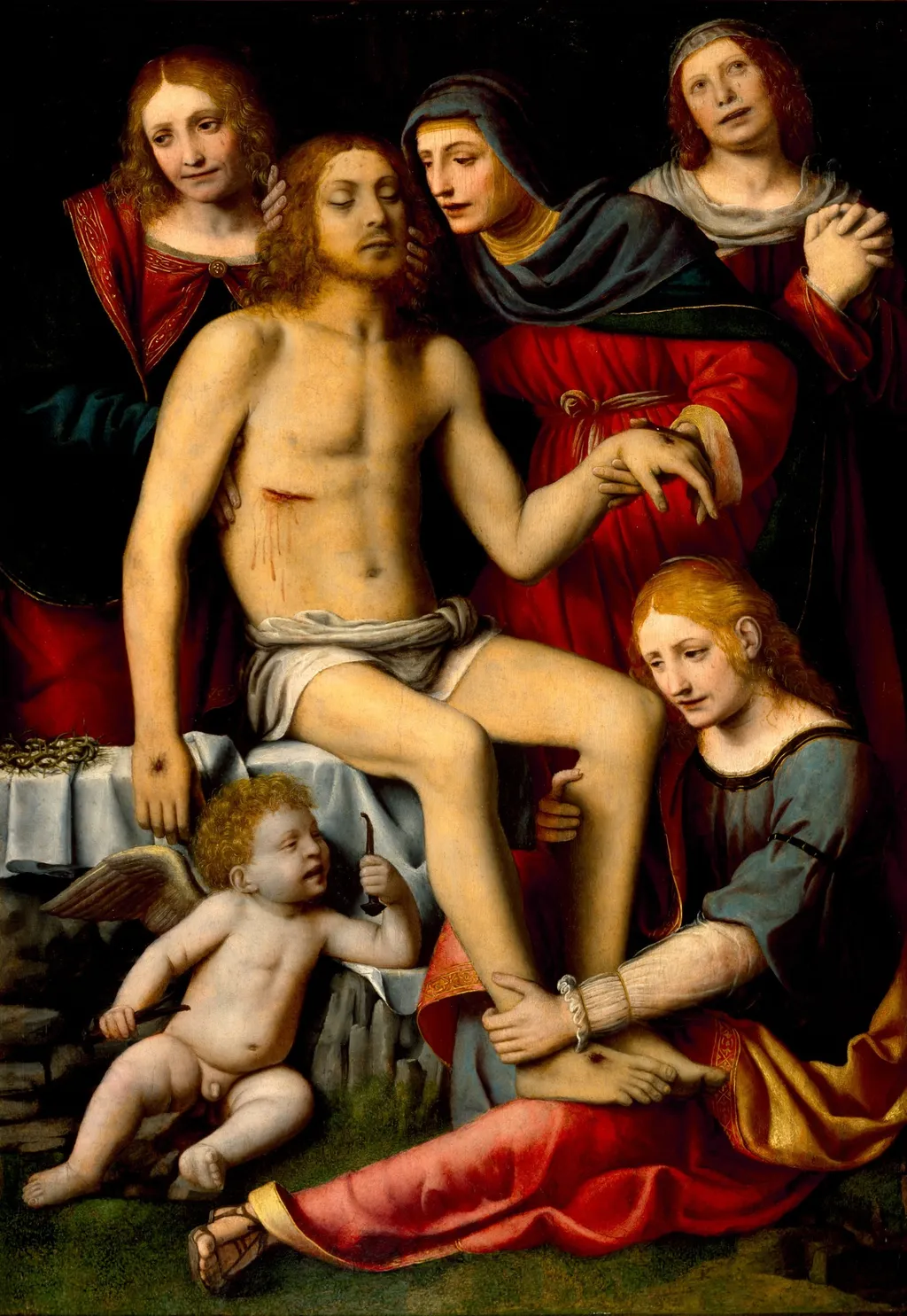
Lamentation over the Dead Christ is an oil painting by the High Renaissance artist Luini Bernardino. It dates from 1517 and is held in the collection of the Museum of Fine Arts, Houston.
About this work
Overview
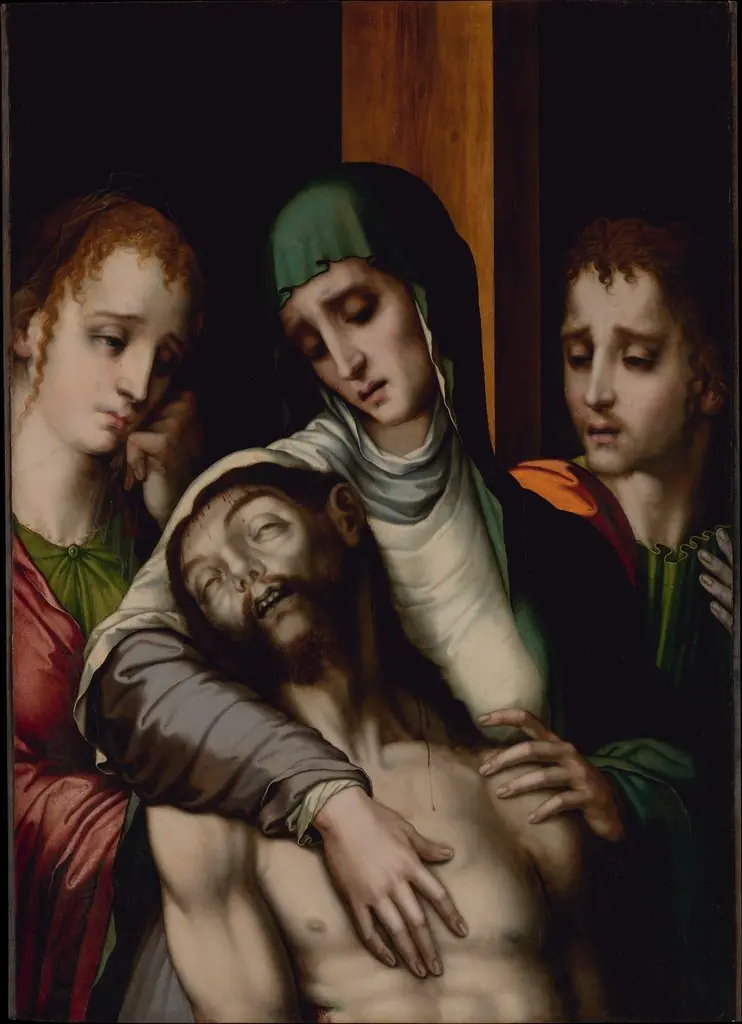
Painted in 1517 by Bernardino Luini, this oil-on-panel work portrays the moment after Christ’s crucifixion, as mourners gather around his lifeless body.
Painted in 1517 by Bernardino Luini, this oil-on-panel work portrays the moment after Christ’s crucifixion, as mourners gather around his lifeless body. Executed in the High Renaissance style, the painting reflects Luini’s close association with Leonardo da Vinci’s workshop. It resides today in the Museum of Fine Arts, Houston, where it stands as a quiet example of Lombard devotional art from the early 16th century.
Subject & Meaning
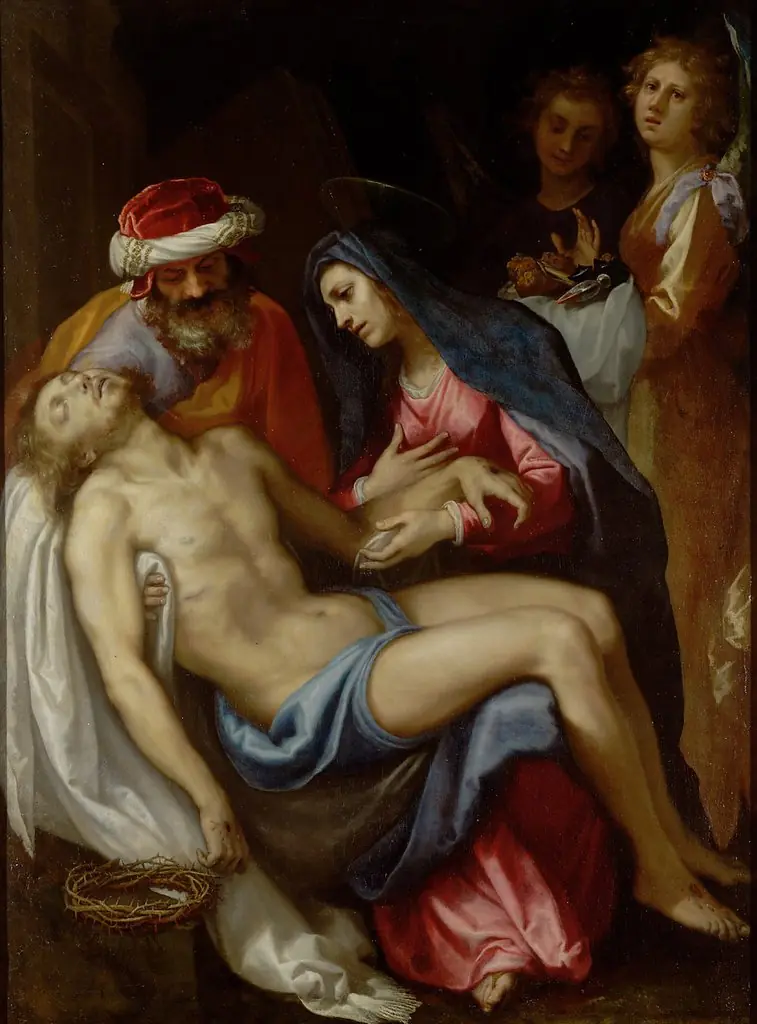
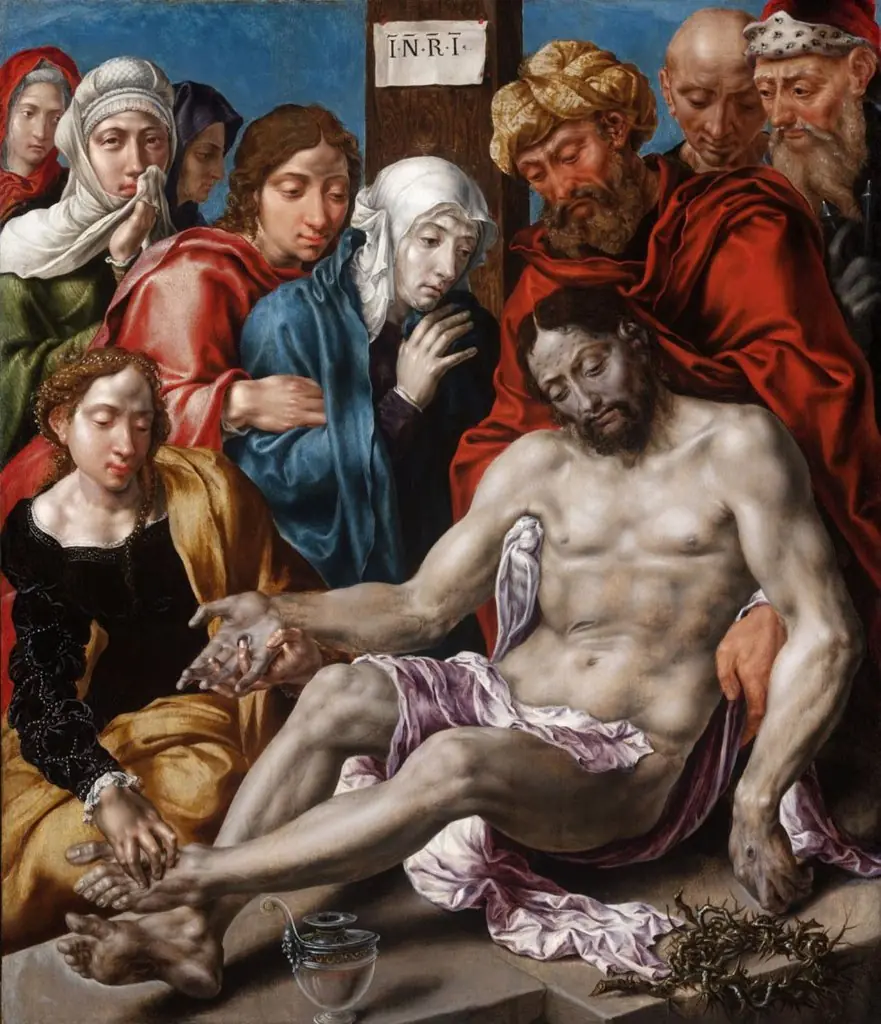
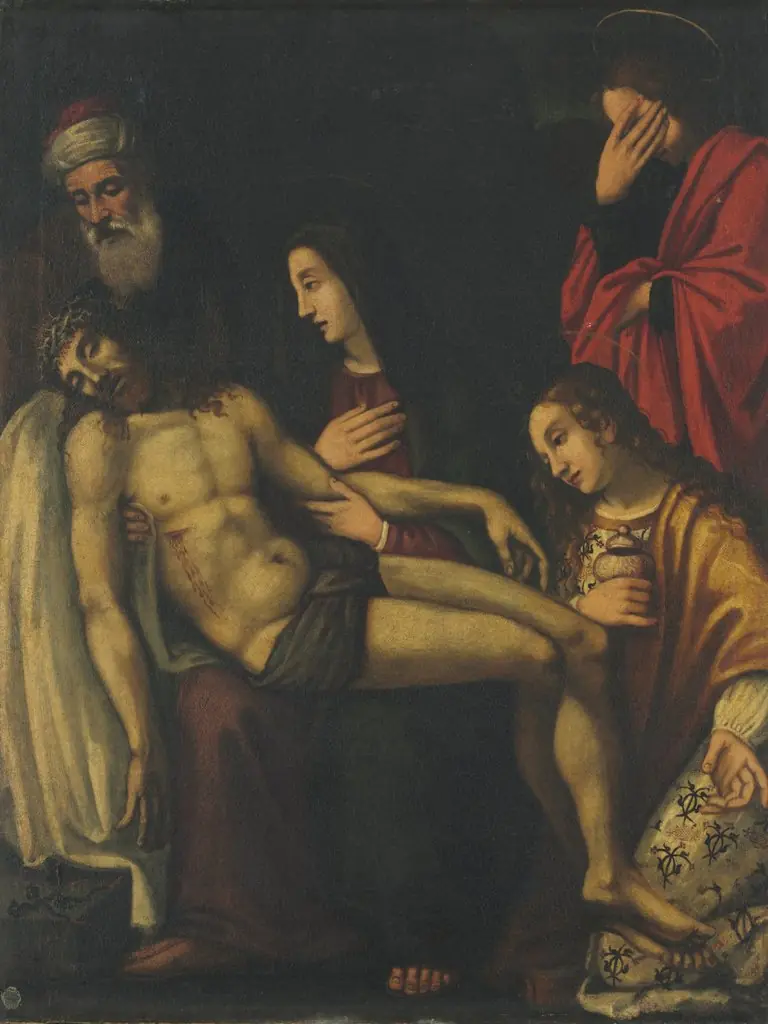
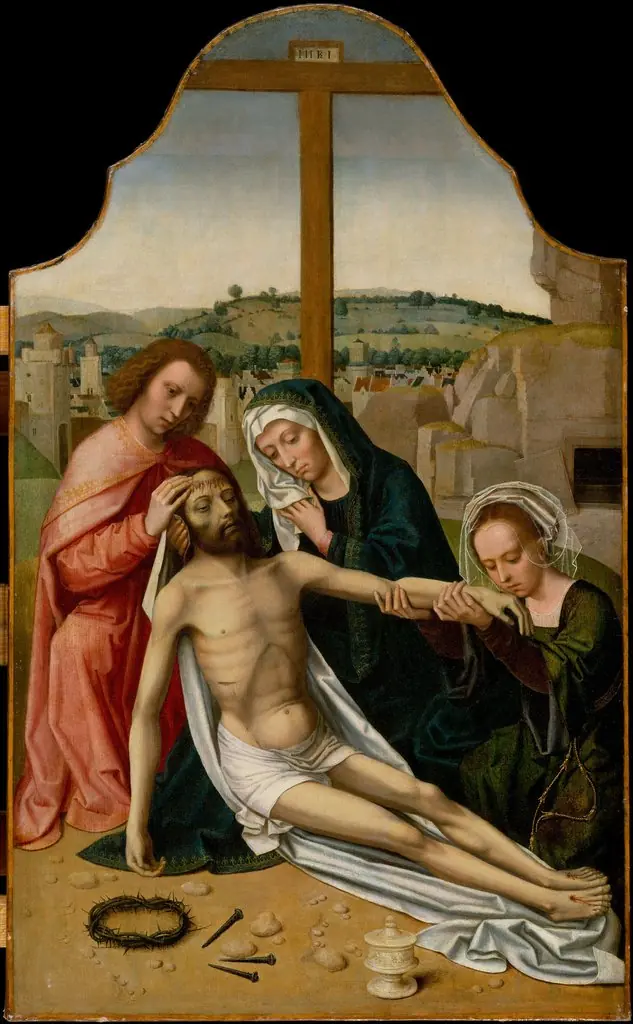
The scene captures the sorrowful vigil over Christ’s body, with figures arranged in a tender semicircle. A woman in red cradles his head, while a man in black stands behind, hands clasped. Bloodstains on Christ’s side and palm mark the wounds of crucifixion. The composition emphasizes physical grief and spiritual reverence, avoiding dramatic spectacle in favor of intimate, restrained mourning.
Technique & Style
Luini employs soft modeling and subtle chiaroscuro to render the figures with a gentle, sculptural presence, echoing Leonardo’s influence. The faces exhibit elongated eyes and delicate features, characteristic of his approach to human form. Brushwork is smooth, with muted tones and minimal contrast, enhancing the somber mood. The white cloth beneath Christ draws attention to his stillness, reinforcing the theme of sacred rest.
History & Provenance
Created in northern Italy during Luini’s mature period, the painting was likely commissioned for private devotion. It entered the Museum of Fine Arts, Houston’s collection in the 20th century. Though once confused with Leonardo’s hand due to stylistic similarities, scholarly analysis has firmly attributed it to Luini, recognizing his distinct interpretation of his master’s innovations.
Context
Luini worked in Milan during a time when Leonardo’s presence profoundly shaped local art. His paintings often bridged Leonardo’s anatomical precision with a softer, more lyrical sensibility. This Lamentation reflects the devotional culture of Lombardy, where intimate scenes of Christ’s passion were favored for personal meditation, contrasting with the grander altarpieces of Venice or Rome.
Legacy
Luini’s reputation endured through his ability to translate Leonardo’s ideas into accessible, emotionally resonant images. While not as widely studied as his mentor’s works, this painting exemplifies how regional artists adapted High Renaissance ideals for local spiritual needs. His influence persists in the quiet dignity of his figures, a hallmark of Lombard painting in the decades after Leonardo’s departure from Milan.
Own this work as a print
Artist & collection

Artist
Bernardino Luini (c. 1480/82 – June 1532) was a north Italian painter from Leonardo's circle during the High Renaissance. Both Luini and Giovanni Antonio Boltraffio were said to have worked with Leonardo directly; he…