Artwork
The schoolmaster
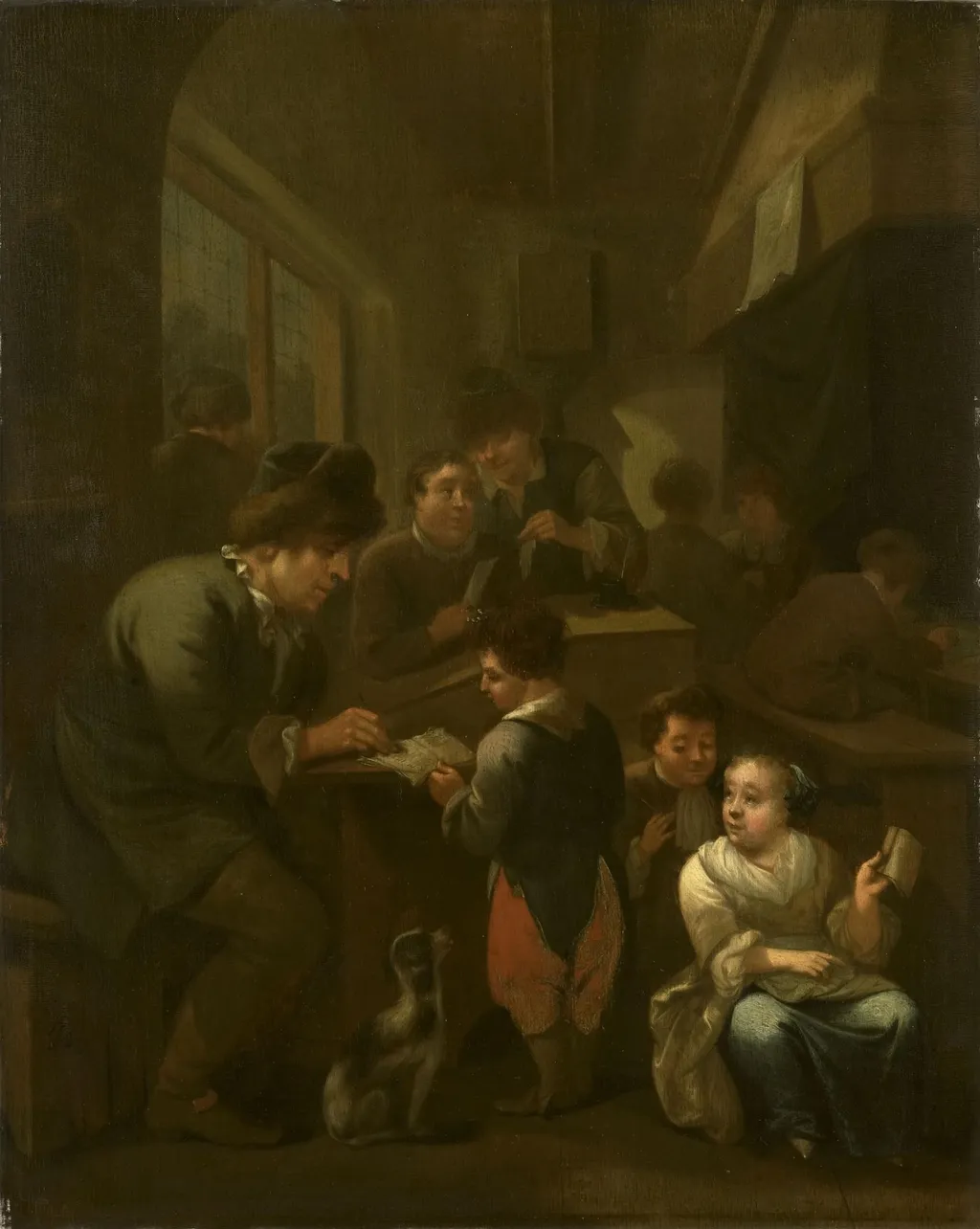
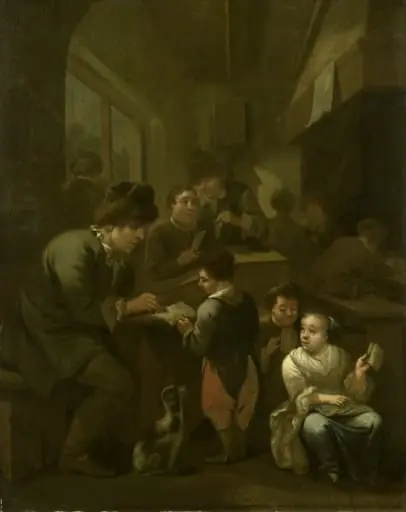
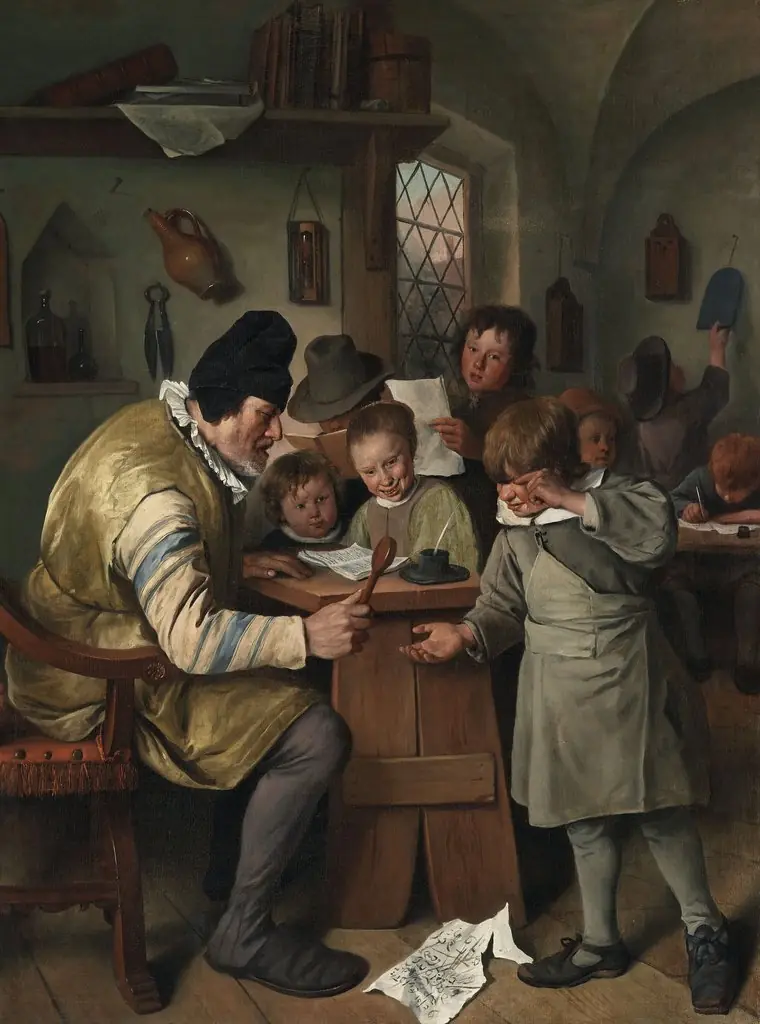
The schoolmaster is an oil painting by the Dutch Golden Age artist Bernardus van Schijndel. It dates from 1695 and is held in the collection of the Rijksmuseum.
About this work
Overview
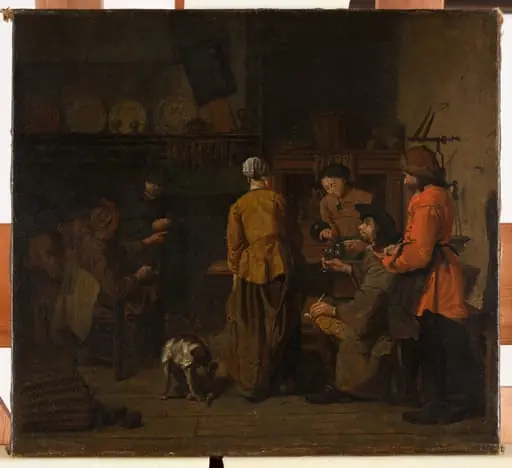
Painted in 1695 by Bernardus van Schijndel, this oil-on-canvas work depicts a quiet interior scene set in a modest Dutch classroom. The composition centers on a man in a hat, likely the schoolmaster, surrounded by students and a seated woman. The dim, intimate space is rendered with careful attention to daily life, reflecting the genre painting traditions of the Dutch Golden Age.
Subject & Meaning
The scene captures a moment of quiet authority and attentive stillness. The schoolmaster stands apart, observing the group, while students and a woman engage with books or papers. The woman’s downward gaze and the small dog at her feet suggest contemplation or restraint. The painting conveys order and discipline without overt drama, emphasizing the dignity of everyday education.
Technique & Style
Van Schijndel employs chiaroscuro to model forms and direct attention, using sharp contrasts between light and shadow to highlight faces, hands, and textures.
Van Schijndel employs chiaroscuro to model forms and direct attention, using sharp contrasts between light and shadow to highlight faces, hands, and textures. The uneven illumination enhances spatial depth and focuses the viewer on subtle expressions and gestures. Brushwork is precise yet unobtrusive, favoring naturalism over embellishment, characteristic of mid-to-late 17th-century Dutch realism.
History & Provenance
The painting entered the Rijksmuseum’s collection in the 19th century, having likely passed through Dutch private collections since its creation. Its attribution to van Schijndel is supported by stylistic parallels with his other known works. No significant alterations or restorations are recorded, preserving its original tonal balance and surface integrity.
Context
Created during the Dutch Golden Age, the work reflects a cultural emphasis on domestic and educational virtue. Genre scenes like this one celebrated ordinary life, often infused with moral undertones. The presence of books and attentive figures aligns with contemporary values around literacy, discipline, and the role of the teacher in civic life.
Legacy
Though not widely reproduced, the painting remains a representative example of Dutch genre painting’s quiet intensity. It contributes to the understanding of how artists of the period portrayed education and social hierarchy with restraint and psychological nuance, influencing later depictions of classroom life in Northern European art.
Own this work as a print
Artist & collection