Artwork
Ornament
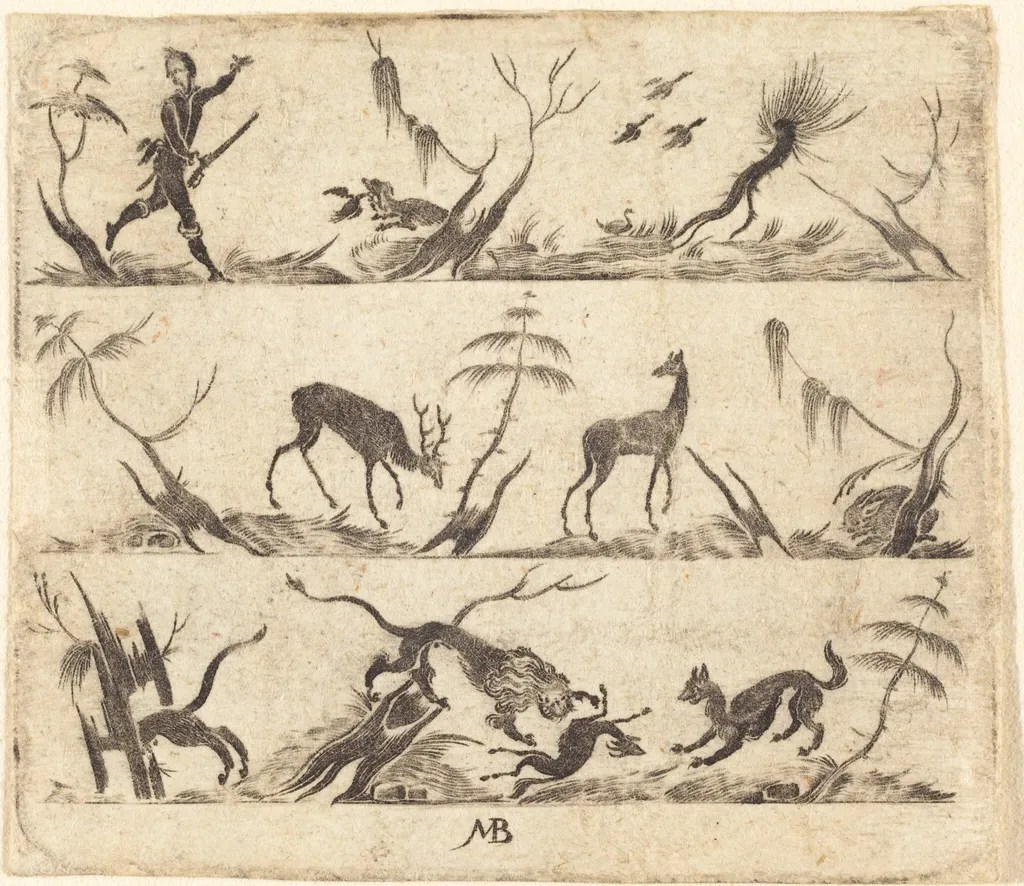
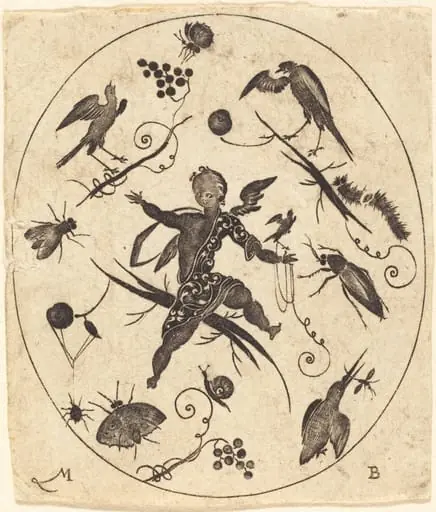
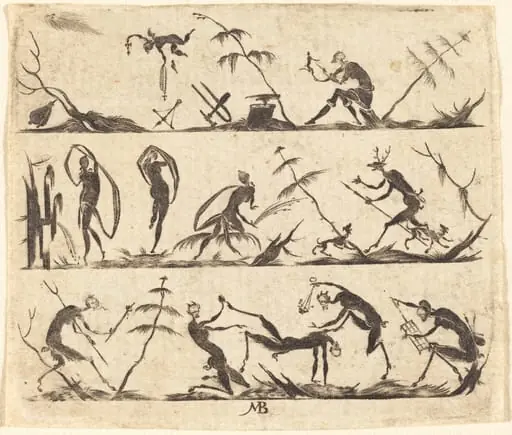
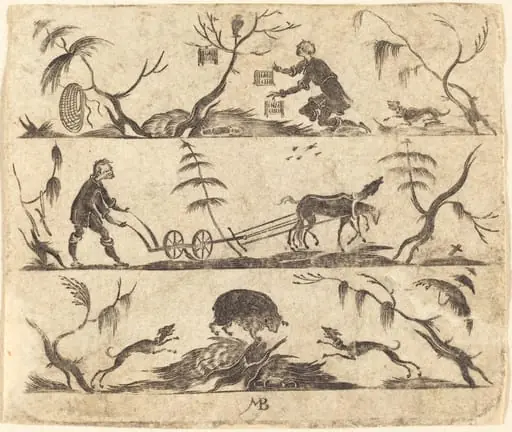
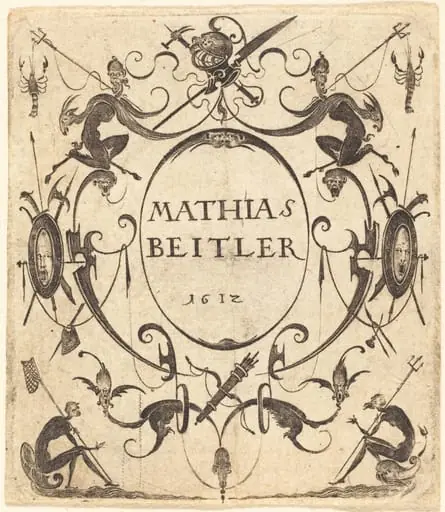
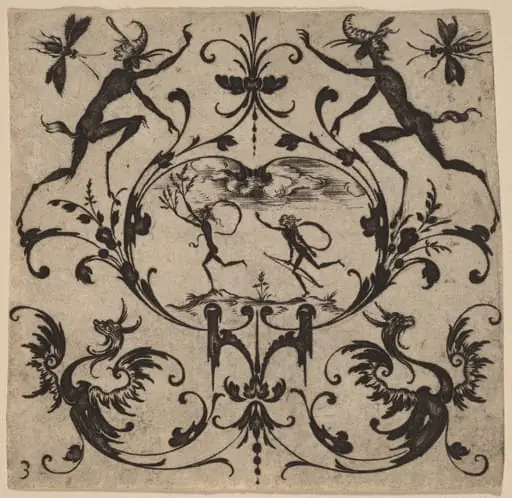
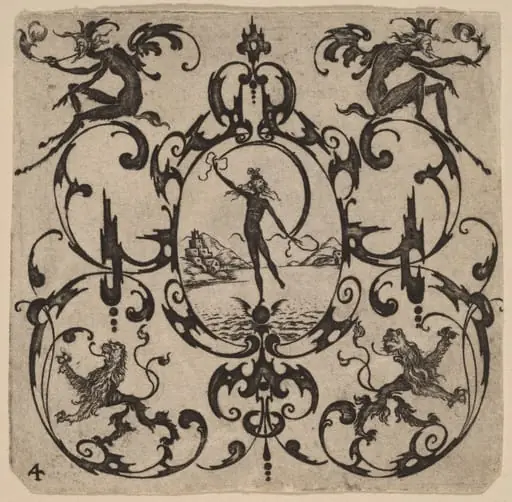
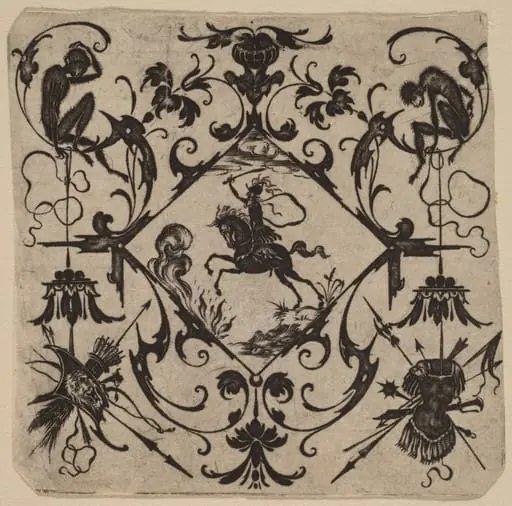
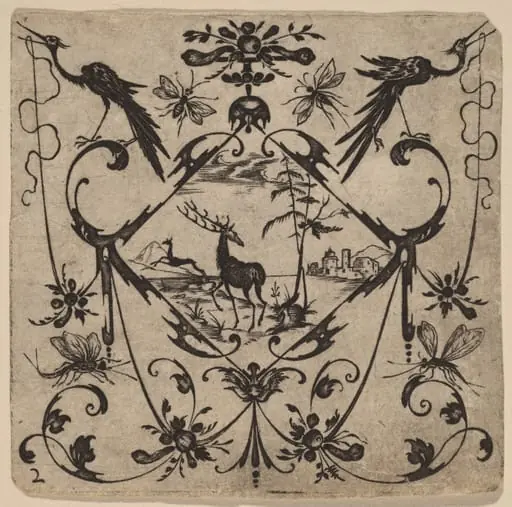
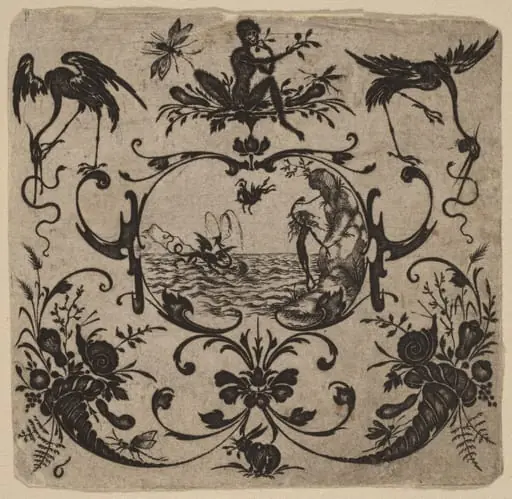
Ornament is an ink print by the Renaissance artist Mathias Beutler. It dates from 1602 and is held in the collection of the National Gallery of Art.
About this work
Overview
Mathias Beutler’s 1602 engraving titled Ornament presents a densely patterned sheet of paper, overrun with curling foliage and diminutive blossoms. The composition is rendered in an intricate network of fine lines that resemble delicate lace, each leaf and petal rendered with meticulous attention to veins and the suggestion of moisture on their surfaces.
Technique & Style
The work was produced by incising a metal plate with a burin, a common practice in early modern printmaking. Beutler’s line work exhibits a precision and delicacy reminiscent of Albrecht Dürer’s engravings, employing tightly controlled hatching to convey texture and depth while maintaining a uniform, ornamental quality across the entire surface.
Subject & Meaning
The engraving functions as a decorative motif rather than a narrative scene, celebrating the natural forms of leaves and flowers. By arranging the botanical elements in a repetitive, ornamental fashion, the image underscores the period’s fascination with the decorative potential of nature’s minutiae.
History & Provenance
Created in the early seventeenth century, the print reflects the growing accessibility of engraved images following the spread of print technology. While specific ownership records are scarce, such works were often distributed to a broader audience, allowing individuals beyond elite patronage to acquire finely crafted art.
Context
During the late Renaissance, engraving emerged as a pivotal medium for disseminating artistic ideas across Europe. Beutler’s Ornament aligns with contemporary trends that valued intricate line work and ornamental design, serving both as a decorative object and as an example of the technical skill that made prints a viable alternative to costly painted works.
Artist & collection