Artwork
The Triumph of Camillus
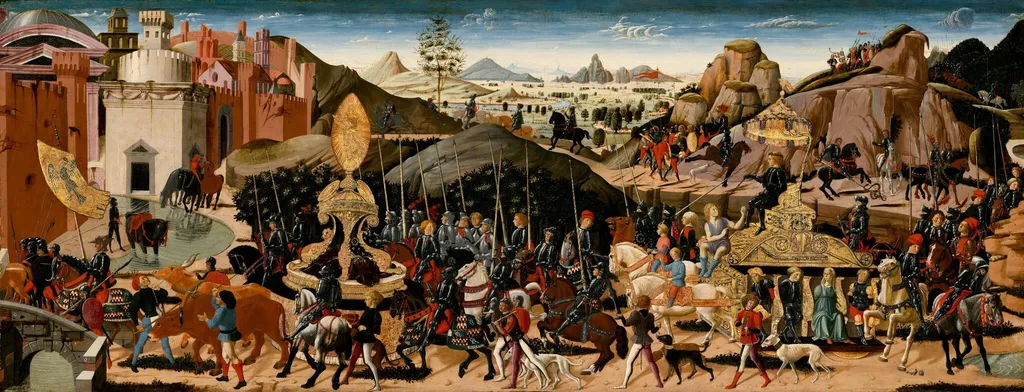
The Triumph of Camillus is a tempera painting by the Early Renaissance artist Biagio d'Antonio. It dates from 1472 and is held in the collection of the National Gallery of Art.
About this work
Overview
Biagio d’Antonio’s tempera on panel, dated to around 1472, presents a bustling ceremonial scene titled The Triumph of Camillus.
Biagio d’Antonio’s tempera on panel, dated to around 1472, presents a bustling ceremonial scene titled The Triumph of Camillus. The composition centers on a golden chariot surrounded by a multitude of riders and pedestrians, set against a backdrop that includes architectural forms and distant mountains. The work exemplifies a narrative approach typical of late‑15th‑century Italian history painting.
Subject & Meaning
The painting illustrates the legendary triumph of the Roman hero Camillus, celebrating his victorious return after a military campaign. By gathering a diverse crowd of on‑foot participants and mounted figures, the artist emphasizes communal rejoicing and the civic pride associated with such a procession, reflecting contemporary Renaissance interest in classical antiquity and moral exempla.
Technique & Style
Executed in tempera, the work displays the medium’s characteristic fine brushwork and luminous color palette. D’Antonio employs a layered application of pigments to achieve detailed textures on clothing, armor, and animal fur. The spatial arrangement combines a shallow foreground populated with figures and a receding landscape, creating depth while maintaining the decorative clarity favored in the period.
History & Provenance
Created in the early 1470s, The Triumph of Camillus likely served a decorative or commemorative function for a patron interested in classical themes. Though its early ownership records are sparse, the panel has been documented in several collection inventories since the 17th century, eventually entering a public museum collection where it remains on display as an example of early Renaissance narrative art.
Artist & collection