Artwork
Mississippi Boatman
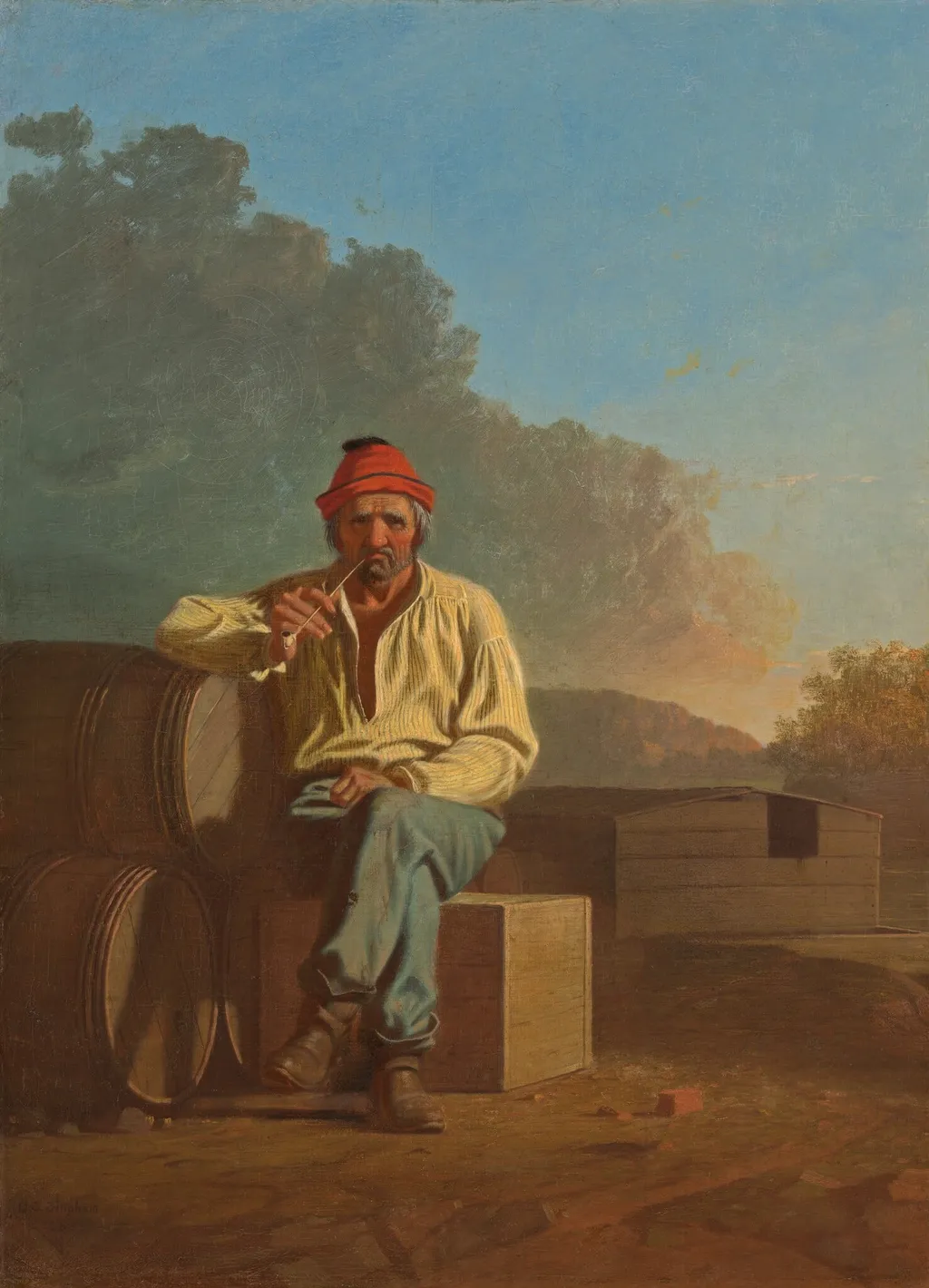
Mississippi Boatman is an oil painting by the Hudson River School artist George Caleb Bingham. It dates from 1850 and is held in the collection of the National Gallery of Art.
About this work
Overview
George Caleb Bingham’s 1850 oil on canvas, titled Mississippi Boatman, portrays a solitary figure perched on a wooden crate. The man, dressed in a red hat and yellow shirt, holds a pipe in his right hand while his left arm leans against a barrel, set against a backdrop of trees beneath a clear blue sky.
Subject & Meaning
The composition captures a moment of quiet labor along the Mississippi River, emphasizing the everyday existence of river workers. The rustic clothing and the presence of barrels suggest a working environment tied to river commerce, inviting viewers to consider the modest lives that sustained regional trade.
Technique & Style
Bingham employs a realistic palette of earthy browns and muted greens, rendering the figure and surroundings with careful attention to light and texture. The brushwork is smooth yet detailed, highlighting the tactile quality of wood, fabric, and foliage, aligning the work with mid‑nineteenth‑century American Realism.
History & Provenance
Created in 1850, Mississippi Boatman reflects Bingham’s early interest in portraying frontier life. The painting has remained in private collections before entering a regional museum’s holdings in the early twentieth century, where it has been displayed as part of exhibitions on American river culture.
Context
During the 1850s, American artists increasingly turned to scenes of ordinary labor and landscape, moving away from grand historical subjects. Bingham’s focus on a solitary boatman parallels the broader Realist tendency to document the nation’s expanding frontier and its inhabitants.
Own this work as a print
Artist & collection

Artist
George Caleb Bingham (March 20, 1811 – July 7, 1879) is recognized as one of the most important American artists of the 19th century.