Artwork
The Last Supper
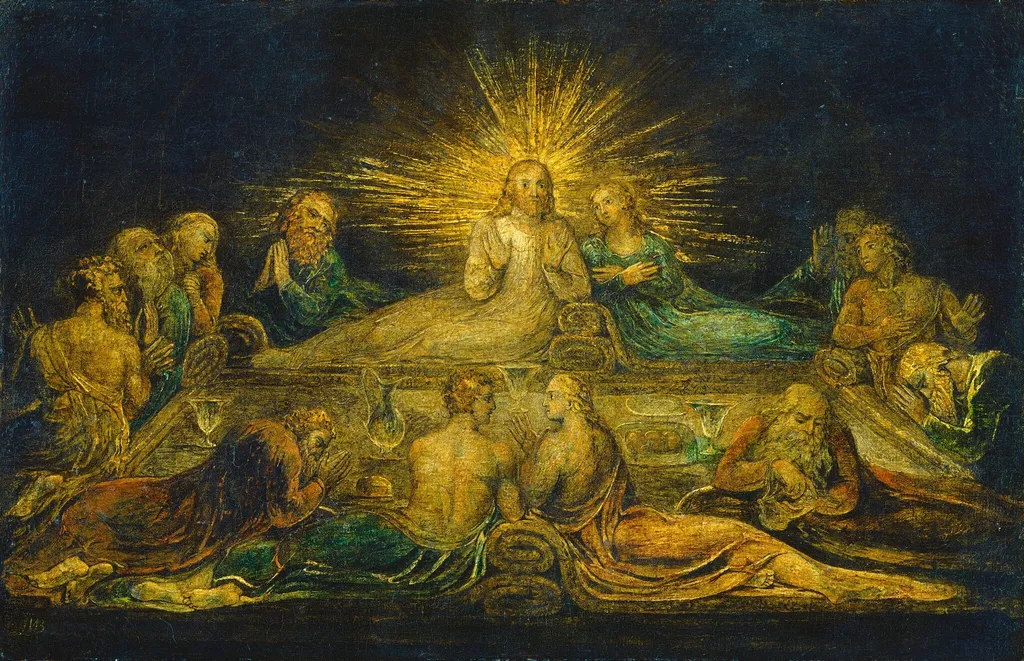
The Last Supper is a tempera painting by the Romanticist artist William Blake. It dates from 1799 and is held in the collection of the National Gallery of Art.
About this work
Overview
Created in 1799, William Blake’s tempera on canvas work portrays the biblical episode of the final communal meal shared by Jesus and his twelve followers. The composition places the central figure of Christ at the heart of a circular gathering, emphasizing his role as focal point of the scene.
Subject & Meaning
The painting captures the moment of the Last Supper, with the apostles turned toward Christ, some raising their hands in gesture. Blake’s inclusion of a luminous halo around Jesus and the subtle illumination behind him underscores the spiritual significance of the event.
Technique & Style
Executed in tempera, the work exhibits a deliberately rough, unfinished quality. Muted tones dominate the palette, and visible brushstrokes convey a sense of immediacy and kinetic energy, aligning with Blake’s broader interest in expressive, symbolic rendering.
History & Provenance
Although Blake was active as a poet, painter, and printmaker in London, his visual art received little recognition during his lifetime. It was only after his death that scholars began to appreciate the symbolic depth of his paintings, situating them within the Romantic movement.
Context
The piece reflects Romantic era concerns with individual vision, spiritual experience, and emotional intensity. Blake’s approach to a traditional religious subject diverges from academic conventions, favoring personal imagination over strict realism.
Own this work as a print
Artist & collection
Artist
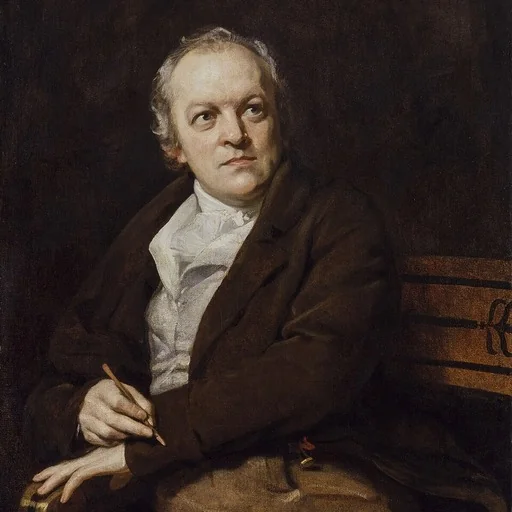
William Blake (28 November 1757 – 12 August 1827) was an English poet, painter and printmaker.