Artwork
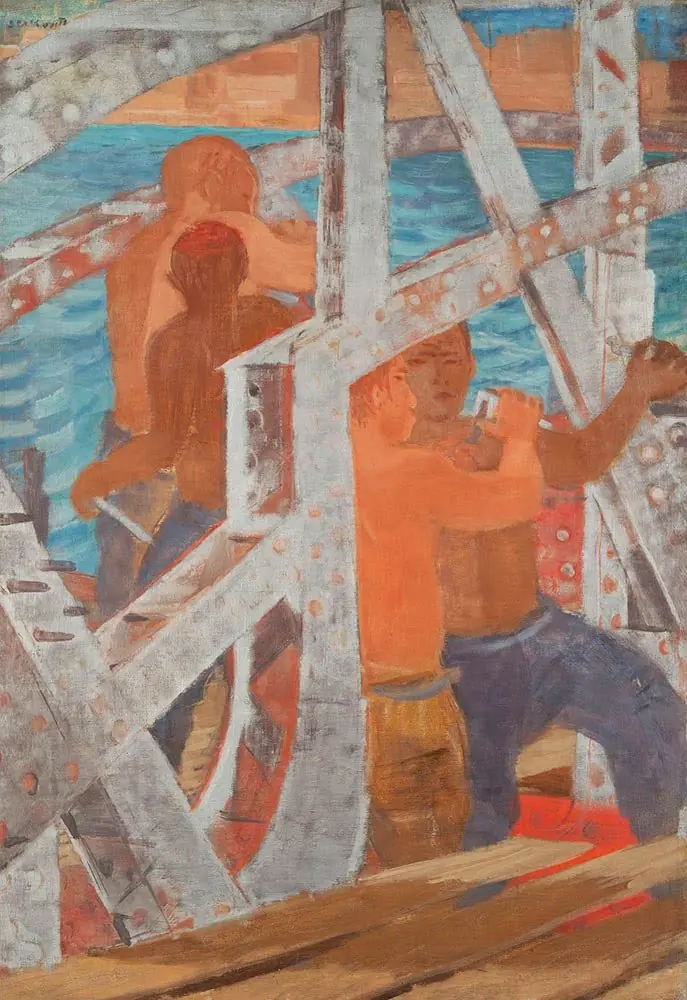
Șantier de constucții: Viaductul peste valea Prihadului
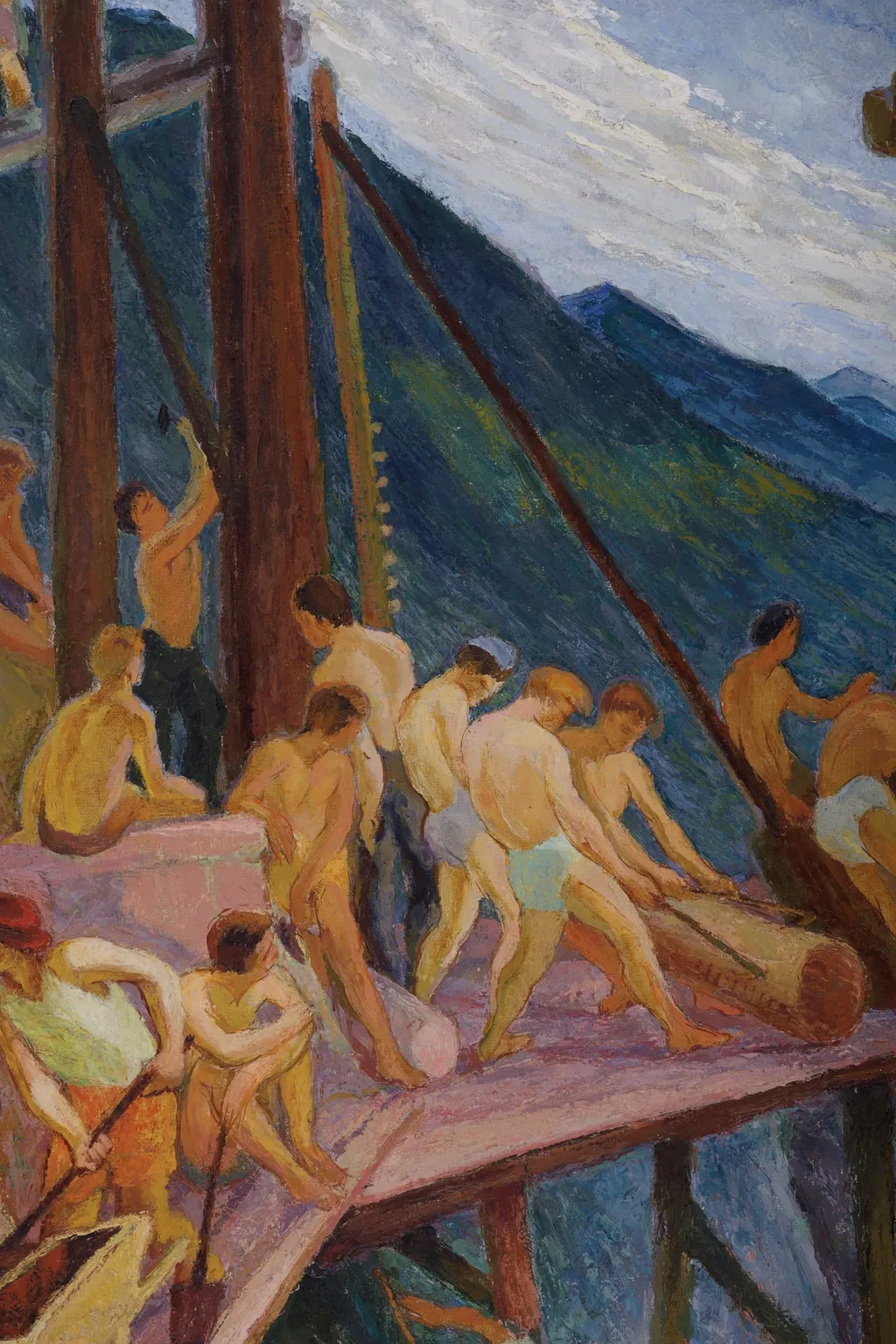
Șantier de constucții: Viaductul peste valea Prihadului is a print by Boușcă Eugen Ștefan. It dates from 1948 and is held in the collection of the Moldova National Museum Complex.
About this work
Overview
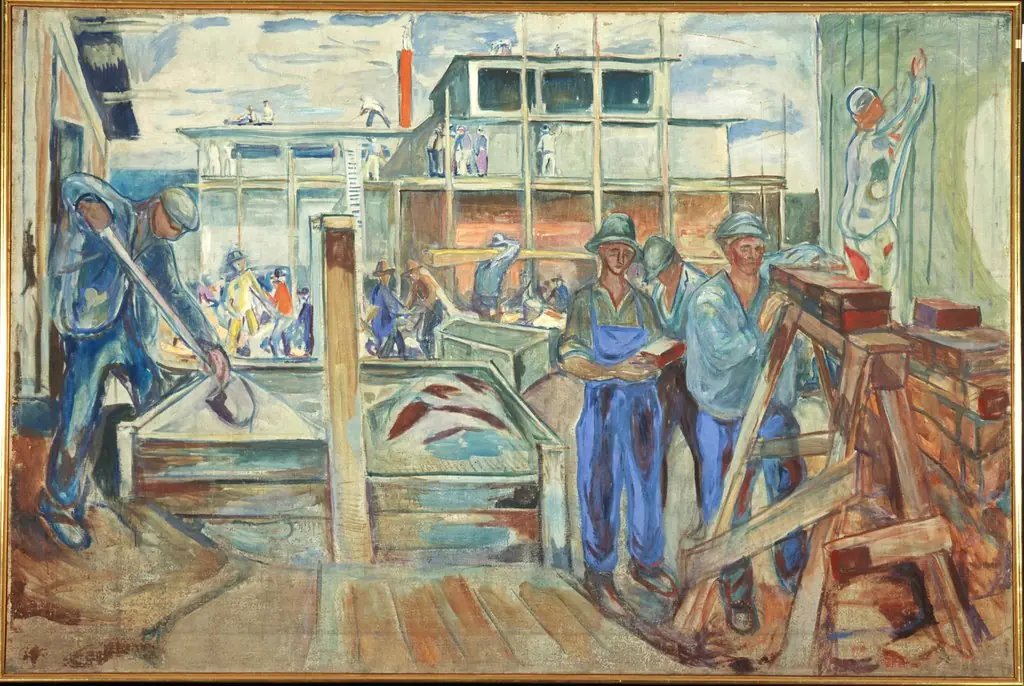
Created in 1948 by Boușcă Eugen Ștefan, this painting depicts a construction site where workers are building a viaduct across the Prihadului Valley.
Created in 1948 by Boușcă Eugen Ștefan, this painting depicts a construction site where workers are building a viaduct across the Prihadului Valley. The scene captures laborers engaged in physical tasks, their movements arranged to convey collective effort. The composition centers on human activity against a rugged natural backdrop, emphasizing the intersection of industrial progress and the landscape.
Subject & Meaning
The painting portrays a moment of postwar reconstruction, highlighting the labor of ordinary men in shaping infrastructure. Shirtless figures and practical attire suggest the physical demands of the work, while their coordinated actions imply unity and purpose. The absence of machinery in focus shifts attention to human endurance, reflecting broader societal values of diligence and collective rebuilding during that era.
Technique & Style
Boușcă employs a restrained palette of earth tones—ochres, browns, and muted grays—to ground the scene in realism. Brushwork is direct and unembellished, capturing texture in clothing, stone, and skin without idealization. Figures are rendered with attention to posture and gesture, conveying motion and fatigue. The background’s soft horizon and sky provide contrast, reinforcing the foreground’s gritty immediacy.
History & Provenance
Painted in 1948, the work emerged during Romania’s early communist period, when state-sponsored art often celebrated labor and industrial advancement. Though not commissioned by authorities, its subject aligns with official narratives of progress. Its provenance remains undocumented in public records, but it is held in Romanian institutional collections, likely acquired soon after completion.
Context
In postwar Romania, infrastructure projects were central to national recovery. The viaduct symbolized connectivity and modernization, while the workers represented the backbone of state-driven reconstruction. Art of this period frequently turned to realist depictions of labor, distancing itself from prewar aesthetics. Boușcă’s work fits within this trend, offering a quiet, unsentimental view of public works.
Legacy
Though not widely exhibited internationally, the painting remains a significant example of Romanian realist painting from the late 1940s. It preserves a visual record of manual labor during a transformative decade, valued for its unadorned observation. Boușcă’s focus on the dignity of work, without heroism or propaganda, gives the piece enduring resonance within national art history.
Artist & collection
Artist