Artwork
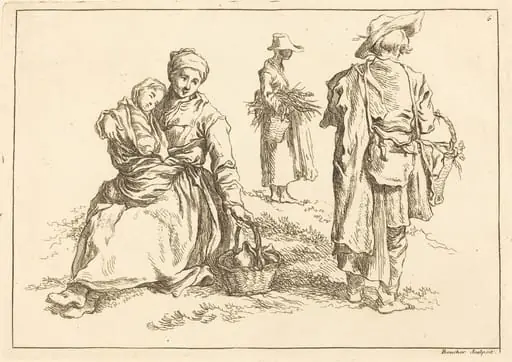
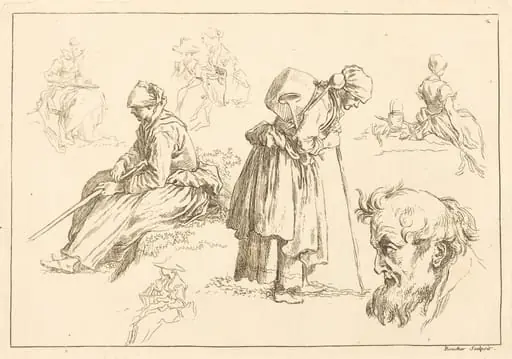
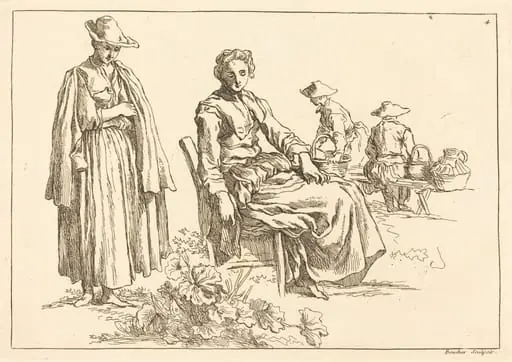
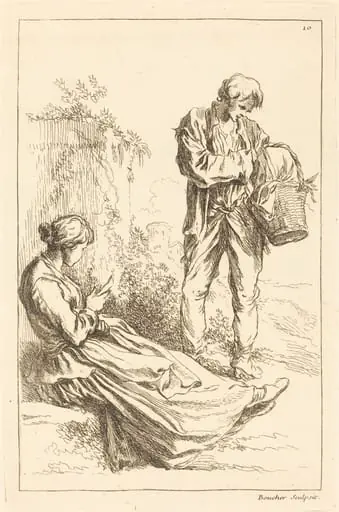
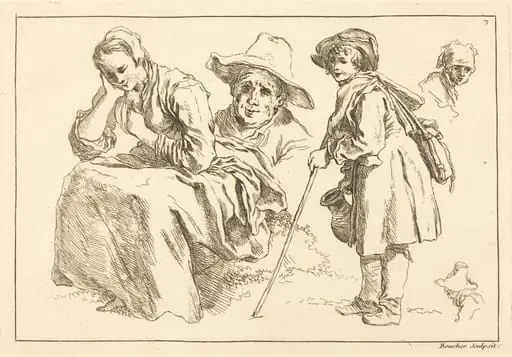
Figure Studies including Two Seated Peasants
Figure Studies including Two Seated Peasants is an ink print by the Baroque artist François Boucher. It dates from 1735 and is held in the collection of the National Gallery of Art.
About this work
Overview
Its modest scale and sketch-like quality reflect the artist’s engagement with draftsmanship as a tool for exploration rather than final presentation.
François Boucher’s *Figure Studies including Two Seated Peasants* is an etching on laid paper dated 1735. Part of his broader practice, the work captures informal groupings of rural figures through swift, unrefined lines. Unlike his polished paintings, this print serves as a preparatory exercise, emphasizing immediacy over finish. Its modest scale and sketch-like quality reflect the artist’s engagement with draftsmanship as a tool for exploration rather than final presentation.
Subject & Meaning
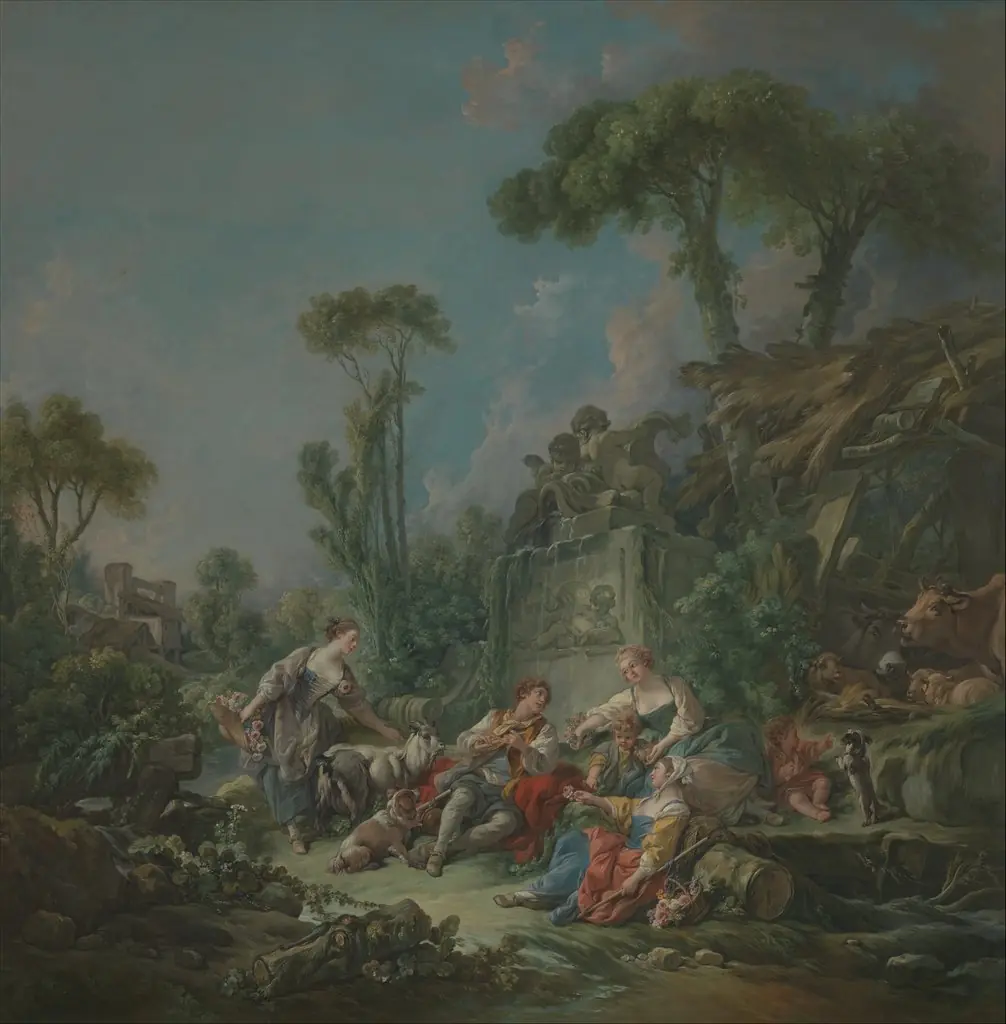
The etching depicts a loosely arranged assembly of peasants, some seated, others standing or engaged in quiet tasks. A central female figure holds a draped cloth, her gaze directed downward. The scene avoids narrative clarity, instead presenting a fleeting glimpse of rural life. Boucher’s focus on ordinary subjects aligns with Rococo interests in the pastoral, though here the treatment remains observational, devoid of idealized embellishment.
Technique & Style
Executed in etching, the print relies on acid-bitten lines incised into a metal plate, producing sharp, dark marks on paper. The technique permits spontaneity, evident in the uneven, rapid strokes that define forms. Boucher’s approach here contrasts with his painted works, favoring a rougher, more improvisational style. The use of laid paper, with its subtle grid texture, further underscores the work’s unpolished character.
History & Provenance
Created in 1735, the etching belongs to Boucher’s early graphic output, a period marked by experimentation with printmaking. As a study rather than a finished composition, its survival suggests its retention within the artist’s studio or circulation among collectors of preparatory works. Details of its early ownership remain sparse, though it later entered institutional collections as an example of Rococo draftsmanship.
Context
Boucher’s etching emerges from an era when printmaking served both as a reproductive medium and a means of artistic investigation. The Rococo period valued elegance and decorative charm, yet this work diverges by focusing on rustic subjects without overt refinement. Its sketch-like quality reflects the 18th-century interest in process, where studies were often preserved alongside completed works for their instructional or documentary value.
Artist & collection
Artist
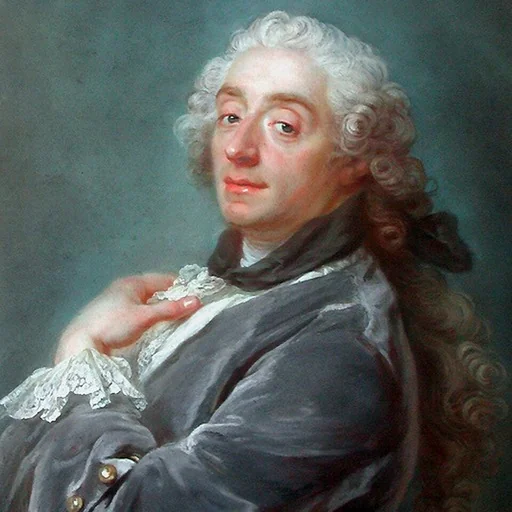
François Boucher was a French painter, draughtsman and etcher, who worked in the Rococo style.