Artwork
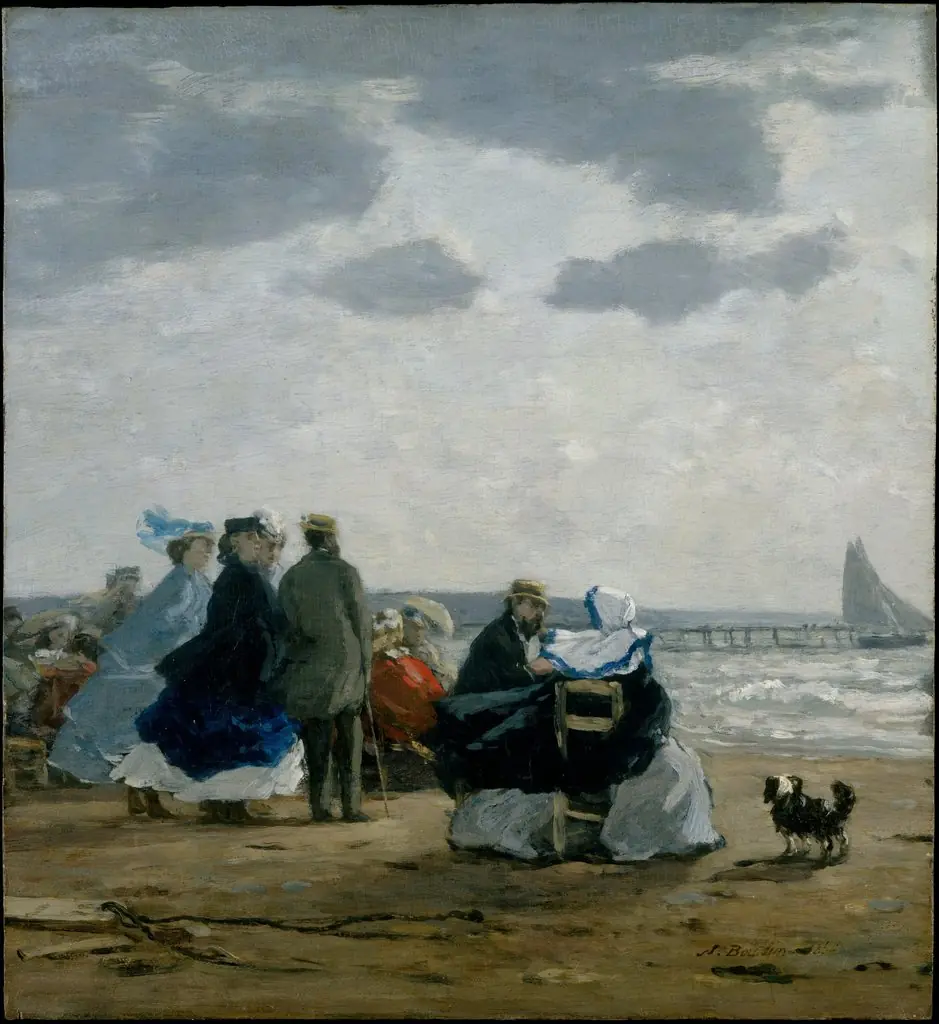
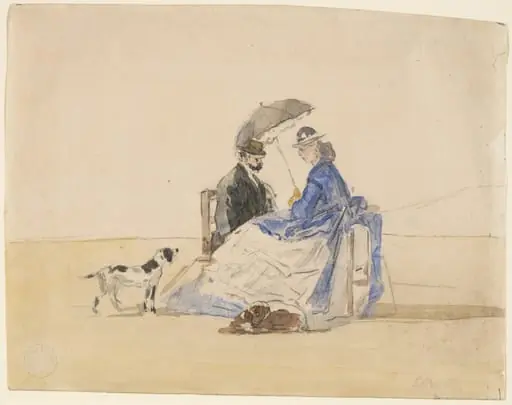
Ladies and Gentlemen Seated on the Beach with a Dog
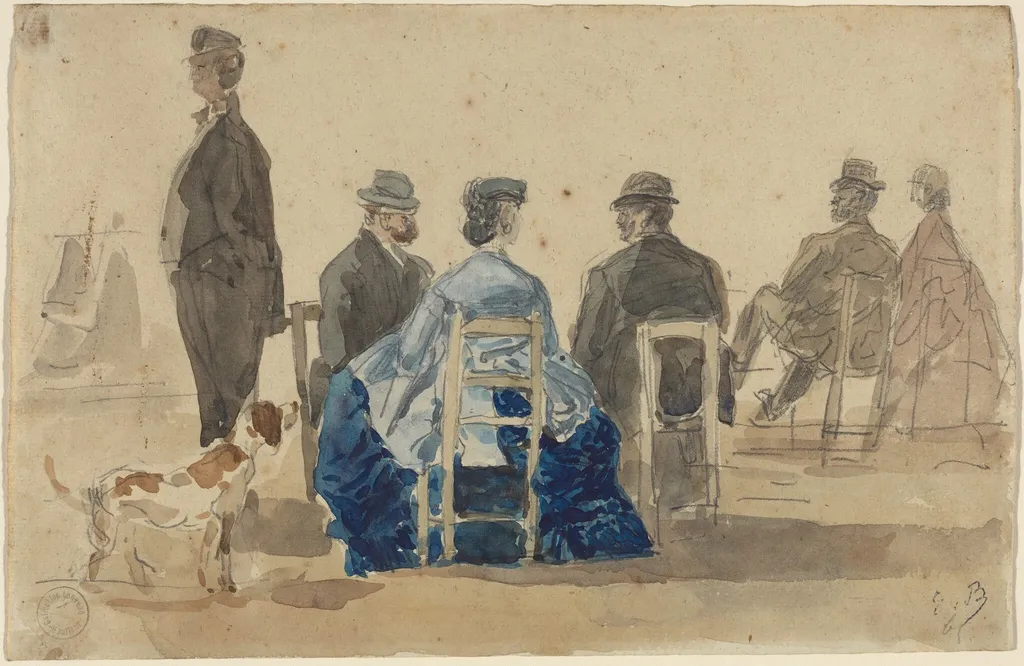
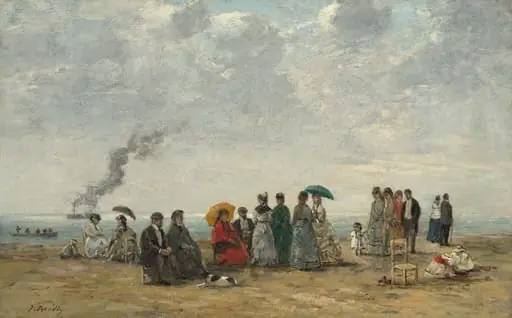
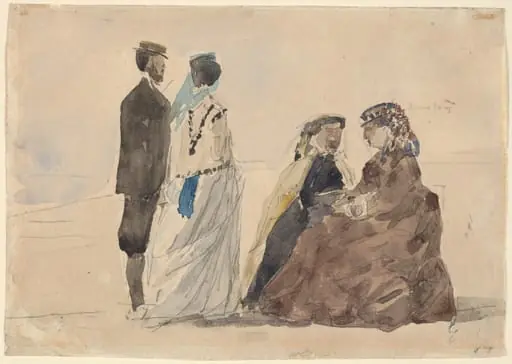
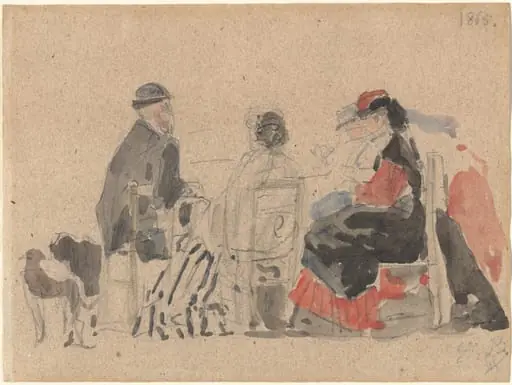
Ladies and Gentlemen Seated on the Beach with a Dog is a graphite drawing by the Impressionist artist Eugène Boudin. It dates from 1866 and is held in the collection of the National Gallery of Art.
About this work
Overview
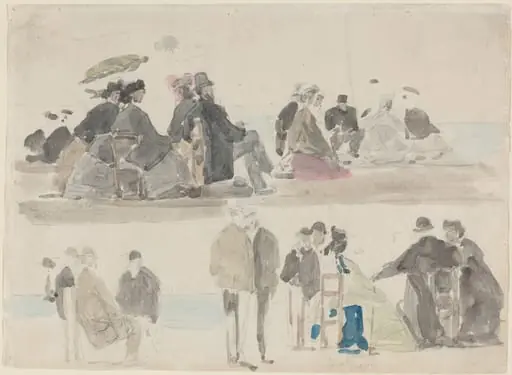
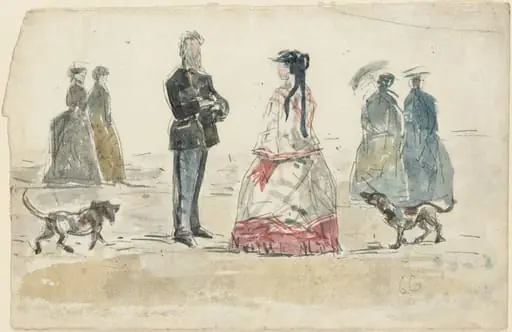
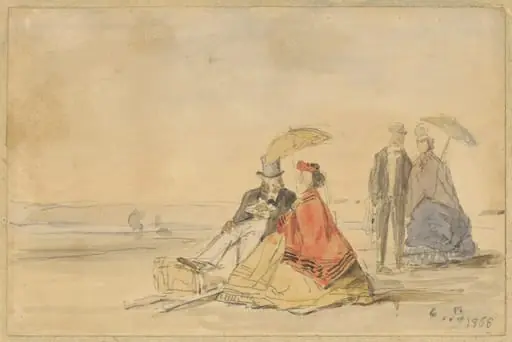
Created in 1866, *Ladies and Gentlemen Seated on the Beach with a Dog* is a watercolor drawing executed over a graphite underdrawing. The French artist Eugène Boudin, noted for his depictions of coastal life, employed the medium to record a quiet seaside scene populated by a small group of figures and a dog.
Subject & Meaning
The composition shows five individuals seated on a bench facing the sea, their backs turned toward the viewer, accompanied by a woman in a dark blue dress and a dog lying on the sand. The attire—hats, suits, bonnets—identifies the figures as leisurely beachgoers, reflecting Boudin’s recurring interest in the everyday recreation of the 19th‑century shoreline.
Technique & Style
Boudin applied watercolor in swift, loose strokes that merge into soft washes, allowing the graphite sketch to remain visible beneath. This approach captures the fleeting quality of light and atmosphere, a method that was considered innovative for its immediacy and sketch‑like quality at the time of its creation.
Context
Although primarily known for his pastel works, Boudin’s watercolors also attracted critical attention. Contemporary writers such as Charles Baudelaire and Jean‑Baptiste-Camille Corot praised his economical handling of medium, a sentiment that extends to this drawing as an example of his skill in rendering marine subjects with minimal means.
Artist & collection
Artist
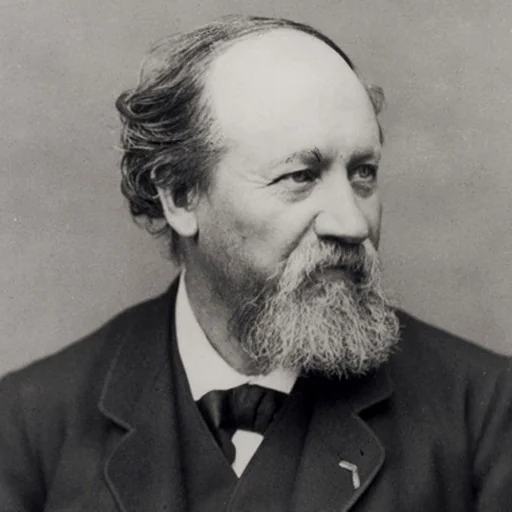
Eugène Louis Boudin (French: ; 12 July 1824 – 8 August 1898) was one of the first French landscape painters to paint outdoors.