Artwork
Low Tide, Sailboats Run Aground
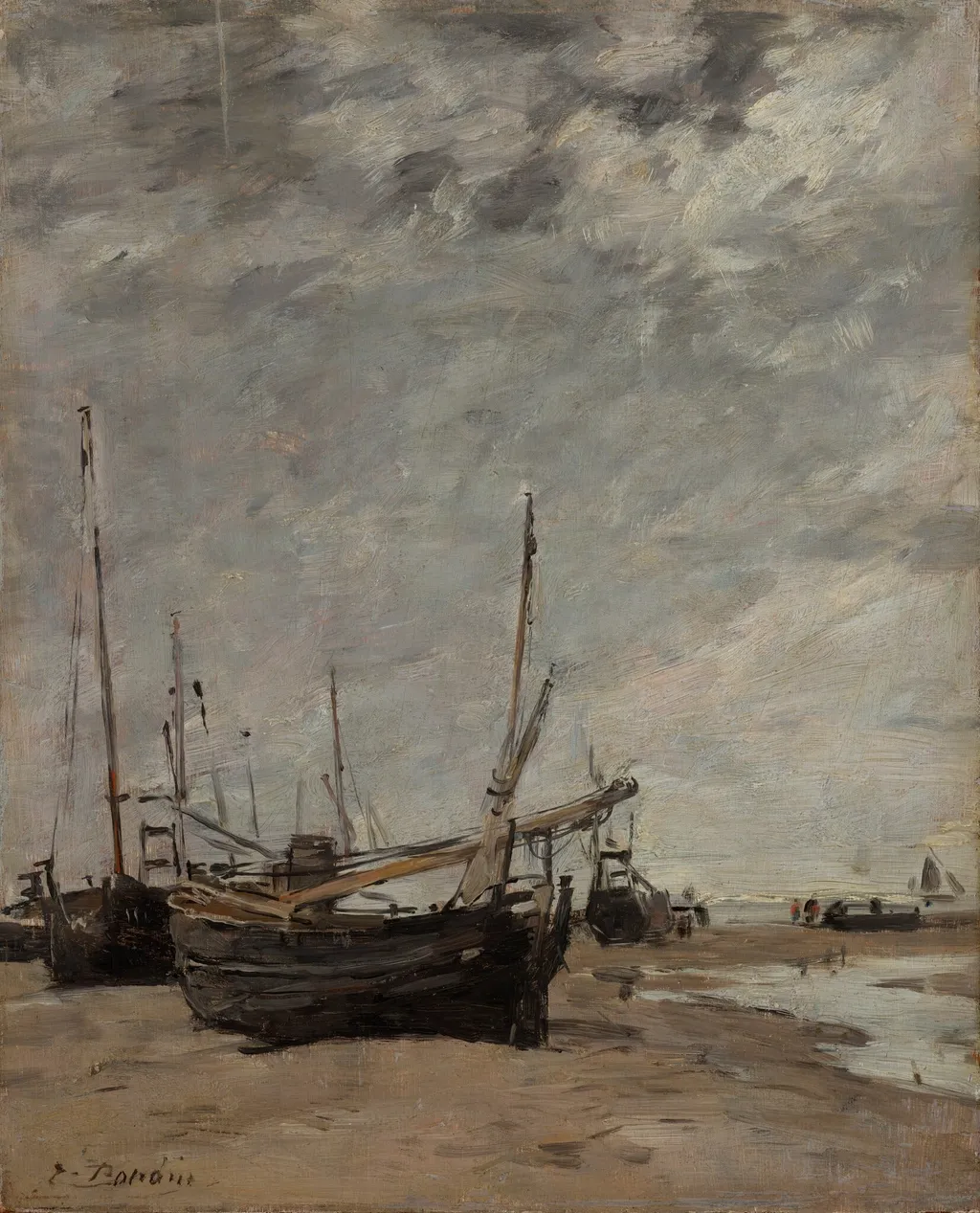
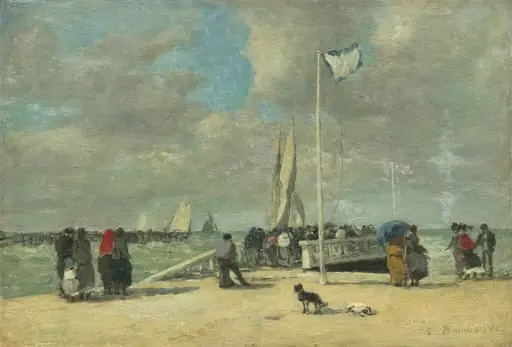
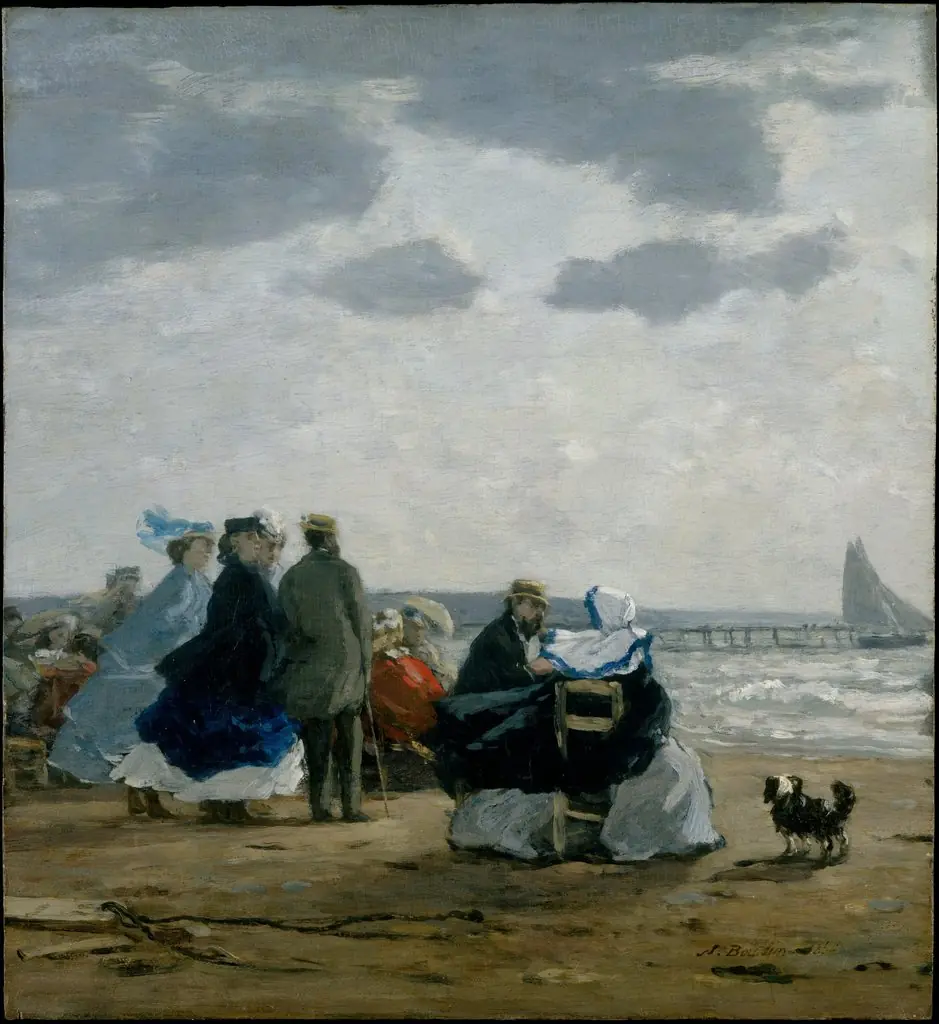
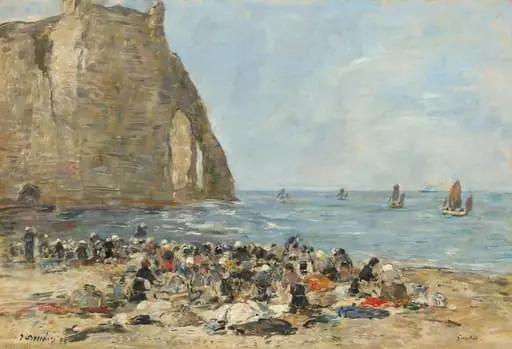
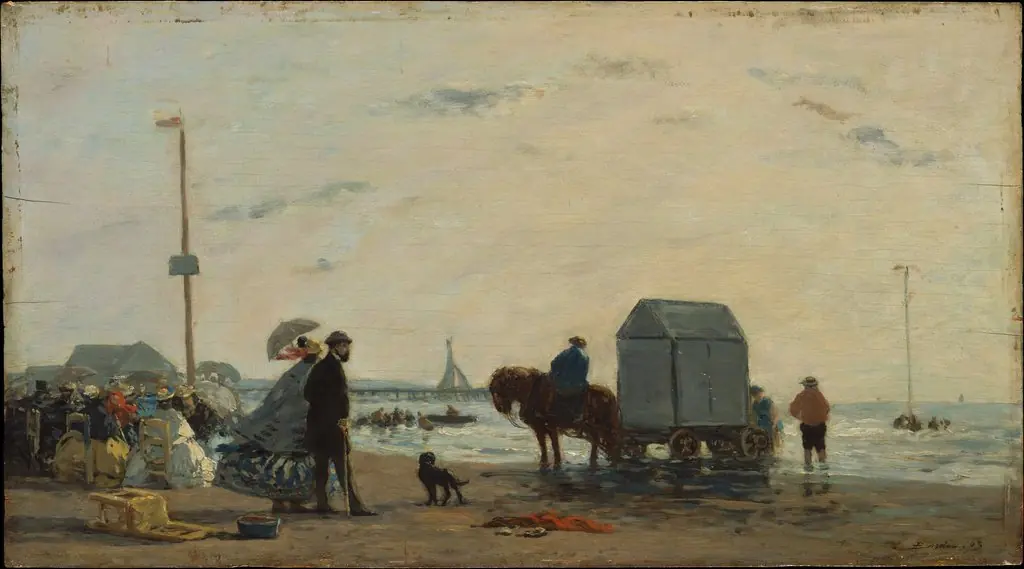
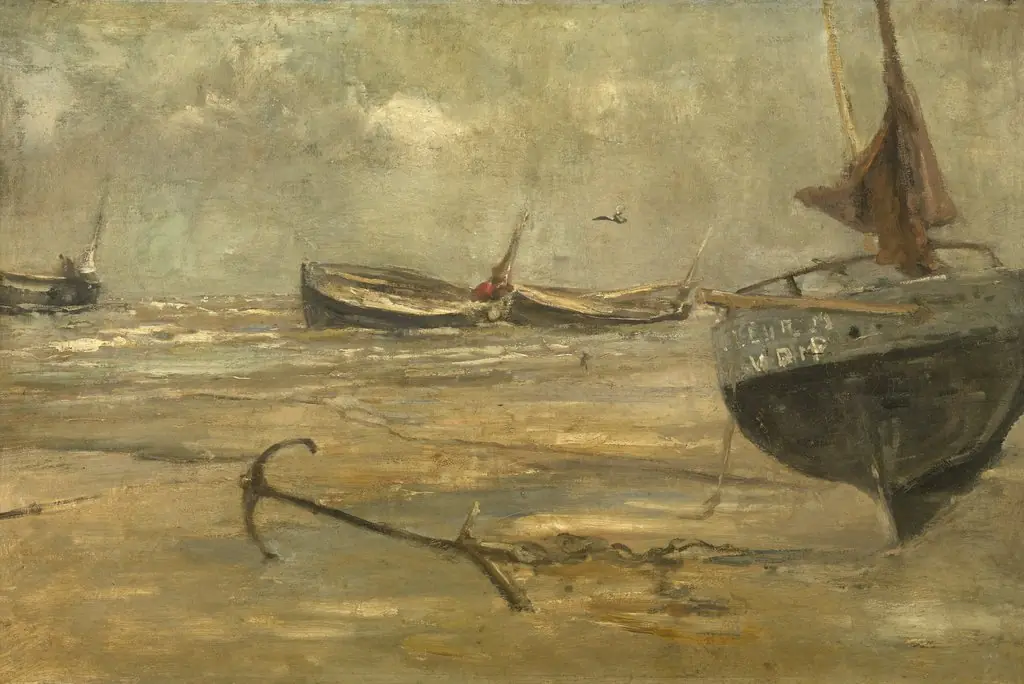
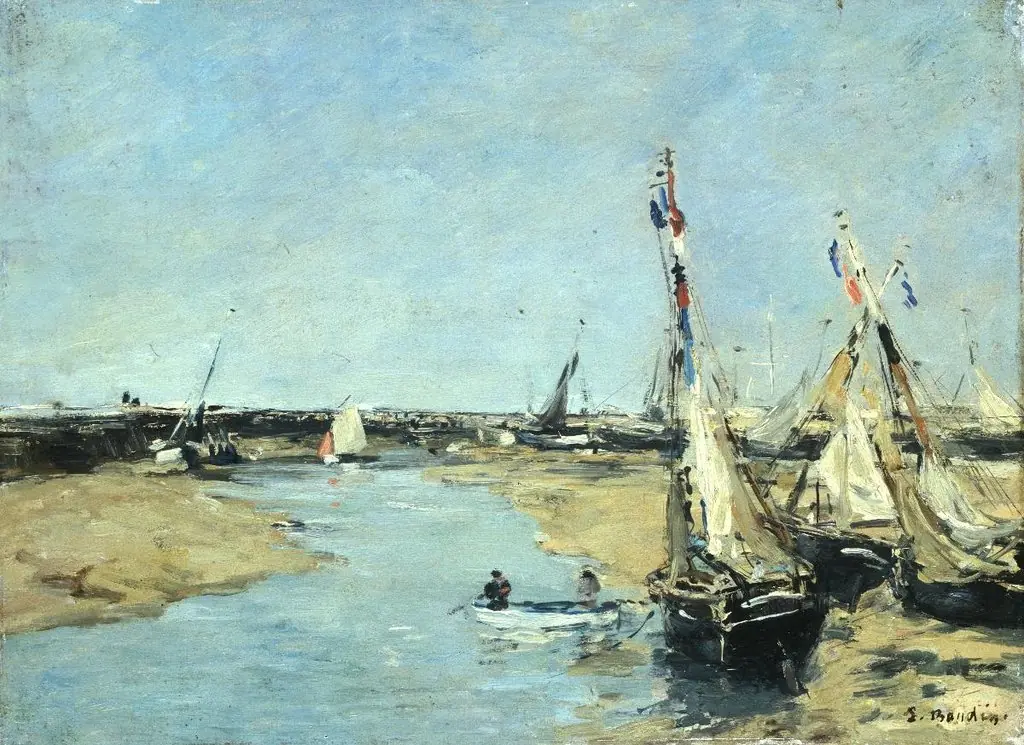
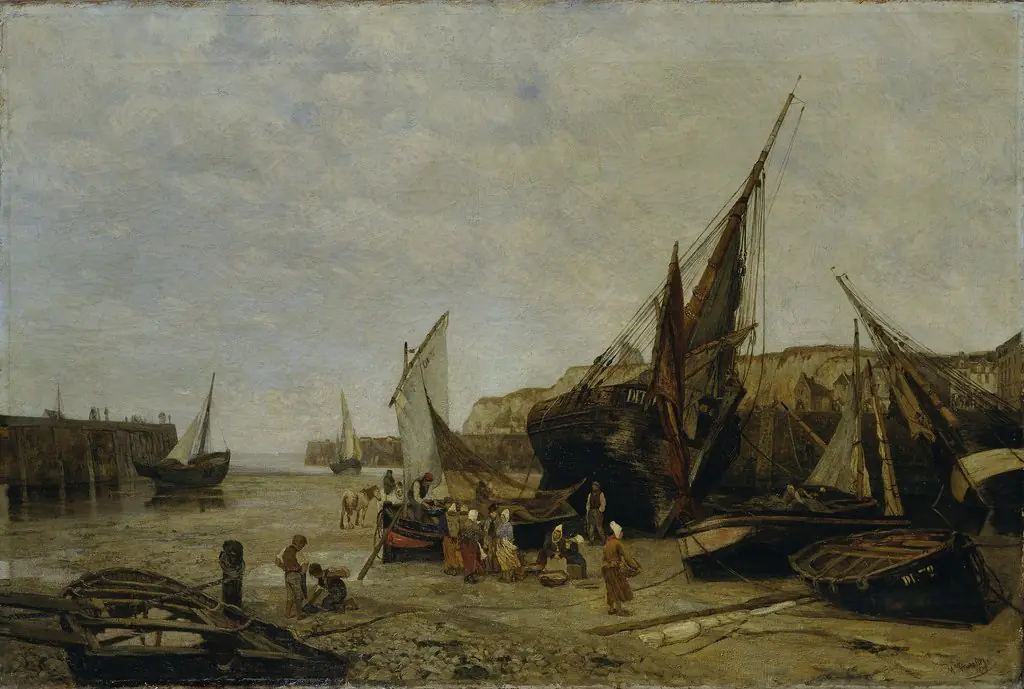
Low Tide, Sailboats Run Aground is an oil painting by the Impressionist artist Eugène Boudin. It dates from 1888 and is held in the collection of the National Gallery of Art.
About this work
Overview
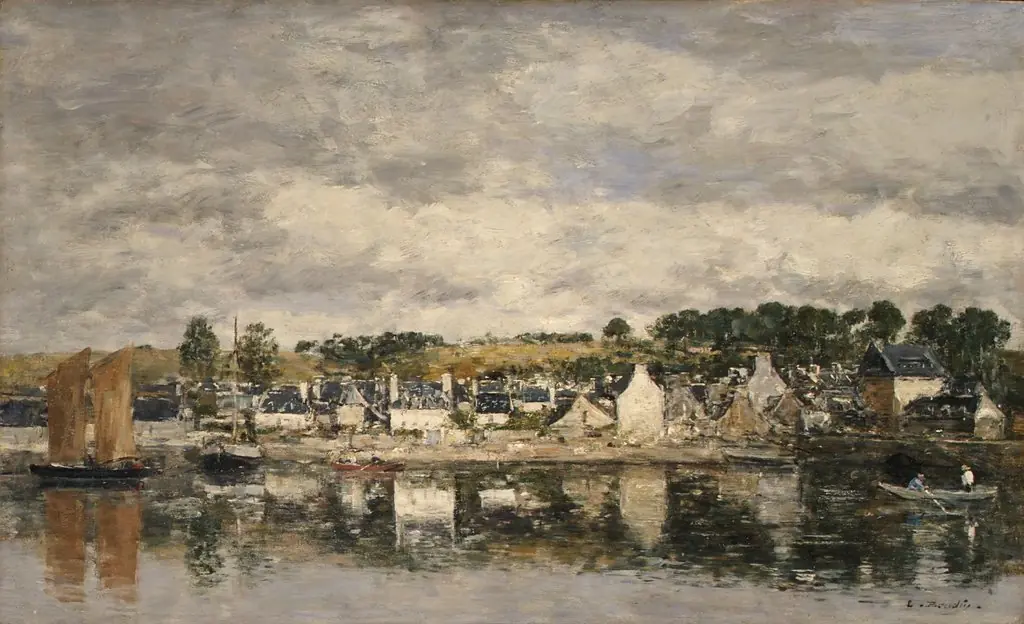
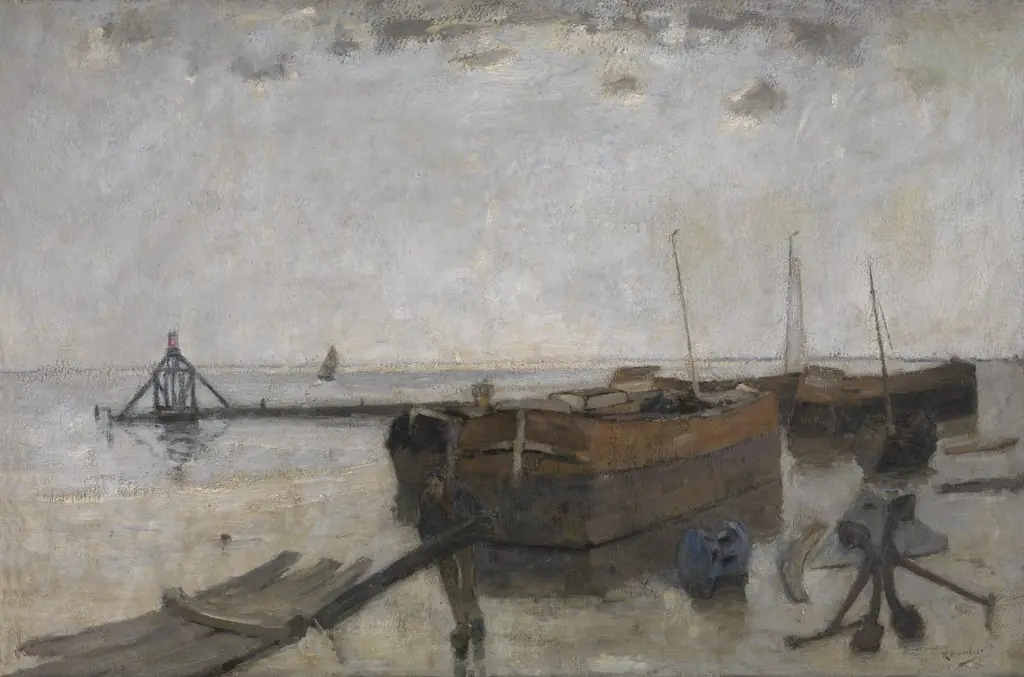
Eugène Boudin’s 1888 oil on panel, *Low Tide, Sailboats Run Aground*, portrays a quiet shoreline where several small sailboats lie beached on sand. The composition centers on the masts and canvas of the vessels, while a softly graded sky stretches above, suggesting the calm after a receding tide.
Subject & Meaning
The work captures a fleeting moment of maritime stillness, emphasizing the relationship between water, light, and human activity. By presenting the grounded boats against an expansive horizon, Boudin invites contemplation of the sea’s transitory nature and the quiet pause that follows the ebb of the tide.
Technique & Style
Executed in oil on a wooden panel, the painting employs delicate, blended brushwork that softens edges and creates a gentle atmospheric haze. Boudin’s palette of muted blues, warm sands, and subtle sky tones demonstrates his skill in rendering the interplay of light on water and sand, hallmarks of his plein‑air approach.
History & Provenance
Created in the late 1880s, the piece entered the collection of the National Gallery of Art in Washington, D.C., where it remains on public display. Its acquisition reflects the institution’s commitment to representing 19th‑century French landscape painting.
Context
Boudin, a forerunner of Impressionism, was celebrated by contemporaries such as Charles Baudelaire and Jean‑Baptiste‑Camille Corot for his nuanced skies and coastal scenes. *Low Tide, Sailboats Run Aground* exemplifies his lifelong interest in marine subjects and his influence on younger artists who later explored light and atmosphere more radically.
Own this work as a print
Artist & collection
Artist
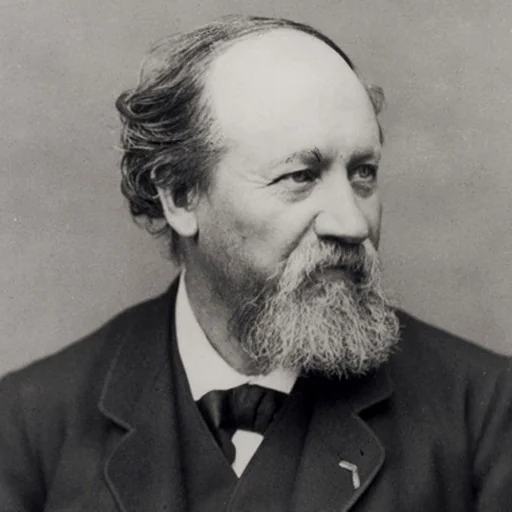
Eugène Louis Boudin (French: ; 12 July 1824 – 8 August 1898) was one of the first French landscape painters to paint outdoors.