Artwork
Peasants and Cows [recto]
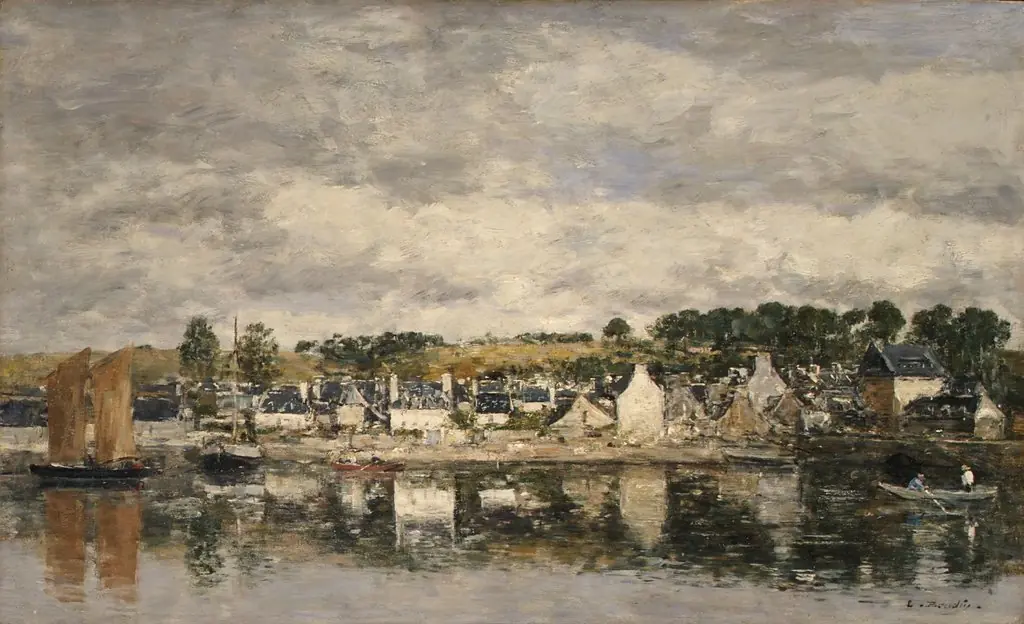
![Peasants and Cows [recto], by Eugène Boudin, graphite, 1877](https://artifactworldgallery.com/img/eugene-boudin--peasants-and-cows-recto--c202fd0a77c24e2a-w1024.webp)
Peasants and Cows [recto] is a graphite drawing by the Impressionist artist Eugène Boudin. It dates from 1877 and is held in the collection of the National Gallery of Art.
About this work
Overview
Created in 1877, this graphite drawing by Eugène Boudin depicts a rural scene of peasants and cattle in a quiet, unidealized moment. Executed on wove paper, it belongs to a body of work made outdoors, reflecting Boudin’s dedication to direct observation. His approach prioritized spontaneity over finish, capturing the rhythms of daily life with minimal yet deliberate strokes.
Subject & Meaning
The drawing portrays ordinary villagers and their livestock in a pastoral setting, with figures standing, sitting, or leaning on staffs.
The drawing portrays ordinary villagers and their livestock in a pastoral setting, with figures standing, sitting, or leaning on staffs. The cows rest calmly, their forms suggested with loose contours. There is no narrative drama—only the quiet persistence of rural labor and animal husbandry. The scene conveys dignity in the mundane, aligning with Realist values that honored everyday existence without embellishment.
Technique & Style
Boudin employed light, fluid pencil lines to suggest movement and form without detailed rendering. The figures and animals are simplified, their volumes implied through gesture rather than precise anatomy. The paper’s texture interacts with the graphite, enhancing the sketch’s immediacy. This method reflects his practice of rapid on-site studies, valuing observation over polished completion.
History & Provenance
The drawing is one of many works Boudin produced during his travels through Normandy and northern France. Though not exhibited publicly during his lifetime, such studies were foundational to his larger oil paintings. After his death, these drawings gained recognition for their insight into his process and their role in shaping the plein air tradition that influenced the Impressionists.
Context
Boudin worked during a period when artists increasingly turned away from studio-based historical subjects toward direct engagement with nature and common life. His focus on coastal and rural scenes aligned with broader Realist and early Impressionist interests. Unlike academic painters, he valued transient effects of light and unposed human activity, making his sketches vital records of 19th-century rural France.
Legacy
Boudin’s drawings, including this one, helped redefine the role of sketching in artistic practice. They demonstrated that informal, rapid studies could hold aesthetic and documentary value. His emphasis on outdoor observation and naturalism directly influenced younger artists, including Monet, who credited Boudin with teaching him to paint from life.
Artist & collection
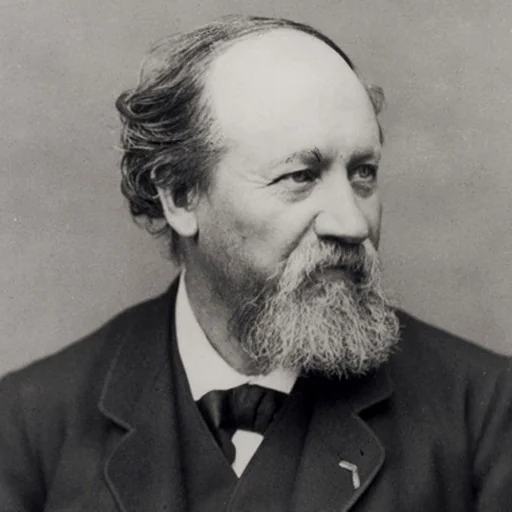
Artist
Eugène Louis Boudin (French: ; 12 July 1824 – 8 August 1898) was one of the first French landscape painters to paint outdoors.

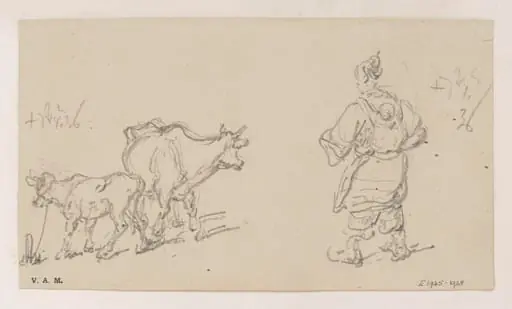 A cow and calf, and a boatwoman with a child on her back
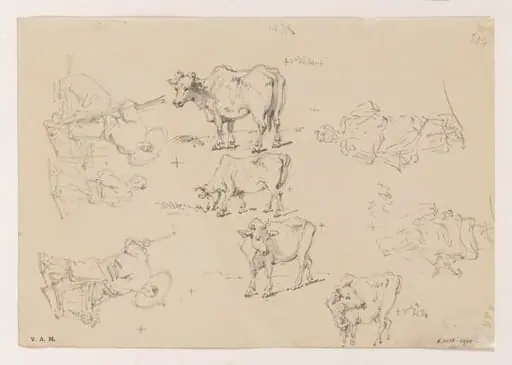 Figures and cattle
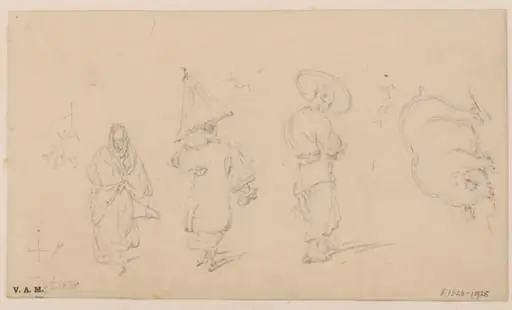 Three figures and a pig
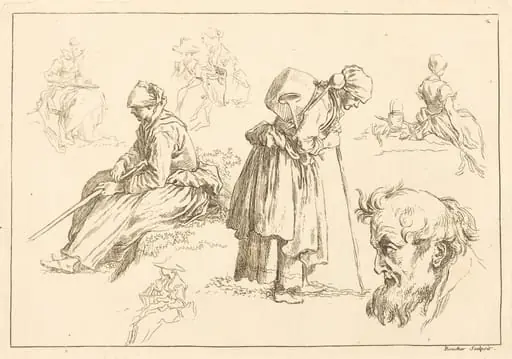 Figure Studies including Woman with a Kettle
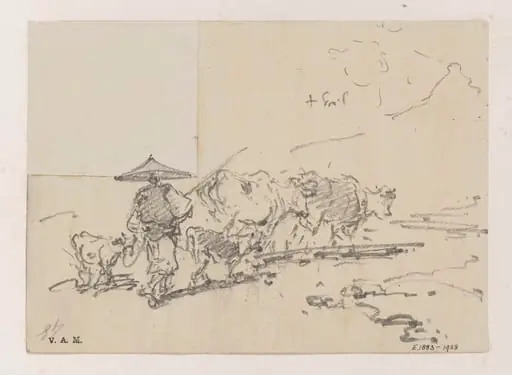 A Chinese cowherd driving cattle
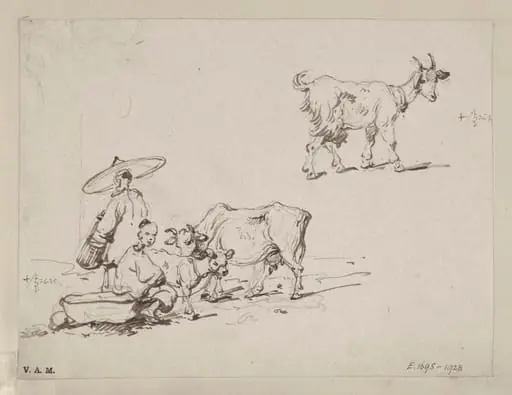 Two figures with a cow and calf; and a goat
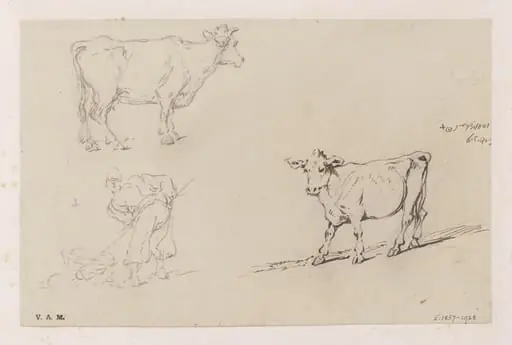 A Chinese man with a pole and basket, and two cows
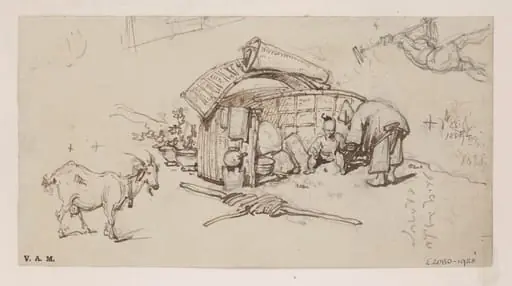 A beached Tanka boat adapted as a dwelling
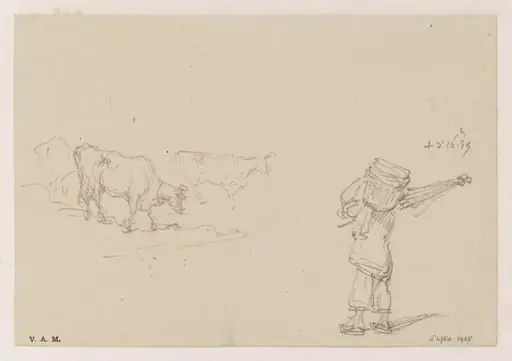 Cows, and a figure carrying a basket
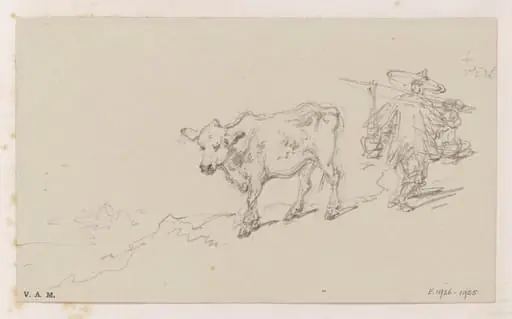 A Chinese porter and a cow