Artwork
Seascape with Sailing Vessel
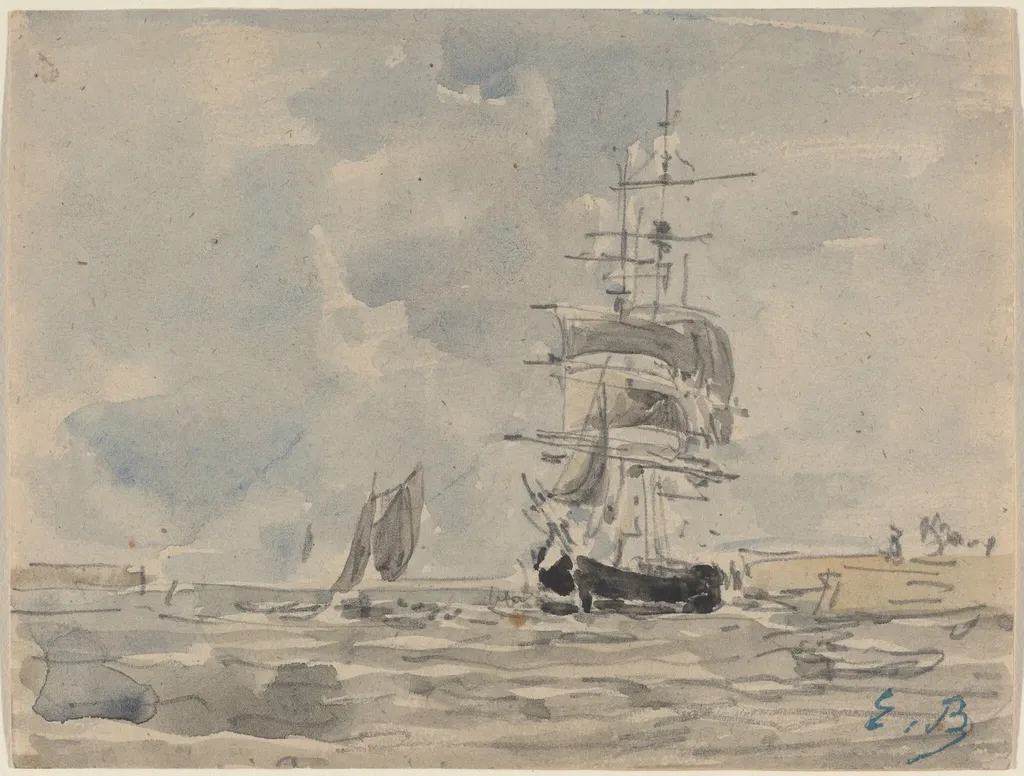
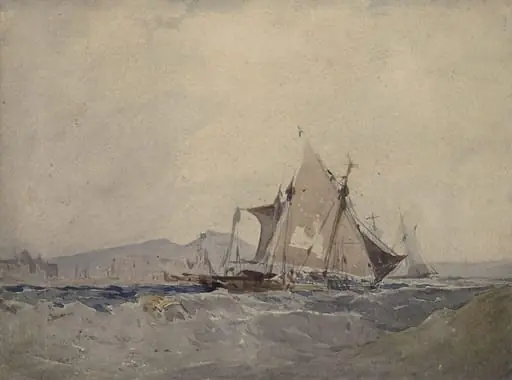
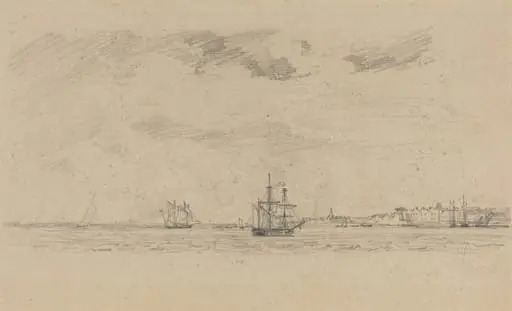
Seascape with Sailing Vessel is a graphite drawing by the Impressionist artist Eugène Boudin. It dates from 1875 and is held in the collection of the National Gallery of Art.
About this work
Overview
Created around 1875, *Seascape with Sailing Vessel* is a watercolor and graphite drawing by French artist Eugène Boudin.
Created around 1875, *Seascape with Sailing Vessel* is a watercolor and graphite drawing by French artist Eugène Boudin. It exemplifies his dedication to painting outdoors and capturing transient natural conditions. Boudin’s focus on marine environments positioned him as a key figure in 19th-century landscape art, bridging traditional techniques and emerging observational approaches that would later inform Impressionism.
Subject & Meaning
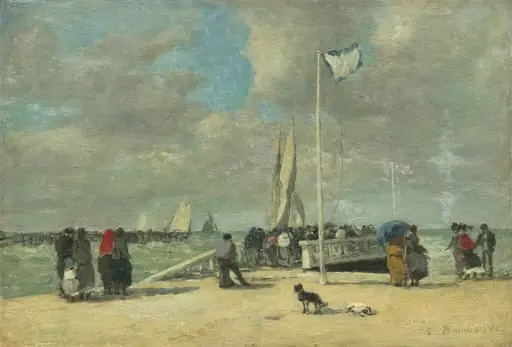
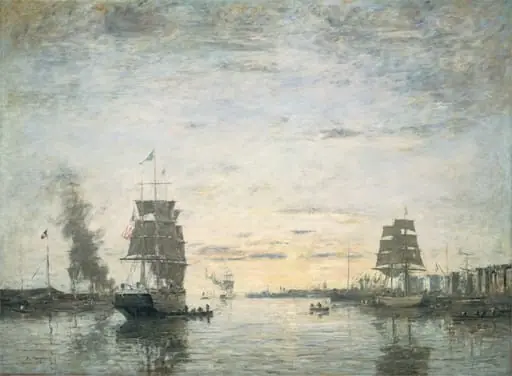
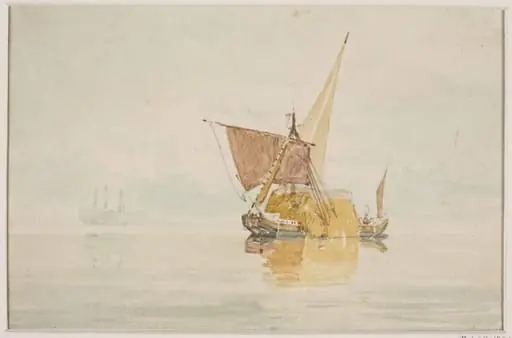
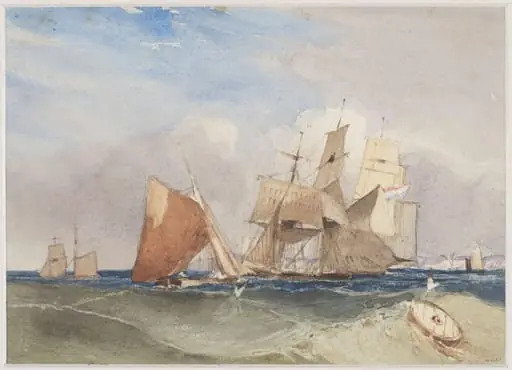
The composition centers on a large sailing vessel under full sail, accompanied by a smaller boat in the distance. The scene conveys quiet maritime activity without narrative drama. The emphasis lies not in the vessels themselves, but in their relationship to the shifting sky and sea—suggesting the rhythm of coastal life and the dominance of natural forces over human endeavor.
Technique & Style
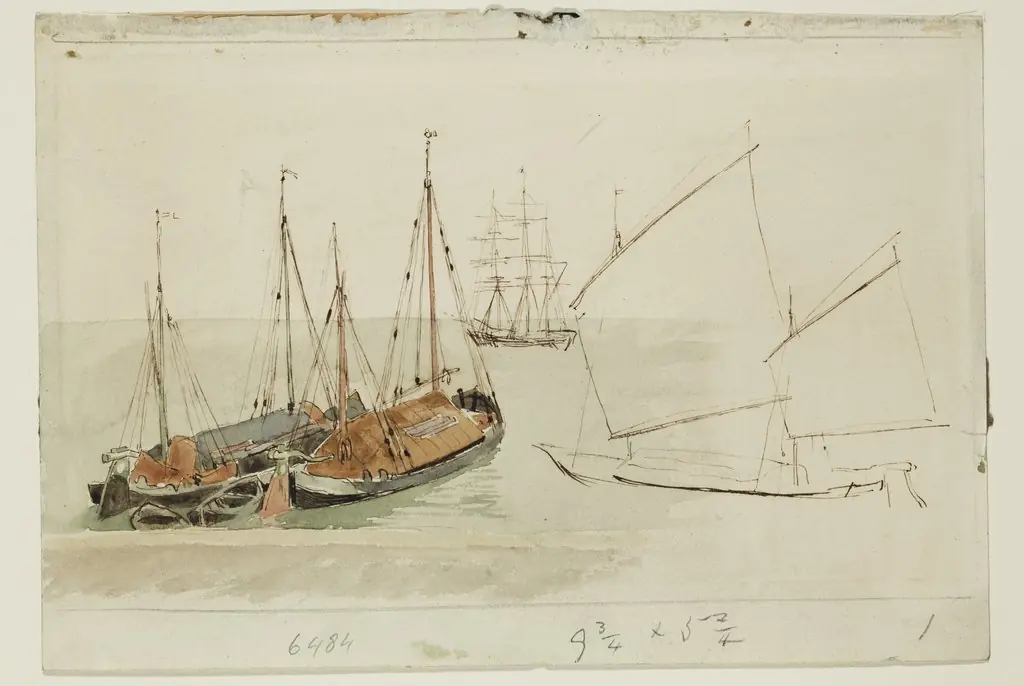
Boudin employed loose, rapid brushwork in watercolor, layered with delicate graphite lines to define the ship’s structure. The sky and waves are rendered with minimal detail, using pale blues and grays to suggest atmosphere and motion. This economical approach prioritized immediacy over precision, capturing fleeting light and weather conditions with a spontaneity that departed from academic conventions.
History & Provenance
Boudin produced this work during a period of growing recognition, following early support from critics such as Baudelaire and Corot. While specific ownership history is not documented here, the piece aligns with his broader output from the 1870s, when he frequently exhibited in Paris and influenced younger artists, including Monet, who credited Boudin with teaching him to paint en plein air.
Context
In the mid-1870s, French art was shifting toward direct observation of nature. Boudin’s watercolors, with their emphasis on light and atmosphere, contributed to this transition. Though not formally part of the Impressionist group, his methods—painting outdoors, rejecting studio idealization—laid groundwork for the movement. His work offered an alternative to historical or mythological subjects dominant in official salons.
Legacy
Boudin’s focus on transient marine effects helped redefine landscape painting’s possibilities. His watercolors, like this one, demonstrated that modest media could convey profound atmospheric nuance. Later artists, particularly the Impressionists, adopted his practice of painting quickly from nature, cementing his role as a quiet but essential precursor to modern landscape art.
Own this work as a print
Artist & collection
Artist
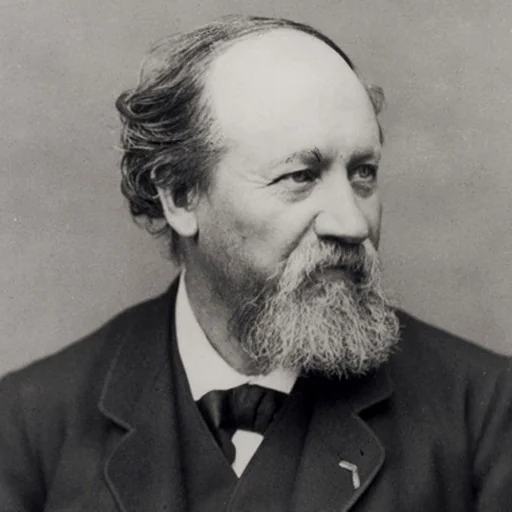
Eugène Louis Boudin (French: ; 12 July 1824 – 8 August 1898) was one of the first French landscape painters to paint outdoors.