Artwork
Skating on the Frozen Amstel River
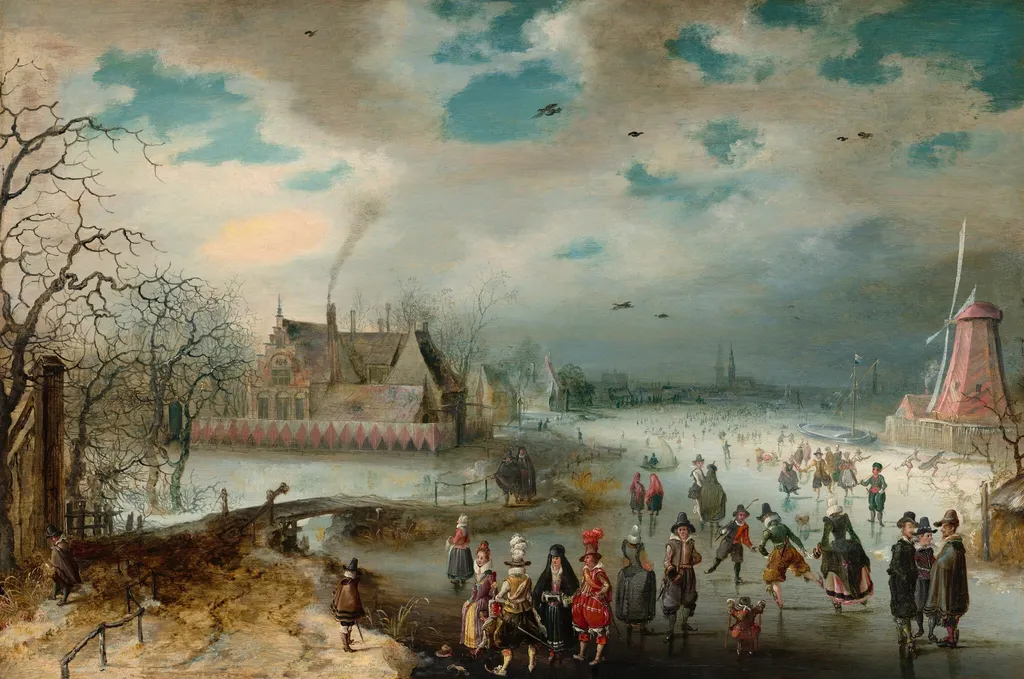
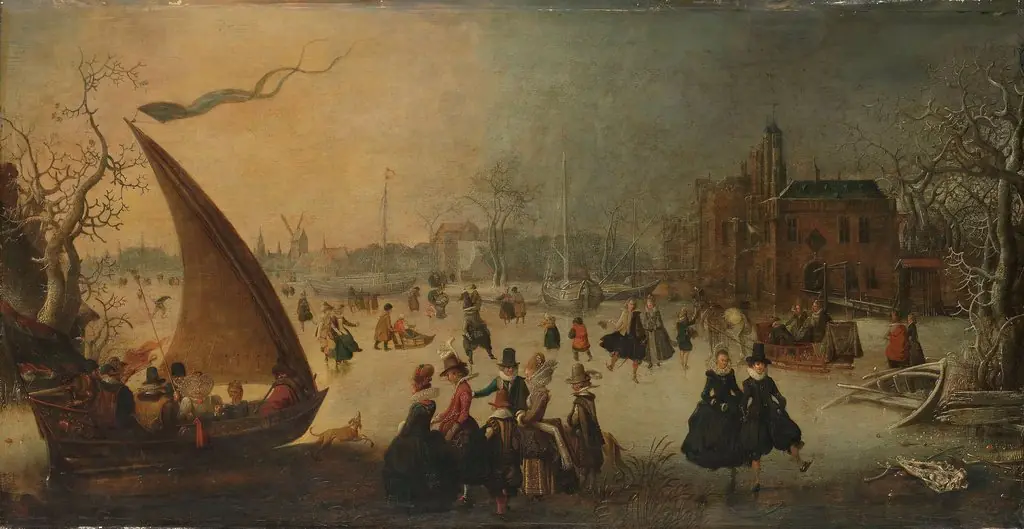
Skating on the Frozen Amstel River is an oil painting by the Baroque artist Adam van Breen. It dates from 1611 and is held in the collection of the National Gallery of Art.
About this work
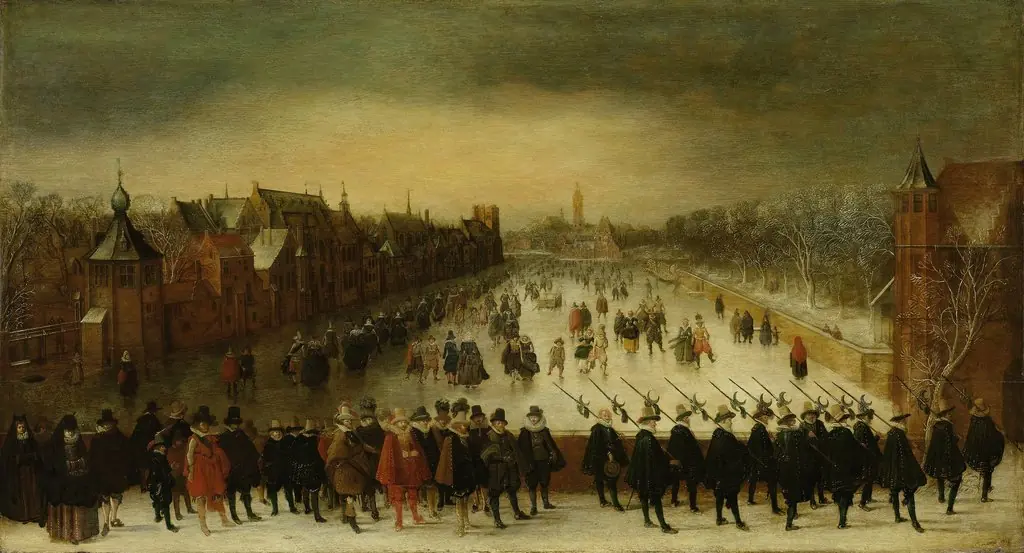
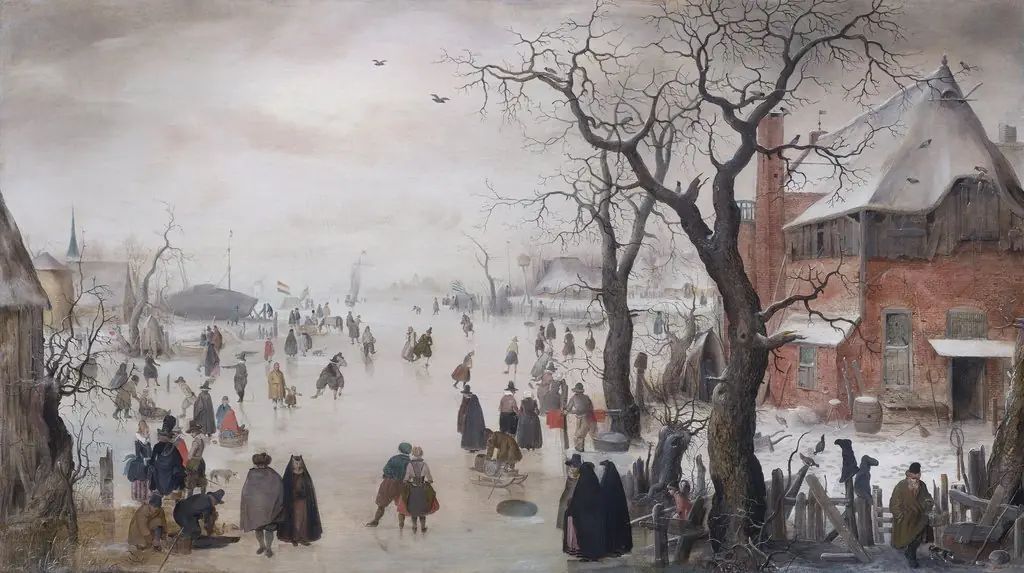
You see a winter scene on a frozen river. People skate, play games, and walk dogs on the ice. Houses and a church line the banks.
This was painted in 1611 by Adam van Breen. It’s one of the earliest known Dutch winter scenes. The details show how people dressed and spent time outside back then.
Check out more winter scenes at the National Gallery of Art, Washington.
Overview
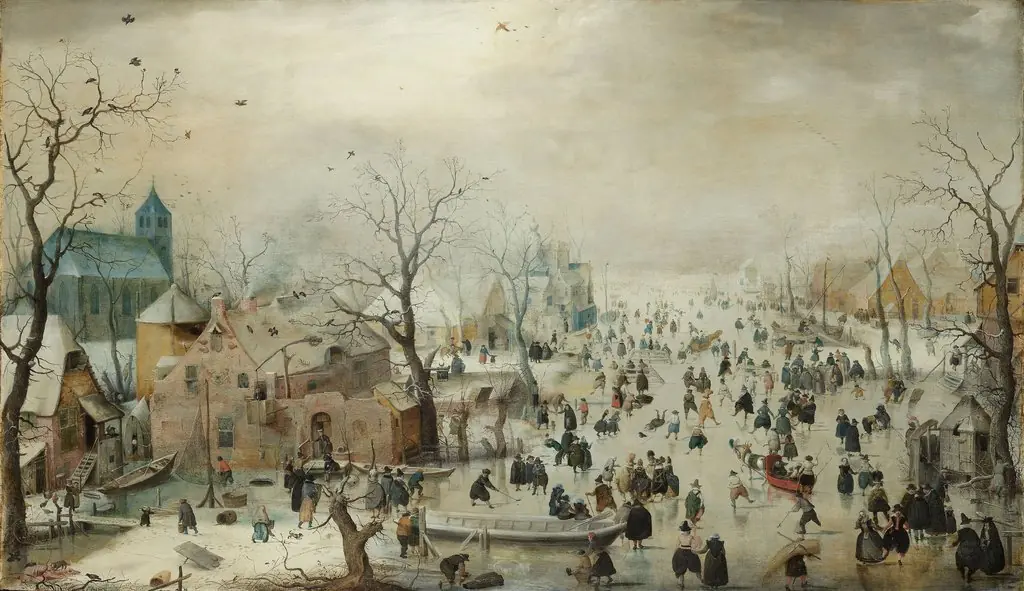
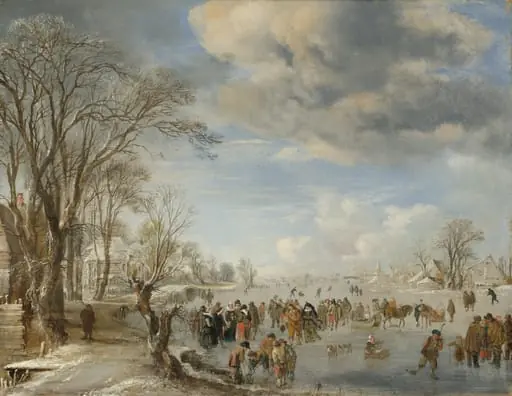
Skating on the Frozen Amstel River, painted by Adam van Breen in 1611, is a seminal oil-on-panel work that captures a bustling winter landscape on the frozen waters of the Amstel near Amsterdam. The composition presents a panoramic view where the ice serves as a dynamic stage for diverse social activities; figures are depicted skating, playing kolf, walking dogs, and gathering in small groups, illustrating the communal nature of winter recreation in the early Dutch Golden Age. Van Breen arranges the scene with a low horizon line, allowing the expansive, overcast sky to dominate the upper portion of the panel, while the riverbanks are lined with detailed architecture, including residential houses and a prominent church tower that anchors the background. Executed with precise attention to atmospheric perspective and the texture of ice and snow, the work documents contemporary dress and leisure with documentary fidelity. As one of the earliest known independent Dutch winter landscapes, it marks a significant shift in Northern European art toward secular, genre-specific subjects, establishing a visual template for the winter scenes that would later be perfected by artists such as Hendrick Avercamp and Aert van der Neer.
Subject & Meaning
The work depicts everyday recreation during a cold season, emphasizing communal activity and the adaptation of public space for sport and socializing.
The work depicts everyday recreation during a cold season, emphasizing communal activity and the adaptation of public space for sport and socializing. Figures are shown in period attire, highlighting contemporary fashion, while the presence of a church underscores the integration of sacred architecture into daily life. The scene reflects a cultural appreciation for winter’s temporary transformation of the cityscape.
Technique & Style
Executed in oil on a wooden panel, van Breen employs a restrained palette of muted blues, grays, and earth tones to convey the chill of the landscape. Fine brushwork renders the texture of ice and the details of clothing, while broader strokes suggest atmospheric depth. The balanced arrangement of figures and architecture demonstrates a compositional clarity typical of early Dutch genre painting.
History & Provenance
Created in 1611, the painting stands among the first Dutch artworks to focus on winter scenery, predating the later popularity of such subjects. Though its early ownership records are sparse, the piece has been recognized by scholars as a key reference for studying the development of seasonal genre scenes in the Netherlands.
Own this work as a print
Artist & collection