Artwork
The Crucifixion
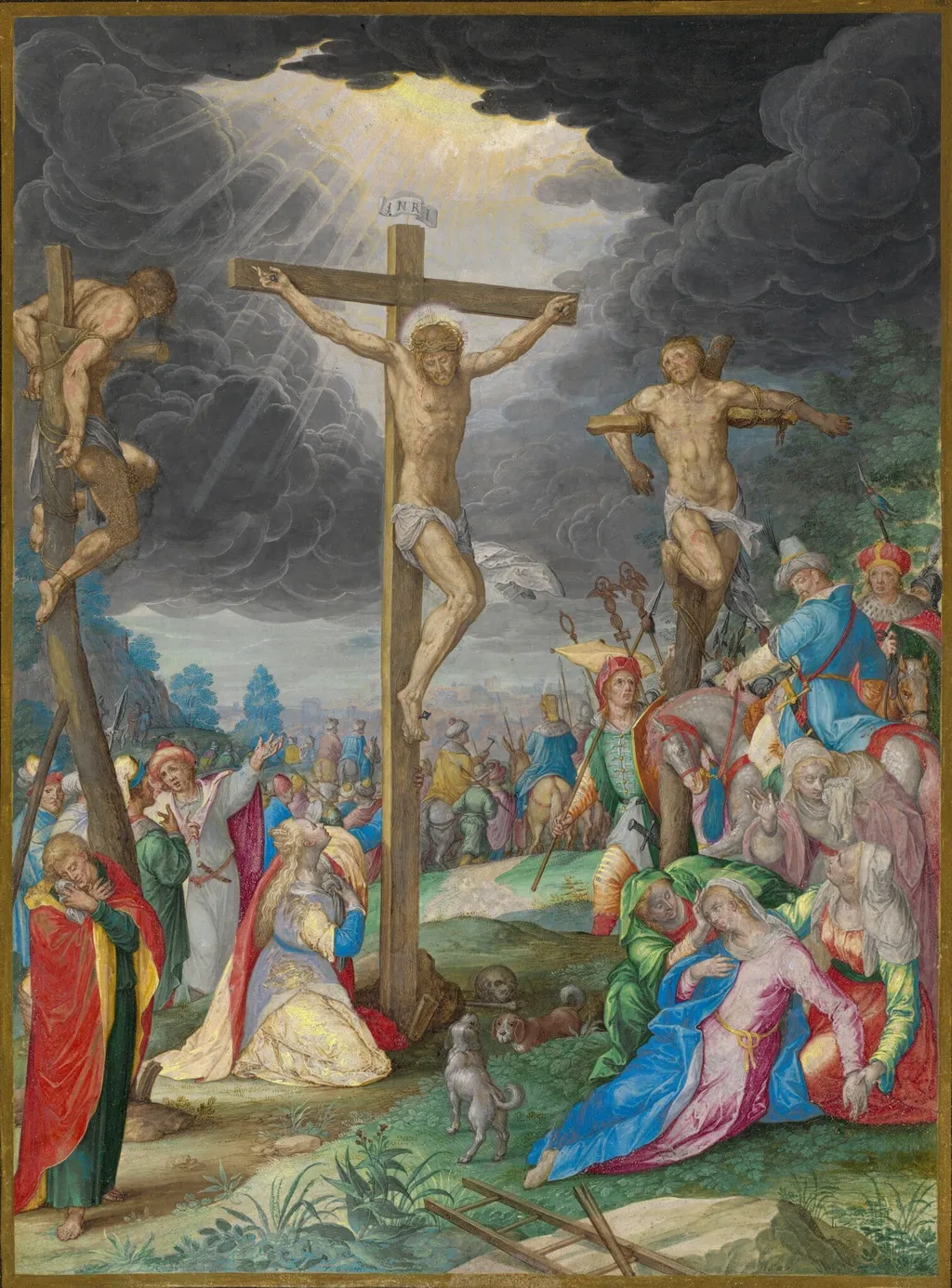
The Crucifixion is a gouache drawing by the Baroque artist Friedrich Brentel. It dates from 1627 and is held in the collection of the National Gallery of Art.
About this work
Overview
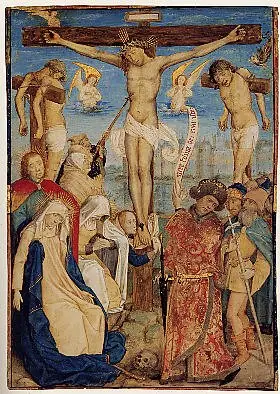
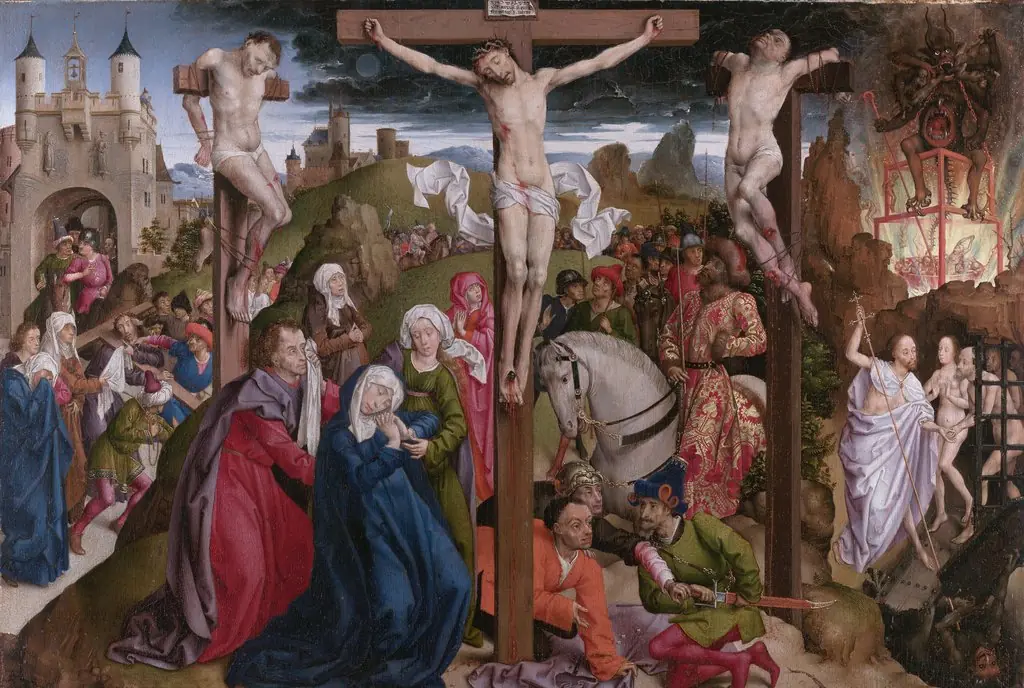
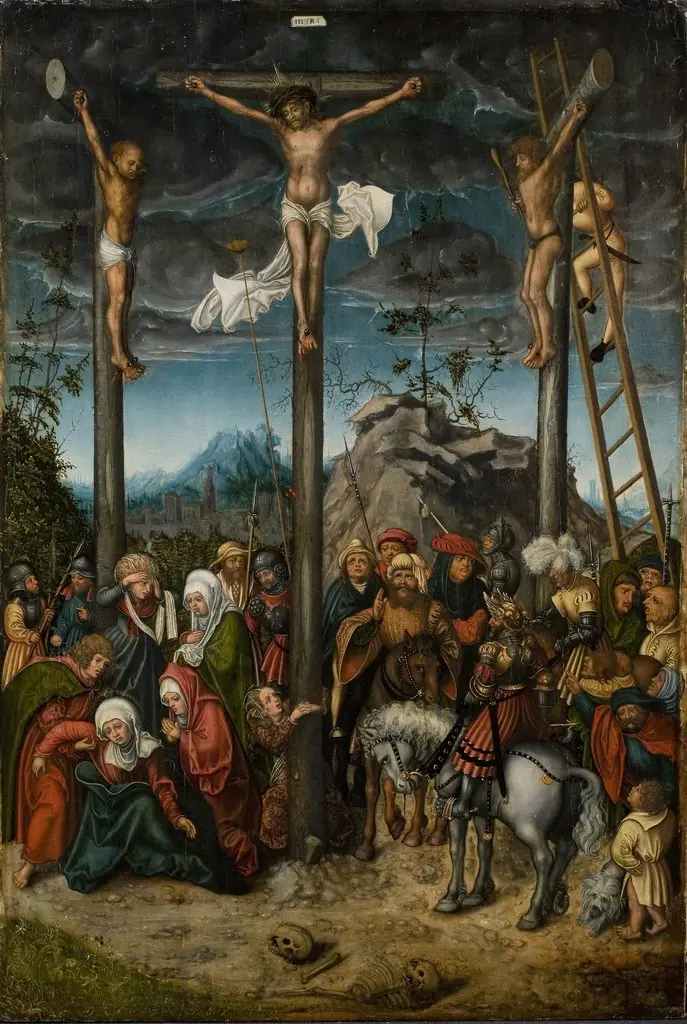
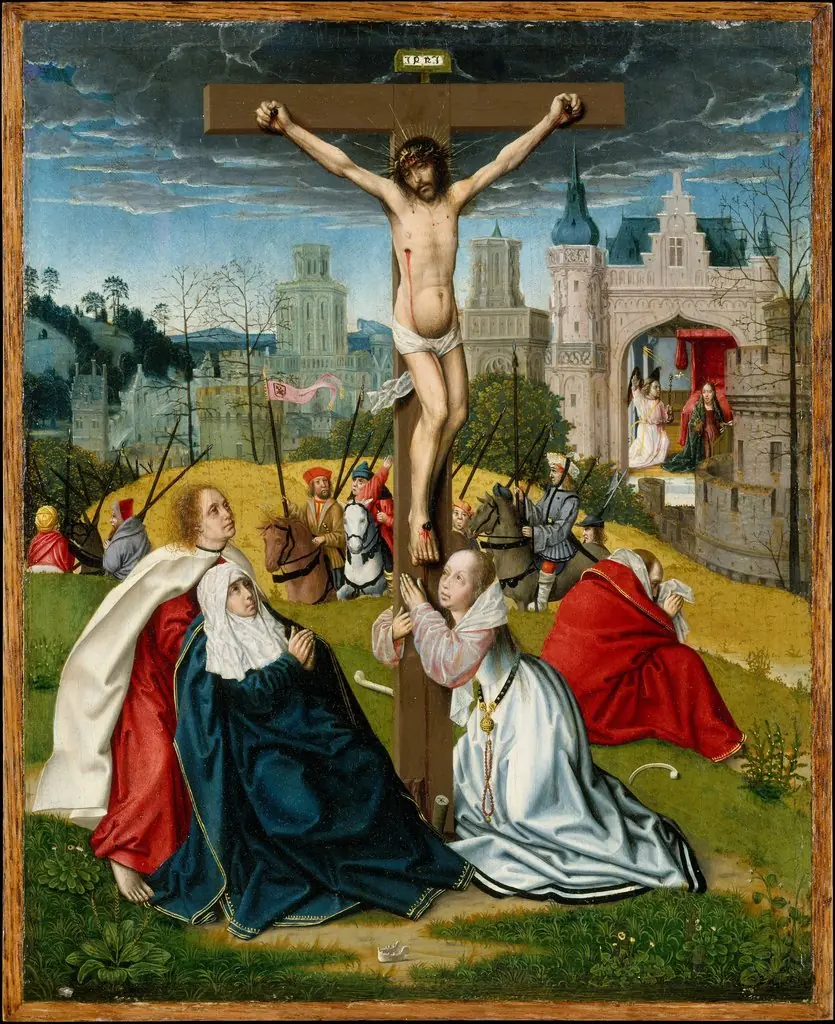
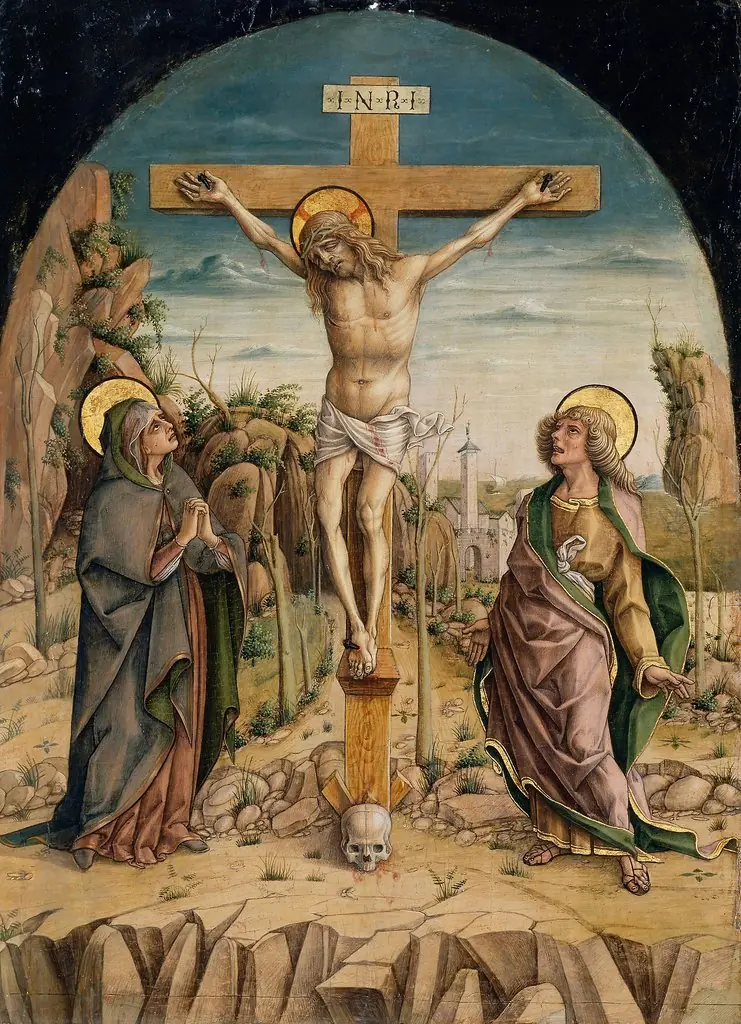
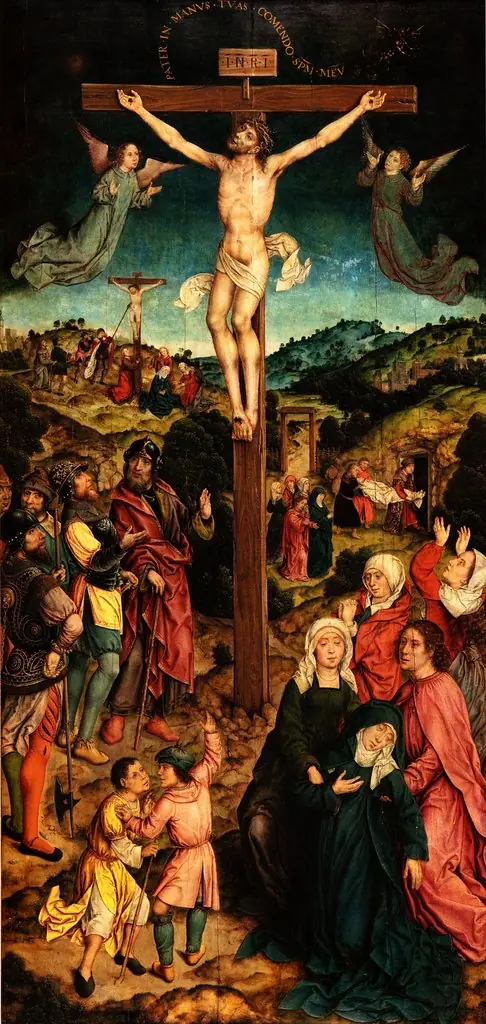
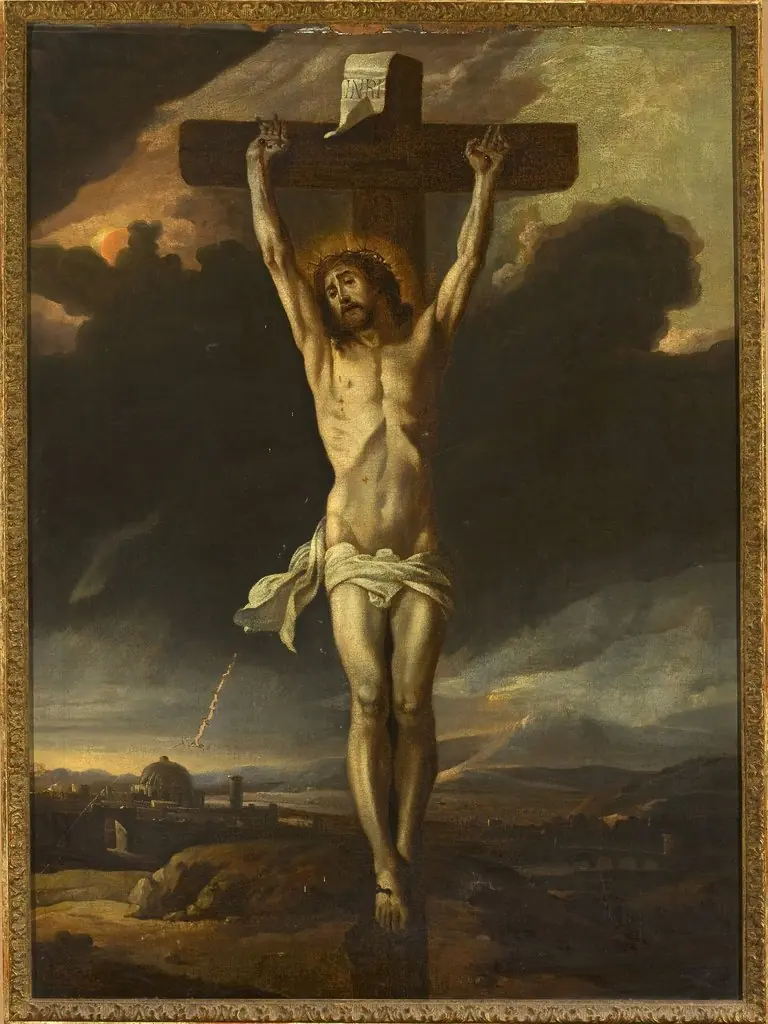
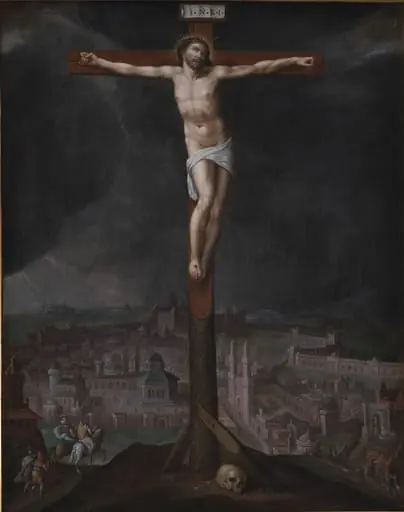
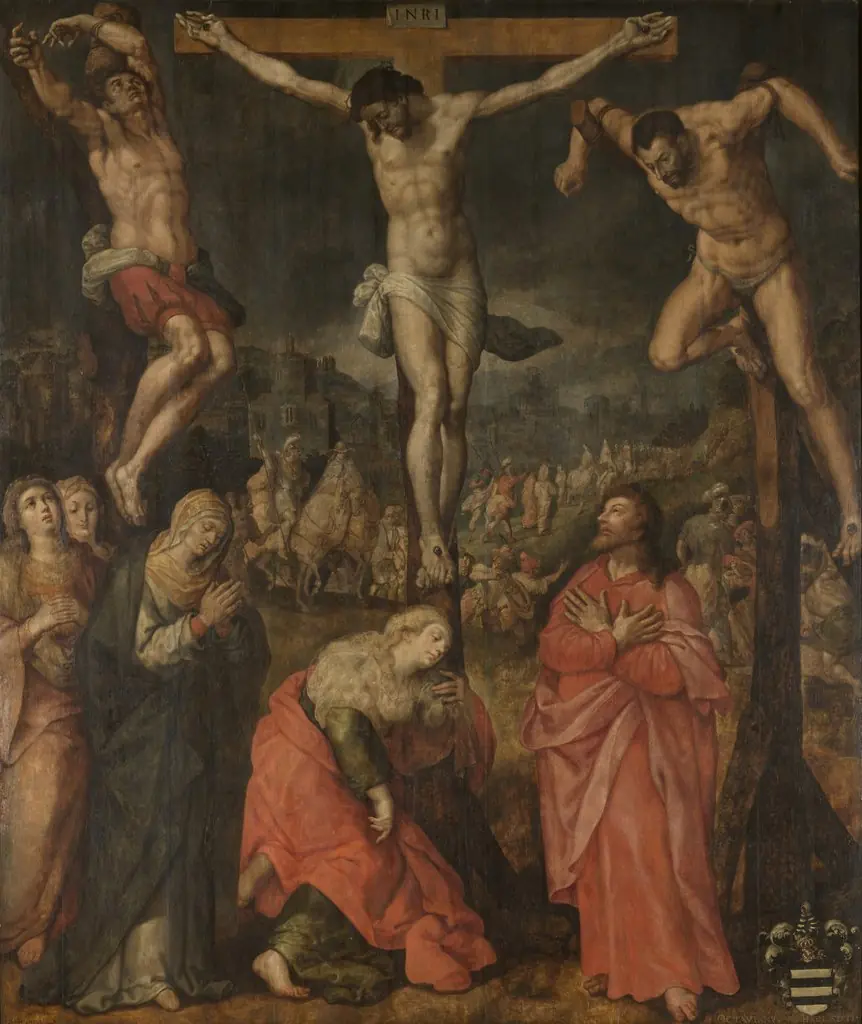
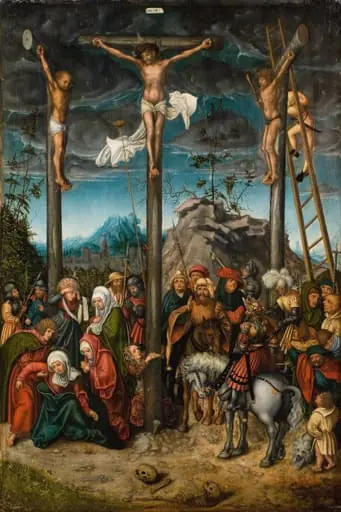
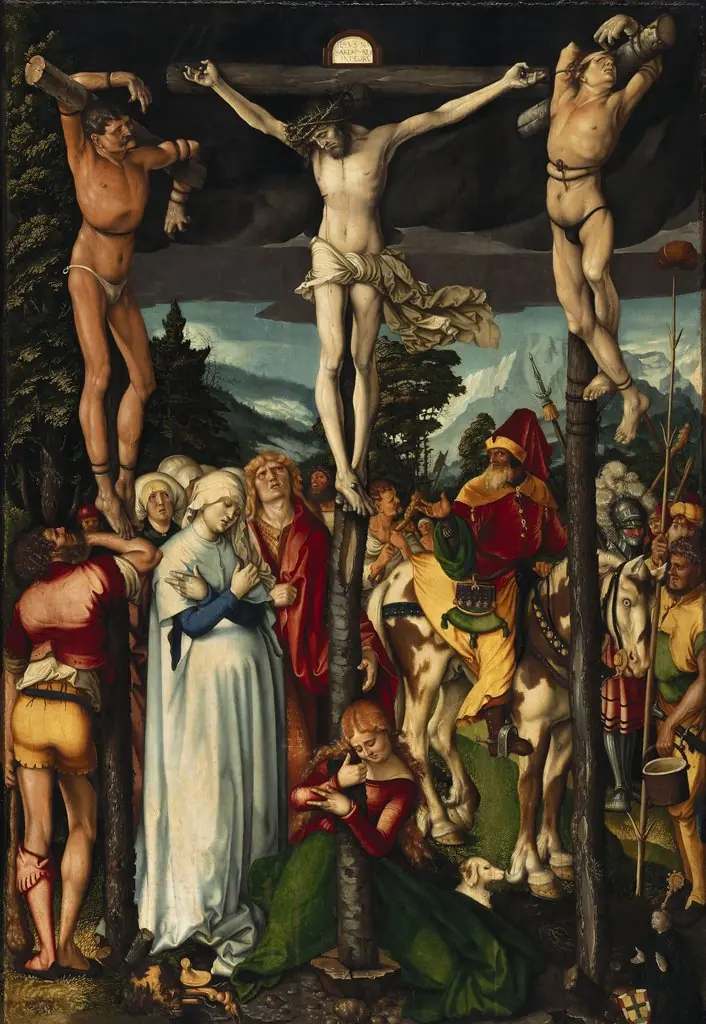
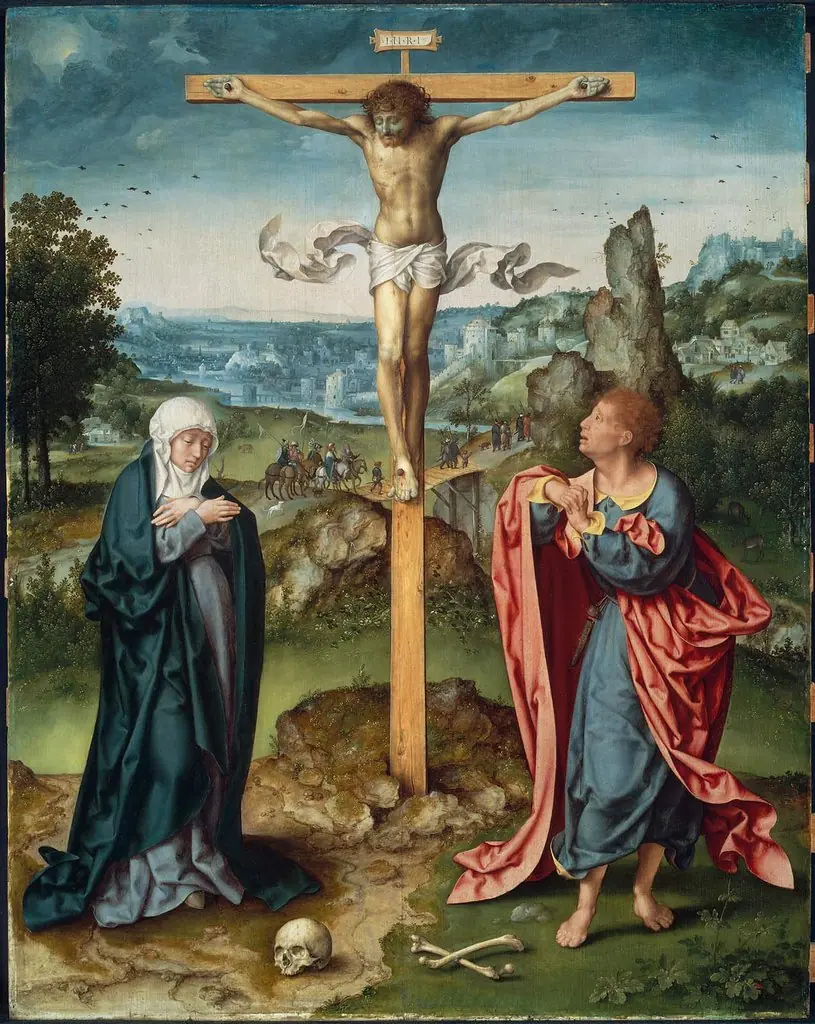
Friedrich Brentel’s 1627 gouache work titled The Crucifixion is executed on vellum and enhanced with gold leaf. The composition presents three crucified figures, the central one elevated on a tall cross with arms outstretched, while a tumultuous sky of dark clouds is pierced by shafts of light.
Subject & Meaning
The scene depicts the biblical Passion, focusing on the crucifixion of Christ flanked by two other figures. Below the crosses a varied crowd reacts: some mourn, others gesture outward, emphasizing the public nature of the event. A kneeling woman in a vivid red garment looks upward toward the central figure, her posture suggesting devotion and sorrow.
Technique & Style
Brentel employs gouache, a water‑based opaque pigment, to achieve rich, saturated colors on the smooth surface of vellum. Gold leaf is applied to the woman’s robe, creating a luminous effect that draws the eye and highlights her emotional significance within the composition. The handling of light and shadow reflects early Baroque sensibilities.
History & Provenance
Created in 1627, the drawing remains a representative example of Brentel’s religious output during the early seventeenth century. Its survival on vellum, a delicate support, indicates careful preservation, though specific ownership records prior to its current placement are not documented.
Artist & collection