Artwork
Landscape
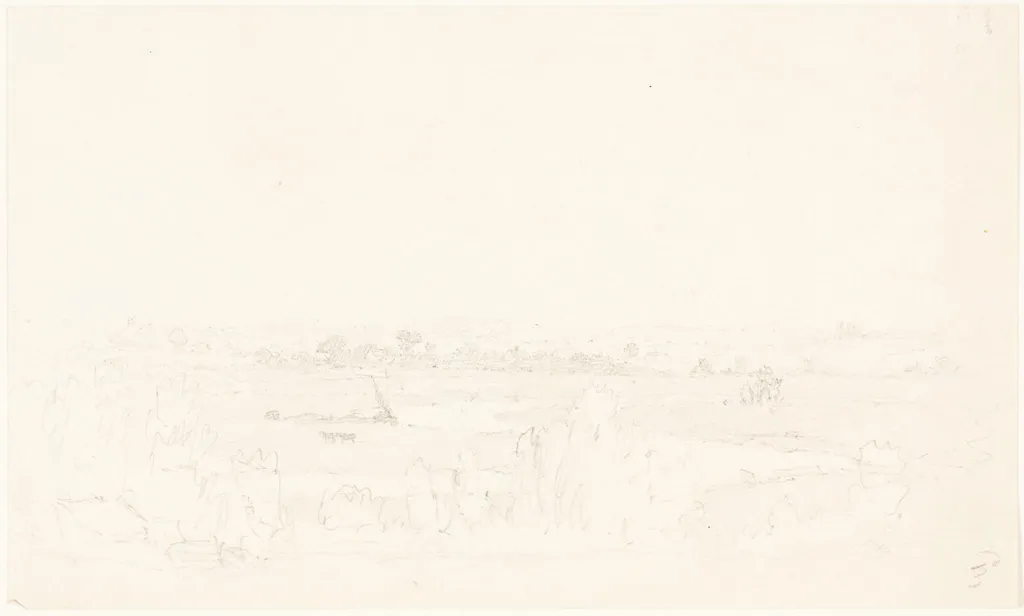
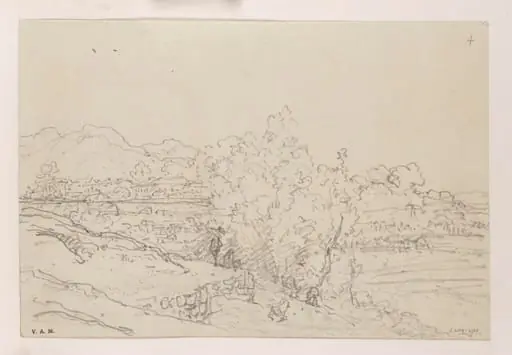
Landscape is a graphite drawing by the Romanticist artist British 19th Century. It dates from 1801 and is held in the collection of the National Gallery of Art.
About this work
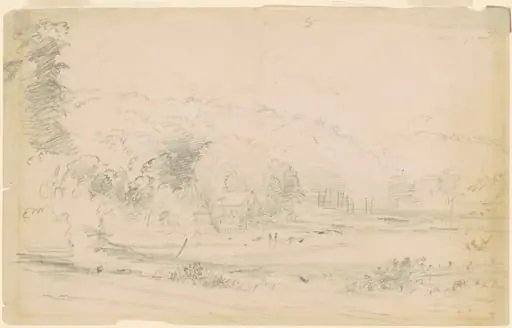
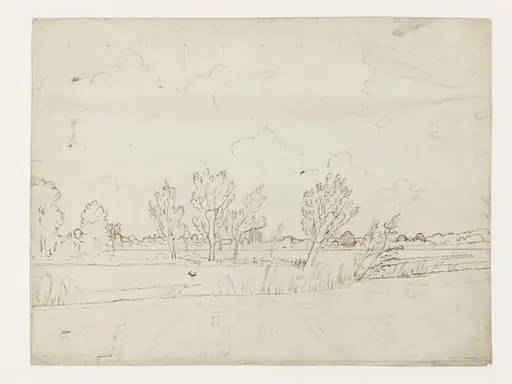
You can barely make out a few buildings in the distance, some trees, and a road winding through a flat, open area.
This sketch shows a faint, rough view of a landscape. You can barely make out a few buildings in the distance, some trees, and a road winding through a flat, open area. The lines are light and shaky, like the artist was working fast or unsure.
The paper looks worn, with some smudges and uneven edges. It’s all in pencil on a simple beige background—no color, just gray tones.
If you like loose, quick sketches, check out British 19th Century artists for more.
Overview
This work is a graphite drawing on wove paper, executed as a quick, loosely rendered landscape. The composition presents a broad, flat terrain traversed by a winding road, with distant structures and scattered trees suggested by faint, tentative lines. The overall effect is one of immediacy, as the artist’s hand appears light and uncertain, leaving the paper’s surface visibly marked by smudges and uneven edges.
Subject & Meaning
The drawing depicts an open countryside scene, emphasizing the relationship between a solitary road and the surrounding environment. Minimal details—such as the vague silhouettes of buildings and trees—invite viewers to contemplate the vastness of the space and the transient nature of travel across it.
Technique & Style
Rendered entirely in graphite, the piece relies on delicate, shaky strokes that convey a sense of rapid execution. The artist employs a limited tonal range, allowing the paper’s beige hue to serve as a neutral backdrop while the gray marks suggest form and depth without precise delineation.
History & Provenance
The work is presented without a specific date or artist, but its material qualities—graphite on wove paper and a 19th‑century British sketching aesthetic—place it within the tradition of British landscape studies of that era, when artists frequently produced informal studies for later, more finished compositions.
Context
During the 19th century, British artists often used graphite sketches to capture fleeting impressions of the countryside, a practice linked to the rise of plein‑air drawing and the desire to record natural light and atmosphere quickly. This drawing reflects that investigative approach, focusing on compositional layout rather than detailed rendering.
Legacy
While modest in execution, the piece exemplifies the pedagogical value of sketching as a foundational step in landscape art. It continues to serve as a reference for understanding how artists of the period approached preliminary studies before committing to larger, more elaborate works.
Artist & collection

Artist
This artist’s short life left behind a quiet obsession with water—whether the churn of a mill wheel, the choppy waves off England’s south coast, or the way light bounces off pond lilies.

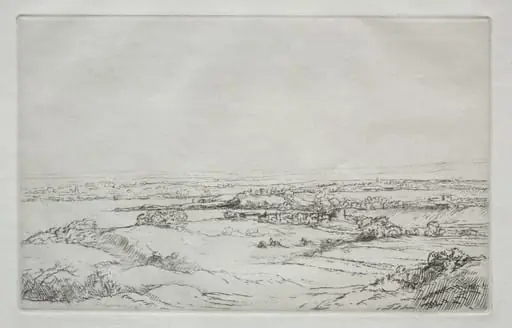 The Meadow near the Lake (La Plaine Près Du Lac)
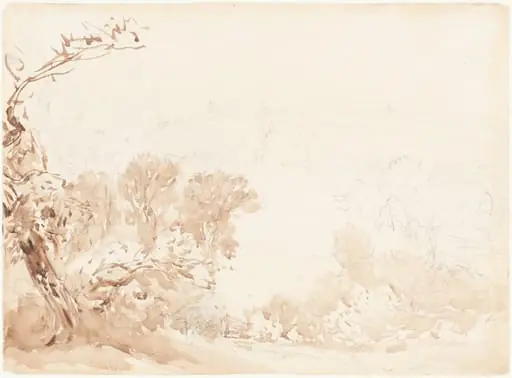 Hillside and Trees
 Fields and trees, with the city of Macau in the distance
 Long Island, New York
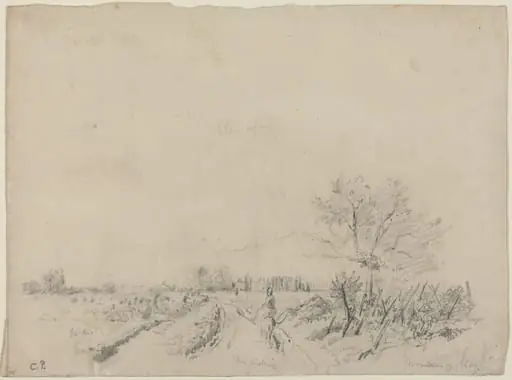 Montmorency Road
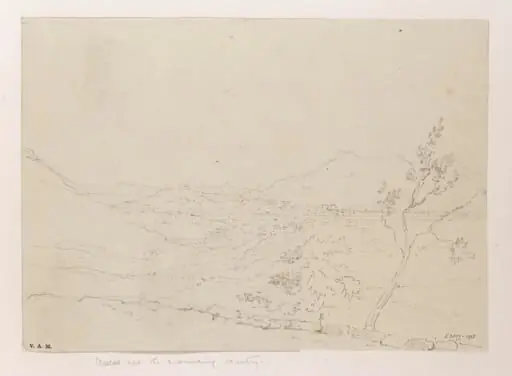 Macau, looking south-west along the peninsula
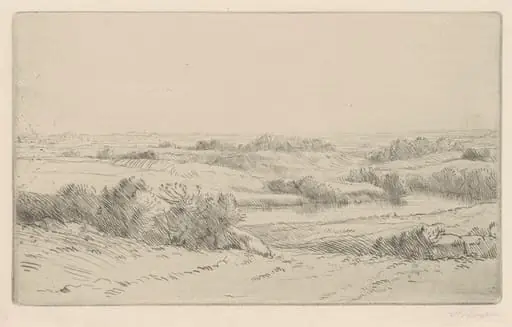 Banks of the Yanne (Les Bord de la Yanne)
 Water meadows near Salisbury
 Sherberne Valley
 Chain of Alps from Grenoble to Chamberi