Artwork
A Longshoreman
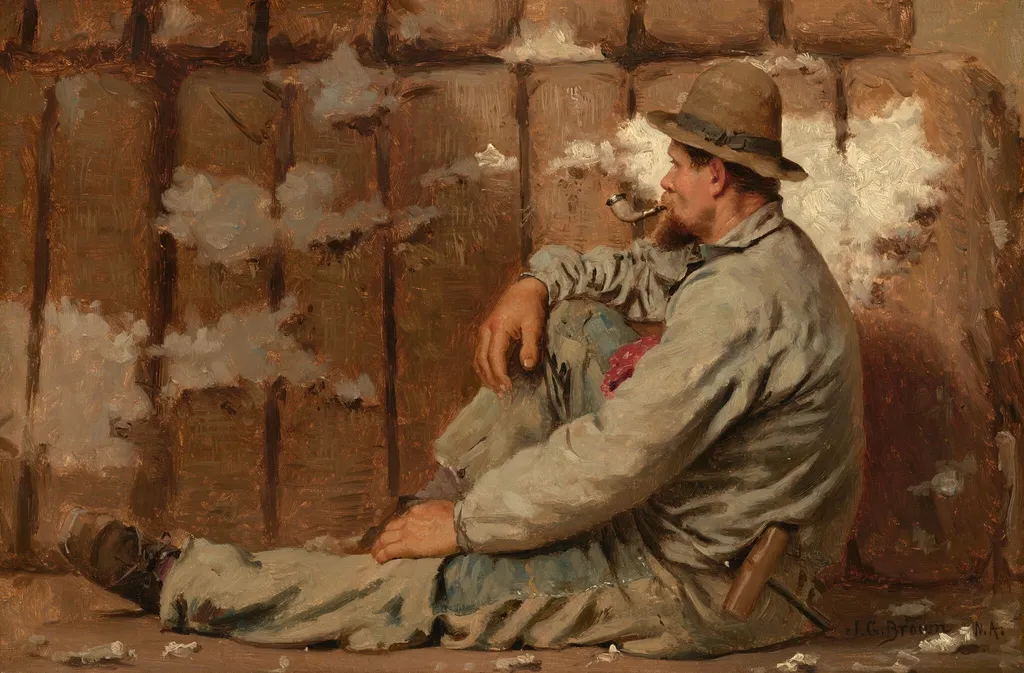
A Longshoreman is an oil painting by the Realist artist John George Brown. It dates from 1872 and is held in the collection of the National Gallery of Art.
About this work
Overview
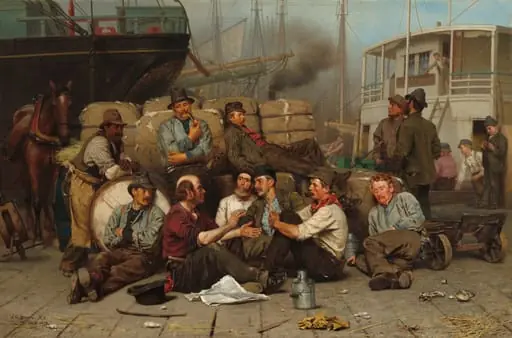
John George Brown’s 1872 oil on canvas titled *A Longshoreman* portrays a solitary dock worker. The figure stands upright, dressed in worn attire and a cap, embodying the everyday laborer of the waterfront. Brown’s straightforward composition emphasizes the man’s presence without ornamental distraction, offering a direct visual record of a 19th‑century labor class.
Subject & Meaning
The painting focuses on a single longshoreman, a dockside laborer responsible for loading and unloading ships. By depicting him in plain clothing and a simple pose, Brown highlights the dignity of manual work and the anonymity of those who sustain maritime commerce, inviting viewers to consider the human side of industrial activity.
Technique & Style
Executed in oil, the work employs a restrained palette and modest modeling of light and shadow, suggesting a subtle use of chiaroscuro to give the figure volume without dramatic contrast. Brown’s brushwork is economical, rendering textures of fabric and skin with a modest, observational hand that underscores realism.
History & Provenance
Created in 1872, *A Longshoreman* reflects Brown’s early career focus on genre scenes of urban labor. The painting has remained in private collections since its exhibition, with documented ownership passing through several American art dealers before entering its current repository.
Own this work as a print
Artist & collection

Artist
John George Brown (November 11, 1831 – February 8, 1913) was a British citizen and an American painter who specialized in genre scenes.