Artwork
Drum lângă pădure
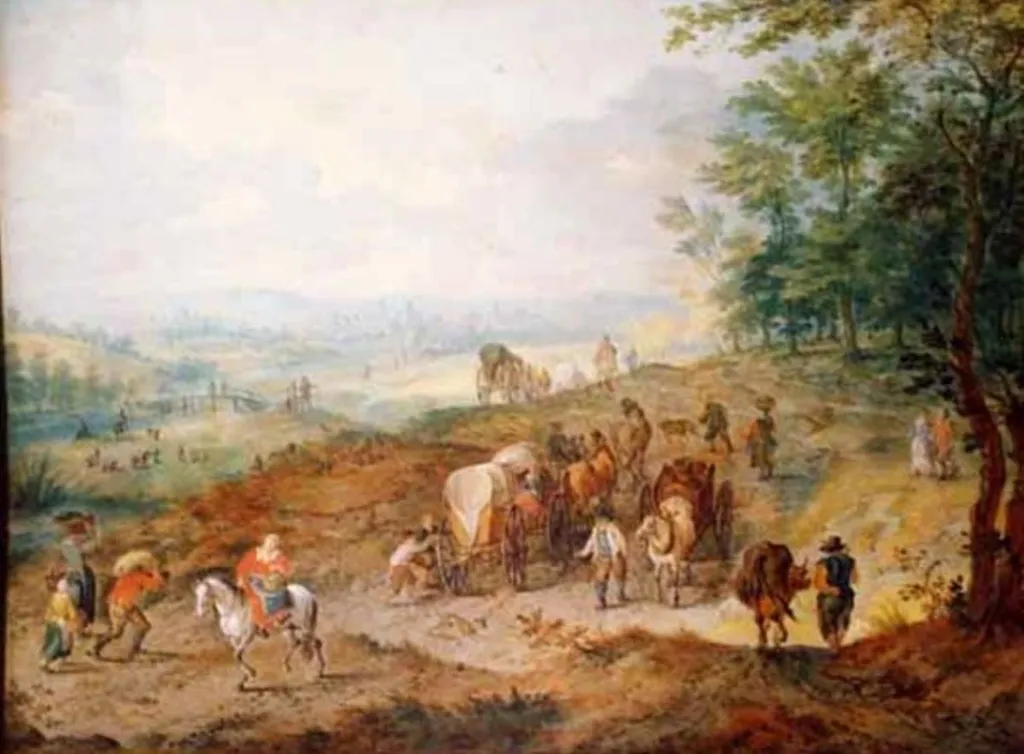
Drum lângă pădure is an unspecified painting by the Northern Renaissance artist Jan Brueghel I. It dates from 1650 and is held in the collection of the Brukenthal National Museum. Created around 1650 by Jan Brueghel the Elder, this landscape painting captures a quiet rural moment near a woodland edge.
About this work
Overview
It presents a scene of everyday life—figures and animals interacting in a natural setting—without overt narrative or drama.
Created around 1650 by Jan Brueghel the Elder, this landscape painting captures a quiet rural moment near a woodland edge. It presents a scene of everyday life—figures and animals interacting in a natural setting—without overt narrative or drama. The composition balances foreground activity with a receding backdrop of hills and trees, grounding the image in a tangible, observed world rather than an idealized one.
Subject & Meaning
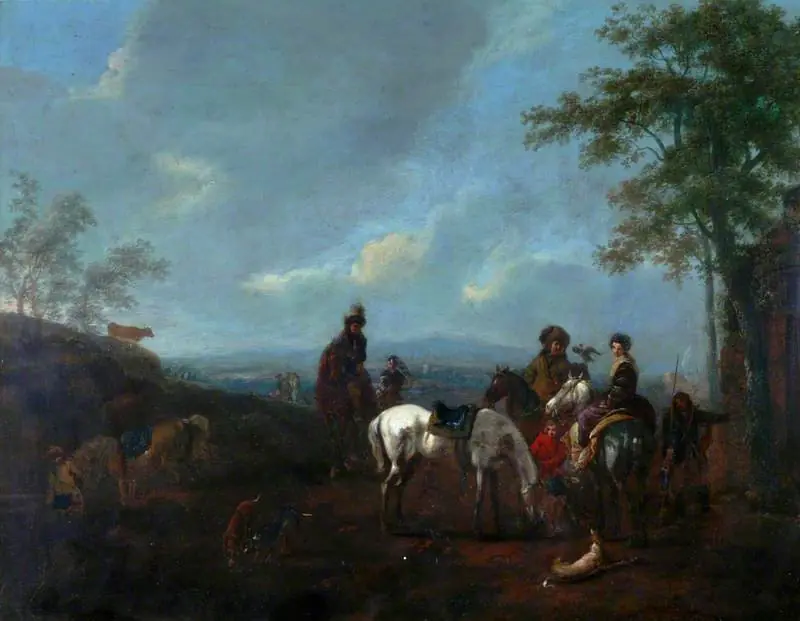
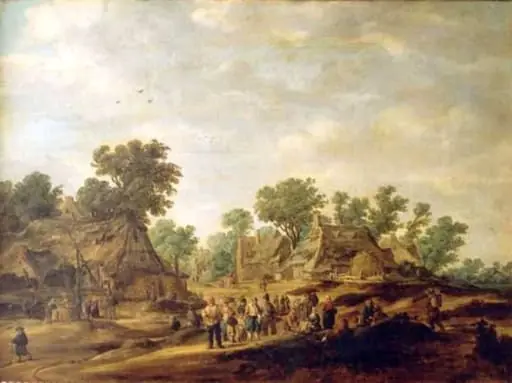
The painting portrays ordinary villagers and travelers in a pastoral environment, some gathered beneath a tree, others moving along paths or riding horses. There is no single focal event; instead, the work suggests the rhythm of daily life in the countryside. The absence of grandeur or symbolism points to an appreciation of mundane routines, reflecting a broader 17th-century interest in the dignity of common existence.
Technique & Style
Brueghel employs loose, fluid brushwork to suggest movement and texture, particularly in foliage and clothing. The palette is restrained, dominated by muted greens, browns, and ochres, enhancing the naturalism of the scene. Light is diffused and even, avoiding dramatic contrasts, which contributes to the painting’s calm, observational tone. Details are rendered with care but never overly polished, preserving a sense of immediacy.
History & Provenance
The work dates from the final decades of Brueghel’s career, a period when he increasingly focused on landscape and genre scenes. While its early ownership is undocumented, it aligns with the tastes of Flemish collectors who valued intimate, detailed depictions of rural life. Its survival into the modern era reflects its quiet appeal among those seeking authentic portrayals of pre-industrial Europe.
Context
Painted during the height of the Dutch and Flemish Golden Age, this work reflects a cultural shift toward secular, everyday subjects. While religious and mythological themes remained prevalent, artists like Brueghel found value in the ordinary. The depiction of rural labor and travel resonated with urban audiences fascinated by the rhythms of country life, even as cities grew more dominant.
Legacy
Brueghel’s approach to landscape and genre scenes influenced later generations of Flemish and Dutch painters who prioritized observation over idealization. Though not widely celebrated in his time as a revolutionary, his quiet, detailed depictions of rural life helped establish a visual language for the everyday that endured beyond his lifetime, contributing to the broader tradition of Northern European realism.
Artist & collection
Artist
Flemish painter Jan Brueghel I made lush, detailed scenes packed with figures and nature.

 Landscape with Figures
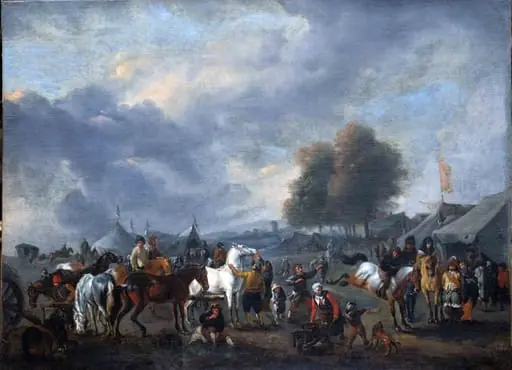 Târgul de cai
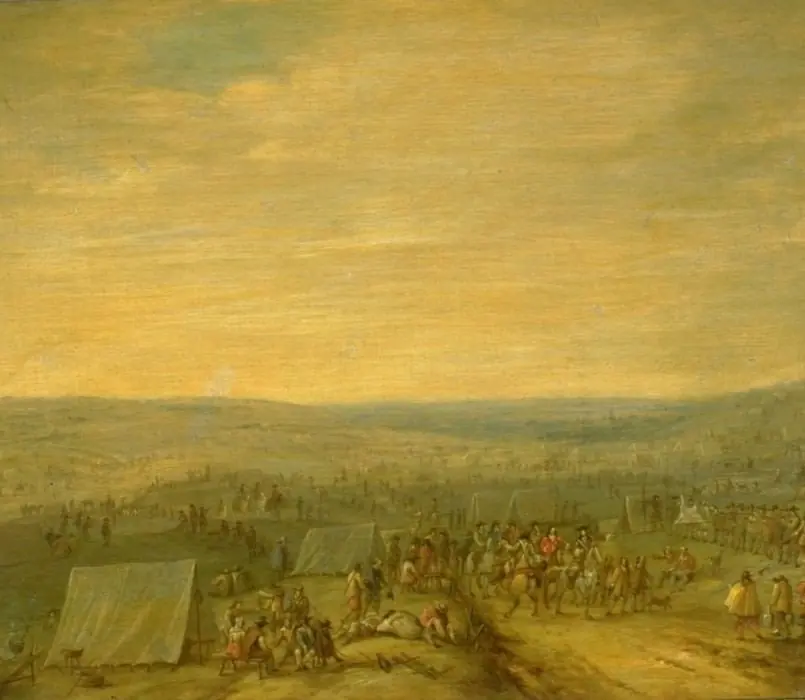 The Encampment
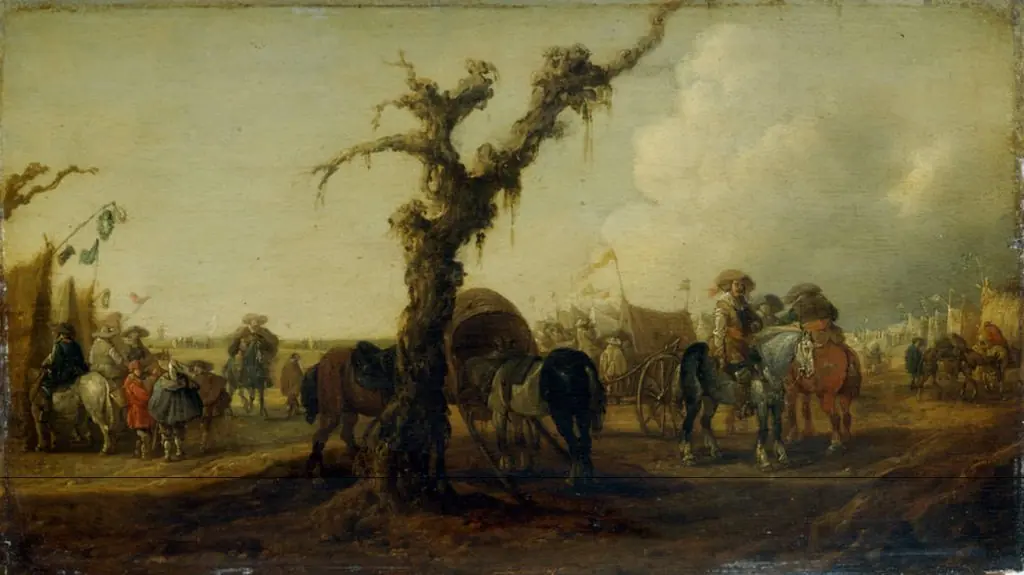 Military camp
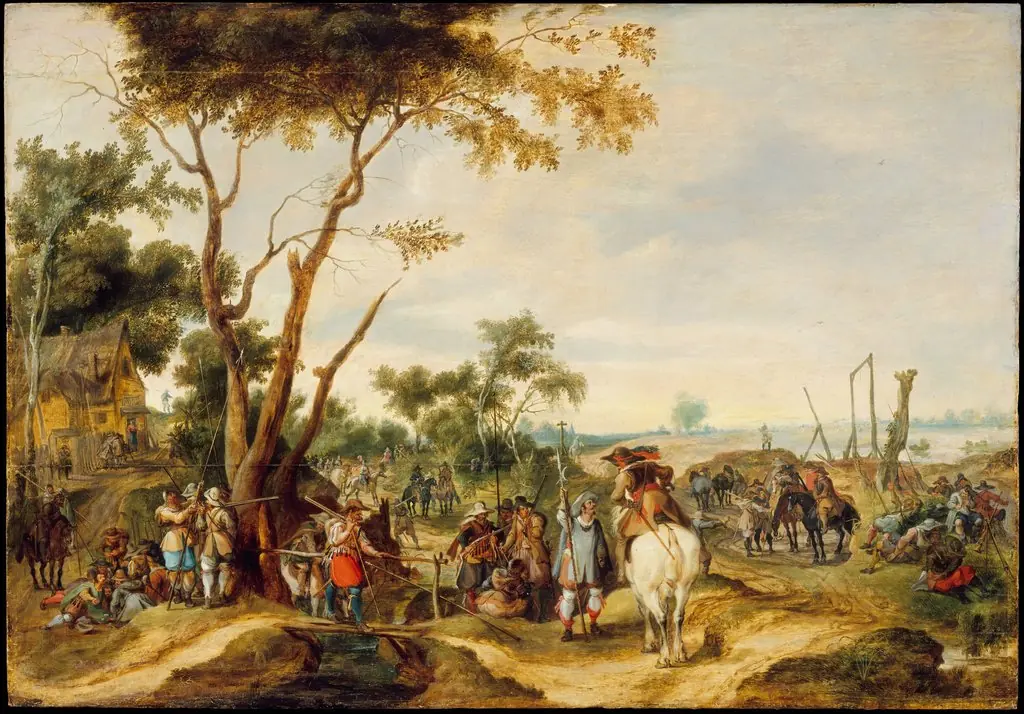 Soldiers Bivouacking
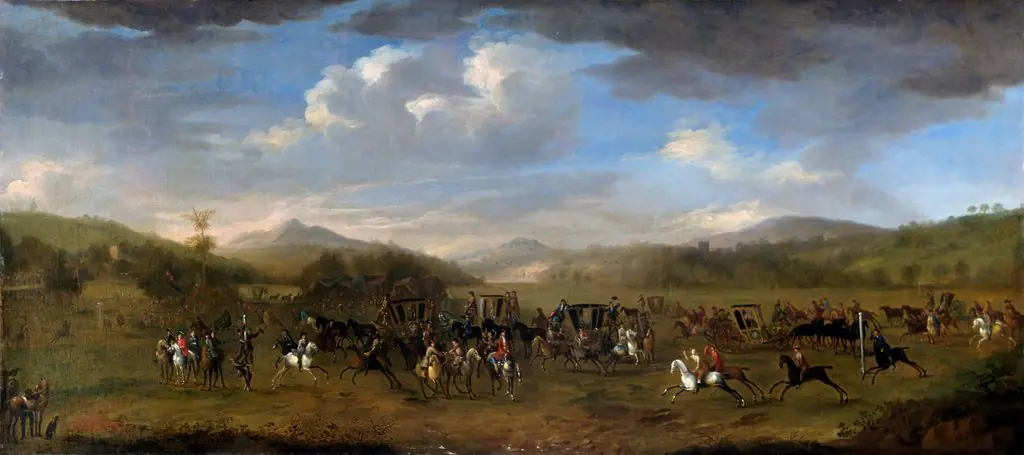 The Finish of a Horse Race with a Country Fair in the Background
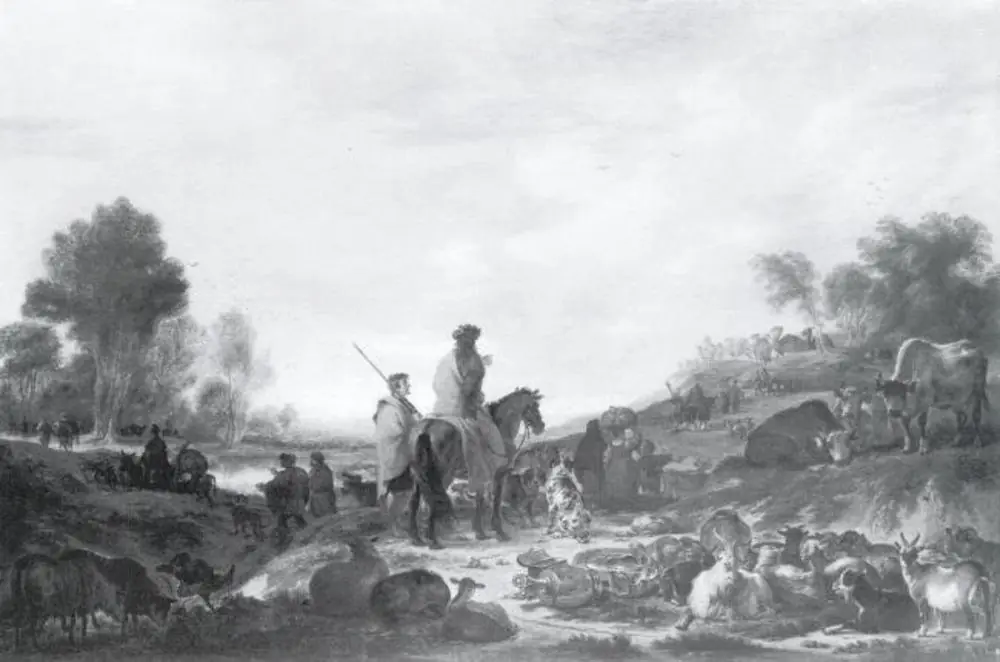 Landscape with Figures, Cattle and Household Utensils
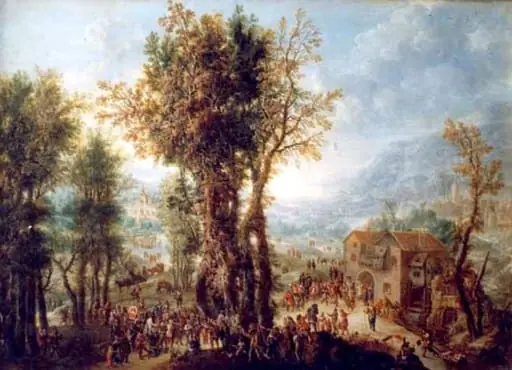 Petrecere populară lângă moară
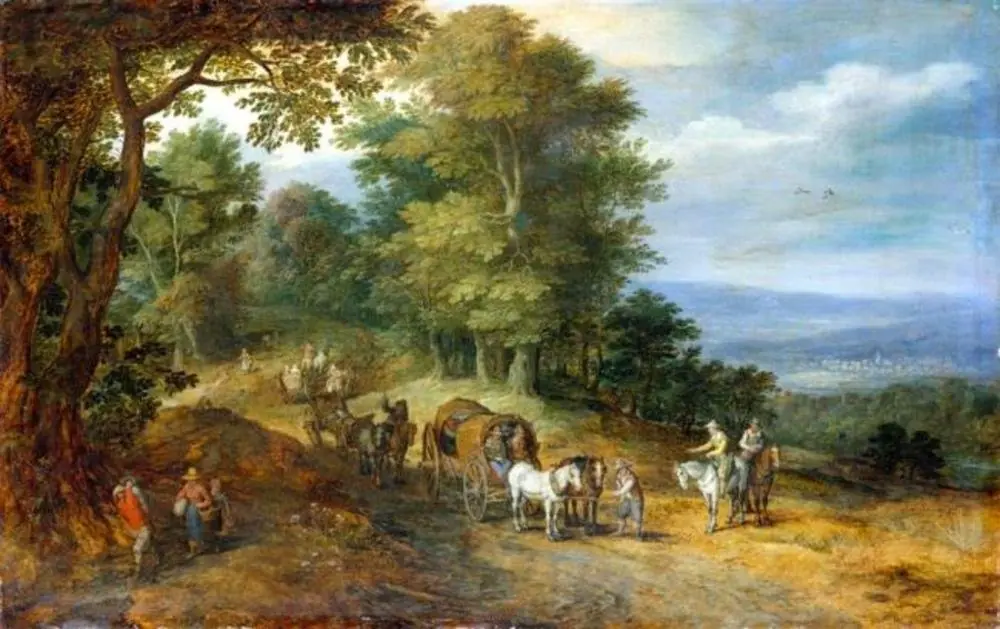 Hilly landscape with figures on a road
 Landscape with a Hawking Party
 Peisaj olandez cu țărani