Artwork
Hunter and Indian Guide
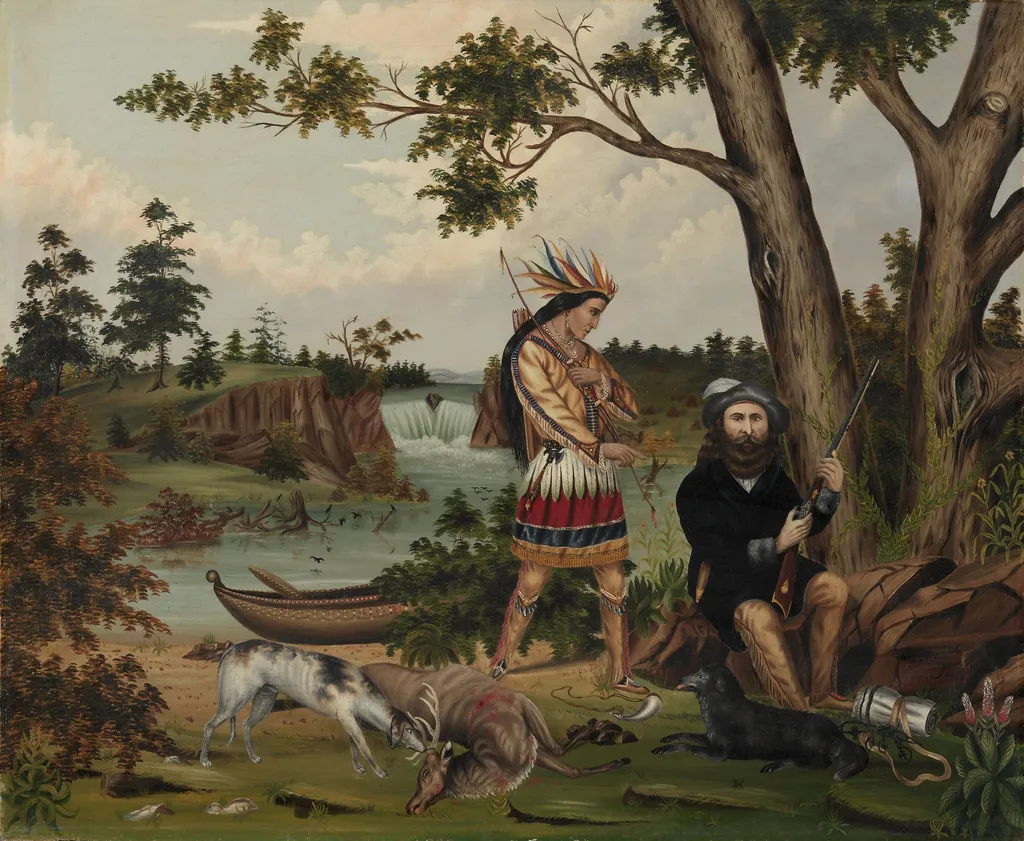
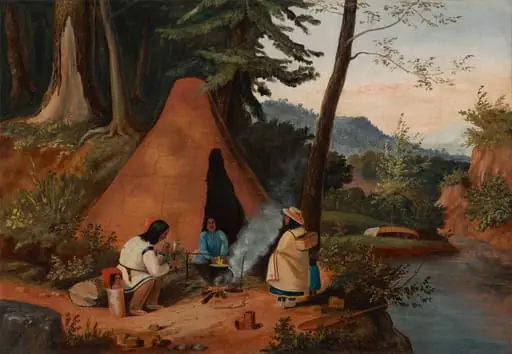
Hunter and Indian Guide is an unspecified painting by the American Folk Art artist C. L. Woodhouse. It dates from 1869 and is held in the collection of the Cleveland Museum of Art. Painted in 1869 by C.
About this work
Overview
The scene, rendered in oil on canvas, captures a transient encounter between individuals from distinct cultural backgrounds.
Painted in 1869 by C. L. Woodhouse, this work depicts a quiet moment between two men in a forested riverside setting. The scene, rendered in oil on canvas, captures a transient encounter between individuals from distinct cultural backgrounds. It is part of the collection at The Cleveland Museum of Art, where it is displayed as an example of 19th-century American genre painting focused on the natural landscape and human interaction within it.
Subject & Meaning
The painting portrays a Native American guide, dressed in ornate attire and armed with a bow, standing beside a settler-hunter seated with a rifle and dog. The presence of dead deer and a grounded canoe suggests a recent hunt. The composition implies cooperation rather than conflict, reflecting contemporary ideals of intercultural exchange, though it also reinforces romanticized notions of Indigenous people as guides to an untamed wilderness.
Technique & Style
Woodhouse employs detailed brushwork to render textures of foliage, water, and fabric with precision. The lighting is soft and diffused, enhancing the tranquil mood. The figures are rendered with careful attention to costume and posture, while the background blends natural elements into a cohesive whole. The palette favors muted greens and browns, punctuated by the guide’s vivid garments, drawing the eye without disrupting the scene’s serenity.
History & Provenance
Created in 1869, the painting entered The Cleveland Museum of Art’s collection in the 20th century, though its earlier ownership history is not well documented. It was likely produced for a domestic audience interested in frontier narratives, a popular theme in post-Civil War American art. Its preservation reflects a broader institutional interest in regional and genre subjects from the late 1800s.
Context
During the late 19th century, American artists frequently depicted Indigenous people in roles that emphasized their connection to nature, often as stoic companions to white settlers. This painting aligns with such tropes, emerging amid westward expansion and increasing displacement of Native communities. It reflects a cultural moment where romanticized imagery of the frontier overshadowed complex realities of colonization and resistance.
Legacy
Though not widely exhibited beyond regional collections, the painting remains a representative example of how 19th-century artists visualized cross-cultural encounters in the American wilderness. Its quiet composition and attention to detail offer insight into period attitudes toward nature, identity, and the perceived role of Indigenous peoples in shaping the national narrative.
Own this work as a print
Artist & collection

 Midday Rest
 The Trappers' Return
 Osceola and Four Seminolee Indians
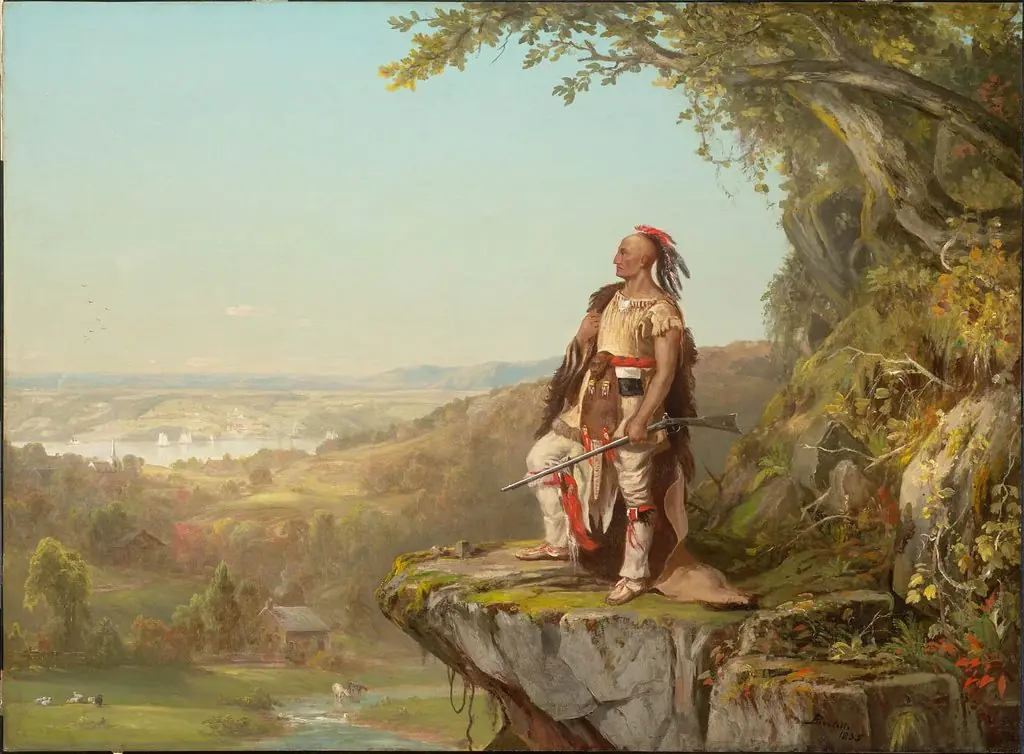 Indian Surveying a Landscape
 The Cheyenne Brothers Returning from Their Fall Hunt
 Two Weeah Warriors and a Woman
 The Cheyenne Brothers Starting on Their Fall Hunt
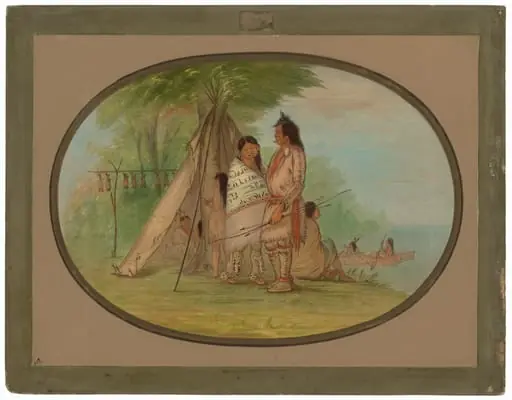 Nayas Indians
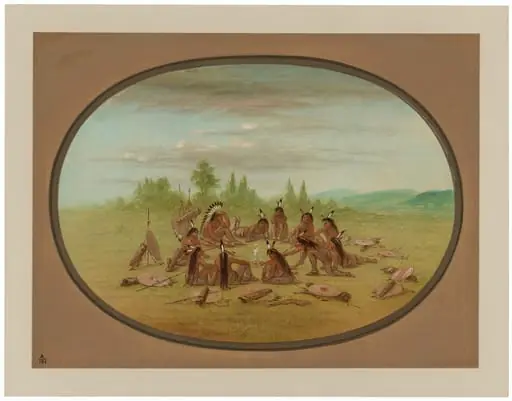 A Foot War Party in Council - Mandan
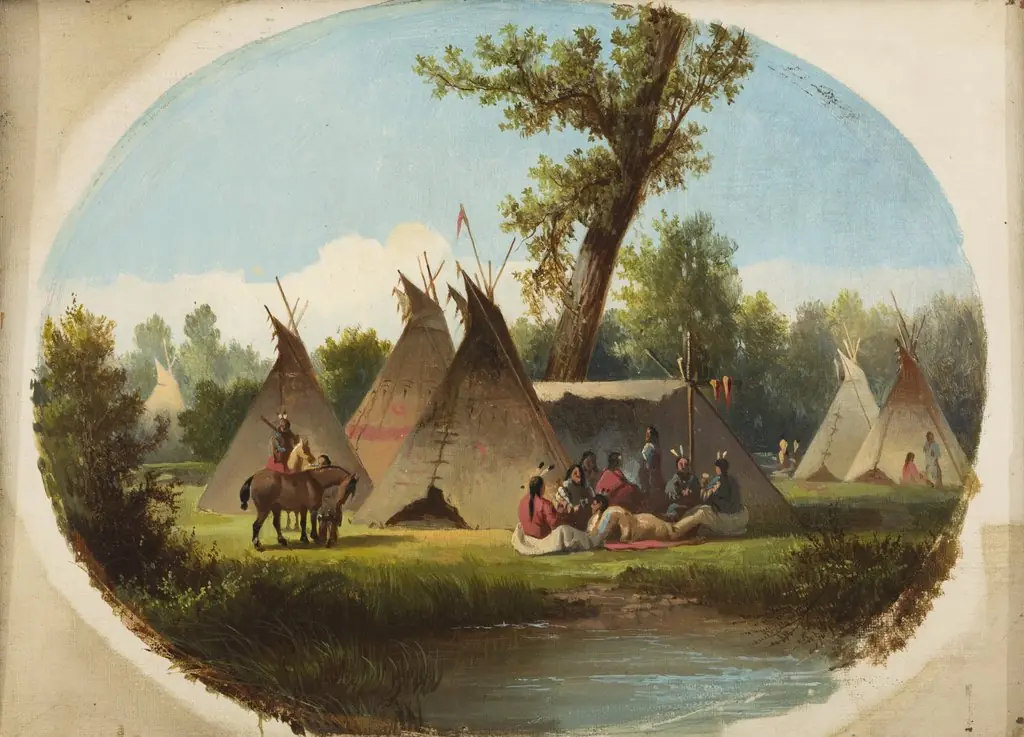 Assiniboin Encampment on the Upper Missouri
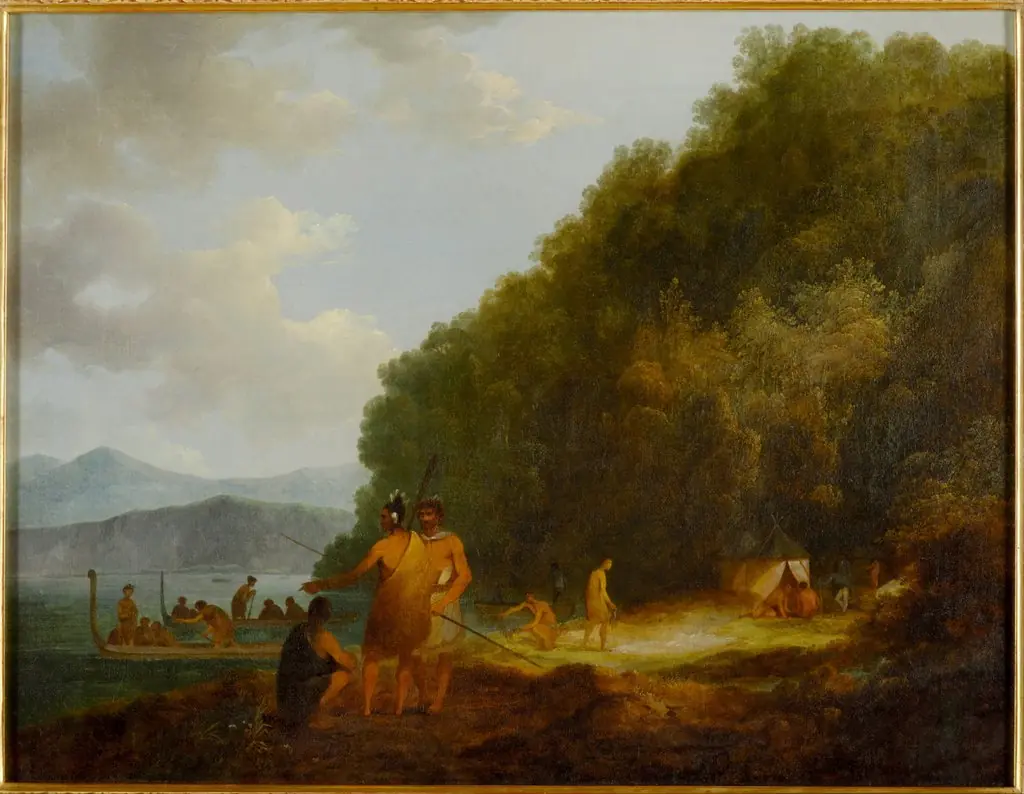 Ship Cove, Queen Charlotte Sound
 Indians Cooking Maize