Artwork
Vedere din Sibiu
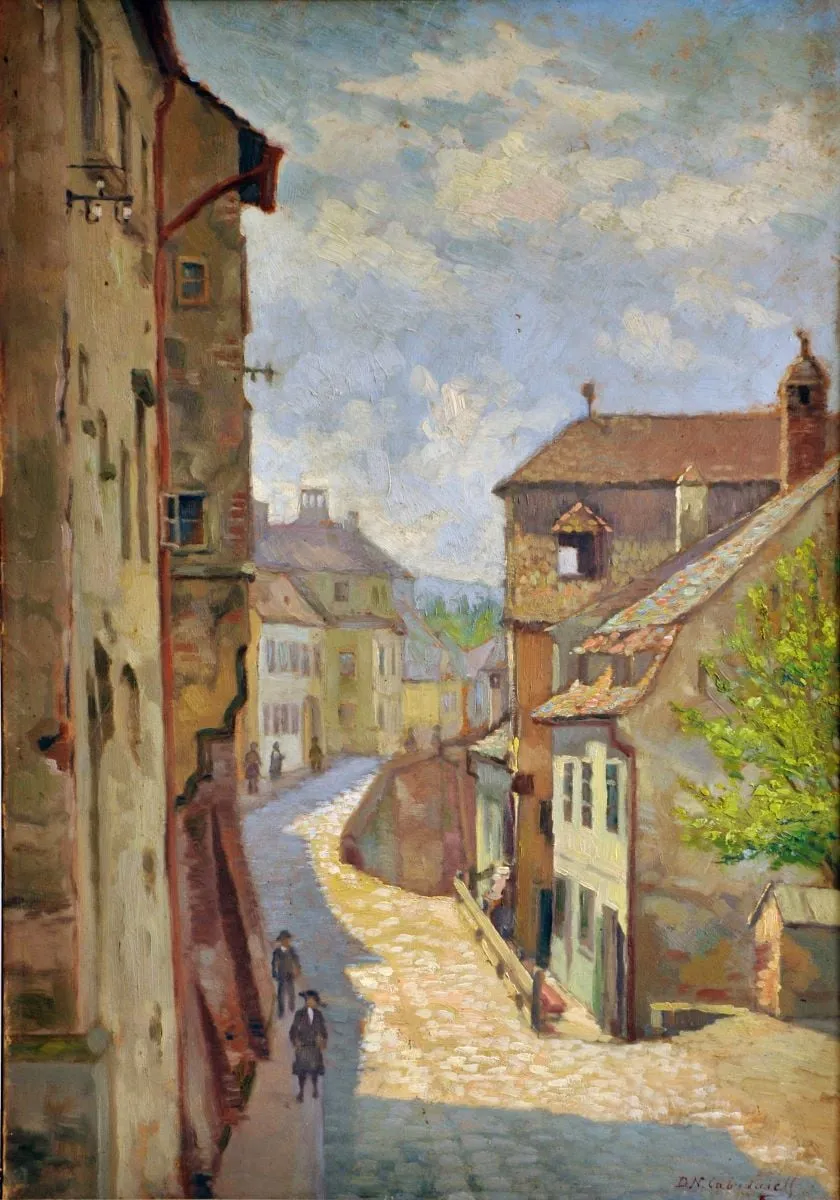
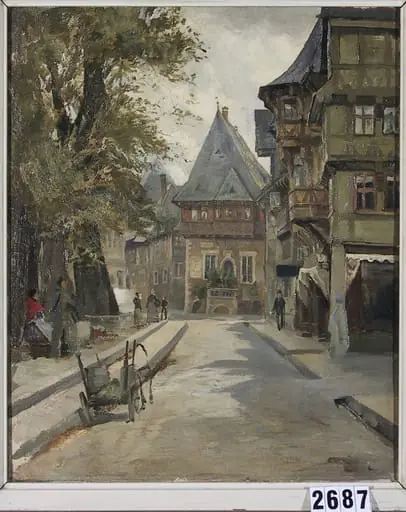
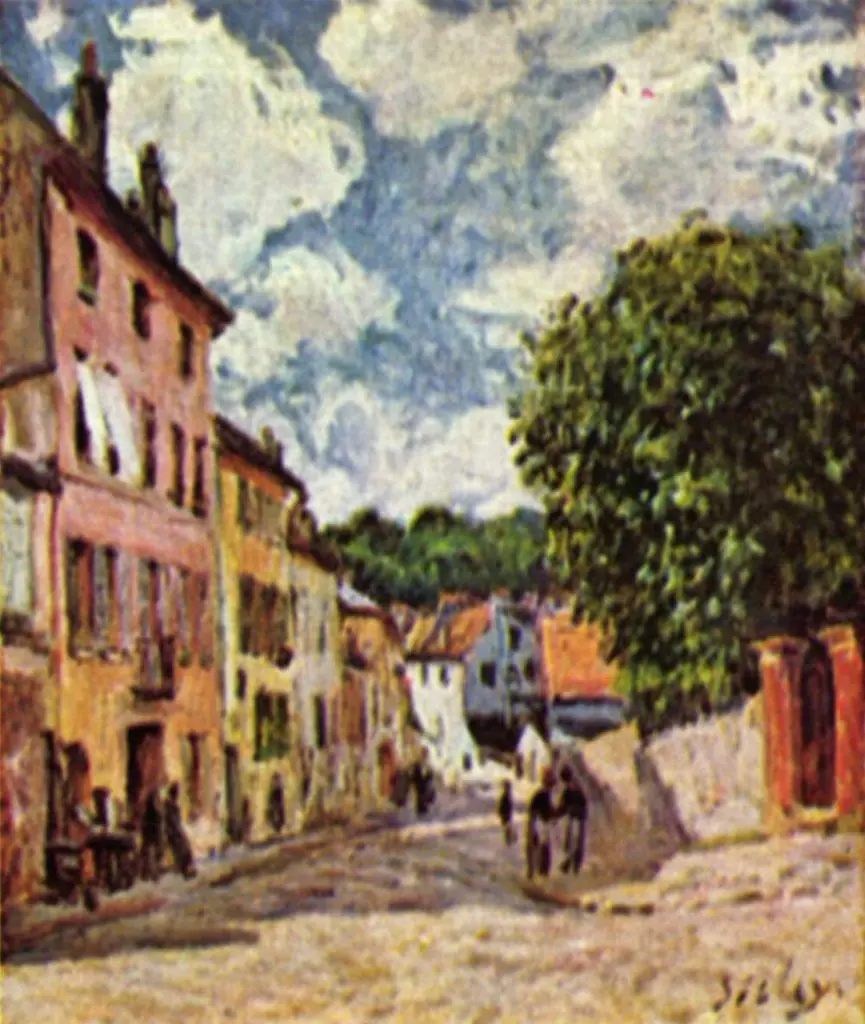
Vedere din Sibiu is a print by Dimitrie Nicolae Cabadaieff. It is held in the collection of the Brukenthal National Museum. The painting captures a quiet street in Sibiu, Romania, rendered with calm precision.
About this work
Overview
A single tree on the right introduces natural contrast to the urban setting, while a soft, cloud-dappled sky above suggests a still, open day.
The painting captures a quiet street in Sibiu, Romania, rendered with calm precision. A narrow cobblestone path leads the eye into the distance, flanked by modest brick buildings with chimneys and evenly spaced windows. A single tree on the right introduces natural contrast to the urban setting, while a soft, cloud-dappled sky above suggests a still, open day. The composition avoids dramatic action, focusing instead on stillness and spatial harmony.
Subject & Meaning
The scene presents an uneventful moment in daily life—individuals walk slowly along the street, their presence subtle and unobtrusive. There is no narrative urgency; the figures blend into the environment rather than dominate it. This restraint suggests an appreciation for ordinary rhythms, inviting contemplation rather than storytelling. The absence of overt symbolism points to a quiet reverence for place and time.
Technique & Style
The artist employs gentle tonal gradations to model forms, using light to define architecture and foliage without harsh contrasts. Shadows are soft, suggesting diffused daylight rather than direct sun. Brushwork is controlled, with smooth transitions between surfaces—brick, sky, and pavement—creating a cohesive atmosphere. The handling of light avoids theatrical chiaroscuro, favoring a subdued realism that enhances the scene’s serenity.
History & Provenance
The work originates from the late 19th or early 20th century, likely painted by a Romanian artist connected to Sibiu’s cultural milieu. It was probably created during a period when regional identity and everyday life became subjects of artistic interest. While its early ownership is undocumented, it has remained within local collections, preserving its connection to the city’s visual heritage.
Context
Sibiu, a historic Transylvanian town, was undergoing gradual modernization while retaining its medieval character. Artists of the time often turned to local streetscapes as a way to document cultural continuity. This painting reflects a broader trend in Central European art, where quiet urban views replaced grand historical themes, emphasizing personal observation over public spectacle.
Legacy
The painting contributes to a modest but enduring tradition of Romanian urban realism. It does not seek to revolutionize style but rather to preserve a sense of place through attentive observation. Its quietude has influenced later regional artists interested in the poetic potential of ordinary environments, offering a counterpoint to more dramatic or nationalist narratives of the era.
Artist & collection
Artist
Romanian artist Dimitrie Nicolae Cabadaieff made portraits and city scenes in simple lines and flat color.