Artwork
Woman praying
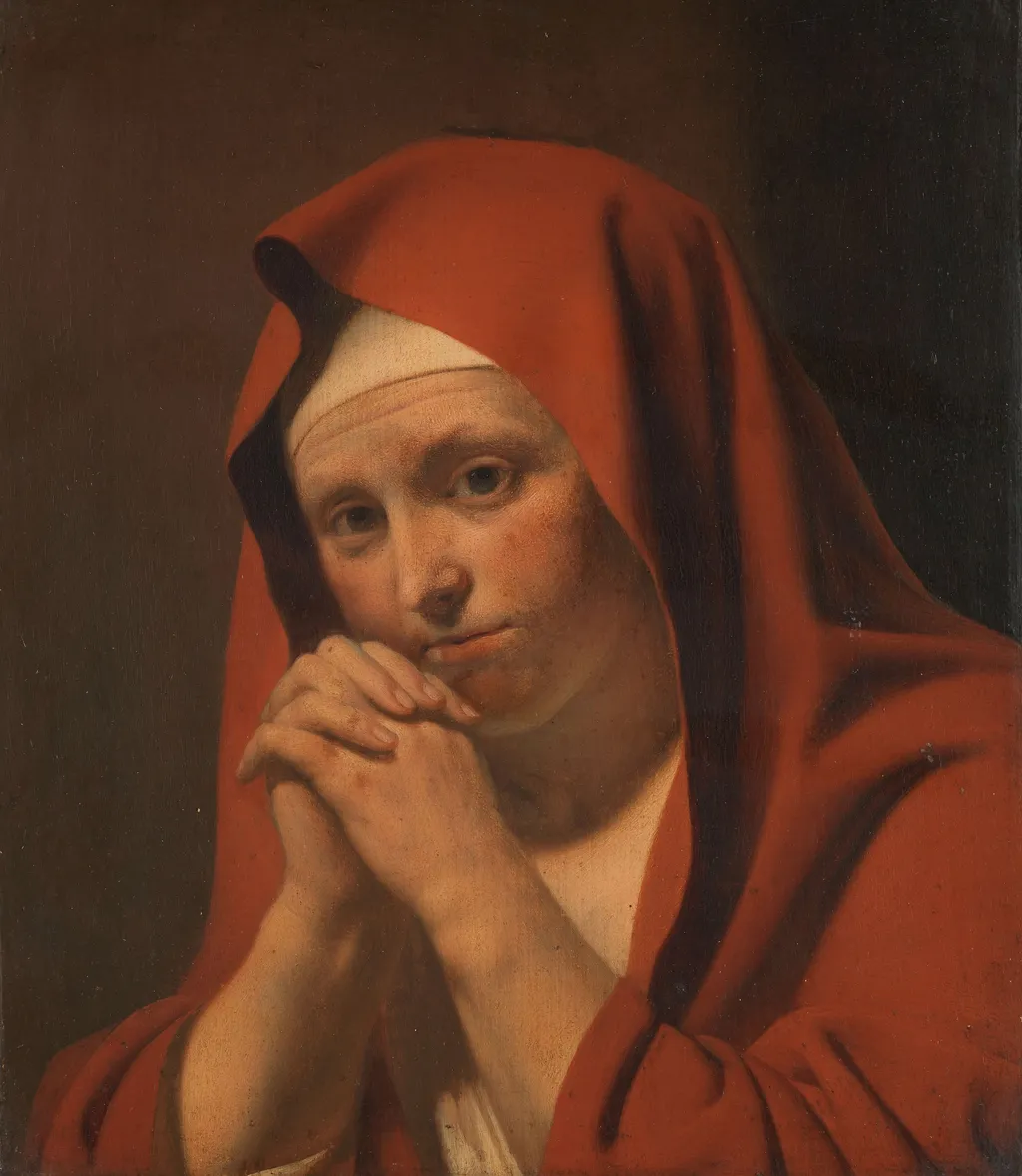
Woman praying is an oil painting by the Dutch Golden Age artist Caesar van Everdingen. It dates from 1650 and is held in the collection of the Rijksmuseum.
About this work
Overview
Created circa 1650 by Dutch painter Caesar van Everdingen, *Woman Praying* is an oil on canvas portrait that belongs to the Rijksmuseum’s collection. The work presents a solitary female figure in profile, her hands joined in prayer, set against a dark, undefined background.
Subject & Meaning
The sitter is shown wearing a deep‑red hood over a white undercap, her face illuminated and solemn. The gesture of clasped hands and the contemplative expression suggest a private moment of devotion, typical of 17th‑century genre scenes that explore individual piety.
Technique & Style
Van Everdingen employs a restrained chiaroscuro, allowing light to fall on the woman’s face and hands while the surrounding space recedes into shadow. Soft modeling of the features and subtle gradations of tone give the portrait a quiet intensity and a sense of three‑dimensional presence.
History & Provenance
The painting has been part of the Rijksmuseum’s holdings since the museum acquired it, though the exact acquisition date is not recorded here. It remains one of the few surviving works that illustrate van Everdingen’s early portraiture before he turned more frequently to history subjects.
Context
Caesar van Everdingen (born 1616/17) was active during the Dutch Golden Age and was the elder brother of painters Allart and Jan van Everdingen. While his career is better known for historical compositions, this intimate portrait reflects the period’s interest in everyday religious sentiment and the influence of Flemish chiaroscuro techniques.
Own this work as a print
Artist & collection
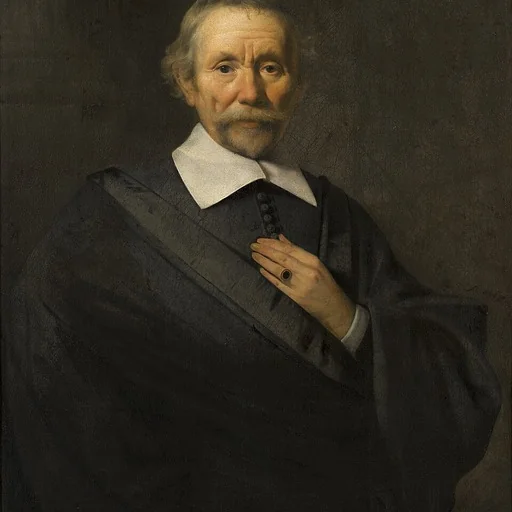
Artist
Cesar Pietersz, or Cesar Boetius van Everdingen (1616/17 – buried 13 October 1678), older brother of Allart van Everdingen and Jan van Everdingen, was a Dutch Golden Age portrait and history painter.