Artwork
Roadside Cottages
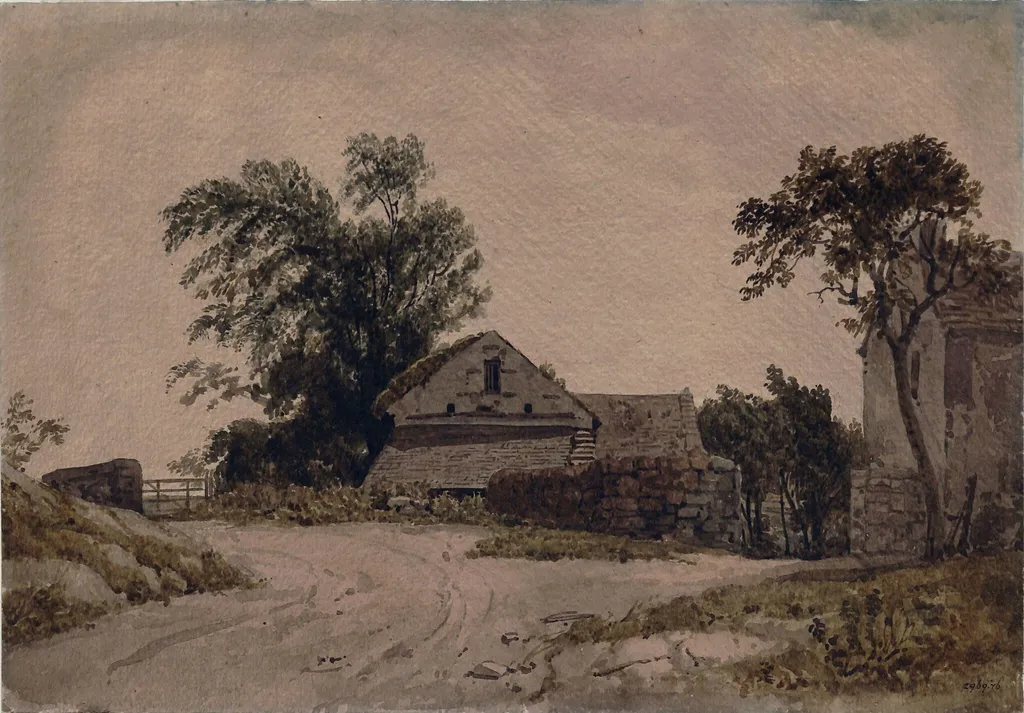
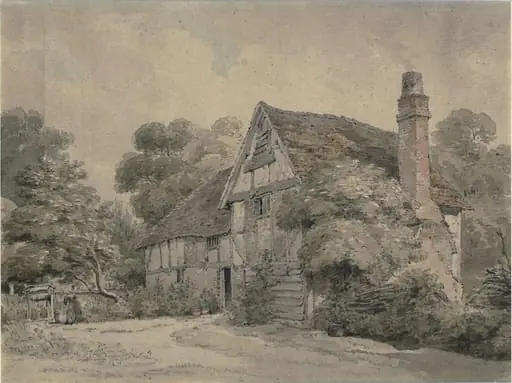
Roadside Cottages is a watercolor work on paper by the British Romanticist artist Augustus Wall Callcott. It dates from 1805 and is held in the collection of the Victoria and Albert Museum.
About this work
Overview
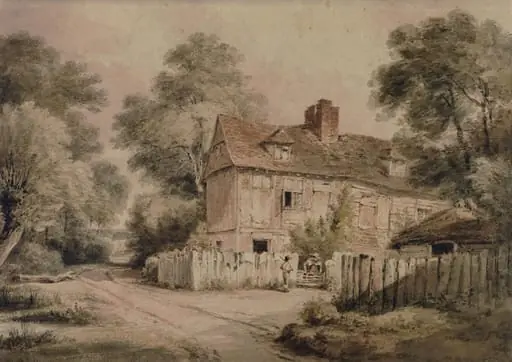
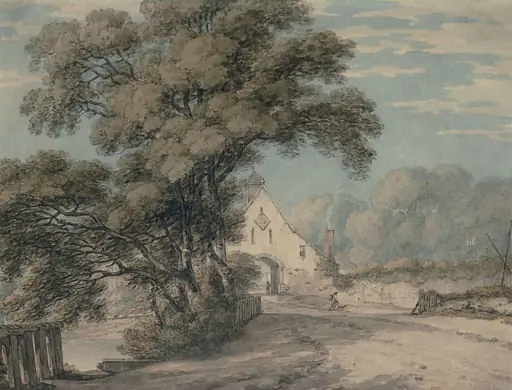
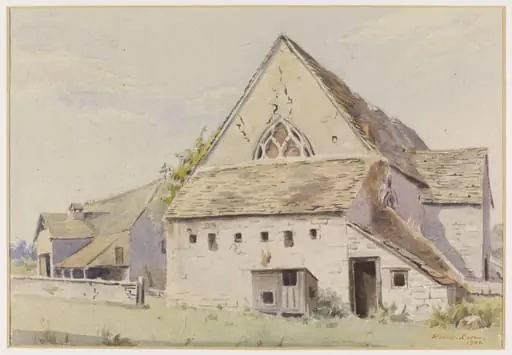
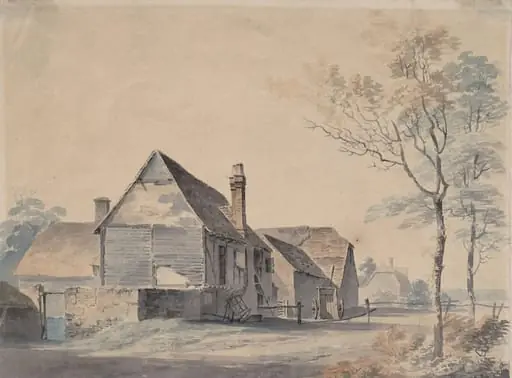
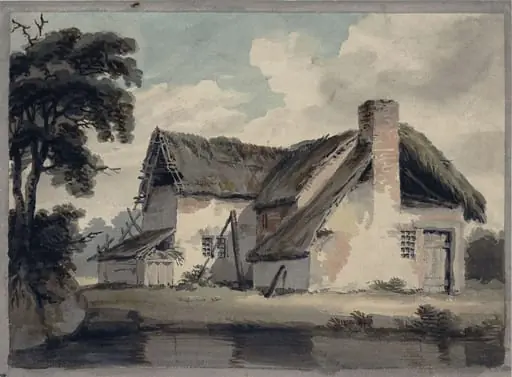
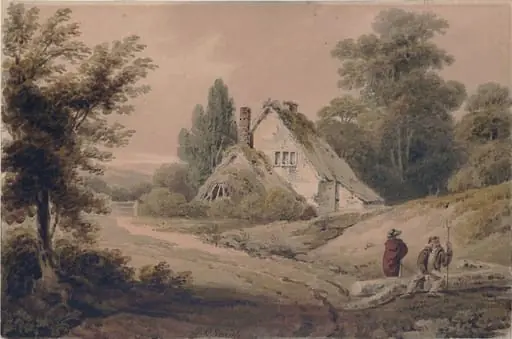
Sir Augustus Wall Callcott’s watercolour presents a modest rural scene: a narrow lane winds past a stone cottage capped with a thatched roof. Two trees flank the dwelling—one verdant, the other leaf‑less—while a simple wooden fence borders the dusty path. The surrounding grass appears dry and uneven, emphasizing the work’s quiet, unembellished atmosphere.
Subject & Meaning
The composition captures an ordinary moment of country life, focusing on the everyday rather than grandiose architecture or bustling urbanity. By isolating a solitary cottage and its immediate surroundings, the image invites contemplation of rural simplicity and the rhythms of a modest, agrarian existence.
Technique & Style
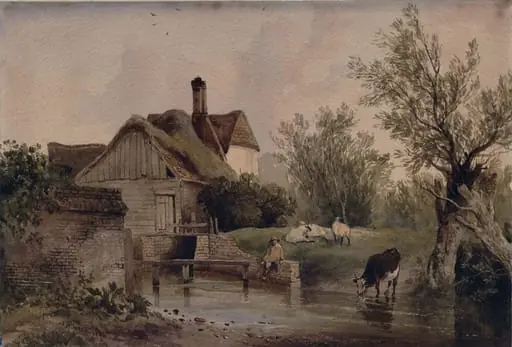
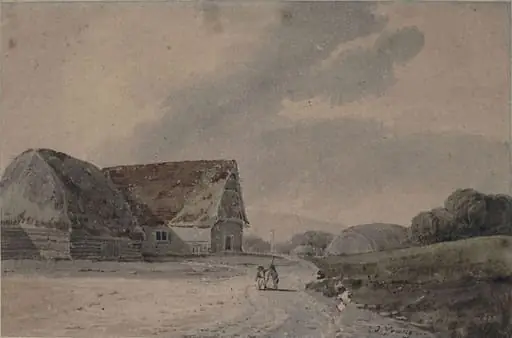
Executed in watercolour, the piece employs a restrained palette of muted earth tones—soft browns, subdued greens, and gentle ochres. Callcott’s handling of the medium yields delicate washes that blend seamlessly, rendering the foliage, stone, and sky with a calm, atmospheric quality characteristic of early‑19th‑century Romantic landscape approaches.
History & Provenance
Created by the English painter Sir Augustus Wall Callcott (1802–1880), the work reflects his longstanding interest in bucolic subjects. While specific acquisition details are not recorded here, the drawing aligns with Callcott’s broader oeuvre of watercolours documenting the English countryside during the Romantic period.
Context
The painting belongs to a period when artists turned toward the pastoral and the picturesque, seeking to evoke emotional resonance through natural settings. Callcott’s focus on a solitary cottage mirrors contemporary literary and artistic trends that valued the serene, unspoiled aspects of rural England.
Own this work as a print
Artist & collection
Artist
A British watercolorist in the early 1800s, Augustus Wall Callcott captured quiet lanes and Dutch harbor views with delicate washes.