Artwork
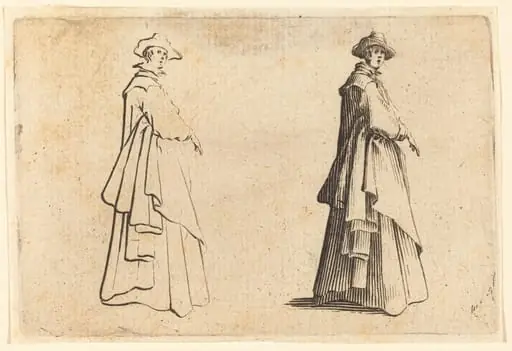
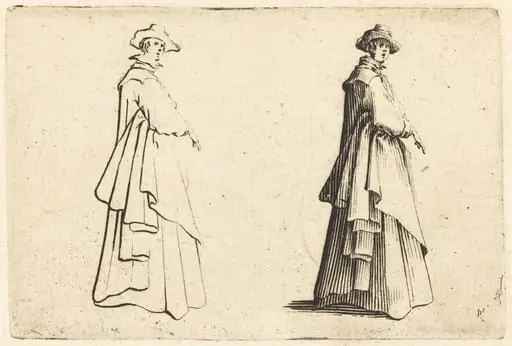
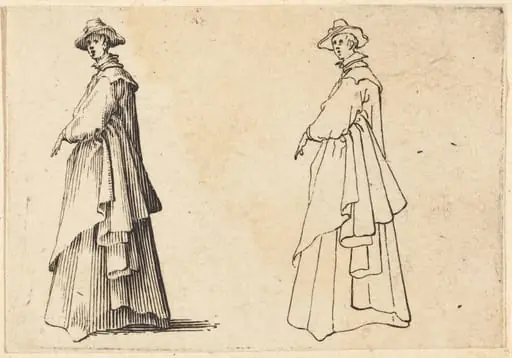
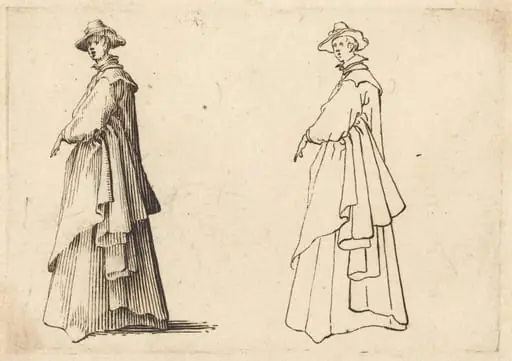
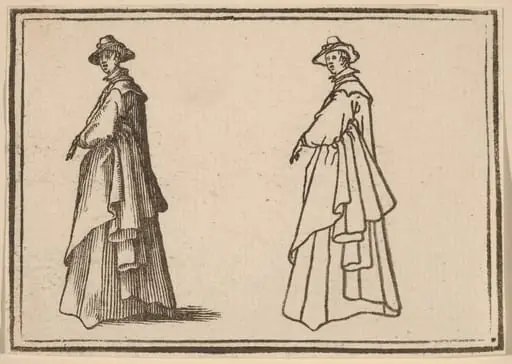
Lady in a Large Coat
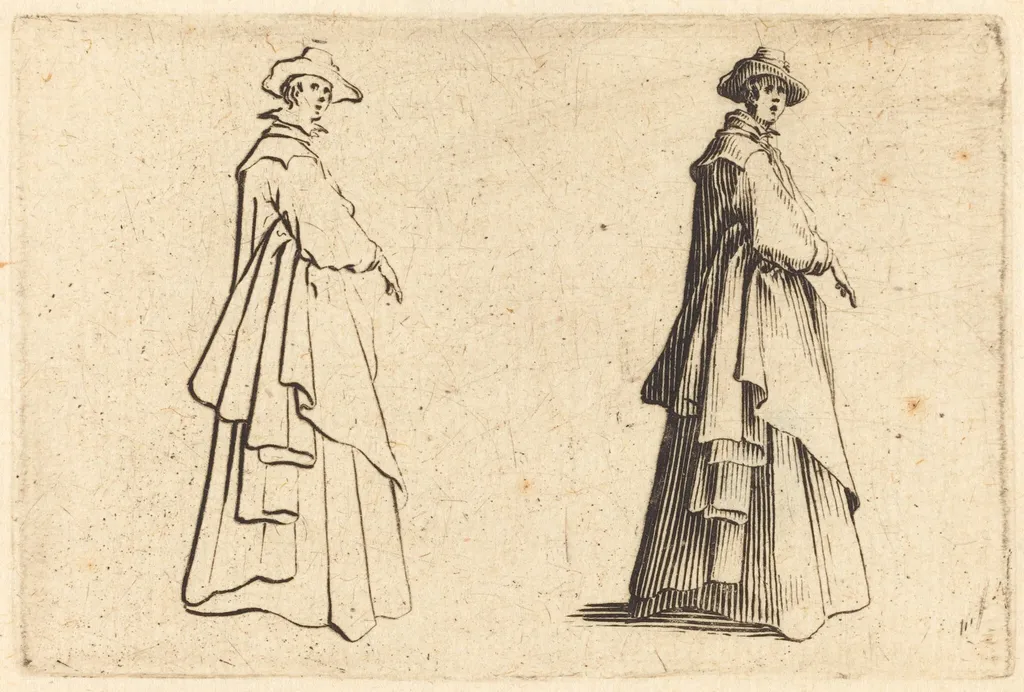
Lady in a Large Coat is an ink print by the Baroque artist Jacques Callot. It dates from 1622 and is held in the collection of the National Gallery of Art.
About this work
You see a woman in a wide coat with big sleeves. Her hat hides her face. The lines are sharp and clean.
Callot made this in 1622 using a metal plate and acid. The coat’s folds look real because of tiny lines he scratched in. Back then, artists used this method called etching to make prints.
Check out another print by Callot, Jacques.
Overview
Created circa 1622, *Lady in a Large Coat* is an etching on laid paper by French baroque printmaker Jacques Callot. The image presents a solitary woman dressed in a voluminous coat with exaggerated sleeves, her face concealed beneath a broad hat. The composition is rendered in crisp, precise lines that emphasize the texture of the garment and the figure’s posture.
Subject & Meaning
The work portrays a female figure whose anonymity—achieved by the hat’s concealment—suggests a focus on social type rather than individual identity. The exaggerated coat and sleeves hint at contemporary fashion trends, while the solitary stance may allude to themes of modesty, concealment, or the marginal status of women in early‑17th‑century urban settings.
Technique & Style
Callot employed the traditional etching process, incising a copper plate with a needle before immersing it in acid to bite the lines. Fine cross‑hatching and delicate scratches render the folds of the coat with a tactile realism, while the overall composition retains the sharp, clean quality characteristic of his prints.
History & Provenance
The etching belongs to Callot’s prolific output of more than 1,400 prints, many of which document everyday life in the Duchy of Lorraine and beyond. Produced during the early phase of his career, the piece reflects his interest in capturing contemporary figures—courtly, military, and common—within meticulously detailed settings.
Context
In the early 1620s, French printmaking was expanding beyond religious and mythological subjects to include genre scenes of daily life. Callot’s work, including this portrait, contributed to that shift by offering a nuanced visual record of fashion, social roles, and urban anonymity within the baroque aesthetic.
Artist & collection

Artist
Jacques Callot was a baroque printmaker and draftsman from the Duchy of Lorraine.

 Holy Family at supper
 Restoration of the Aqueduct at Pisa
 Restoration of the Aqueduct at Pisa
 Square in Paris with Many Figures
 Square in Paris with Many Figures
 Horsemen Attacked by Robbers
 HOW WILL A COVERED PART BE CORRECTED?HOW WIKA A COVERED HEART DEED CORRECTED?
![Christ Walking on the Water [second plate], by Jacques Callot](https://artifactworldgallery.com/img/jacques-callot--christ-walking-on-the-water-second-plate--2069f3bfe4cb2126-w320.webp) Christ Walking on the Water [second plate]
Christ Walking on the Water [second plate]